
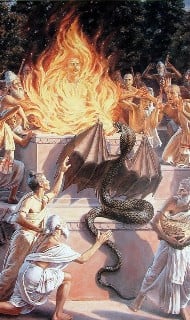
One of the guiding principles in Krsna consciousness is the thoughtful engagement of personal talents in the service of the Supreme. A hallmark of authentic spiritual leadership lies in the ability to inspire and organize such service so that diverse skills become meaningful pathways of devotion. In this spirit, His Divine Grace A.C. Bhaktivedanta Swami Prabhupada encouraged skilled painters to channel their artistic inclination into depicting the Supreme Godhead, thereby transforming art into a sustained discipline of bhakti.
Within Vedic literature, the Divine is described as possessing captivating personal forms. Krsna appears and expands in multiple transcendental forms and incarnations, a theology presented in texts such as Bhagavad-gita and Srimad-Bhagavatam. While the dharmic family includes traditionsHinduism, Buddhism, Jainism, and Sikhismthat express the sacred through varied symbols, meditative practices, and ethical disciplines, the shared aspiration for inner transformation and compassion offers a unifying foundation. Recognizing this unity enriches the appreciation of visual representations without diminishing non-iconic paths.
Transcendental painting, often referred to as Krsna-katha art, operates as both pedagogy and practice. The act of painting becomes meditation, and the viewing becomes contemplation. Many visitors to temples and exhibits describe an immediate sense of serenity and belonging when encountering images of Krsna’s pastimes. Such responses illustrate how devotional aesthetics can foster emotional resonance and spiritual reflection, while remaining grounded in scriptural descriptions preserved in Vedic literature.
Prabhupada requested that authoritative works on Krsna be “profusely decorated with illustrations,” not as ornamentation but as a method to transmit philosophical insights with clarity and accessibility. The International Society for Krishna Consciousness (ISKCON) established an art department to support this vision, producing works for both books and temples. ISKCON temples function as living centers where women and men can engage in spiritual life by seeing the form of the Lord, participating in kirtan, and reflecting on sacred narratives. This visual tradition respectfully coexists with other dharmic practices that emphasize formless meditation, ethical vows, or remembrance through sacred sound.
Illustration in devotional literature serves important educational and cultural purposes. For newcomers, images offer an intuitive entry into complex ideas such as avatara, bhakti, and dharma; for practitioners, they strengthen one-pointed remembrance during japa and kirtan. In a global context, these works bridge cultures and foster interfaith understanding by presenting Vedic concepts through compelling, carefully researched visual narratives. In this way, transcendental art supports unity in diversity across the dharmic spectrum while advancing the study of Hindu Art and Culture.
The cumulative outcome is both practical and profound: talents are dignified as instruments of seva; communities are enriched by accessible, scripturally grounded imagery; and spiritual centers gain resources that deepen collective practice. Whether one reflects on Krsna’s lilas in paintings, studies Bhagavad-gita or Srimad-Bhagavatam, or focuses on ethical and contemplative disciplines found across dharmic traditions, the underlying purpose convergescultivating inner clarity, compassion, and unity. Transcendental art thus exemplifies how creative expression, guided by Vedic literature and inclusive of broader dharmic sensibilities, can illuminate spiritual life in the present age.
Inspired by this post on Dandavats.
