The journey of a single devotional image into a lasting work of Cultural Heritage is captured through the experience of Saradiya dasi. While cleaning Srila Prabhupada’s rooms, the simple sight of a clothesline in the kitchen evoked a palpable sense of presence and continuity. Amid the quiet, an unexpected discovery on the countera small Indian printbecame a moment of profound recognition and inspiration.
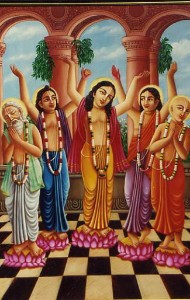
On closer reflection, the print revealed Lord Caitanya, Lord Nityananda, Sri Advaita, Sri Gadadhara, and Srivasathe Pancha‑Tattva, translated as “Five Truths in One.” The composition’s balance of figures and architecture, the delicate lines and luminous colors, and above all the devotional mood, conveyed a refined visual theology. That small print united aesthetics and Bhakti Tradition in a way that was both intimate and expansive.
Years later, the path led to Bhaktivedanta Manor in England, donated by George Harrison. During the summer of 1973, Srila Prabhupada resided at the Manor and attended the Rathayatra in London, a milestone in ISKCON (International Society For Krishna Consciousness) history. In that charged atmosphere of service and devotion, a large 4 by 5 foot oil painting of the Pancha‑Tattva took shape, transforming the memory of a modest print into a substantive temple artwork.
The trajectory from a small storefront print on 2nd Avenue to a monumental painting in Great Britain underscores how devotional art moves through time, space, and community. Housed within the elegant setting of Bhaktivedanta Manor, the painting was presented as an offering to His Divine Grace and the community of devotees. The work now serves as both a devotional act and a cultural artifactlinking personal service to the wider continuum of Hindu Art and Culture.
In iconographic terms, the Pancha‑Tattva embodies unity‑in‑diversity: five distinct yet harmonious truths realized as one. This synthesis aligns with dharmic values shared across Hinduism, Buddhism, Jainism, and Sikhismvalues that honor compassion, service, and spiritual plurality. As a visual meditation on unity, the painting encourages respectful engagement with varied paths while sustaining a shared ethos of devotion and ethical living.
Today, the Bhaktivedanta Manor Pancha‑Tattva painting invites visitors and practitioners to contemplate devotion through form and color, to appreciate the legacy of Srila Prabhupada, and to recognize how sacred art preserves Cultural Heritage. It stands as a serene testament to ISKCON’s living tradition, a bridge between intimate remembrance and public reverence, and a reminder that devotional creativity can foster harmony across dharmic traditions.
Inspired by this post on Dandavats.