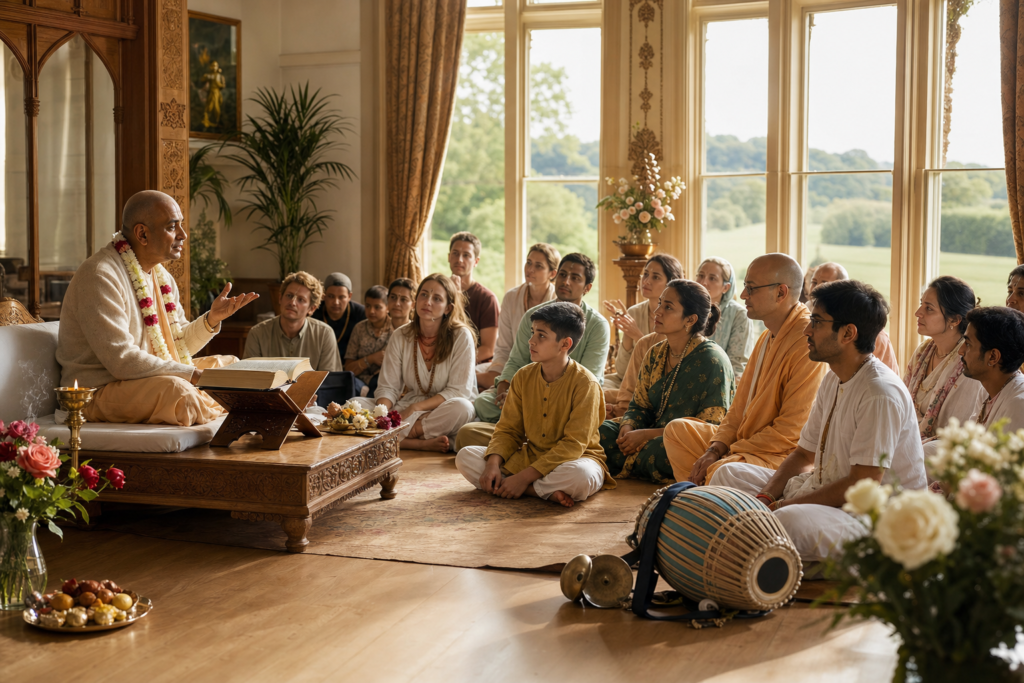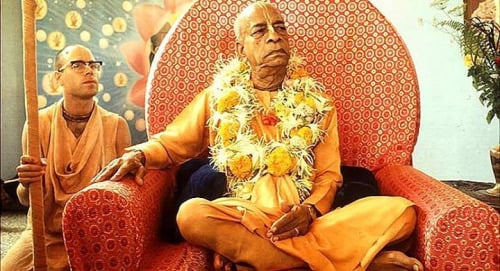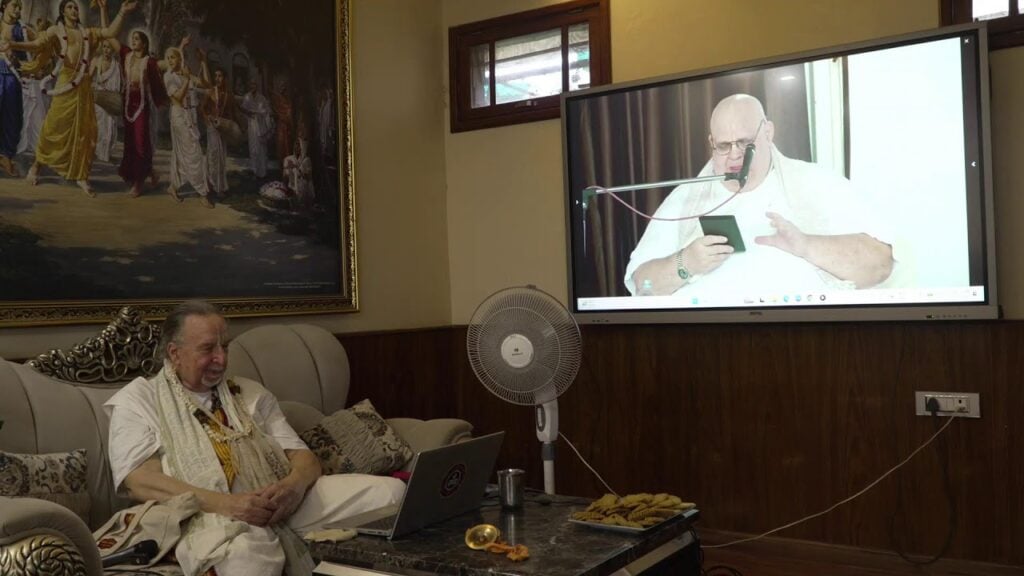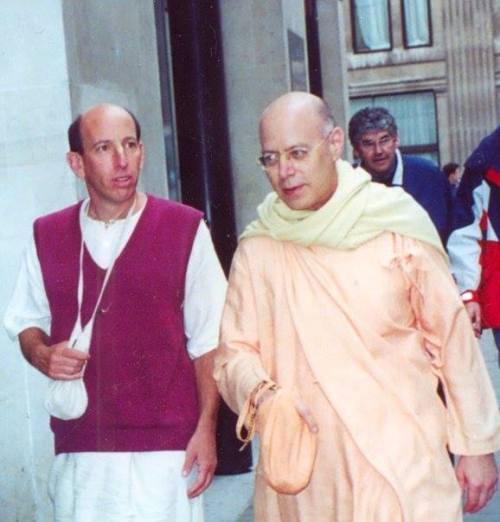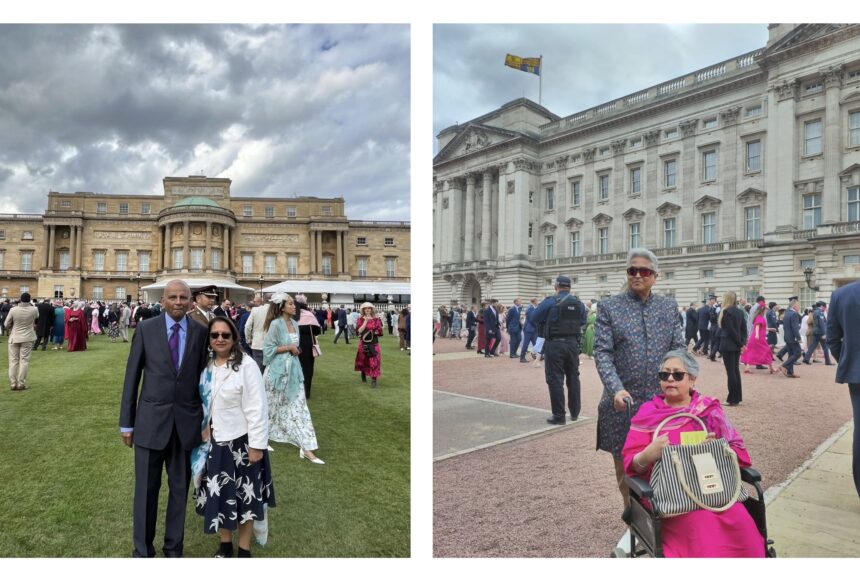
Dedicated volunteers from Bhaktivedanta Manor were honoured with invitations to the annual King’s Garden Party at Buckingham Palace, an occasion hosted by the British monarch to recognise exemplary public service, community engagement, and charitable work. Among those invited were Ketan Patel and Ashok Parmar, reflecting the sustained civic contribution of the Hare Krishna community within the UK’s plural public sphere.
Within the United Kingdom’s civic tradition, the King’s Garden Party functions as a highly visible forum acknowledging individuals and initiatives that measurably enhance social cohesion and wellbeing. Recognition of volunteers associated with a dharmic institution signals mainstream appreciation of religiously inspired service (seva) as a public good aligned with national priorities around inclusion, neighbourhood resilience, and interfaith dialogue.
Bhaktivedanta Manor’s community-facing workcharacterised by seva, cultural education, vegetarian food relief, environmental stewardship, youth mentorship, and structured interfaith engagementoperates within a service ethic shared across Hinduism, Buddhism, Jainism, and Sikhism. These traditions converge on principles such as ahimsa, dana, karuna, and sarva-dharma-samabhava, offering a common vocabulary for collaboration in diverse urban settings across London and the wider UK.
In practice, dharmic organisations routinely partner with local councils, charities, schools, and multi-faith networks to deliver outcomes that matter at street level: warm meals, pastoral support, cultural literacy programmes, temple- and gurdwara-based volunteering, and mindfulness and meditation offerings with recognised benefits for mental health. This portfolio of activity builds bridging social capital, counters isolation, and strengthens trust in public institutions.
From a measurement perspective, impact can be framed through a logic-model lens: inputs (volunteer time, facilities, donor support); activities (food relief, educational workshops, heritage events, chaplaincy, and hospital or prison visits); outputs (service episodes, participants, trainings); outcomes (improved wellbeing, youth engagement, and confidence in civic services); and long-term effects (reduced loneliness, strengthened interfaith trust, and environmentally conscious habits). Embedding basic monitoringattendance logs, anonymised feedback, referral pathwayssupports accountability and enhances eligibility for civic recognition.
At a philosophical level, the service ethic uniting these efforts draws on nishkama karma in Hindu thought (selfless action), seva in Sikh praxis (humble service), metta and karuna in Buddhist traditions (loving-kindness and compassion), and ahimsa and dana in Jain practice (non-violence and generosity). While theological frameworks differ, the practical outcomes converge: alleviating suffering, cultivating character, and reinforcing a culture of responsibility.
Methodologically, faith-based organisations that articulate their work in a professional public-policy idiom tend to achieve wider reach. Tools such as theory-of-change diagrams, Social Return on Investment (SROI) narratives, equality impact assessments, and robust safeguarding and governance protocols enable communities to communicate their contributions in language legible to funders, local authorities, and the broader public. ISKCON (International Society For Krishna Consciousness) communities have increasingly aligned with such standards without diluting their spiritual intent.
Ceremonies at Buckingham Palace provide more than pageantry; they operate as soft-power nodes within Britain’s democratic culture, where the Crown symbolically validates citizen initiative across backgrounds and beliefs. For diaspora communities, an invitation affirms that cultural heritage and civic duty are mutually reinforcing identities, situating faith-rooted service squarely within the national story.
In this context, the presence of Ketan Patel and Ashok Parmar at the King’s Garden Party personifies long-term, often quiet dedication to neighbours and networks in and around London. Their inclusion underscores a broader institutional ethos in which devotion to Sri Krishna translates into tangible public benefitmeals served, minds calmed, and communities connected.
Looking ahead, three priorities are salient for community leaders seeking durable impact: deepening interfaith partnerships grounded in shared dharmic ethics; professionalising safeguarding, governance, and volunteer management to UK standards; and co-designing programmes with local authorities so that seva directly maps to public-health, education, and integration goals. These steps ensure that future recognition flows from demonstrable results rather than visibility alone.
The invitation to the King’s Garden Party ultimately signals a wider truth: dharmic service enriches the United Kingdom’s civic fabric by uniting spiritual aspiration with pragmatic compassion. As organisations across Hindu, Buddhist, Jain, and Sikh lineages continue to collaborate, the resulting unity in religious diversity strengthens social trust, advances inclusive citizenship, and offers a replicable model for multicultural societies.
Inspired by this post on Dandavats.