By Jahnavi Harrison
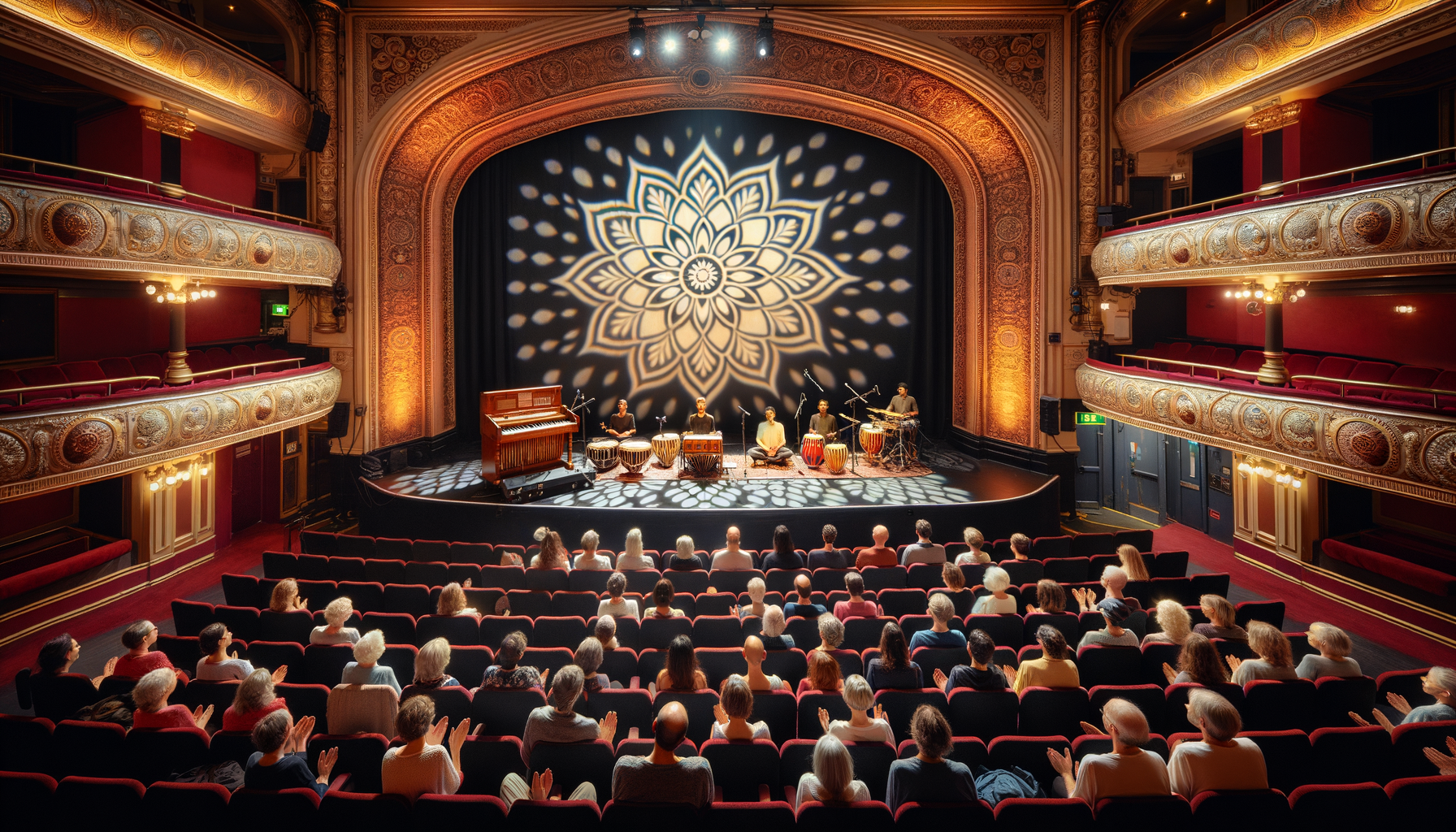
An evening of Bhakti unfolded at one of London’s iconic listed theatres, where Radhika dasa joined an ensemble of skilled musicians and long-time friends for a kirtan gathering that balanced artistic excellence with devotional depth. The historic architecture and resonant acoustics of the venue amplified every note, allowing mantra and melody to carry clearly across the hall.
As the music progressed, the audience moved from attentive listening to wholehearted participation. Voices converged into a single chorus with striking consonance, creating an atmosphere many described as transformative and deeply moving. Rarely does communal singing achieve such spontaneous harmony; in this instance, the collective sound felt, in a word, magical.
A strong current of gratitude defined the experience. Thanks extended to everyone presentperformers, organizers, and participantswhose attentive presence and responsive singing shaped the sonic and spiritual fabric of the evening. The concert demonstrated how devotional music can forge community bonds, bridge generations, and nurture a shared sense of purpose.
The kirtan welcomed seekers across dharmic traditions, reflecting values of inclusivity and mutual respect consistent with Hindu, Buddhist, Jain, and Sikh pathways. In this setting, chanting functioned as a unifying practice, illustrating how devotion, compassion, and contemplation can coexist in a common space without compromising distinct identities. Such gatherings model harmony of faiths and underline the living continuity of cultural heritage in contemporary urban life.
Beyond its aesthetic appeal, the event highlighted the well-documented benefits of communal chantingenhanced focus, emotional regulation, and social cohesionwhile reaffirming the role of Bhakti Tradition as a bridge between personal devotion and community wellbeing. As attendees departed, the prevailing sentiment was clear: shared song can cultivate serenity, resilience, and unity, offering a gentle yet powerful reminder of what is possible when hearts and voices come together.
Inspired by this post on Dandavats.