
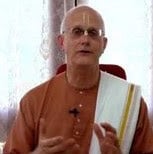
On 31 May 2026, Anuttama Dasa delivered the Sunday Feast Lecture at the Hare Krishna Temple in Alachua, Florida, presenting a rigorous and accessible exploration of bhakti-yoga that resonated with seekers, families, and long-time practitioners alike.
Recognized within ISKCON (International Society For Krishna Consciousness) for clear teaching and thoughtful engagement, Anuttama Dasa situates classical Gaudiya Vaishnava theology within contemporary social and ethical realities. His public talks are known for combining scriptural fidelity, practical guidance, and a tone of inclusivity that strengthens community cohesion.
The Hare Krishna Temple in Alachua serves one of the largest Hare Krishna communities in North America. In this setting, the Sunday Feast operates as a weekly public-theology forum—integrating kīrtana (devotional music), śāstra-kathā (scriptural discourse), and prasadam (sanctified vegetarian food)—that invites participants into study, reflection, and communal service.
Institutionalized by A. C. Bhaktivedanta Swami Prabhupada, the Sunday Feast was designed to present Sanatan Dharma through three complementary modalities: śravaṇa (hearing sacred wisdom), kīrtana (collective mantra recitation), and prasada-sevā (honoring sanctified food). This integrated pedagogy offers an experiential pathway into the heart of bhakti-yoga for newcomers and seasoned practitioners.
Lectures of this kind typically center on foundational texts—especially the Bhagavad-gita and the Srimad Bhagavatham—elucidating themes such as the nature of the self (ātman), the dynamics of karma, the cultivation of devotion (bhakti), and practical dharma in everyday life. Such exposition emphasizes that spiritual realization matures through disciplined practice, ethical conduct, and a conscious relationship with the Divine.
A technical feature of Gaudiya Vaishnava exposition is its epistemic grounding in śabda-pramāṇa (authoritative revelation) while engaging pratyakṣa (direct experience) and anumāna (reasoned inference). In a Sunday Feast context, this translates into careful reading of śāstra, clear definitions of terms, real-life analogies, and time for questions—so listeners can connect timeless principles to current dilemmas with intellectual honesty and devotional intent.
The practice architecture of bhakti-yoga is often summarized in navadhā-bhakti: śravaṇa (hearing), kīrtana (chanting), smaraṇa (remembering), pāda-sevana (service), arcana (worship), vandana (prayer), dāsya (servitorship), sakhya (friendship), and ātma-nivedana (self-surrender). Within the Sunday Feast, these modes are not presented as abstract ideals but as lived disciplines that can be harmonized with family life, vocation, and civic responsibility.
Kīrtana and japa (personal mantra meditation) form the sonic core of the tradition. The maha-mantra—Hare Krishna, Hare Krishna, Krishna Krishna, Hare Hare / Hare Rama, Hare Rama, Rama Rama, Hare Hare—is engaged both personally and collectively. Contemporary research on contemplative repetition suggests positive effects on attentional stability and emotional regulation, aligning with bhakti-yoga’s experiential claim that sound (nāma) refines consciousness when invoked with intention and humility.
Prasadam culture anchors the ethical and ecological dimensions of the Feast. The Bhagavad-gita’s principle that offerings made with devotion—“patram puṣpam phalam toyaṁ”—transform daily eating into a sacrament supports a vegetarian ethic that minimizes harm (ahimsa), encourages gratitude, and fosters community sharing. In Alachua, this tradition sustains intergenerational bonds and welcomes guests through hospitality rooted in devotion rather than display.
Beyond individual practice, the Sunday Feast cultivates social capital. Regular satsanga (devotional association) provides mentorship for youth, companionship for elders, and a values-based context for families. The Hare Krishna Temple in Alachua thus operates as a spiritual commons where culture, service (seva), and learning converge.
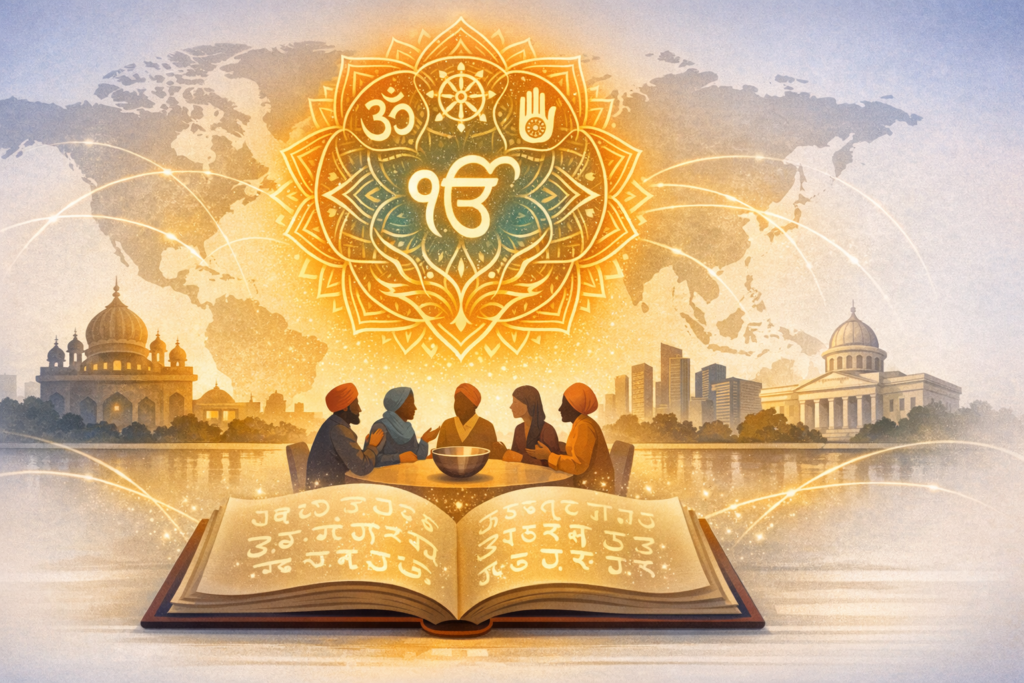
A consistent emphasis in Alachua’s community programming—reflected in talks such as this—is the unity of dharmic values across traditions. Buddhist mettā, Jain ahimsa and pratikraman, Sikh kirtan and langar, and Hindu bhakti converge around compassion, self-discipline, truthfulness, and service. Articulating these shared ethics supports harmony among Hinduism, Buddhism, Jainism, and Sikhism while honoring each path’s distinct practices and insights.
As a seasoned communicator, Anuttama Dasa often frames spiritual leadership in terms of transparency, empathy, and responsibility. Such framing aligns with Vaishnava virtues—humility (amanitvam), steadiness (sthiti), and compassion (dayā)—and offers a roadmap for thriving communities: uphold tradition, engage the modern world with clarity, and keep service at the center.
Pedagogically, the Sunday Feast lecture is typically structured with invocation, textual reading, thematic exposition, narrative exemplars, and practical takeaways, followed by discussion. This structure mirrors classical Indian hermeneutics—moving from principle (tattva) to illustration (dṛṣṭānta) to application (prayojana)—so participants leave with both understanding and method.
Practical guidance commonly highlighted in such assemblies includes steady japa, mindful digital habits, ethical speech, and cooperative service. The aim is not ascetic withdrawal from society but a reorientation of goals and habits so that household, workplace, and community life become extensions of sādhana rather than obstacles to it.
For the diaspora in Florida and visitors from across the region, ISKCON Alachua’s Sunday Feast functions as a cultural and spiritual bridge—preserving sacred arts, Sanskritic learning, and festivals, while welcoming neighbors into a living experience of the Bhagavad-gita’s teachings. The resulting environment is both devotional and dialogical, encouraging inquiry alongside devotion.
Viewed through this lens, the 31 May 2026 lecture by Anuttama Dasa exemplified how the Hare Krishna Sunday Feast unites scriptural depth, contemplative practice, ethical living, and dharmic harmony. By translating Vaishnava wisdom into actionable insights, it reinforced a shared civilizational message: inner transformation and compassionate service are mutually reinforcing pathways to personal well-being and social concord.
Inspired by this post on Dandavats.









Leave a Reply
You must be logged in to post a comment.