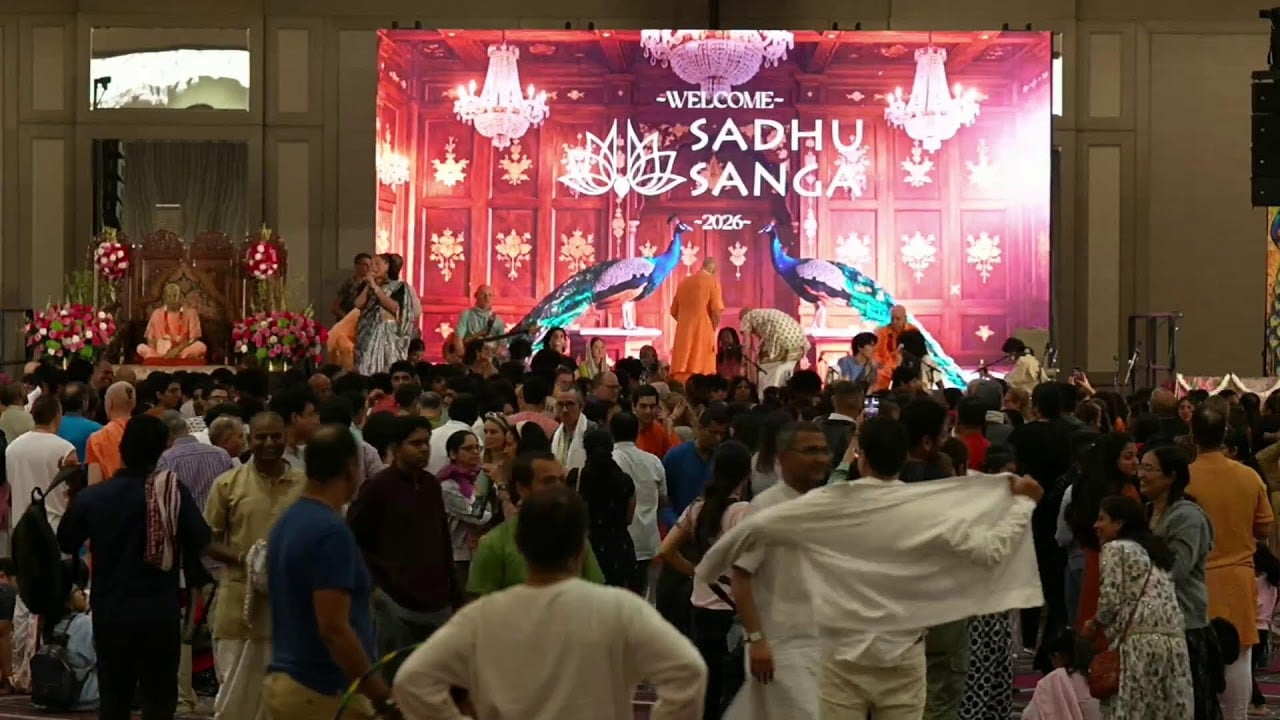
2026 Sadhu Sanga – Day 1 presents an immersive introduction to bhakti-yoga in the Gaudiya Vaishnava tradition, closely associated with the Hare Krishna Movement and ISKCON (International Society For Krishna Consciousness). The opening day typically establishes a shared devotional intention (sankalpa), orients participants to attentive mantra meditation, and foregrounds the sonic and social dynamics of saṅkīrtana (congregational kirtan). While particular schedules vary, Day 1 reliably centers humility, service, musical worship, and community, welcoming practitioners across the dharmic spectrumHinduism, Buddhism, Jainism, and Sikhisminto a shared ethos of reverence and unity.
In Gaudiya Vaishnava theology, sādhu-saṅgameaning purposeful association with the spiritually mindedfunctions as a primary catalyst for devotion. Classical literature emphasizes its centrality; for example, Cc. Madhya 22.54 states, “sādhu-saṅga, sādhu-saṅgasarva-siddhi haya,” highlighting that transformative association is the conduit to all success in spiritual life. Day 1 of any Sadhu Sanga gathering thus seeks to create conditions for sustained, uplifting contactthrough music, dialogue, and shared practiceso that aspirants can refine intention and deepen practice in supportive company.
Parallel concepts of sacred association are deeply embedded across dharmic traditions. In Buddhism, Saṅgha denotes the community of practice that preserves, transmits, and embodies the Dharma; in Sikhism, Saṅgat (holy company) and kirtan are central to cultivating remembrance of the Divine; in Jainism, the Saṅgha integrates monks, nuns, and lay communities who align conduct with nonviolence and truth. Day 1 underscores these convergencesshared discipline, communal song, and ethical fellowshipthereby fostering unity in spiritual diversity without collapsing meaningful differences in doctrine or method.
Kirtan on Day 1 anchors devotional momentum by uniting scriptural principle and lived experience. Bhagavad-gita 9.14 encapsulates the mood“satataṁ kīrtayanto māṁ”continuous glorification, here expressed through call-and-response singing, simple refrains, and meditative repetition. Participants often find that sung prayer lowers internal noise, stabilizes attention, and opens space for refined ethical and contemplative intent.
The Hare Krishna mahā-mantra“Hare Krishna Hare Krishna Krishna Krishna Hare Hare / Hare Rama Hare Rama Rama Rama Hare Hare”is frequently at the heart of congregational practice. Phonetically compact and semantically rich, its vocative structure appeals to the Divine Names. Interpretive lineages variously understand Hare as the energy of compassion (Harā) or as the vocative of Hari, while Krishna signifies the all-attractive and Rama connotes plenitude and joy. Theologically, the Names are non-different from the Named; practically, repetition directs attention toward steadiness, gratitude, and loving service.
Musically, Day 1 kirtans commonly cultivate progressive depth through tempo, melody, and rhythm. Call-and-response structures encourage entrainment and accessibility; percussive layers (mṛdaṅga and karatālas) synchronize group pulse; harmonium and voice establish a melodic center. The simplicity of form serves a higher purpose: to free cognitive bandwidth for devotional absorption, allowing collective sound to deepen focus rather than disperse it.
Japa (individual mantra meditation) is introduced or reinforced early, since sustained personal practice stabilizes the more exuberant dynamics of congregational kirtan. Practitioners typically use a japa-mālā to count repetitions, modulating breath and posture to support even attention. Day 1 sessions often explain pacing, clarity of diction, and gentle redirection of the wandering mindpractical elements that, when consistently applied, mature into reliable contemplative skill.
Socially, sādhu-saṅga operates as a community of practice that transmits ethos as much as method. Guidance from senior devotees and Vaishnava saints, the living guru-śiṣya paramparā, and a culture of sevā (service) shape norms of humility, cooperation, and mutual care. Day 1 sets these expectations explicitly, inviting newcomers and seasoned practitioners alike into a space where musical devotion and ethical conduct reinforce each other.
Empirical research on group singing and contemplative repetition aligns with these traditional claims. Studies broadly indicate that synchronized vocalization can support autonomic balance, enhance prosocial affect, and foster belonging through rhythmic and respiratory entrainment. Within this framework, Day 1’s extended kirtans and structured japa provide both a contemplative method and a relational matrix, helping participants experience devotion as embodied, communal, and emotionally coherent.
Programmatically, Day 1 commonly foregrounds orientation: shared guidelines for respectful conduct, accessible introductions to mantra-based practices, and context for the retreat’s learning arc. This scaffolding creates claritywhen to sing, how to listen, where to practice silent japa, and how to maintain devotional focus amid large gatheringsso that contemplative depth and social harmony reinforce one another from the outset.
Inclusivity is integral to the retreat ethos. The opening day emphasizes welcoming language, clear pathways for beginners, and optional quiet zones for those who benefit from contemplative pacing. In honoring varied needs and sensibilitiesmusical exuberance alongside silent meditation, shared meals alongside reflective solitudeDay 1 models a dharmic pluralism that is both principled and practical.
Scripturally, the emphasis on sacred sound responds to the conditions of the present age. As Śrīmad-Bhāgavatam 12.3.51 states, “kaler doṣa-nidhe rājan asti hy eko mahān guṇaḥ / kīrtanād eva kṛṣṇasya mukta-saṅgaḥ paraṁ vrajet,” indicating that in a difficult era, chanting the Divine Names is uniquely efficacious. Day 1 connects this theological insight to daily method, translating principle into accessible practice.
Ethically, the retreat culture foregrounds humility, respect, and resilience. The well-known instruction “tṛṇād api sunīcena taror iva sahiṣṇunā; amāninā mānadena kīrtanīyaḥ sadā hariḥ” orients speech and action toward gentleness and honor for others. Day 1 articulates these values as practical guidelines for conversation, queuing, shared spaces, and musical leadership, ensuring that devotion is expressed as both sound and conduct.
Philosophical framing often accompanies the musical practice on Day 1, situating kirtan within the broader arc of bhakti-sādhana. Passages from Bhagavad-gita and Śrīmad-Bhāgavatam illuminate the nature of devotion, the role of the senses in worship, and the transformative power of remembrance. This combination of scriptural insight and lived rhythm gives participants a coherent map: why sacred sound matters, how to practice skillfully, and what maturation in devotion looks like over time.
Attendees frequently describe immediate, relatable shifts on the first day: a quieter mind after initial rounds of japa, a softening of interpersonal tension amid collective singing, and a felt sense of belonging when voices harmonize on a shared refrain. Such reports, while subjective, align with both scriptural expectations and contemporary findings on communal contemplative arts, offering an experiential bridge between tradition and modern life.
Intertradition resonance enriches the first day’s atmosphere. Buddhist metta chanting, Sikh kirtan in the Saṅgat, and Jain stotras exemplify cognate practices of sacred sound, ethical refinement, and community care. By acknowledging these shared lineages of devotion, Day 1 affirms unity in spiritual diversityhonoring distinctive paths while celebrating common ground in reverence, discipline, and compassion.
In sum, 2026 Sadhu Sanga – Day 1 lays the devotional, musical, and ethical foundations for the days that follow. Through kirtan, japa, scriptural reflection, and a clear culture of service, it invites participants to experience bhakti as a precise discipline and a generous social reality. The result is a well-structured, emotionally resonant, and doctrinally grounded beginning that strengthens personal practice and cultivates dharmic unity.
Inspired by this post on Dandavats.