Vasant Navratri 2026—also known as Basant Navaratri, Chaitra Navratri, and Sri Ram Navratri—will be observed from 19 March to 27 March 2026. Across these nine sacred nights and nine days, devotees venerate Goddess Durga, Maha Lakshmi, and Maa Saraswati, celebrating Shakti as protective courage, life-sustaining abundance, and liberating wisdom. The observance is regarded as an auspicious period for spiritual renewal, disciplined practice, and community harmony.
In the traditional lunisolar Hindu calendar, Vasant Navratri begins on Chaitra Shukla Pratipada and culminates on Chaitra Shukla Navami (Ram Navami). Because tithi and sunrise-based calculations vary by location and Panchang, civil dates can differ slightly across regions; for 2026, most commonly used Indian Panchangs align on 19–27 March. Practitioners are advised to confirm local muhurta and parana windows with a trusted regional Panchang or temple advisory.
Vasant Navratri is often experienced as a structured inward journey: the first triad of days emphasizes Durga’s transformative strength, the middle triad invokes Lakshmi’s harmonizing prosperity, and the final triad refines sattva through Saraswati’s insight. The festival’s devotional grammar holds together Shakta, Vaishnava, Smarta, and regional lineages within Hinduism, while its ethical center—cultivating courage, generosity, and clarity—resonates broadly across dharmic traditions.
In 2026, the day-wise outline followed by many households maps as follows in civil terms, with local Panchang consultation always recommended: Day 1 (19 March) Shailaputri, Day 2 (20 March) Brahmacharini, Day 3 (21 March) Chandraghanta, Day 4 (22 March) Kushmanda, Day 5 (23 March) Skandamata, Day 6 (24 March) Katyayani, Day 7 (25 March) Kalaratri, Day 8 (26 March) Mahagauri, and Day 9 (27 March) Siddhidatri. While this sequence is widely observed, exact tithi observance can shift when lunar transitions occur between sunrise and sunset.
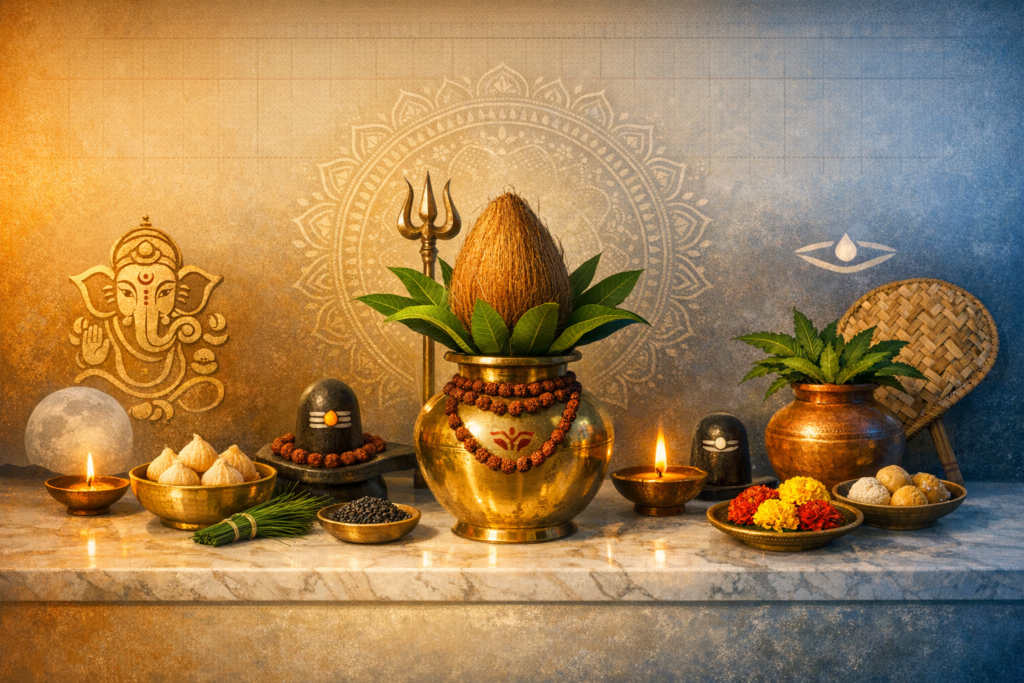
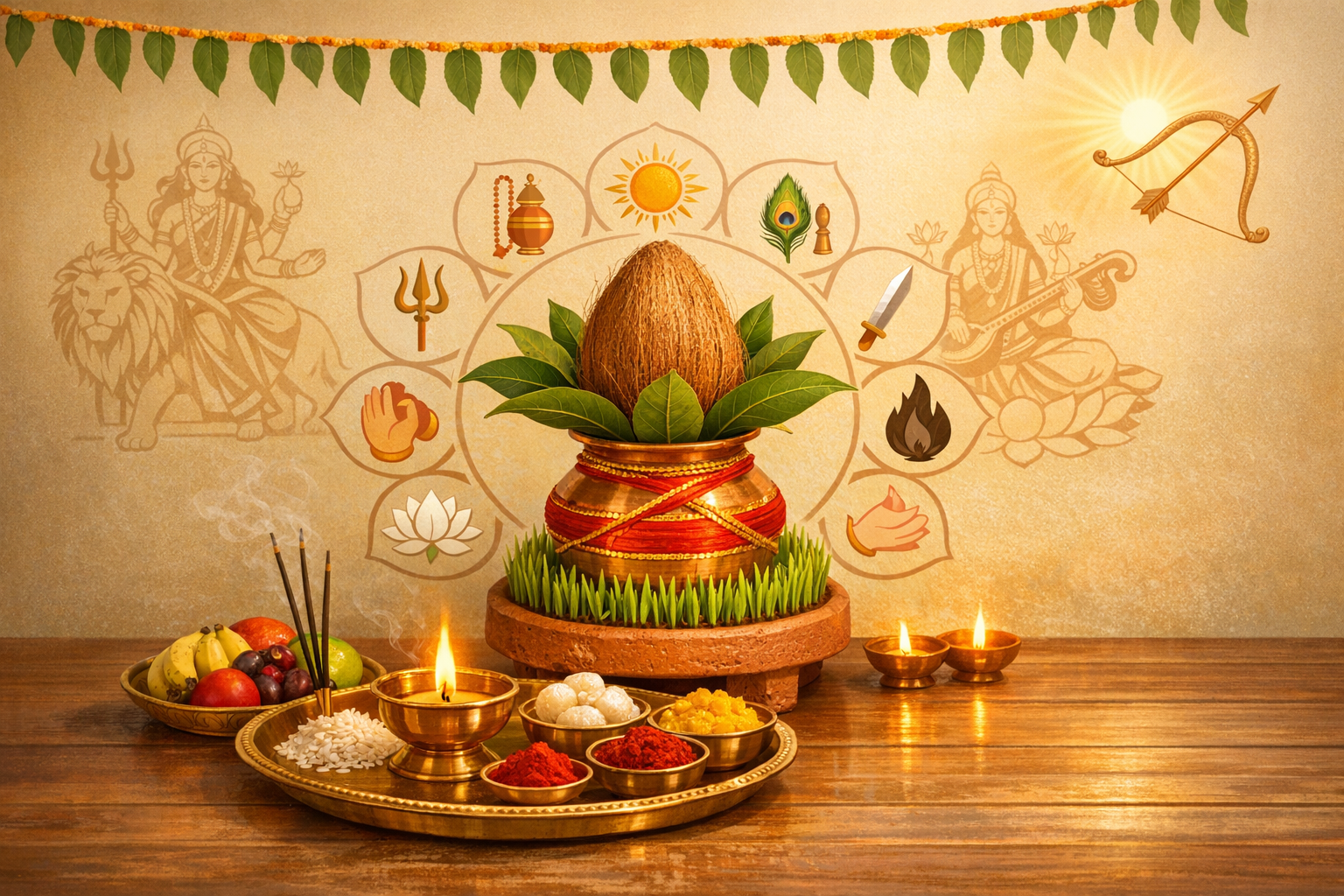
Ghatasthapana (Kalash Sthapana) anchors the festival’s domestic and temple worship. The consecrated kalasha—traditionally a copper or clay pot filled with sanctified water, topped with mango leaves and a coconut—is installed on the morning of Chaitra Shukla Pratipada during an auspicious window. Classical guidelines advise performing Ghatasthapana within the first third of the day after sunrise, preferably avoiding Vaidhriti Yoga and Chitra Nakshatra when possible, and favoring Abhijit Muhurta if Pratipada spans midday. A small vedi of clean soil is often prepared to sow barley seeds (jav), signifying growth and the devotee’s sankalpa to cultivate virtue. Many households maintain an akhand jyot for the full nine nights as a symbol of unwavering attention.
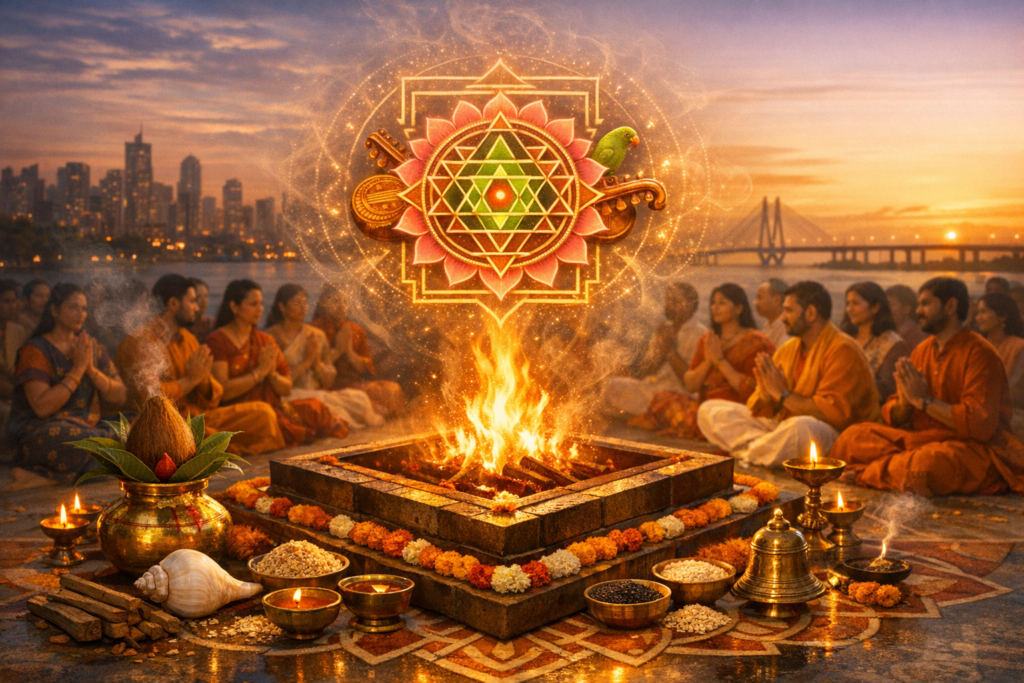
Daily puja vidhi typically proceeds through sankalpa, dhyana, avahana, and either panchopachara or shodashopachara offerings, with simple sattvik naivedya such as fruit, milk preparations, and homemade sweets. The liturgical backbone in many traditions is the recitation of Devi Mahatmya (Durga Saptashati) with Kavach, Argala, and Keelaka; others chant Lalita Sahasranama, Durga Suktam, or the octave of “Ya Devi Sarvabhuteshu” mantras. Vaishnava communities frequently supplement with Nama Ramayana, Ramraksha Stotra, and Ramayana parayana during the concluding days, reflecting Sri Ram Navami’s centrality to the spring cycle.
Fasting practices during Vasant Navratri range from nirjala and phalahar to anukalpa meals, guided by health and capacity. Many follow a sattvik regimen that includes fruits, milk, nuts, singhada (water chestnut) flour, kuttu (buckwheat), and sabudana, while avoiding onion, garlic, and heavy rajasic foods. Consistent hydration, balanced electrolytes, and medical discretion for children, elders, and those with ongoing health conditions are essential. The fast is generally concluded on Navami, observing a proper parana window as indicated by the local Panchang, with gratitude offerings and community sharing of prasad.
The NavaDurga forms are invoked sequentially with salutations such as “Om Devi Shailaputryai Namah,” “Om Devi Brahmacharinyai Namah,” “Om Devi Chandraghantayai Namah,” “Om Devi Kushmandayai Namah,” “Om Devi Skandamatayai Namah,” “Om Devi Katyayanyai Namah,” “Om Devi Kalaratryai Namah,” “Om Devi Mahagauryai Namah,” and “Om Devi Siddhidatryai Namah.” While regional liturgies vary, propitiation with clean water, flowers, incense, lamp, and sincere mantra japa remains a unifying axis. Many families also associate each day with specific colors and offerings, recognizing that local traditions—transmitted by elders and temples—carry meaningful authority.
Ram Navami, falling on 27 March 2026, marks the sacred culmination of Chaitra Navratri. Textual traditions place special emphasis on madhyahna kala (the midday period) for Sri Rama Janmotsava rituals, including abhishekam for Rama–Sita–Lakshmana–Hanuman vigrahas, community kirtan, and collective readings from Valmiki Ramayana’s Bala Kanda. Kanya Puja or Kumari Puja—honoring the living embodiment of Shakti—is observed in many regions on Ashtami or Navami; the underlying ethic is reverence for innocence, learning, and the dignified empowerment of girls. The festival typically closes with Kalasha Visarjana, a reflective thanksgiving that releases the sankalpa back into daily life.
Vasant Navratri unfolds alongside regional new-year observances that accent the renewal of spring. In several parts of India, Chaitra Shukla Pratipada coincides with Gudi Padwa in Maharashtra and with Ugadi in Andhra Pradesh, Telangana, and Karnataka; Kashmiri Pandits welcome Navreh around this time, and Sindhi communities observe Cheti Chand in close proximity. Eastern India recognizes Chaitra Durga Puja in select locales, while North Indian towns witness Ram Navami yatras and akhand path programs. In the global diaspora, temples curate inclusive schedules that blend home-bound simplicity with the grandeur of collective aarti and annadanam.
In the wider dharmic family, the festival’s ethos of self-cultivation and compassionate strength finds resonances without conflating distinct theologies. Sikh tradition celebrates valor and righteousness in the spring season and venerates the Divine’s protective aspect in compositions such as Chandi di Vaar in the Dasam Granth. Buddhist traditions honor wisdom and compassion as inseparable perfections, thematically echoing Navratri’s movement from courage to clarity; Jain practice centers on the Jinas yet recognizes attendant deities like Padmavati and Ambika in protective roles near the sanctum. The shared moral arc—courage, restraint, generosity, service, and study—supports unity-in-diversity across dharmic paths.
For many families, the sensory tapestry of Basant Navaratri is memorable and instructive: the gentle glow of the akhand jyot through the night, the fragrance of fresh flowers at dawn, the faint rustle of barley shoots near the altar, and the steady rhythm of evening aarti. Children learn to participate by ringing the bell, arranging prasad, and attempting simple mantras, while elders pass on stories from the Devi Mahatmya and Ramayana that illuminate ethical choices in everyday life. These intergenerational rituals build emotional bonds and normalize a life of reflection, gratitude, and mutual care.
Sustainability-minded observances are increasingly integral to Vasant Navratri 2026. Households and temples can prioritize biodegradable decorations, responsibly sourced flowers, metal or clay utensils, and minimal plastic. Nirmalya may be composted, prasad can be prepared with local grains and millets, and water usage during abhishekam can be measured and reused for plants where feasible. Aligning festival practice with ahimsa and ecological stewardship deepens the sadhana and offers a living example to younger participants.
Preparation benefits from thoughtful planning. A tidy, sanctified altar space, a well-timed Ghatasthapana, and a modest but consistent daily routine—lighting the lamp, mantra japa, a short reading, and quiet contemplation—often prove more sustainable than overly elaborate schedules. Procuring sattvik staples, organizing text passages for daily parayana, and setting digital quiet hours enable a calmer, more attentive mind. Safety with the akhand diya, inclusivity in annadanam, and flexibility for working professionals and students ensure that devotion remains accessible and life-affirming.
Frequently asked points resolve with a common principle: sincerity over complexity. Those unable to fast fully may adopt partial fasts or food discipline; those unable to recite entire texts can choose a daily stotra or mala of a simple mantra. When tithi ambiguities arise, local temple guidance or a trusted Panchang should prevail. Ultimately, Vasant Navratri 2026 is an invitation to cultivate inner resilience, outward kindness, and clear discernment—qualities that nourish families and communities well beyond the festival’s nine days.
As the festival concludes with Sri Ram Navami on 27 March 2026, the devotional arc from Shailaputri to Siddhidatri merges into the virtues embodied by Sri Rama—dharma, restraint, compassion, and steadfast truth. Carried forward into daily conduct, these ideals transform celebration into character, and ritual into lived wisdom. In that spirit, Vasant Navratri’s nine luminous nights offer a deeply relevant, unifying, and hope-filled path for the season of renewal.
Inspired by this post on Hindu Pad.