Sindhara Doojalso known regionally as Gauri Dwitiya, Sowbhagya Dooj, or Sindoor Doojis observed on the second day (Shukla Dwitiya) of both Chaitra (Vasant) and Ashwin (Sharad/Shardiya) Navratri across North India. The observance blends the theological focus of Navratri Day 2 with the cultural affirmation of sowbhāgya (marital and familial auspiciousness), particularly through reverence for the Divine Feminine as Gauri/Parvati and the Navadurga form honored on this day.
In 2026, Sindhara Dooj falls on March 20 during Vasant (Chaitra) Navratri and on October 12 during Sharad (Ashwin) Navratri. In most North Indian almanac traditions, the Dwitiya tithi prevailing at local sunrise determines the festival day; devotees outside India should verify dates using a regional panchang to account for time-zone differences. The Dwitiya alignment ensures that the festival remains contextually integrated with the nine-day Navratri vrata, rather than standing apart as an independent observance.
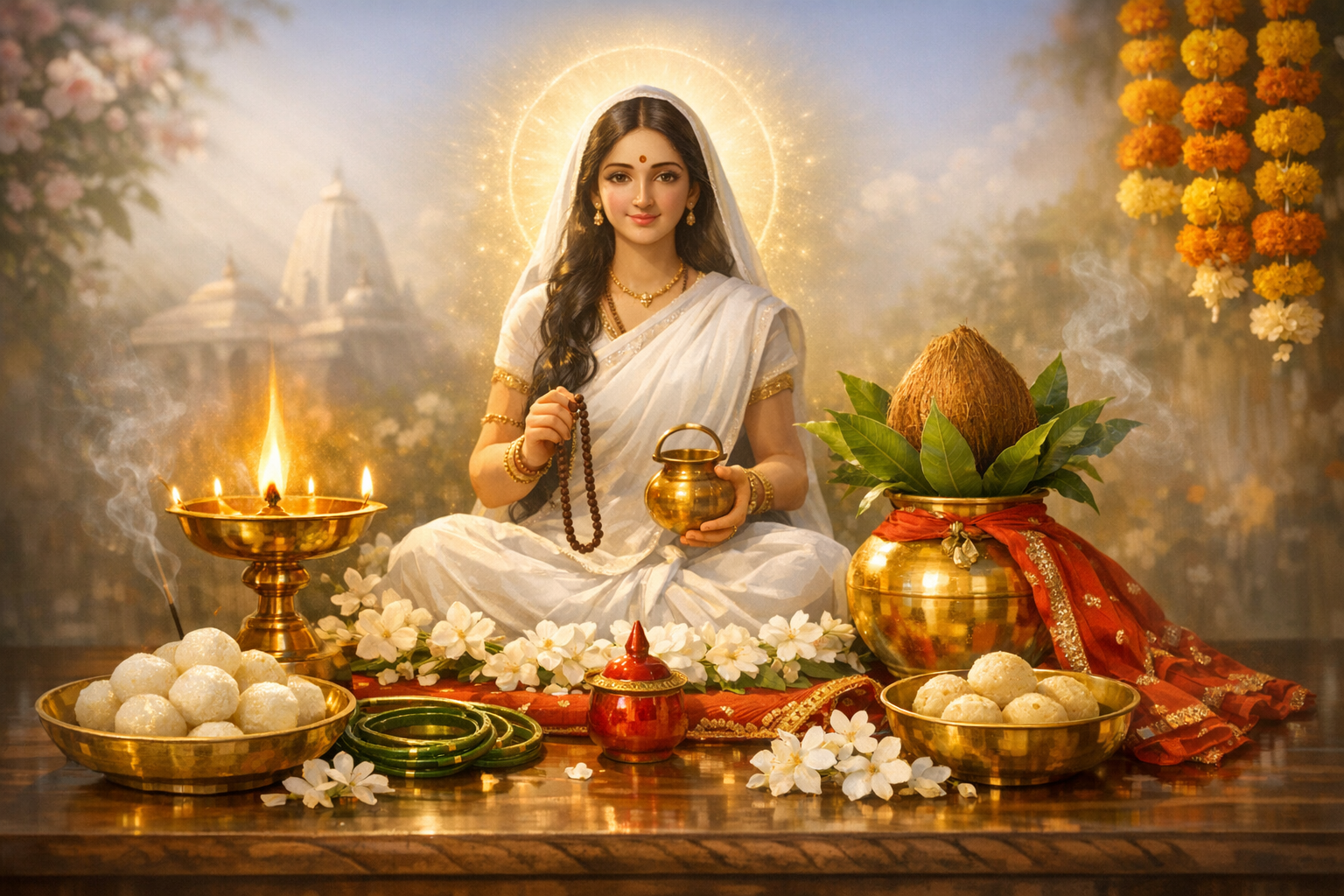
Navratri Day 2 is dedicated to Maa Brahmācharini, the ascetic and luminous form of the Goddess who embodies unwavering tapas, restraint, and spiritual resolve. Iconographically, Brahmācharini is depicted holding a rosary (japa-mālā) and a water-pot (kamaṇḍalu), signifying steady practice and inner purity. Devotees recite prayers such as “ॐ देवी ब्रह्मचारिण्यै नमः” and offer light, simple, sattvic naivedyaoften milk-based preparations or mishriwhile meditating on the qualities of discipline and grace that this form of the Goddess bestows.
While the Day 2 worship focuses the mind on tapas through Brahmācharini, the regionally cherished framing of the day as Sindhara Dooj or Gauri Dwitiya simultaneously celebrates familial harmony and the well-being of married women. The term “sindhara/sindoor” evokes suhaag and the protective blessings sought for long life, mutual respect, and prosperity within households. Communities mark the day with shared offerings of sindoor, red chunri, bangles, and auspicious sweetsframing material tokens as extensions of spiritual intent, rather than ends in themselves.
It is helpful to distinguish Sindhara Dooj (Navratri Dwitiya) from Bhai Dooj (Kartik Shukla Dwitiya, after Deepavali), which centers sibling bonds. Sindhara Dooj, by contrast, is embedded within the Navratri vrata and emphasizes Devi-upasana (worship of the Goddess), the virtues of brahmacharya in a broader sense of focused living, and sowbhāgya as a collective ideal upheld by families and communities.
A home observance typically begins with a simple sankalpa after sunrise, while Dwitiya prevails: lighting a steady lamp (akhaṇḍ jyoti) at the altar established on Day 1, placing white flowers, and offering a minimal, pure prasad such as milk, sugar, or fruits. Recitation from Devi Mahatmyam (Durga Saptashati) continues according to household tradition; some commence the Madhyama Charita on Day 2, aligning the text’s narrative arc with the intensifying devotional mood. Meditation on the japa-mālā motif of Brahmācharini encourages devotees to adopt a measured daily rhythmregular mantra-japa, mindful speech, and restraint in consumption.
Color traditions widely associate Day 2 with white, symbolizing serenity, clarity, and the inner ascetic glow of Brahmācharini. Many families also include a red elementchunri or kumkumat the altar to integrate the shakti dimension of Navratri. A sattvic fast is commonly maintained: grains may be substituted with kuttu/singhada flours or fruits, and salt with sendha namak, depending on local custom and personal health. Those with medical conditions are encouraged to adjust their vrata responsibly; in dharmic ethics, ahiṃsā begins with honoring one’s embodied duties and well-being.
Regional practice in Himachal Pradesh adds distinctive texture. Shakti Peethas such as Chintpurni (Una district) and Naina Devi (Bilaspur district) host special Navratri arrangements and community melas. On or around Sindhara Dooj, devotees offer coconut, red chunri, and sindoor to the Goddess, seeking health, resilience, and harmony at home. The devotional atmospherebhajans, collective aartis, and disciplined queuesembodies the social coherence Navratri engenders in the Himalayan belt, while the mountainous setting and ancient temple lineages remind pilgrims of a long civilizational continuity.
Across the North Indian plainsin Punjab, Haryana, Delhi, Uttar Pradesh, Uttarakhand, Rajasthan, and beyondSindhara Dooj dovetails with community customs like exchanging sowbhāgya-sūchaka items among relatives and neighbors. This exchange is not merely symbolic; it reiterates mutual obligations of care, hospitality, and collective prosperity. In many locales, women visit temples together on this day, reaffirming sisterhood and shared spiritual goals within and across extended families.
Chaitra (Vasant) and Ashwin (Sharad) Navratri provide distinct seasonal frames for Sindhara Dooj in 2026. The spring observance on March 20 aligns with renewal, agricultural preparation, and the softening of climate; households emphasize fresh starts and learning disciplines that can be sustained through the year. The autumn observance on October 12, linked to harvest cycles and clearer skies, often invites more public gatherings, melas, and extended temple programs. Both invite reflection on cyclical timecharaiveti, the injunction to keep moving forward with steady practice.
Theologically, the pairing of Brahmācharini’s tapas with the sowbhāgya-emphasis of Gauri Dwitiya has a coherent logic in the dharmic canon: tapas is not a rejection of the world but a training of attention that enhances responsibility and care. In households, this translates into a balanced ethic: inner austerity in habits and speech, coupled with outer generositydāna, sewa, and supportive relations.
As a shared civilizational expression, Sindhara Dooj resonates with broader dharmic traditions. The veneration of compassionate feminine energy has conceptual parallels with the Buddhist reverence for Tārā as savioress, the Jain tradition’s honor for śāsana-devīs such as Ambikā in a protective role, and Sikh social ethics that elevate dignity, seva, and the honoring of women as the foundation of the community’s strength. These resonances do not erase doctrinal differences; they demonstrate a family of valuesreverence, restraint, service, and wisdomthat sustains social cohesion across diverse paths.
Practical planning for 2026 can follow a simple framework. For March 20 and October 12, families may schedule morning worship during the Pratah segment after sunrise while Dwitiya prevails, followed by brief mantra-japa sessions through the day. If visiting temples, carrying eco-friendly offerings (cloth chunri, biodegradable plates) and supporting community-led cleanliness ensures the sacred and environmental ethos align. For those abroad, verifying local sunrise and Dwitiya’s span via a reliable panchang helps synchronize home puja with the festival’s intended tithi.
For many, an inner liturgy complements the external. A short reflective exercisearticulating three ways to reduce excess (alankāra) and three ways to increase discipline (alankāra of virtues)grounds the Brahmācharini archetype in daily life. Families may also compose a household “vrata charter” for Navratri: limits on screen time, emphasis on sattvic meals, scheduled reading from Itihasa-Purana, and a shared seva activity. Such practices translate metaphysical ideals into lived culture.
Scholarly observation notes that festivals like Sindhara Dooj are both ritual and social policy by other means. The aggregation of simple actstemple visits, neighborly exchanges, fasting with care, communal singingproduces measurable social capital: trust, coordination, and mutual aid. In historical North India, such observances underwrote resilience during seasonal transitions; in contemporary life, they provide psychological anchoring and ethical clarity amid rapid change.
Key distinctions remain important for accurate calendrical understanding. Sindhara Dooj belongs strictly to Navratri’s Shukla Dwitiya in Chaitra and Ashwin and is not interchangeable with Dwitiya occurrences in other lunar months. When Dwitiya spans two civil dates, the tithi at sunrise governs day assignment in most North Indian traditions. For temple-linked observances, local temple schedules and regional customs may refine timing; deference to those authorities maintains alignment with living lineages.
In essence, Sindhara Dooj 2026 (Gauri Dwitiya) invites a synthesis: the contemplative steadiness of Brahmācharini and the warm, communal auspiciousness of sowbhāgya. Observed on March 20 (Chaitra Navratri) and October 12 (Sharad Navratri), the day’s devotional grammarmantra, lamp, offering, and mutual respectre-enchants daily life without excess, cultivating unity that is at once personal, familial, and civilizational across the dharmic spectrum.
Inspired by this post on Hindu Pad.