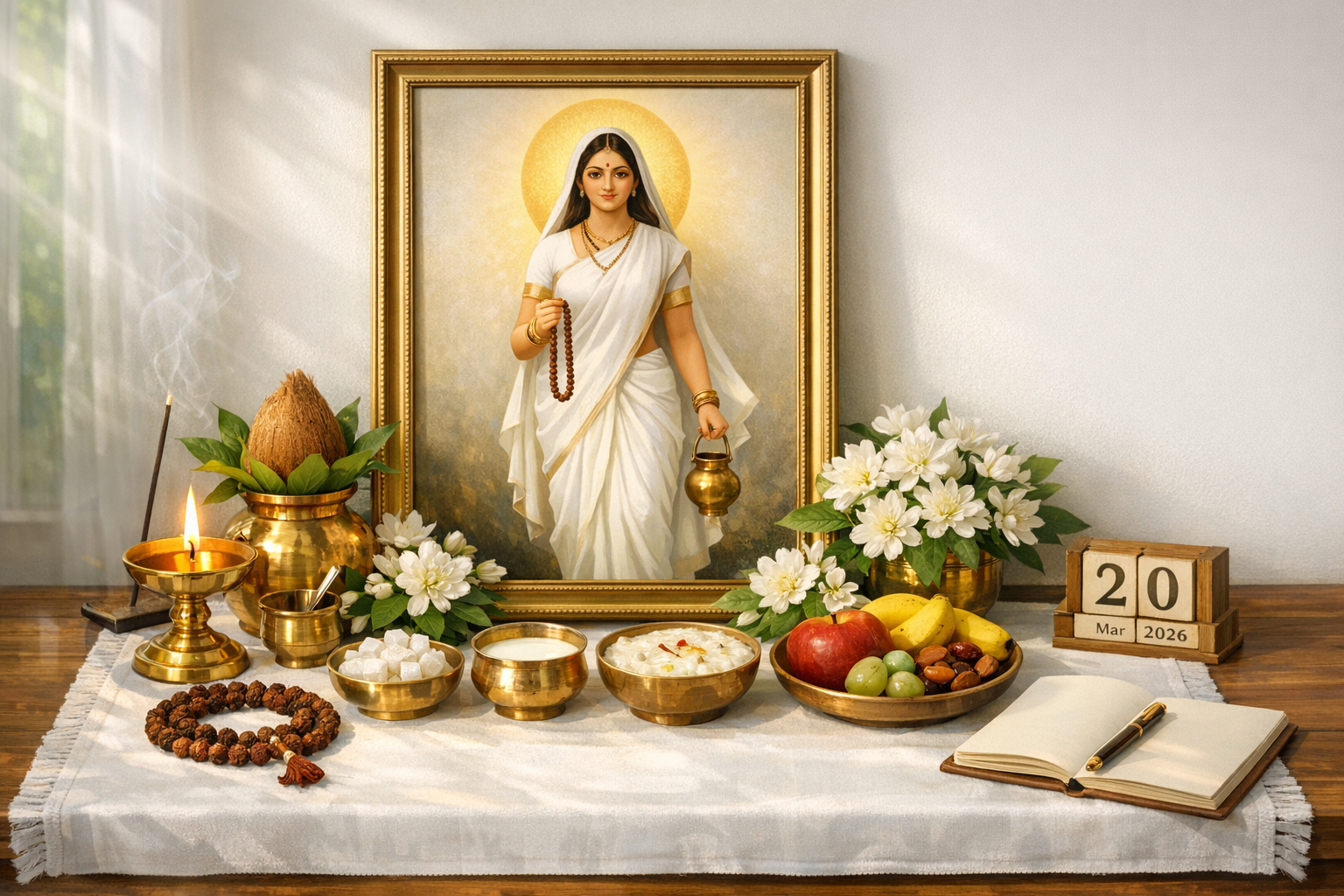
On 20 March 2026, the second day of Chaitra Navaratri (Shukla Dwitiya) focuses on the worship of Goddess Brahmacharini, the Navadurga form embodying tapas, steadfast devotion, and inner discipline. Thoughtful observance on this day refines attention and strengthens resolve across personal, professional, and spiritual life.
Shakta sources portray Brahmacharini as walking barefoot, clothed in white, holding a japa mala and a kamandalu. This iconography communicates the pedagogy of restraint and study, inviting practitioners to amplify simplicity, contemplative effort, and a sustained vow of self-improvement.
Panchang and muhurta guidance for 20 March 2026 should be derived locally because tithi transitions vary by place. Many almanacs list Shukla Dwitiya for much of India on this date; suitable windows traditionally include Brahma Muhurta before sunrise, Pratah kala after sunrise, Abhijit Muhurta near midday, and Sandhya for evening arati.
Color and fragrance cues help set intention. Communities often adopt white on Day 2 to signal purity; several regional lineages also prefer green to mark renewal. White flowers or locally available seasonal blossoms are appropriate, with an emphasis on eco-friendly, plastic-free decor.
1) Consecrate a serene altar at home. Place a clean cloth, an image or murti of Brahmacharini, a deepa, incense, water, and flowers. If a Navaratri kalasha was established on Day 1, continue worship in the same sacred space; otherwise, a simple panchapatra with water and a diya suffices. Face east if possible, and begin with a clear sankalpa stating date, location, and intent.
2) Perform Panchopachara or Shodashopachara Puja Vidhi. Invite the Devi (avahana), offer seat (asana), water (arghya and achamana), fragrance (gandha), flowers (pushpa), incense (dhupa), lamp (deepa), and naivedya. Conclude with tambula, karpura arati, and kshama prarthana, keeping all offerings sattvic and freshly prepared.
3) Practice mantra japa to stabilize attention. Core invocations on Day 2 include Om Devi Brahmacharinyai Namah and the universal Ya Devi Sarvabhuteshu Shakti Rupena Samsthita, Namastasyei Namastasyei Namastasyei Namo Namah. A count of 108 with a rudraksha or sphatik mala is customary; maintain steady breath and a gentle gaze at the flame.
4) Observe a mindful Navaratri fast. Common fasting patterns include phalahar or light satvik meals using samak rice, kuttu or singhare ka atta, sabudana, milk, nuts, and fruits. Hydration with water and herbal infusions is essential. Individuals with medical needs, elders, and pregnant or nursing persons may adopt a partial fast or a no-onion, no-garlic satvik diet in consultation with health guidance. The emphasis is tapas and temperance, not strain.
5) Offer bhog favored for Brahmacharini. Many traditions present sugar or mishri, milk, panchamrit, and simple milk-based kheer or sabudana kheer as naivedya, later shared as prasad. Avoid onion, garlic, and overly spicy or packaged items to preserve purity.
6) Practice dhyana on the Brahmacharini archetype. Visualize the Devi in white, holding a japa mala and kamandalu, radiating calm. A steady breathing pattern such as sama vritti or gentle anulom-vilom can precede meditation. The meditation verse often used is Dadhana karapadmabhyam akshamala kamandaluh, Devi prasidatu mayi Brahmachariny-anuttama, contemplated slowly for a few minutes.
7) Study and recitation support insight. Select passages from Devi Mahatmyam, Durga Saptashati stotras, or Navadurga hymns dedicated to Brahmacharini. Even a short daily reading with bhava sharpens comprehension of the tapas principle and connects household practice with the broader Shakta textual tradition.
8) Journal a tapas sankalpa. Write a single, realistic commitment for the nine-day festival, such as a reduction in distraction, a daily meditation window, or a service action. Noting start time, duration, and reflections each evening increases adherence and makes Navaratri an applied discipline rather than a symbolic one.
9) Offer dana and engage in seva. Traditional acts include annadanam, distribution of fruits, grains, or essentials, and support for students or elders. Such service harmonizes with the value of self-restraint across dharmic streams, resonating with ahimsa and dana in Jainism, maitri and mindfulness in Buddhism, and seva in Sikh tradition, thereby strengthening inter-dharmic unity.
10) Join inclusive satsang, bhajan, or community garba. Collective singing of Devi stotras, soft kirtan, or locally organized garba fosters social cohesion, especially when spaces are welcoming, eco-conscious, and mindful of neighbors. Families often report that even brief evening bhajans elevate mood and sustain the festival ambience through the week.
Simple home sequence for Brahmacharini Puja Vidhi. After cleaning the space and oneself, light the lamp, perform achamana, recite a brief Ganapati and Guru invocation if customary, then avahana of Brahmacharini, Panchopachara offerings, mantra japa, dhyana, stotra recitation, arati, and distribution of prasad. Close with shanti mantras and gratitude.
Panchang precision for 20 March 2026. While this date is widely observed as Day 2 of Chaitra Navaratri, verify Shukla Dwitiya start and end times for the specific city using a reliable Panchang. When tithi touches two civil dates, preference typically goes to the sunrise-bound day carrying Dwitiya for daytime puja.
Material and food ethics. Favor reusable brass or copper utensils for puja, natural cotton wicks, and ghee or sesame oil for the deepa. Choose seasonal, local ingredients, and compost flower waste. These practices align ritual purity with environmental responsibility.
Color of the day and attire cues. White is widely associated with Brahmacharini, signifying simplicity and purity; some communities also adopt green to represent growth. Either is appropriate when coupled with a calm, study-focused demeanor.
Health, safety, and accessibility. Adopt fasting and sitting postures appropriate to age and health; short, focused sessions often yield more stability than lengthy discomfort. Children can participate by offering flowers, learning a simple mantra, and helping serve prasad, turning Navaratri into shared learning.
Emotional resonance and practical outcomes. Devotees frequently observe improved concentration, steadier emotions, and greater patience during Brahmacharini day practices. The blend of mantra, meditation, and restrained diet functions as a calibrated reset that can carry into the remaining seven days of Navaratri.
Why the Brahmacharini archetype matters today. In a world saturated with stimuli, this form of Shakti instructs in deliberate attention and ethical restraint. Such qualities are as relevant to study and work as they are to spiritual cultivation, making Day 2 a cornerstone of the nine-day progression.
Closing reflection. Observing 20 March 2026 as the second day of Navaratri with informed puja vidhi, mantra japa, mindful fasting, dana, and inclusive community practices honors Brahmacharini while nurturing unity across the dharmic family. The essence is steady devotion expressed through small, consistent acts.
Inspired by this post on Hindu Pad.