Kanya Puja, also known as Kumari Pooja or Kanjak Pooja, is a central rite of Navratri Durga Puja that venerates prepubescent girls as living embodiments of Devi. In 2026, the primary observance is on October 18, coinciding with Durgashtami in many regions, while several traditions perform it on Mahanavami, October 19. During Chaitra Navaratri in 2026, Kanya Puja is observed on Thursday, March 26.
These dates are determined by the Hindu lunisolar calendar and the Ashtami–Navami tithis that define the climactic days of Navaratri. Households and temples typically align Kanya Puja either with Durgashtami when Ashtami predominates, or with Mahanavami when regional parampara prescribes that day. For practical planning, families follow their local panchang and temple advisories, ensuring the ritual is performed during an auspicious daytime window.
Traditional guidance places emphasis on daytime worship for Kanya Puja, particularly during the mid-day to late-afternoon period associated with the Aparahna segment, when ritual energy is considered sattvic and stable. In eastern Shakta practice, related observances such as Sandhi Puja focus on the liminal junction of Ashtami and Navami; Kanya Puja, however, is often conducted earlier in the day to enable extended hospitality to the children and to complete annadanam with care.
The theological foundation of Kanya Puja rests in the Shakta understanding that the Divine Feminine pervades all beings and manifests in distinct forms as the Nava Durga across the nine nights. Honoring a child as Devi is not symbolic alone; it is a lived recognition of Shakti dwelling in innocence, compassion, and unconditioned presence. This insight harmonizes with the broader Navaratri liturgy, in which Shailaputri, Brahmacharini, Chandraghanta, Kushmanda, Skandamata, Katyayani, Kalaratri, Mahagauri, and Siddhidatri are invoked progressively.
Scriptural and ritual literature in the Shakta tradition, including the Devi Mahatmya and allied Purana and Tantra sources, uphold the worship of the kumari as an efficacious sadhana that yields punya and cultivates humility, reverence, and seva. Many acharyas emphasize that Kanya Puja completes Navratri by translating the metaphysics of Shakti into tangible ethics: feeding, honoring, and protecting children with dignity.
Beyond theology, Kanya Puja reinforces community bonds by centering compassion, hospitality, and gratitude. Devotees frequently describe the atmosphere as quietly transformative—the moment a child smiles on receiving prasad, the gentle stillness during aarti, and the feeling of grace when blessings are sought from the young guests—all of which embody the lived ethos of Navaratri.
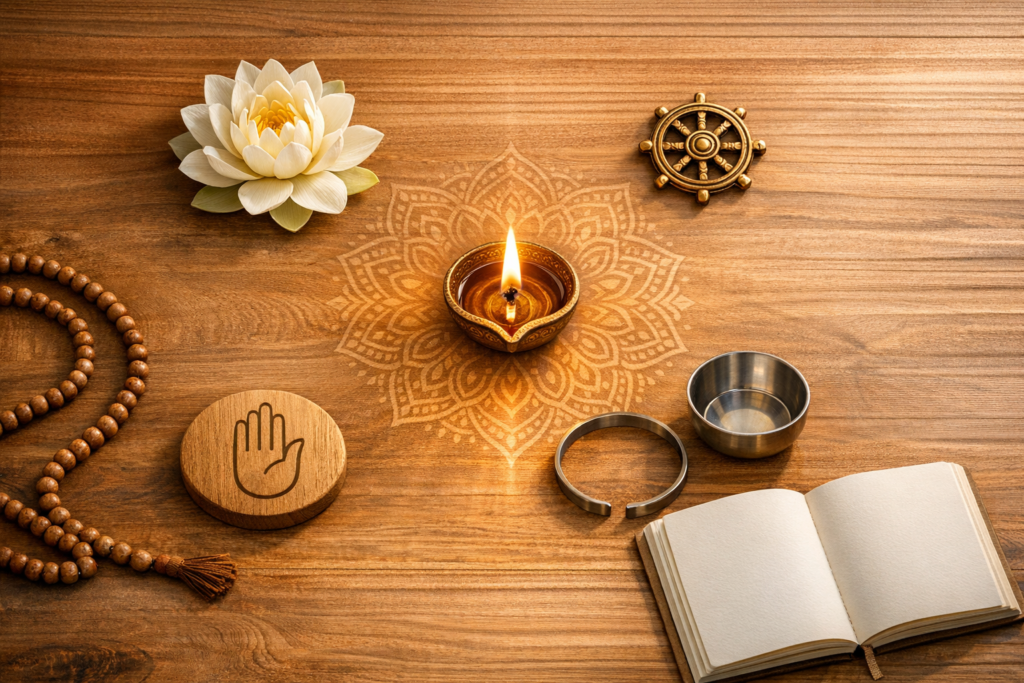
While Kanya Puja is specific to Navratri Durga Puja in Hindu practice, its ethical core resonates across the dharmic family. Buddhism venerates the wisdom principle through figures like Prajnaparamita and Tara; Jainism elevates ahimsa and dana as daily vows; Sikh tradition institutionalizes seva and shared meals through langar. Although liturgical forms differ, the shared commitment to honoring dignity, nurturing children, and practicing generosity unifies dharmic traditions at a values level.
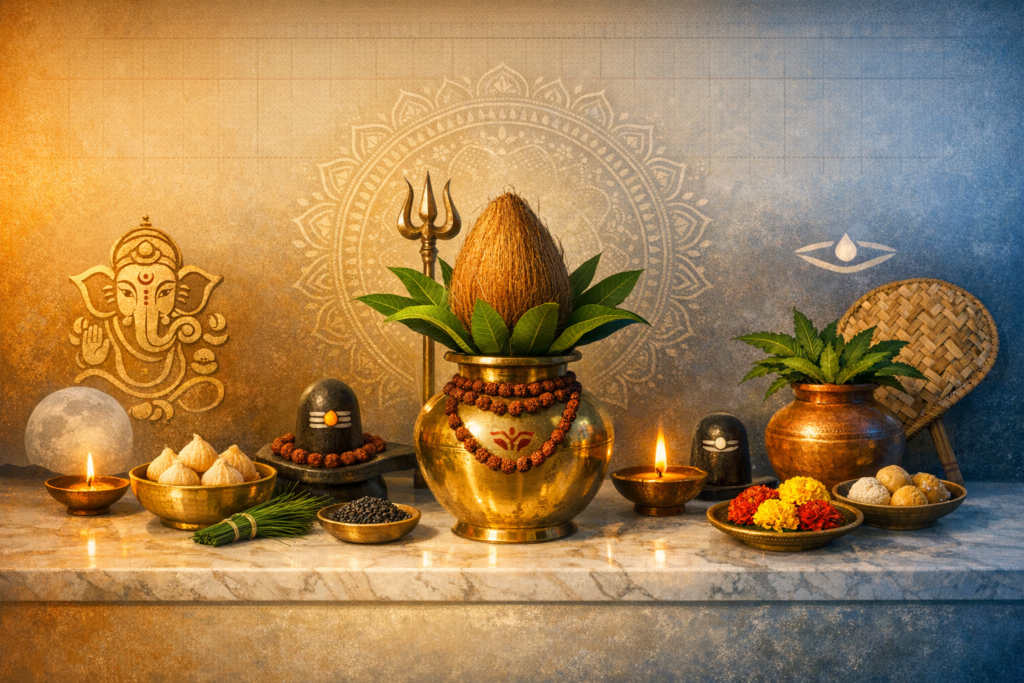
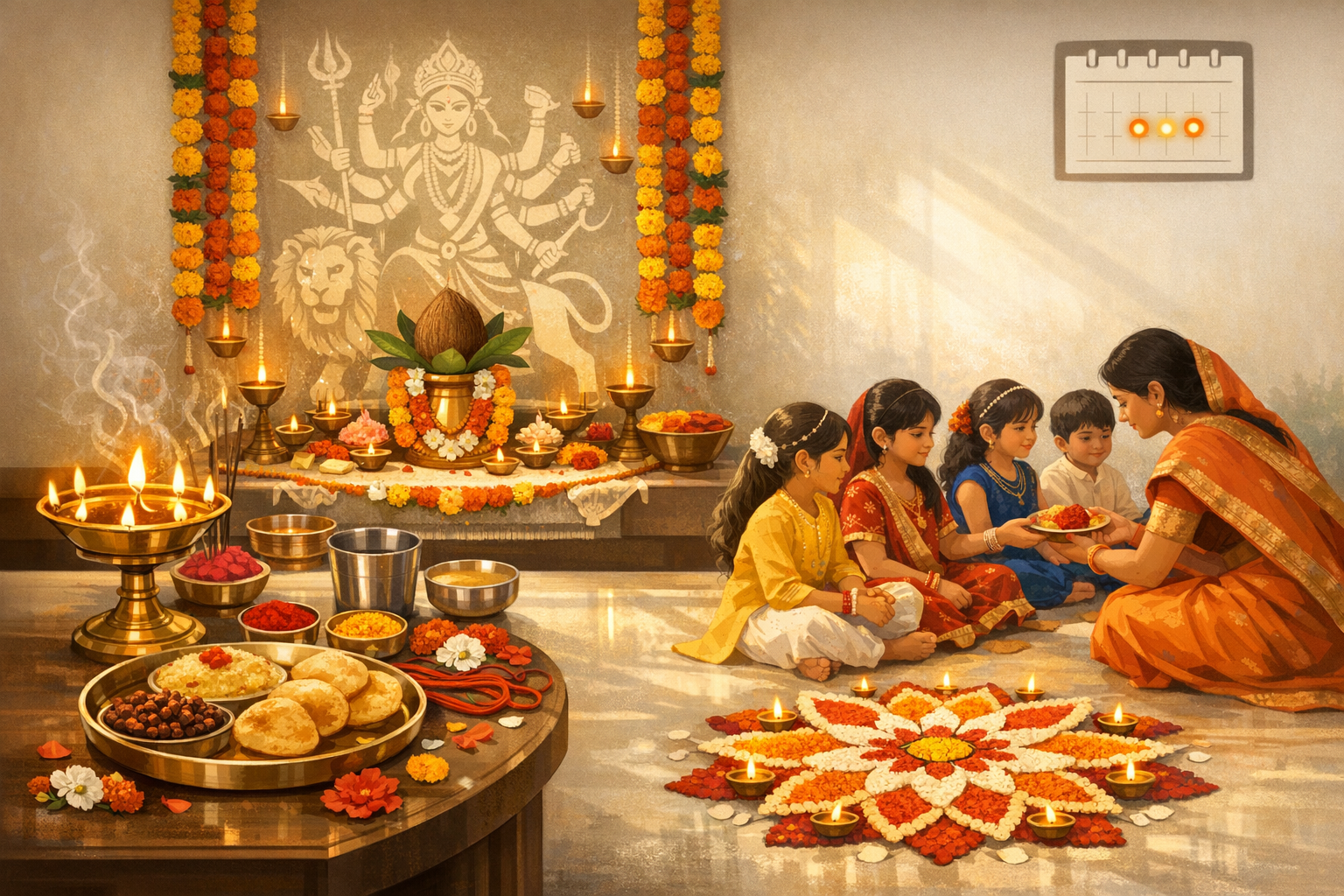
Preparation for Kumari Pooja begins with a clean, serene space, a dedicated altar for Devi, and simple sattvic offerings. Households arrange flowers, water, lamps, incense, and prasad, often including the North Indian halwa, puri, and kala chana combination that has become synonymous with Kanjak Pooja. The ambience is best kept calm and welcoming so the children feel safe and celebrated.
Families invite one, five, seven, or nine girls based on feasibility and local custom; some include a prepubescent boy as Bhairav to complement the Shakti principle with protective energy. While nine kanya are ideal in several regions, tradition clearly teaches that sincerity outweighs numbers; even one child, honored with love, fulfills the spiritual intention.
The core rite typically includes welcoming the children, gently washing or symbolically cleansing their feet (pada prakshalana), anointing the forehead with kumkum and haldi, tying a protective red thread on the wrist, and offering flowers. This sequence is accompanied by quiet recitation and contemplation to keep attention anchored in the presence of Devi.
Mantra recitation varies by parampara. Many households chant hymns such as the Devi Suktam, Durga Suktam, or selected chapters from the Durga Saptashati during or prior to the puja. Where a complete patha is not possible, even a brief meditation on Ya Devi Sarvabhuteshu or a collective recitation of simple stotras sustains the devotional focus.
Following the worship, prasad is offered with warmth and patience, ensuring the children are comfortable and unhurried as they eat. Gifts may include fruit, sweets, notebooks, crayons, clothing items, or practical accessories for school, always given respectfully and without ostentation.
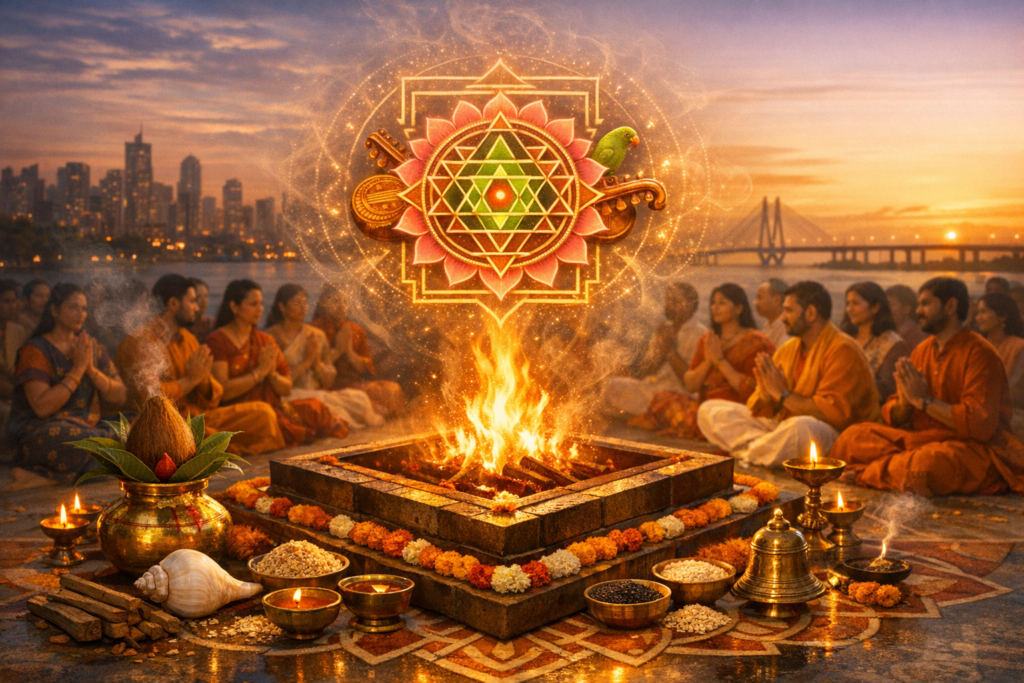
The puja generally concludes with aarti and a gesture of reverence to the children, seeking blessings as embodiments of Devi. Practitioners often note a palpable shift in household energy after the aarti, describing a sense of clearing and uplift that aptly mirrors the victory-of-dharma theme of Navratri.
Regional expressions of Kanya Puja display rich diversity. Across North India—especially in Delhi, Punjab, Haryana, Uttar Pradesh, and Himachal—Kanjak Pooja centers around feeding the girls halwa, puri, and chana, followed by small gifts and dakshina. The practice is community-facing and emphasizes hospitality throughout the day.
In Bengal and parts of the East, Kumari Puja is a revered element within Durga Puja, often aligned with Mahashtami in temple settings. Cities and mathas may follow detailed protocols rooted in Shakta Tantra, and some observances intersect with the Sandhi Puja moment between Ashtami and Navami, while the Kanya Puja-specific annadanam may be completed during the daytime.
In southern states, Navaratri is marked by bommai golu or Bommala Koluvu displays, and households honor Devi through alankara, music, and daily archana. Many families invite suhasinis and young girls for tambulam and Kanya Puja or Kannika Poojai, reflecting the same principle of revering the feminine and sharing annadanam in a regionally distinctive style.
Age guidelines and the number of children vary by lineage. Some traditions specify honoring girls in the 2–10 age range, occasionally assigning divine appellations to each age, while others focus simply on prepubescent status to preserve the symbolism of innocence. The essential principle remains constancy of respect, comfort, and care.
Ethical considerations are paramount. Consent, comfort, and safeguarding must guide every step, with parents or guardians informed and present wherever possible. Photography, if any, should be discreet and never intrusive; the dignity of the children takes precedence over documentation.
Hygiene and dietary care reinforce the sattvic spirit of Kanya Puja. Freshly prepared food, clean utensils, filtered drinking water, and allergen awareness ensure that the act of feeding truly expresses compassion. Households commonly avoid onion and garlic during Navaratri, maintaining a simple, wholesome menu.
Sustainable choices are increasingly embraced: reusable plates and cups, local flowers, plastic-free packaging for gifts, and measured quantities to prevent waste. Such practices align with dharmic stewardship of resources and elevate the ritual’s ethical impact.
Where inviting children at home is impractical, families may partner with community institutions to support Kanya Puja or contribute to annadanam initiatives. The devotional core—honoring Devi by honoring children—can also be expressed through service at schools, orphanages, or local kitchens, in harmony with the ethos of seva and dana.
Regarding timing on the two principal days, households typically select Ashtami (October 18, 2026) if that accords with family parampara or local temple guidance, especially when Ashtami is prominent during the day. Others follow Mahanavami (October 19, 2026), particularly in regions where the ninth day is reserved for concluding worship and collective feeding.
During Chaitra Navaratri, Kanya Puja on March 26, 2026, carries the same devotional essence as in the Ashwin Month cycle. Although the seasonal ambience differs, the theological meaning and ritual structure remain consistent, reaffirming the living presence of Shakti at the onset of the Hindu lunar year in many regional calendars.
For families balancing work and school schedules, a concise yet heartfelt Kanya Puja is perfectly in keeping with tradition. A calm welcome, brief mantra recitation, respectful worship, and unhurried prasad can be completed without rush, preserving the sanctity of the rite and the comfort of the children.
Ultimately, Kanya Puja 2026 serves as a contemplative bridge between metaphysical insight and daily conduct. By recognizing Shakti in every child, devotees reinforce a culture of care that resonates well beyond Navaratri—an ethic equally cherished across Hinduism, Buddhism, Jainism, and Sikhism in their shared commitment to compassion, dignity, and seva.
Inspired by this post on Hindu Pad.