
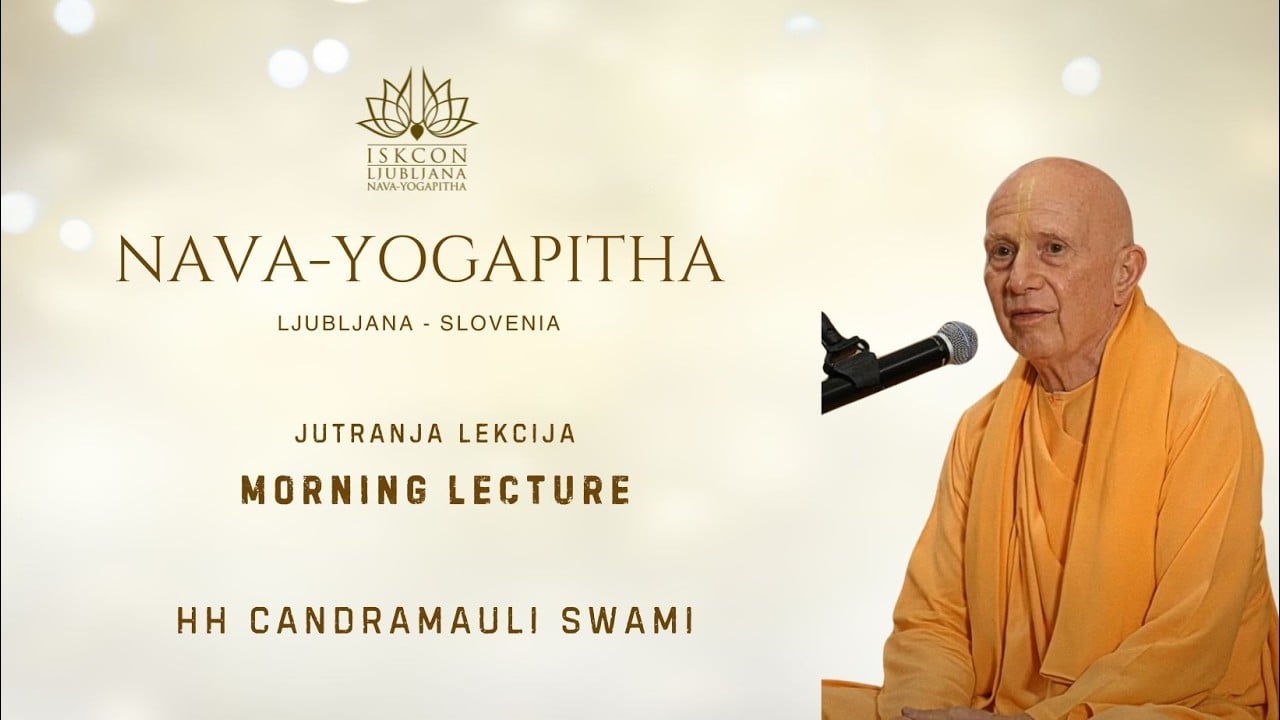
Sri Gaura Purnima, the full-moon celebration of the appearance of Sri Chaitanya Mahaprabhu (Gauranga), is honored across the world as a day that renews the ethos of compassion, devotion, and spiritual unity. In 2026, ISKCON Ljubljana’s live observance highlights the inclusive power of nama‑sankirtanacongregational chanting of the holy namescentral to the Gaudiya Vaishnava tradition and cherished by diverse dharmic communities for its capacity to cultivate inner clarity and shared purpose.
Gaudiya Vaishnava scriptures describe Sri Chaitanya Mahaprabhu as Sri Krishna appearing in a golden hue to inaugurate the yuga‑dharma of nama‑sankirtana. This understanding is rooted in canonical texts and theological commentaries that draw on Srimad‑Bhagavatam (notably 11.5.32) and the biographies and teachings preserved in Sri Caitanya‑caritamrta and Sri Caitanya‑bhagavata. In this framework, Sri Chaitanya’s mission exemplifies an accessible pathway of bhakti‑yogadevotion grounded in the chanting of God’s names, humility, and service (seva).
Gaura‑lila, the “golden pastimes” of Sri Chaitanya, unfolds as a narrative of transformative love. From early years as Nimai of Navadviparenowned for both scholarship and playful brillianceto the profound devotional awakening following initiation by Sri Isvara Puri, the life of Sri Chaitanya demonstrates how sacred sound reshapes personal and social consciousness. Episodes such as nocturnal kirtans in Srivasa Angan and the reconciliation with the local magistrate (Chand Kazi) model principled nonviolence and community harmony.
The theological core articulated through Sri Chaitanya’s teachings is acintya‑bhedabheda‑tattva“inconceivable, simultaneous oneness and difference” between the Divine, the individual self, and the world. This nuanced synthesis affirms intimacy with the Divine without dissolving personal identity, providing a robust philosophical basis for devotion that avoids both reductive monism and rigid dualism. Gaura‑lila is thus a living hermeneutic of grace: a revelation of Radha‑bhavathe compassionate, all‑giving mood of divine loveextended universally.
Sri Chaitanya’s mission unfolds with the Pancha TattvaSri Chaitanya Mahaprabhu, Sri Nityananda Prabhu, Sri Advaita Acharya, Sri Gadadhara Pandita, and Sri Srivasa Thakurawho personify the theology of dynamic divine energies cooperating to distribute prema‑bhakti. Devotees often begin kirtan with the invocation Sri Krishna Chaitanya Prabhu Nityananda Sri Advaita Gadadhara Srivasadi Gaura-bhakta-vrinda, honoring this compassionate dispensation before chanting the maha‑mantra.
Nama‑sankirtana operates both as contemplative practice (japa) and as communal worship (kirtan). The maha‑mantra Hare Krishna Hare Krishna Krishna Krishna Hare Hare Hare Rama Hare Rama Rama Rama Hare Hare is central, with phonetic cadence, breath, and intention aligned to engage attention, regulate the nervous system, and open the heart. Practitioners consistently report that rhythmic call‑and‑response kirtan, guided by mridanga and kartal, supports steady focus, emotional resilience, and a felt sense of belonging.
Gaura Purnima observances in ISKCON communitiesincluding Ljubljanatypically include fasting until moonrise, abhisheka (ceremonial bathing) of Gaura‑Nitai Deities, extended kirtan, readings from Sri Caitanya‑caritamrta (Adi‑lila, especially the chapter on the Lord’s Advent), and distribution of sanctified vegetarian prasada. Live participation and broadcast allow both local and global communities to chant in unison, embodying the festival’s spirit of inclusion and shared joy.
Teachings shared in connection with Gaura Purnima by senior Gaudiya Vaishnava teachers, including reflections inspired by HH Candramauli Swami, emphasize three interlocking practices: sadhana (steady personal discipline, especially attentive japa), sadhu‑sanga (keeping the company of spiritually focused communities), and seva (selfless service). Together they anchor the ecstatic experience of kirtan in a stable ethic of compassion, responsibility, and day‑to‑day spiritual growth.
Gaura‑lila also contains pivotal theological dialogues that continue to shape contemporary bhakti thought. Ramananda‑samvada illuminates the ascending stages of devotion and the primacy of divine love; Rupa‑siksa and Sanatana‑siksa present a comprehensive map of devotional practice and identity; and the Ratha‑yatra pastimes in Puri reveal profound dimensions of separation and union in devotion. These narratives, studied with care, offer advanced students of Gaudiya Vaishnavism a rigorous framework for both scholarship and contemplative practice.
In keeping with the blog’s objective of unity among dharmic traditions, it is noteworthy that nama‑sankirtana’s emphasis on sacred sound and remembrance of the Divine resonates broadly. Sikh sabad‑kirtan and Naam Simran, Buddhist paritta chanting and mindfulness of breath, and Jain samayik as disciplined remembrance all highlight convergent valuesnonviolence, compassion, truthful living, and self‑purification. Honoring these shared principles fosters mutual respect while allowing each tradition to maintain doctrinal integrity.
Contemporary research increasingly observes that group chanting and coordinated singing can modulate autonomic function, elevate mood, and strengthen social bondsfindings that mirror long‑standing insights preserved in dharmic practice. Participants in Gaura Purnima events frequently describe a gentle quieting of mental agitation, a widening of empathy, and renewed commitment to ethical livingoutcomes valued across Hinduism, Buddhism, Jainism, and Sikhism.
For those preparing for Gaura Purnima 2026, accessible steps include setting aside time for the maha‑mantra, studying selected passages from Sri Caitanya‑caritamrta, reflecting on acintya‑bhedabheda‑tattva, and engaging in community service. Simple offeringscandles, flowers, water, and heartfelt kirtancreate a devotional atmosphere at home and in temples alike, ensuring that the celebration welcomes both seasoned practitioners and newcomers.
ISKCON Ljubljana’s live gathering exemplifies how diaspora communities nurture cultural continuity while inviting broader society to experience the aesthetics of devotionmusic, sacred dance, and shared mealswithout coercion or exclusivism. Such events affirm that spiritual festivals can be simultaneously rooted in Vedic tradition and hospitable to pluralistic participation.
As Gaura Purnima 2026 approaches, the message of Sri Chaitanya Mahaprabhu remains clear and practical: cultivate humility, chant with attention, serve with kindness, and honor all sincere seekers. In doing so, Gaura‑lila becomes not only a remembrance of the golden pastimes but a living practice of unity in spiritual diversitya shared celebration that strengthens bonds across dharmic traditions and renews the timeless promise of love and tolerance.
Inspired by this post on Dandavats.
