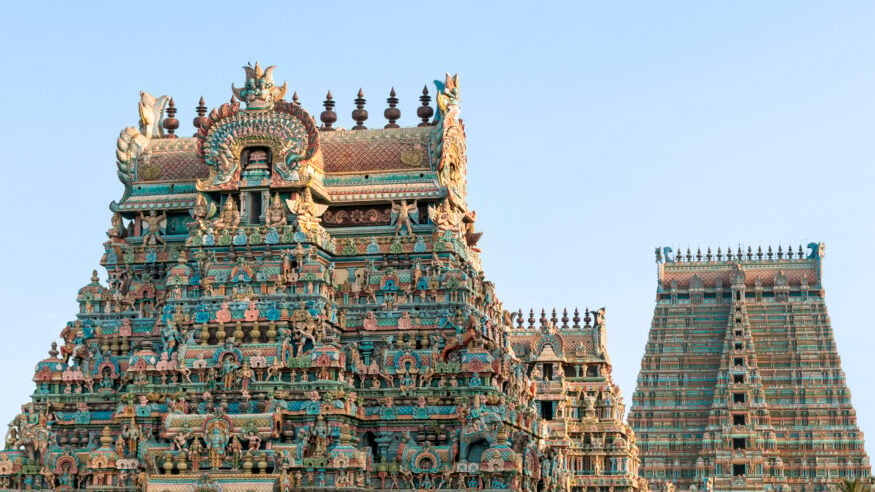
In the sacred geography of Varanasirevered as Kashi in Uttar Pradeshthe Tilbhandeshwar Mahadev Temple stands as a distinctive node in a dense constellation of Shiva shrines. Celebrated locally as a living, ever-evolving presence of Mahadev, it is widely known for a singular tradition: the Shivalinga is said to increase in size each year by the measure of a til, or sesame seed. This belief, held with quiet certainty in the lanes and courtyards of Kashi, renders the temple an instructive locus where devotion, memory, and material processes meet.
The phrase “grows by a til” carries both literal and metaphorical resonance. Literally, the measure is smallsesame seeds are only a few millimeters in lengthyet the passage of years and generations converts such minute increments into a powerful communal observation. Metaphorically, the tradition frames spiritual progress as cumulative and steady; what is barely perceptible today becomes undeniable across time. For pilgrims and residents alike, Tilbhandeshwar Mahadev offers a contemplative lesson on dharma: transformation occurs imperceptibly but persistently, provided practice and reverence continue.
Etymologically, the name Tilbhandeshwar is often read through the components til (sesame) and a root suggesting store, measure, or abundance, with Mahadev denoting Shiva as the Great Lord. While philological unanimity is elusive, local usage coherently ties the name to sesame, the very unit by which the Shivalinga’s increase is remembered. This conjunction between name and narrative anchors the temple’s identity in Kashi’s oral tradition and ritual economy.
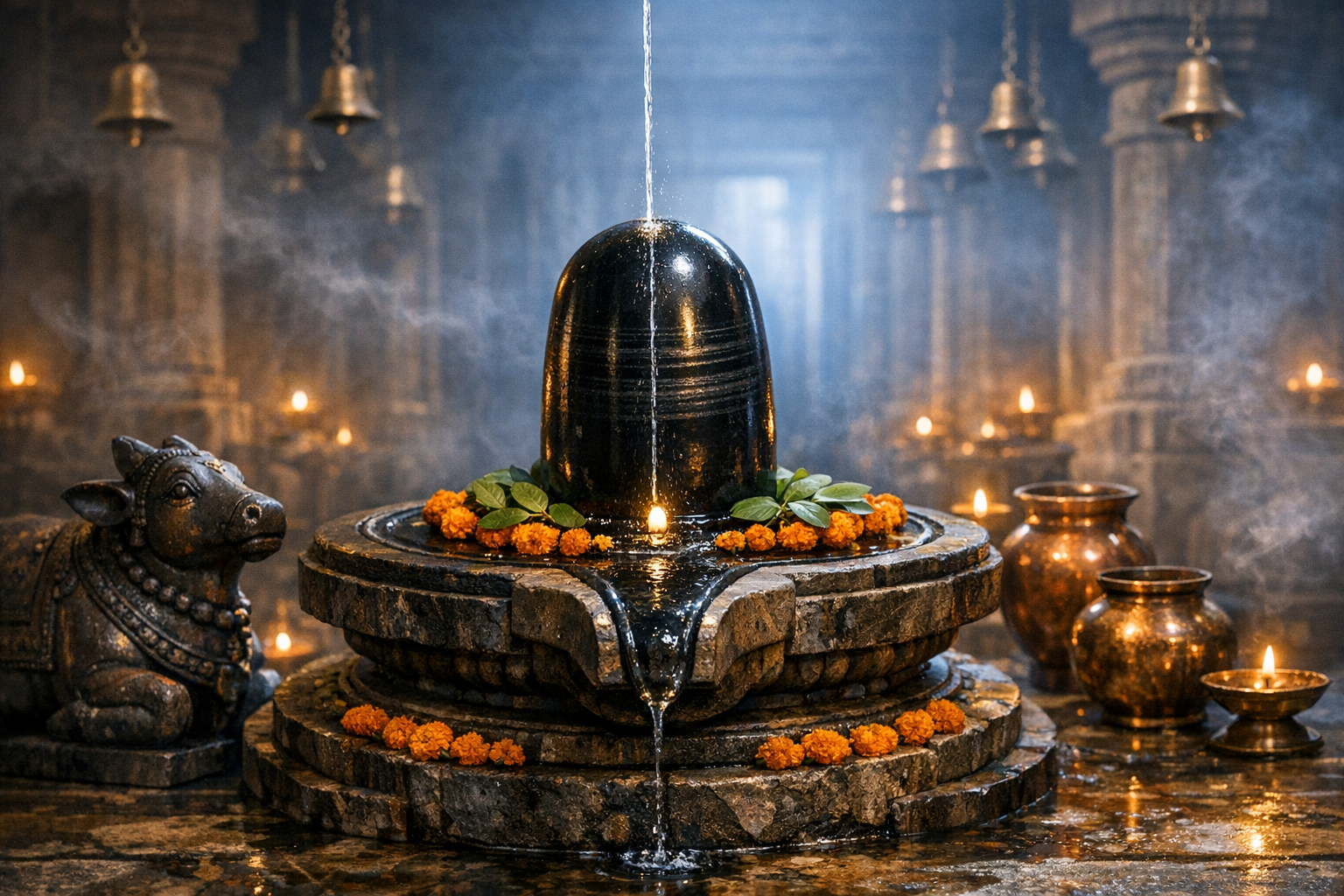
The temple typology is consonant with north Indian, Kashi-specific idioms: a compact garbhagriha housing the Shivalinga, a modest mandapa receptive to the rhythms of Shivalinga Puja, and the ever-watchful presence of Nandi. Soundscapes of bells and mantras, the fragrance of sandal, dhoop, and bilva patra, and the circumambulating movement of devotees knit together an atmosphere characteristic of Varanasi’s temples. The sacred grammar heredarshan, abhishekam, and pradakshinafollows familiar patterns yet acquires a distinctive accent through the temple’s growth tradition.
Historical references to Tilbhandeshwar Mahadev in textual corpora are not definitive in the way epigraphy or formal inscriptions might be. The Kashi Khanda of the Skanda Purana catalogues many Kashi tirthas and lingas; local pandits often situate Tilbhandeshwar within that broadly mapped sacred field. Architectural features suggest phases of renovation and continuity rather than a single-age construction, a common reality in Varanasi where ritual use, floods, urban change, and patronage cycles leave layered signatures on temples.
How might the Shivalinga’s perceived growth be understood in material terms? From a technical standpoint, three interacting factors are frequently cited by observers: mineral accretion due to abhishekam (especially where water carries dissolved calcium carbonate or other minerals), micro-deposition from ritual substances over decades, and relative perception shifts created by floor settling, plinth adjustments, or periodic re-rendering of the sanctum walls. In combination, these can produce subtle yet cumulative changes in the visible profile of a linga. While a peer-reviewed, instrumented metrological study specific to this shrine has not been publicly reported, the material plausibility of minute annual change aligns with known processes in similar ritual environments.
Community memory serves as the temple’s chronometer. Priests and long-time devotees recall faint mineral rings, smoothened contours, or comparative marks that were once lower or thinner. Such memory-workquietly transmitted and periodically reaffirmed during festivalsfunctions as an intergenerational archive. Because a til is so small, annual increments resist casual detection; however, the collective testimony of decades gives the claim its cogency among those who participate in the temple’s daily and seasonal life.
Ritual life at Tilbhandeshwar Mahadev follows the broader rhythm of Shiva worship in Kashi. Mondays (Somvar), Pradosh, and the month of Shravan draw notable crowds, while Maha Shivaratri concentrates the highest fervor. Rudrabhishek, the offering of bilva leaves, and the steady cadence of japa shape a temple ecology that is both intimate and continuous. The result is a “living laboratory” of devotion where sound, scent, and touch reinforce the sacred’s presence in the simplest, most elemental ways.
Visitors frequently report a distinctive experiential arc. On early visits, the shrine may appear like many others: a compact sanctum with a venerable linga. Over years, the ritual patina deepens, and a priest’s fingertip might trace a faint ring or a once-subtle contour, eliciting a moment of recognitionless a dramatic revelation than a measured understanding that sacred things change through care and time. That realization becomes a mirror for personal practice: what steady sadhana adds in spirit, abhishekam layers onto stone.
Dharmic unity is naturally expressed in this space. While Tilbhandeshwar Mahadev is a Śaiva shrine, seekers from Hinduism, Buddhism, Jainism, and Sikhism regularly traverse Kashi’s sacred neighborhoods as co-pilgrims. Shared valuesdhyana (attentiveness), tapas (discipline), ahimsa (restraint), and seva (service)are affirmed across traditions. The temple’s motif of incremental growth offers a non-sectarian metaphor: inner transformation accrues through consistent, compassionate action, a principle honored by all dharmic lineages.
The sesame seed itself bears layered significance in South Asian ritual cultures. In Hindu rites, til features in shraddha, tarpana, homa, and daily offerings as a symbol of purity, nourishment, and continuity. Related usages appear across the broader dharmic field, where simple, sattvic substances anchor ethical and contemplative life. That a Shivalinga is remembered to “grow by a til” each year elegantly draws together cosmology and kitchen, yajna and everyday sustenance.
Architecturally, the Shivalinga’s emplacement follows canonical logic: the jaladhara channels the abhishekam, Nandi aligns devotional gaze, and the sanctum’s axiality grounds verticality (shikhara) in the earth-bound sanctity of the garbhagriha. In Kashi, such alignments are less about strict geometry than about lived continuitypathways, thresholds, and sightlines that have carried footsteps and mantras across centuries. The temple’s scale promotes intimacy: darshan occurs at human distance, and the tactile reality of stone, water, and leaf invites contemplative attention.
Conservation choices at active temples balance devotion with material care. Continuous abhishekam, if unmanaged, can leave mineral crusts or promote moisture ingress in adjacent masonry; conversely, overly aggressive cleaning can erase the very patina that encodes history. At Tilbhandeshwar Mahadev, the desired path is a middle one: respectful ritual continuity supported by basic conservation hygienegentle cleaning, careful drainage, and periodic structural assessmentsto preserve both sanctity and fabric.
Within the larger Kashi pilgrimage, Tilbhandeshwar Mahadev complements the gravitational centers of Vishwanath, Annapurna, and Kaal Bhairav. Its particular gift is scale: a smaller shrine with a distinctive claim, encouraging pilgrims to pause, listen, and learn how the sacred speaks in increments. In this sense, Tilbhandeshwar functions as a pedagogy of attention within a city that already teems with sacred intensity.
For those planning darshan, the most contemplative hours are typically at dawn or in the quieter interludes between the main aarti times. Observing temple etiquetteremoving footwear, maintaining an unhurried queue, minimizing photography within the sanctum, and making space for eldershelps sustain the shared atmosphere. Offerings of water, bilva patra, and a restrained Rudrabhishek align with local practice; those observing Somvar or Pradosh fasts often integrate their vrata with a visit here.
From an interpretive perspective, the “ever-growing” Shivalinga can be read in three useful ways. Devotionally, it testifies to Mahadev’s dynamic presence in Kashi. Culturally, it illustrates how communities remember, mark, and transmit sacred knowledge through steady practice rather than spectacle. Materially, it demonstrates that ritual environments are living systems in which stone, water, and human intention co-create form over time. These readings are not mutually exclusive; together, they offer a comprehensive account of why Tilbhandeshwar remains compelling.
In the end, the temple’s promise is contained in its quietest image: a linga that appears to change by the smallest of measures, year after year. In that image, pilgrims recognize a map for their own journey. A single til of practice, a single til of patience, a single til of compassionaccumulated across seasonsshapes a life as surely as abhishekam shapes stone. In Kashi, where the river bends and bells carry across fog, Tilbhandeshwar Mahadev continues to teach that time, devotion, and care will always, inevitably, leave their mark.
Inspired by this post on Hindu Blog.