
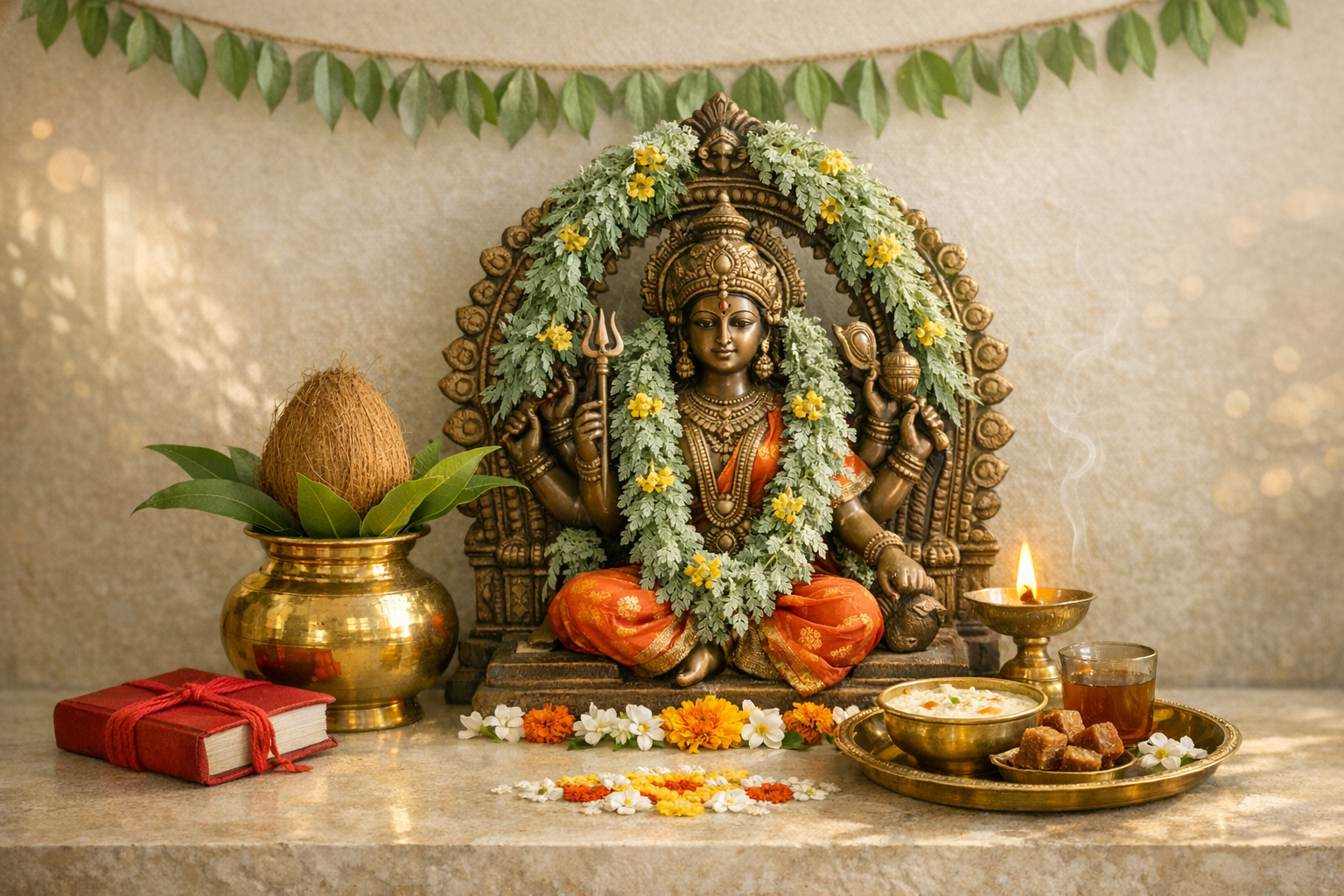
Devi Damanotsav, also known as Durga Damanaropanam, is a spring observance during Vasant Navratri dedicated to honoring the Goddess with fragrant damana (dhavanam) leaves. Celebrated on Durga Navamithe ninth lunar day (Shukla Paksha Navami) of Chaitrathis ritual marks the ceremonial conclusion of Navratri Durga Puja for many communities. In 2026, Devi Damanotsav is observed on March 27, coinciding with the auspicious culmination of Chaitra Navratri.
The festival’s name encapsulates both action and intent: Damanotsav indicates a festivity centered on damana, while Damanaropanam (aropaṇa) denotes the act of adorning the Goddess with these sacred leaves. Across regions, damana is often identified with dhavanam, a fragrant herb associated with purity, auspiciousness, and seasonal balance. This adornment weaves botanical symbolism into Shakta devotion, aesthetically and ritually uniting form, fragrance, and faith.
Calendrically, Devi Damanotsav is anchored to Chaitra Shukla Navami. India follows two principal reckonings of monthsAmanta (month ending on Amavasya) prevalent in much of southern and western India, and Purnimanta (month ending on Purnima) common in the north. Despite this divergence, the tithi-based observance remains consistent. Depending on locality, Durga Navami may also fall close to or alongside Sri Rama Navami observances, reinforcing the spring cycle’s emphasis on dharma, renewal, and the triumph of clarity over inertia.
The damana or dhavanam customarily used in Damanaropanam is commonly identified in many traditions with Artemisia pallens (davanam). Aromatic, gently bitter-sweet, and widely referenced in regional nighantus (traditional materia medica), this herb is prized for its cooling, cleansing, and insect-repellent propertiesqualities highly valued in vasanta (spring) when households and temples reorient rhythms and spaces toward freshness and balance. Regional vocabularies and local botany sometimes apply the word damana to allied fragrant species; accordingly, practitioners defer to their temple’s agamic guidance or regional usage when sourcing the leaves.
Symbolically, adorning Durga with damana leaves during Vasant Navratri expresses a harmonizing of śakti with the season’s sattvika resurgence. The herb’s refreshing scent, durability in garlands, and gentle tonality evoke auspiciousness (mangalya) and the reassertion of inner equilibrium after the winter months. In Shakta understanding, Navadurga worship through the nine days moves the devotee from resolve to refinement; Damanaropanam on Navami becomes a graceful seal on this journey, integrating fragrance, form, and mantra into a single offering of reverence.
In temples, the liturgy typically aligns to Shodashopachara Puja or a fuller Agamic sequence. After the preliminary purification (achamana and prokshana), the murti or utsava-vigraha is bathed (abhisheka) and beautified (alankara). Damana leaves are then gently placed as garlands or clustered adornments upon the crown, shoulders, or the prabhavali, often alongside seasonal flowers such as amra (mango) blossoms where customary. Archakas perform mantra-pushpanjali, followed by Devi Mahatmyam (Durga Saptashati) recitation, naivedya, deepa-aradhana, and a concluding aarti, with devotees receiving damana prasada as a fragrant token of grace.
Many communities add supplementary rites such as Suvasini Puja, Kumari Puja, and collective parayana of selected chapters from Devi Mahatmyam to focus the mind on Devi’s daya (compassion) and kshatra (protective strength). Where a Navratri homa is maintained across the nine days, Navami often features a purnahuti, bringing the sankalpa to completion. In some regions, devotees prepare seasonal naivedya such as light payasam, jaggery-based offerings, or simple panakam, emphasizing simplicity and the cooling, sattvika ethos of spring.
Household observance follows a concise but meaningful sequence. Devotees establish a kalasha or maintain the Navratri ghata, make a clear sankalpa for Navami, and perform alankara to the home shrine’s Durga image or murti. Where available, fresh damana sprigs are offered as a small mala or placed near the kalasha; a short archana with Devi mantras and a brief reading from Devi Mahatmyam or Lalita Sahasranama reinforces the devotional intent. Offerings are shared with family and neighbors, and many households mark the day with annadana or small gifts to girls and elderly women, honoring the living presence of Shakti (Devi-bhava) in society.
Muhurta selection for Durga Damanaropanam generally follows the Navami tithi with preference for auspicious midday or afternoon windows (Aparahna), though local temple schedules and regional traditions may specify particular timings. Because tithi spans differ by longitude and sunrise, householders are advised to consult a reliable local panchang for exact start and end times of Chaitra Shukla Navami in their location. If observing jointly with a temple, aligning to the temple’s schedule is both practical and spiritually cohesive.
Regional expressions of Damanotsav add important texture to the practice. In parts of South India, dhavanam garlands are a customary feature of Vasant Navratri alankara for both Devi and associated deities. In eastern India, Basanti Durga Puja traditions emphasize the springtime invocation of the Goddess with robust mantra and homa, culminating on Navami. Odia and other regional spring rites centered on fragrant herbs (including damanaka traditions) highlight a broader Indic appreciation for aromatics in sacred space, linking aesthetics, climate, and ritual purity.
The devotional logic of Devi Damanotsav resonates across dharmic traditions. The feminine principle (Shakti) that is celebrated in Hinduism also finds cognate esteem in Buddhism’s reverence for Tārā and Prajñāpāramitā, in Jain traditions honoring Ambikā and Padmāvatī as protective and compassionate forces, and in Sikh reflections on moral courage and balance that celebrate the dignity and power of womanhood within the divine order. This shared esteem for compassion, wisdom, and protection offers a natural bridge for mutual respect and unity among Hindu, Buddhist, Jain, and Sikh communities during the spring season of renewal.
Ethnobotanically, damana’s use in sacred contexts underscores an ethic of responsible harvesting and ecological mindfulness. Devotees are encouraged to source leaves locally and sustainably, favoring small sprigs over uprooting entire plants and ensuring that puja-ready material is clean, respectfully handled, and gathered without harming biodiversity. After the puja, returning organic adornments to a garden or a dedicated composting spot honors the cycle of nature and the principle of ahimsa.
Practical considerations complement the spiritual focus. Individuals with plant sensitivities should minimize direct contact with unfamiliar leaves, and no component of the offering should be ingested unless it is recognized as a food-safe naivedya in that tradition. The ritual’s value lies in intention (bhava), adherence to dharmic norms, and the inner quiet that springs from concentrated worshipeach of which can be upheld with simple, safe materials when damana is not locally available.
For 2026, the primary date to note is March 27 for Chaitra Shukla Navami. Because diaspora communities may encounter date shifts owing to time zones and tithi rollovers, it is prudent to check a location-specific panchang or align with a local temple’s announced Navami puja. This preserves the integrity of the observance while ensuring that families and communities can gather with confidence and coherence.
Devi Damanotsav also clarifies the relationship between Vasant Navratri and the more widely known Sharadiya Navratri in Ashwin. Both cycles honor Navadurga through nine nights, yet the spring cycle is colored by freshness, restraint, and the moral reorientation associated with the new year in several regional calendars. Where Sharadiya culminates in Vijayadashami and Ayudha Puja themes, Vasant Navratri culminates in Navami formulations closely allied to Sri Rama Navami, the triumph of virtue, and the fragrant renewal that Damanaropanam makes tangible.
As a devotional and cultural practice, Durga Damanaropanam refines attention, steadies emotion, and aligns the household or temple with the season’s promise of clarity. The simple act of offering damana becomes a studied meditation on balancebetween warmth and coolness, energy and repose, outer fragrance and inner purity. Observed with care on March 27, 2026, and attuned to local custom, Devi Damanotsav invites communities to renew commitment to compassion, wisdom, and shared dharmic valuesan invitation that enriches both personal sadhana and inter-traditional harmony.
Inspired by this post on Hindu Pad.
