Chinnamasta Jayanti (Chhinnamasta Jayanthi) honors the first appearance of Goddess Chinnamasta, also revered as Prachanda Chandika, a formidable Mahavidya embodying the transformative force of Shakti. In 2026, Chinnamasta Jayanti falls on 29 April, observed in the Hindu calendar on Vaishakh Shukla Trayodashi. The day is approached as a vrata and as a contemplative rite of inner courage, self-mastery, and compassionate strengthqualities that the fierce mother-goddess bestows on devotees navigating life’s uncertainties.
As a calendrical observance, Chinnamasta Jayanti follows the tithi system rather than civil dates, which means practical observance aligns with Vaishakh Shukla Trayodashi according to the local Panchang. Because India and the global diaspora use both Amanta and Purnimanta month-reckoning traditions, regional almanacs should be consulted. The 2026 civil date of 29 April corresponds to the Trayodashi phase for most locations in India, though the tithi may start or end across nearby civil days outside India; local sunrise–sunset windows remain the guiding reference for home worship and temple visits.
In traditional practice, puja and japa are ideally performed while the Trayodashi tithi prevails. If the tithi spans two civil dates, householders prioritize the date on which Trayodashi is operative during local sunrise. This simple calendrical principlecombined with the guidance of the family priest or a trusted Panchangis sufficient for timely observance. When in doubt, aligning main worship with the tithi’s daylight hours offers an accessible and time-honored approach.
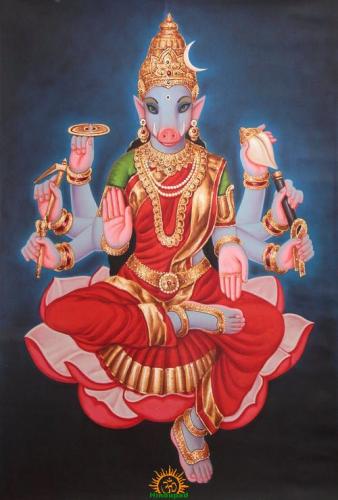
Chinnamasta stands within the Shakta Tantric pantheon as one of the Dasamahavidyas (Mahavidyas), the ten luminous modes of the Divine Mother that map a spectrum from nurturing benevolence to uncompromising truth. Chinnamasta’s uncompromising aspect is iconographically expressed through self-decapitation: she is often depicted standing upon the couple Kama and Rati, symbolizing mastery over untamed desire and the sublimation of life-energy (kama-shakti) into awakened awareness. The three streams of bloodsustaining herself and the two attendants, Dakini and Varniniare traditionally understood as iccha-shakti (intent), jnana-shakti (insight), and kriya-shakti (skillful action), the triadic current through which the cosmos unfolds.
Academic readings of this iconography emphasize that the dramatic imagery is not violence but metaphor: the severed head signifies the radical cutting of ignorance (avidya) and ego-fixation, while the steady nourishment of the attendants marks the compassionate sharing of awakened energy. The skull bowl (kapala) and sword (khadga) are tools of discernment, and the sky-clad (digambara) form reflects the yogic stance of ultimate authenticity beyond social veneers. In this hermeneutic, Chinnamasta is less a symbol of destruction and more a sign of unconditioned presenceclarity that remains fearless amidst change.
Within Tantric esotericism, Chinnamasta is frequently linked with the sudden, lightning-like breakthrough of prana-shakti through the sushumna nadi, associated by several lineages with the region of the manipura chakra. The mythic shock of her iconography is thus a pedagogic device: it portrays the moment when life-force ceases to be bound by habit and becomes self-luminous awareness. This dynamic is not restricted to ascetics; it resonates with anyone seeking to transmute impulse into integrity, hesitation into courage, and scattered attention into steady resolve.
A comparative Dharmic lens reveals rich affinities that foster unity across traditions. In Vajrayana Buddhism, the cognate form Chinnamunda (often related to Vajrayogini/Vajra Vairochani) conveys instant, non-conceptual wisdom piercing craving and delusionan image philosophically close to the Shakta understanding. Jain teachings on aparigraha (non-possessiveness) and self-restraint echo the ethical pivot from compulsion to clarity that Chinnamasta symbolizes. Sikh teachings valorize nishkam seva (selfless service) and fearlessness born of truth, which align with the Jayanti’s lived ethos of courage and compassion. Though ritual forms differ, the shared Dharmic aspiration is unmistakable: a life refined by inner mastery and service to the world.
Householders observing Chinnamasta Jayanti in 2026 often begin with a sankalpa (intention) during Vaishakh Shukla Trayodashi, followed by snana (ritual bath) and a simple altar arrangement. A clean red or ochre cloth, a representation or image of Chinnamasta (or, in its absence, a general Devi form), flowers such as hibiscus, a ghee or sesame-oil lamp, and fruits like pomegranate are customary. Recitation of select chapters from the Devi Mahatmya (Durga Saptashati) or widely used Shakta stotras, combined with meditation on Chinnamasta’s qualities of fearlessness and clarity, provides a complete, sattvic framework suitable for home worship.
Fasting varies by family tradition and health considerations. Many devotees keep a daytime fast and perform the main puja during the tithi, breaking the fast (parana) after the core observances are completed. Those with health constraints may adopt a partial upavasa with fruit, milk, or light sattvic meals. The liturgical spirit of the day prioritizes inwardness, truthfulness, and kindness over austerity for its own sake.
Because Chinnamasta belongs to the Mahavidya corpus with mantras that are traditionally entrusted through a guru-shishya parampara, householders frequently adopt general Shakta recitations rather than advanced Tantric mantras. This protects the sanctity of the practice and ensures adherence to lineage discipline. In recent decades, many temples and community groups have offered collective readings of the Devi Mahatmya or Lalita Sahasranama on Chinnamasta Jayanti as an inclusive alternative, allowing families to participate meaningfully without stepping into esoteric terrain.
From a yogic perspective, some practitioners meditate on the breath in the navel region (manipura) while maintaining a gentle awareness of the sushumna nadi. The contemplative aim is balance, not intensity: steadiness of breath, ethical clarity of intention, and an attitude of gratitude to Shakti. In this integrative reading, manipura offers the disciplined will to do what is right, anahata steadies the heart in compassion, and ajna clarifies discernmenttogether reflecting the triadic current symbolized by the three streams of life in Chinnamasta’s icon.
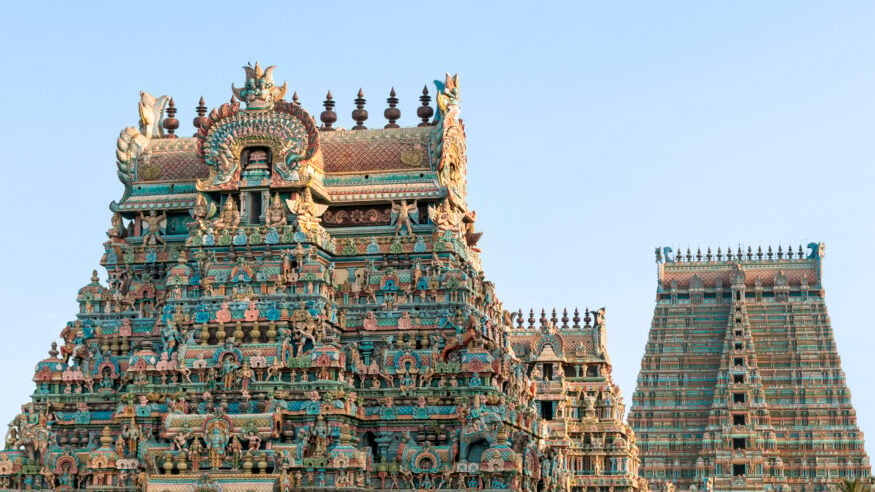
Chinnamasta’s sacred geography amplifies the 2026 observance. The Rajrappa Chhinnamasta Temple in Ramgarh (Jharkhand), located at the confluence of the Bhairavi and Damodar rivers, is among the most prominent sites of her worship. The Chintpurni (Chhinnamastika Devi) Shakti Peeth in Una (Himachal Pradesh) and the Mahavidya shrines within the Kamakhya temple complex (Assam) also hold longstanding ritual lineages that contextualize this Jayanti historically and theologically. Pilgrims often report a palpable atmosphere of discipline, devotion, and collective seva at these sites during Vaishakh Shukla Trayodashi.
Contemporary observance is marked by an ethical emphasis consistent with pan-Dharmic values. While some premodern texts record heterodox offerings, householders today overwhelmingly adopt a sattvic mode that foregrounds ahimsa, dana (charity), and annadanam (sharing food) as living expressions of devotion. This shift highlights the enduring adaptability of the Hindu way of life, harmonizing rigorous symbolism with compassionate praxis and reinforcing unity with the broader Dharmic family.
Common questions around eligibility, ritual scope, and home suitability are addressed by a simple principle: sincere, sattvic worship within one’s capacity is always auspicious. The core vow for Chinnamasta Jayanti is inner transformationrelinquishing harmful habits, cultivating truthful speech, and serving family and community with steadiness. Where advanced mantra or yantra practice is desired, guidance from a competent guru safeguards both spiritual depth and household harmony.
For planning in 2026, devotees can verify Vaishakh Shukla Trayodashi in a trusted Hindu calendar 2026 (Panchang) for their location and confirm temple schedules in advance, particularly at high-footfall sites such as Rajrappa and Chintpurni. Digital Panchangs are helpful, but local temple announcements around Jayanti often provide the most practical details for collective puja timings, community readings, and volunteer opportunities.
Chinnamasta Jayanti 2026, observed on 29 April, thus offers both a precise calendrical focusVaishakh Shukla Trayodashiand a timeless invitation to cultivate fearlessness, clarity, and compassion. Read as a living scripture, the icon teaches mastery over impulse, integration of life-force, and sharing of wisdom for universal good. In that sense, the Jayanti is more than a date; it is a disciplined way of seeing and serving, uniting households and sadhakas across the Dharmic spectrum in the shared work of inner and outer renewal.
Inspired by this post on Hindu Pad.