
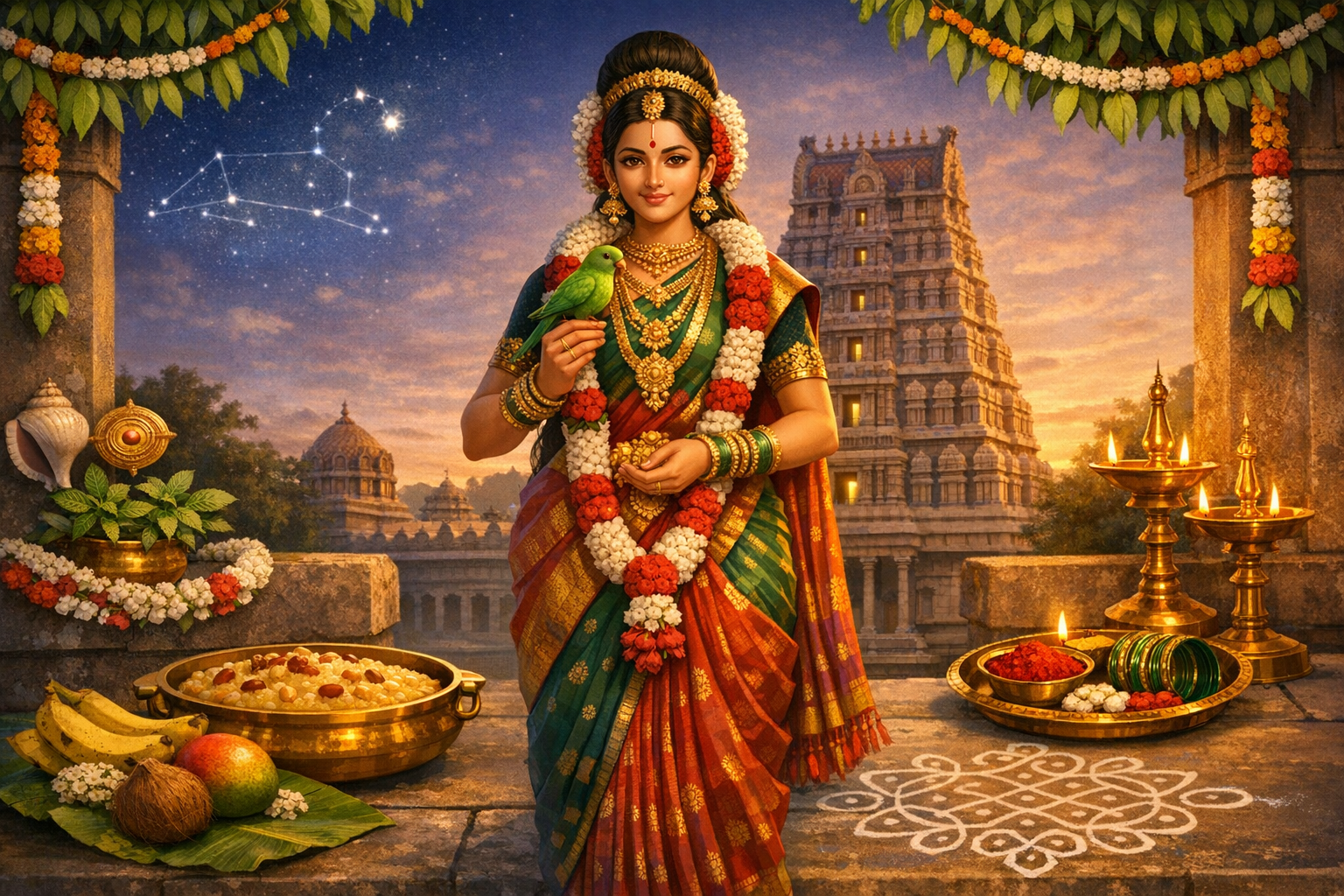
Aadi Pooram (also spelled Aadi Puram) is a major Tamil festival observed across Tamil Nadu and in parts of Kerala, Karnataka, and Andhra Pradesh. In 2026, Aadi Pooram falls on Friday, August 14, aligning with the Pooram (Purva Phalguni) nakshatram in Aadi Masam (July–August) of the Tamil calendar. The day is revered in two complementary ways: as Andal Jayanti (Andal Thirunakshatram) in the Sri Vaishnava tradition and as a grand “Amman” observance in many Shakti temples, affirming a living ethos of unity within dharmic traditions.
Aadi Masam in the Tamil solar calendar begins when the Sun enters Karka Rashi (Cancer). The month carries a tapestry of observances—Aadi Velli (the Fridays of Aadi) for the Divine Mother, Aadi Perukku (Aadi 18) celebrating riverine abundance, and Aadi Pooram as the devotional pinnacle for Andal and, in Shaiva–Shakta milieus, for Ambal (Parvati). Communities perceive Aadi as both a season of spiritual renewal and social well-being, bringing households, temples, and neighborhood associations together in seva, annadanam, and collective worship.
The calendrical anchor of Aadi Pooram is astronomical: it is observed when the Moon transits Pooram (Purva Phalguni), a nakshatra spanning 13°20′ to 26°40′ of sidereal Simha (Leo). While Aadi corresponds to the Sun’s passage through Cancer, the festival date is fixed by the lunar asterism Pooram. In traditional panchang practice, many temples privilege the nakshatra prevailing at sunrise; some prioritize the Pooram segment with the longer or more auspicious span for local devotees. As a result, observance can shift slightly by region and time zone, yet the 2026 civil date across Tamil Nadu is Friday, August 14.
Andal—celebrated as Goda Devi—stands among the twelve Alvars and is venerated for devotional works Tiruppavai and Nachiyar Tirumozhi. Aadi Pooram commemorates Andal’s earthly presence and her bridal union (Thirukalyanam) with Sri Ranganatha of Srirangam, symbolizing bhakti’s culmination as total surrender (prapatti). Her poetic visions interweave temple ritual, aesthetic rasa, and ethical devotion, inspiring generations to practice humility, compassion, and steadfast love for the Divine.
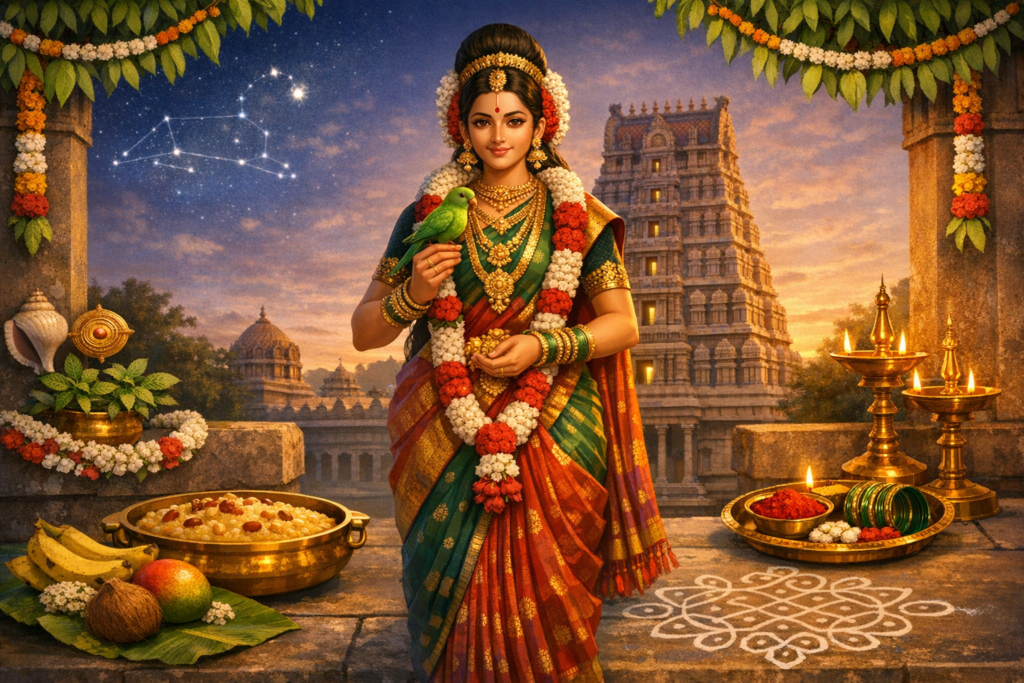
Within the Sri Vaishnava tradition, Aadi Pooram is marked as Andal Jayanti or Andal Thirunakshatram. Temples conduct Thirumanjanam (ritual bathing), special alankarams, and Andal Thirukalyanam, where garlands, silks, and auspicious items evoke the timeless divine wedding. Andal’s iconography—often with the distinct hair bun known as “Andal Kondai”—conveys youthful grace and spiritual resolve. Recitation of Tiruppavai and selected verses of Nachiyar Tirumozhi adds a luminous scriptural cadence to the day’s worship.
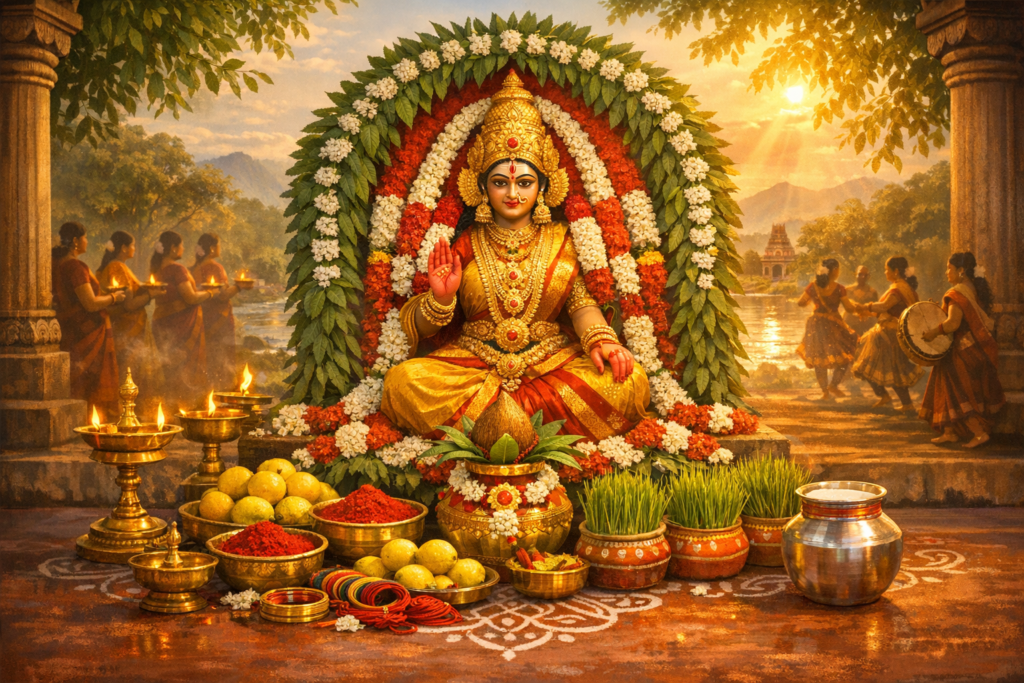
Equally widespread is the Aadi Pooram observance for Ambal (Parvati) in Amman temples. Here the festival is associated with Ambal’s sanctity and auspiciousness for family well-being and community harmony. Ceremonies often include Valaikappu (bangle offering to the Goddess), distribution of bangles and kumkum to women, and special Deepa or Vilakku pujas. The shared calendar moment—Andal for Vaishnavas and Ambal for Shaivas—mirrors the civilizational breadth of Sanatana Dharma, nurturing unity without erasing distinct paths.
Key date for planning in 2026: Aadi Pooram is on Friday, August 14. As Pooram nakshatra timings vary by locality, temples and families consult a regional panchang or temple notice to finalize muhurta for puja, Thirukalyanam, or Valaikappu. The coincidence of an Aadi Velli with Aadi Pooram in 2026 is considered especially auspicious for Ambal worship and for Andal’s blessings on families, children, and community welfare.
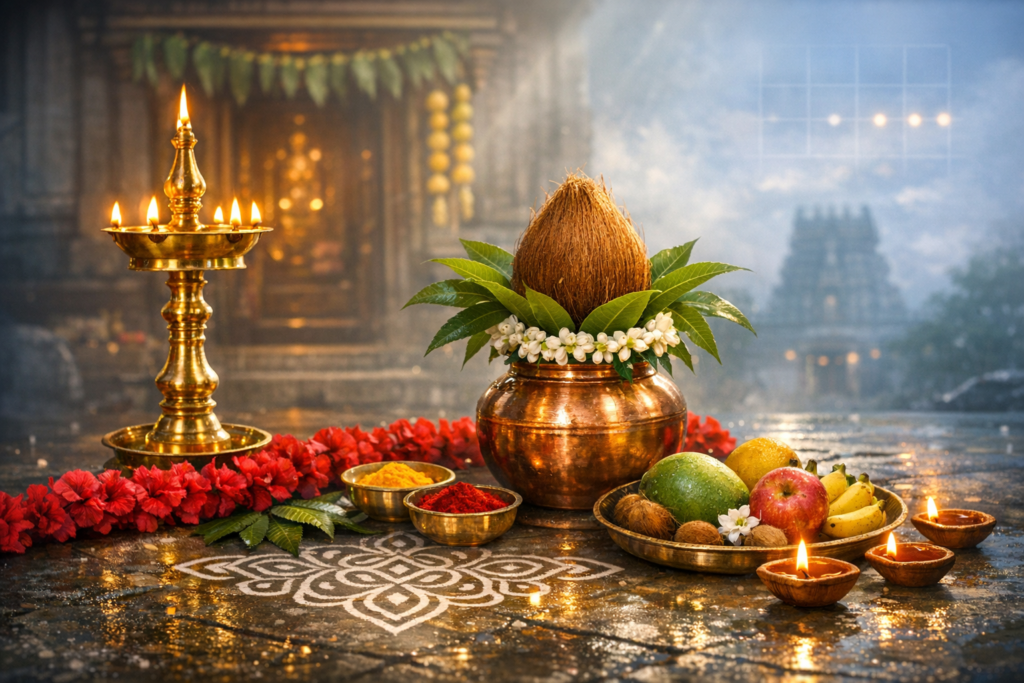
At home, devotees typically perform a simple yet profound Andal puja. After cleaning the space and lighting a deepam, an image or murti of Andal is placed with Sri Vishnu’s image. A sankalpa (intention) is taken, followed by recitation of Tiruppavai and verses from Nachiyar Tirumozhi. Offerings traditionally include fresh garlands—especially with jasmine (mullai) and roses—fruits, and sattvic naivedyam. Tulasi leaves are respectfully offered to Sri Vishnu, while flower garlands adorn Andal. A concluding arati is performed, followed by manasika (inner) prayer for the welfare of all beings.
Culinary offerings for Aadi Pooram express devotion through wholesome abundance. “Akkaravadisal”—a cherished sweet preparation of rice, milk, ghee, and jaggery associated with Andal—is widely offered, alongside “Sakkarai Pongal,” payasam, and seasonal fruits. In Amman temples, prasadam may include traditional rice offerings and vadai, with community annadanam reflecting the month’s ethos of giving and collective care. These culinary traditions, while diverse, align in honoring the Goddess as Mother and Andal as the soul’s guide.
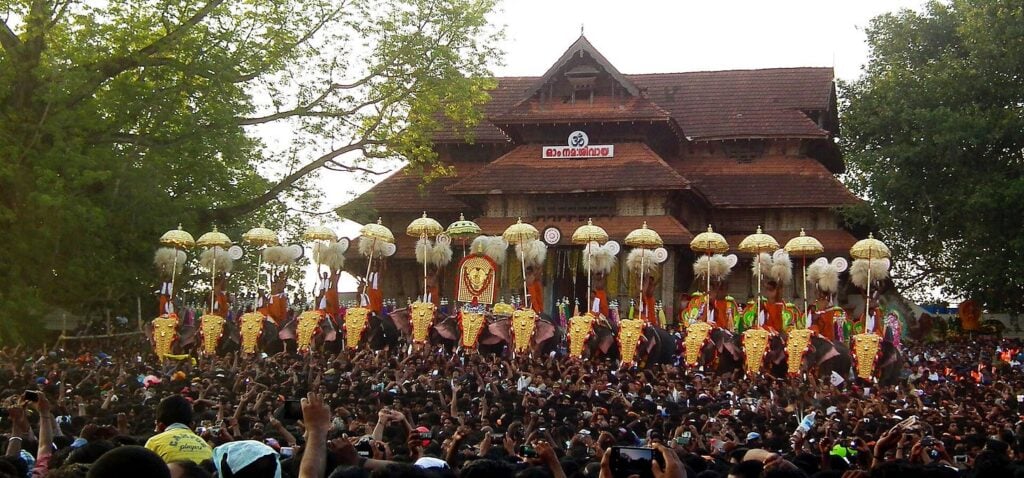
Temple traditions during Aadi Pooram are extensive. Srivilliputhur Nachiyar Thirukovil—Andal’s birthplace—conducts a multi-day festival culminating in the Pooram day with processions, alankarams, and Andal Thirukalyanam. Prominent Vaishnava temples such as Srirangam Ranganathaswamy Temple, Kanchipuram Varadaraja Perumal Temple, and Thiruvallikeni Parthasarathy Temple organize special sevai and utsavams. In parallel, Amman temples across Tamil Nadu (e.g., in Madurai and Kanchipuram regions) celebrate Ambal with grand decorations, Valaikappu, and special homams for health, fertility, and prosperity.
Regional observances reinforce inclusivity. In parts of Kerala, Karnataka, and Andhra Pradesh, Vaishnava and Amman traditions converge around the Pooram star, with local bhajan mandalis, Harikatha sessions, and annadanam. The shared festival calendar across linguistic regions showcases dharmic unity-in-diversity, resonant with the broader values upheld by Hinduism, Buddhism, Jainism, and Sikhism—values emphasizing compassion, self-discipline, and reverence for all life.
For 2026 pilgrims and heritage enthusiasts, early planning is advised. Temple towns such as Srivilliputhur, Srirangam, and Kanchipuram draw large congregations. Observing the customary dress code, respecting queue systems, and checking temple schedules for Thirumanjanam, Thirukalyanam, and evening processions helps ensure a fulfilling visit. Many temples release festival booklets or announcements listing puja times and devotional programs across the Aadi fortnight leading up to Pooram day.
From a calendrical perspective, Aadi Pooram is a nakshatra-based observance rather than a tithi-based one. Panchang entries will list Pooram start and end times, and local practice may privilege the segment prevailing at sunrise or the longer span within the civil day. Families performing vrata may keep a light fast, offer fresh flowers, and conclude with distribution of prasadam to neighbors, aligning personal devotion with community care.
Beyond ritual, Aadi Pooram carries socio-ethical meanings. Andal’s devotion foregrounds equality of access to the Divine, irrespective of birth or status, a hallmark of the Bhakti Tradition. Community annadanam during Aadi exemplifies the dharmic injunction to feed the hungry. The Valaikappu custom—where bangles and kumkum are shared with women—extends blessings of health and auspiciousness, while underscoring mutual support among families and neighborhoods.
Environmental mindfulness is deeply compatible with Aadi observances. Using locally grown flowers, biodegradable plates (such as banana leaves), and minimizing single-use plastics at annadanam venues are practical ways to honor the Goddess as Mother Earth. Temples increasingly encourage reusable water containers and responsible waste segregation—contemporary expressions of a timeless duty to preserve the sacred ecology that sustains devotional life.
Common clarifications help newcomers and young learners. Aadi Pooram (tied to the Pooram nakshatra in Aadi) is distinct from Aadi Perukku (Aadi 18), which focuses on riverine gratitude and agrarian abundance. Andal Jayanti in Aadi also differs from the Margazhi season’s collective recitation of Tiruppavai, though both celebrate Andal’s transformative bhakti. In Amman temples, Aadi Pooram highlights Ambal’s benevolence; in Vaishnava shrines, the day centers on Andal’s grace—two expressions, one dharmic heart.
The inclusive spirit of Aadi Pooram aligns with the broader unity of dharmic traditions—Hinduism, Buddhism, Jainism, and Sikhism—each affirming ethical living, self-cultivation, and service. Families and sanghas who observe the day through meditation, dana (charity), community kitchens, and scriptural study participate in a continuum of shared values. In this sense, Aadi Pooram 2026 is more than a date; it is an invitation to honor Andal’s love and Ambal’s protection through learning, devotion, and social harmony.
In summary, Aadi Pooram 2026 on Friday, August 14, brings together Andal Jayanti and Amman worship under the Pooram nakshatra in Aadi Masam. Through Andal Thirukalyanam, Valaikappu, annadanam, and the chanting of Tiruppavai and Nachiyar Tirumozhi, the day renews the bonds among devotees and communities. By observing with panchang-guided precision and inclusive reverence, households and temples alike embody the enduring message of Aadi Pooram: devotion that uplifts, knowledge that clarifies, and unity that heals.
Inspired by this post on Hindu Pad.







Leave a Reply
You must be logged in to post a comment.