
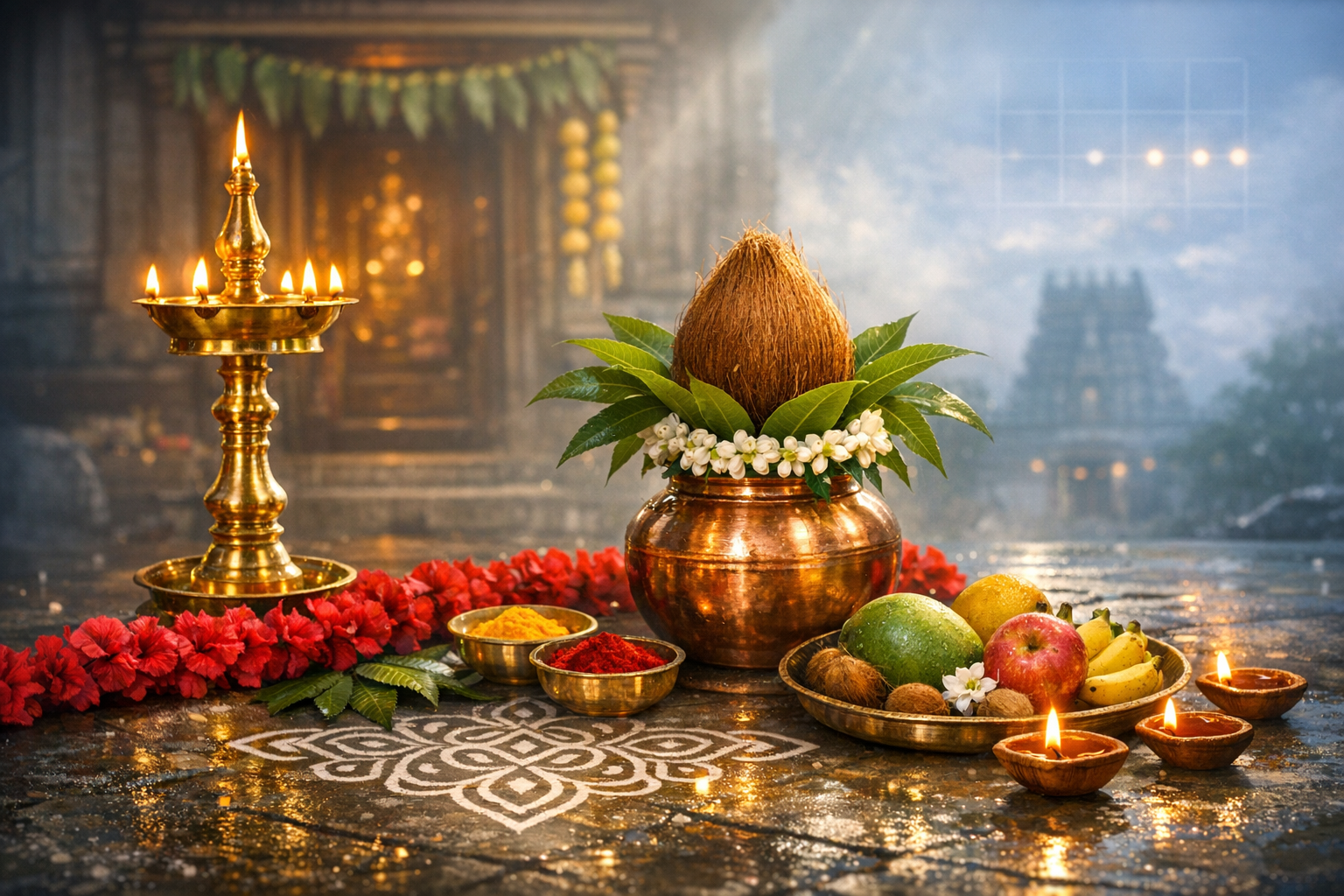
Aadi Chevvai—Tuesdays in the Tamil month of Aadi—is a deeply revered sequence of observances across Amman temples dedicated to Goddess Shakti. Rooted in Tamil calendrical practice and temple Āgamas, these Tuesdays accentuate devotion to the Sacred Feminine through abhishekam, alankaram, archana, and communal vows (vratam). In 2026, Aadi falls in mid-July to mid-August; the outline below consolidates the principal dates, the ritual logic behind Chevvai, and best-practice guidance for temple and home worship in a way that is faithful to tradition and practical for contemporary devotees.
In the Tamil solar calendar, Aadi begins with the Sun’s sidereal transit into Karka (Katakam)—Aadi Pirappu—typically around 16–17 July, and concludes around 16–17 August. The month aligns with the monsoon cycle in much of peninsular India and is traditionally linked to auspicious rites honoring Amman aspects such as Mariamman, Meenakshi, Kamakshi, Karumariamman, and Mutharamman. While Aadi Velli (Fridays) is widely known, Aadi Chevvai has its own strong current of Shakti-centered observances in many regions of Tamil Nadu and among the Tamil diaspora.
Aadi Chevvai dates in 2026 (India) are most commonly observed on 21 July (Tuesday), 28 July (Tuesday), 4 August (Tuesday), and 11 August (Tuesday). Because regional panchangam computations can shift the start/end of Aadi by a day, some temples also include 18 August (Tuesday) as a fifth Aadi Chevvai when the local month reckoning extends through that date. As practice varies by temple tradition, consulting the local panchangam and the temple’s published schedule remains the most reliable approach.
Chevvai in Tamil denotes both Tuesday and the graha Mars (Sevvai/Kuja; Sanskrit: Mangala/Bhauma). In classical Jyotisha, Mars connotes energy, courage, vitality, discipline, and decisive action—qualities that resonate with Shakti’s protective and transformative dimensions in the Amman traditions. Tuesday thus becomes a natural day to invoke the Devi’s dynamic grace for health, protection, and auspicious outcomes in family and community life.
The Aadi month itself bears an agrarian and seasonal logic. The first flush of rains, seasonal sowing, and riverine replenishment (notably marked by Aadi Perukku on Aadi 18) inform a devotional emphasis on prosperity, fertility of the land, and the safeguarding of households. The Shakti focus of Aadi Chevvai gently aligns these seasonal rhythms with the inward discipline of vrata, seva, and mindful offerings to the Goddess.
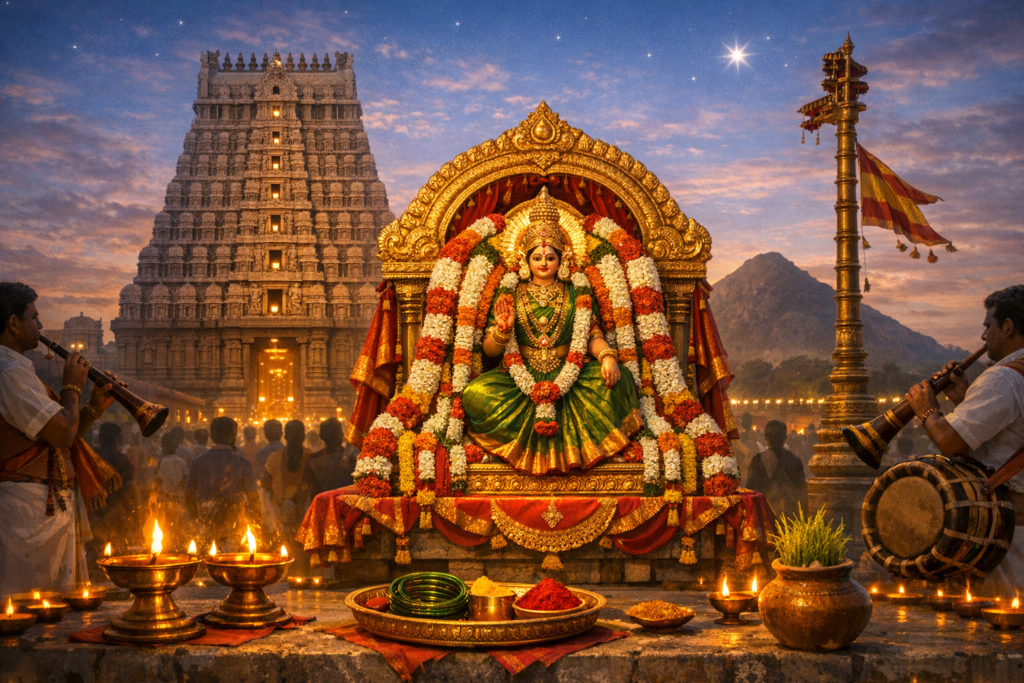
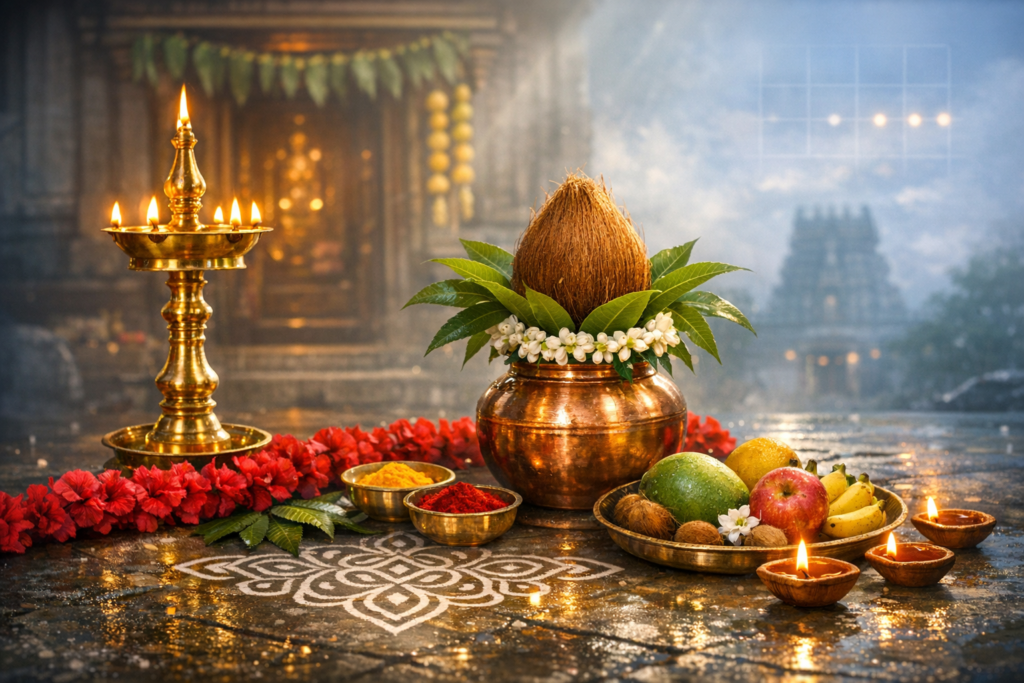
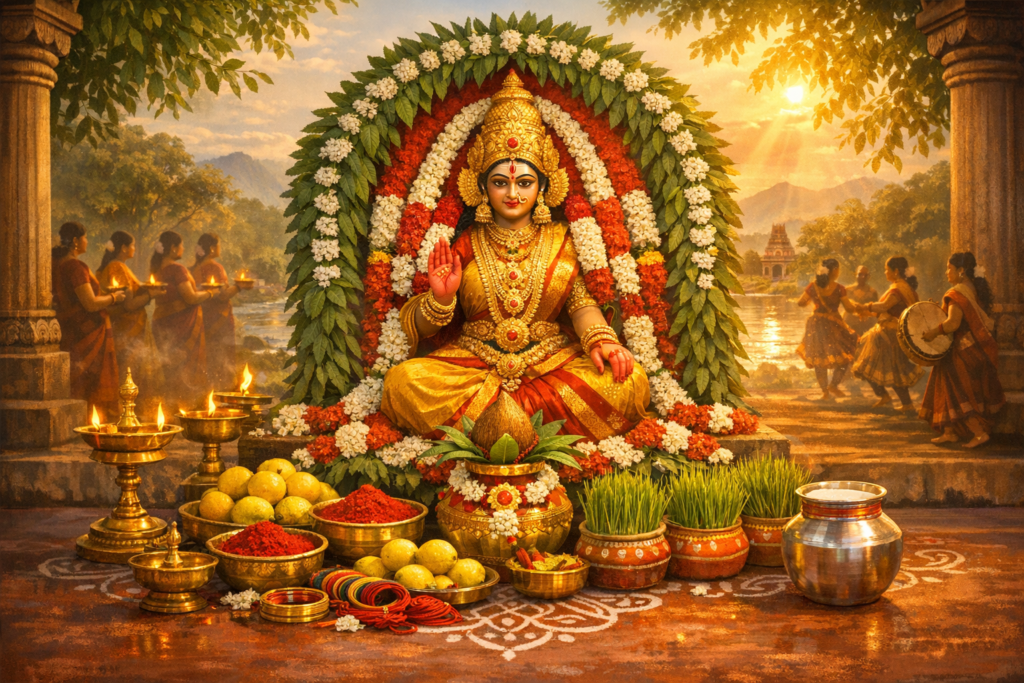
In temples during Aadi Chevvai, worship generally begins at dawn with abhishekam—often including turmeric (manjal), sandal, milk, curd, honey, bilva and neem leaves depending on temple tradition—followed by alankaram with hibiscus and other red-hued flowers that symbolize Shakti’s potency. Kumkum archana is common, along with lemon or betel-leaf garlands, deepa aradhana, and collective recitation of Lalita Sahasranama, Durga Saptashati (selected adhyayas), or Amman-specific stotras. Many shrines conduct special homams or distribute prasadam prepared with seasonal grains, channeling the community’s prayers for well-being and timely rains.
At home, Aadi Chevvai can be observed with a simple, dignified puja. After a predawn cleansing and a brief period of silence, one may light a deepam, offer fresh water, turmeric and kumkum, and a red flower to a Shakti murti or image (such as Mariamman, Meenakshi, Kamakshi, or Durga). A short recitation—Lalita Sahasranama (even 100 names if time-constrained), Sri Suktam, or a favorite Amman stotram—paired with focused contemplation serves well. A small naivedyam of seasonal fruits or a simple sweet, followed by pradakshina and shanti-prayers for family, neighbors, and community, completes the core observance. Many choose a modest upavasa (fast) or a saatvik diet through the day, ending with prasadam after sunset.
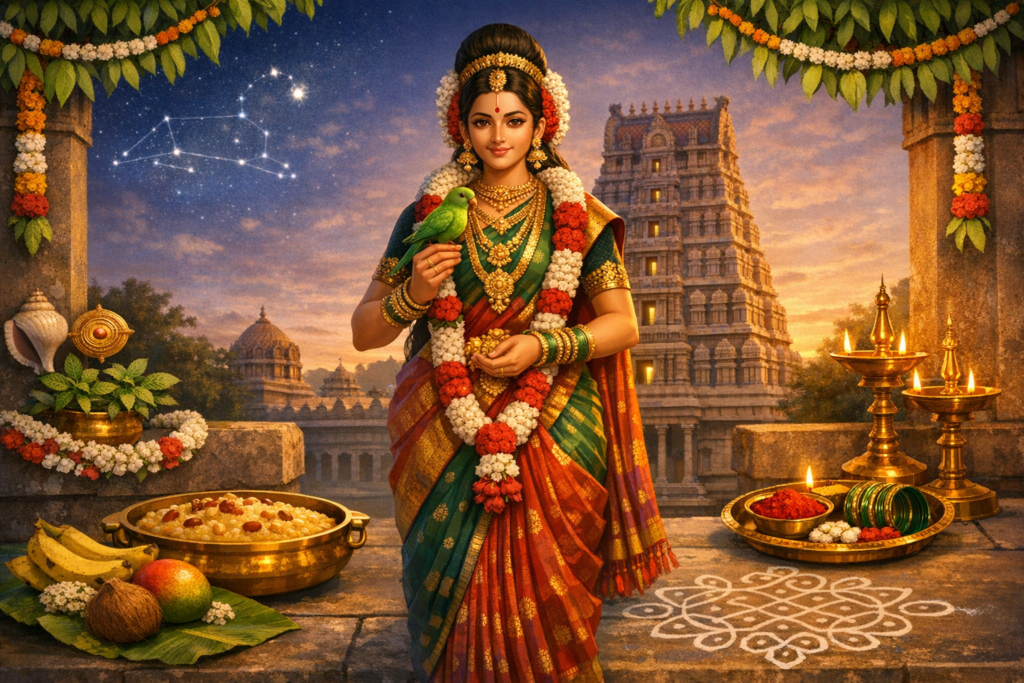
Devotees commonly undertake specific Aadi Chevvai sankalpas: prayers for maternal and child health; household stability; courage in addressing difficult tasks; clarity in career or academic undertakings; and harmony in marriage. In regions where marital auspiciousness (mangalya) rites are emphasized, married women (sumangalis) may perform special kumkum archana and offer turmeric and bangles (glass or lac) to the Devi while praying for family prosperity and longevity.
A complementary astrological current associates Tuesday remedials with Kuja (Sevvai). Without doctrinal overstatement, many worshippers combine Shakti puja with traditional Mangala-related dana—such as offering red cloth, red lentils, or jaggery to the needy—alongside acts of seva. When framed as a discipline of generosity and responsibility, this pairing of Chevvai observance with ethical action enhances both spiritual focus and social benefit.
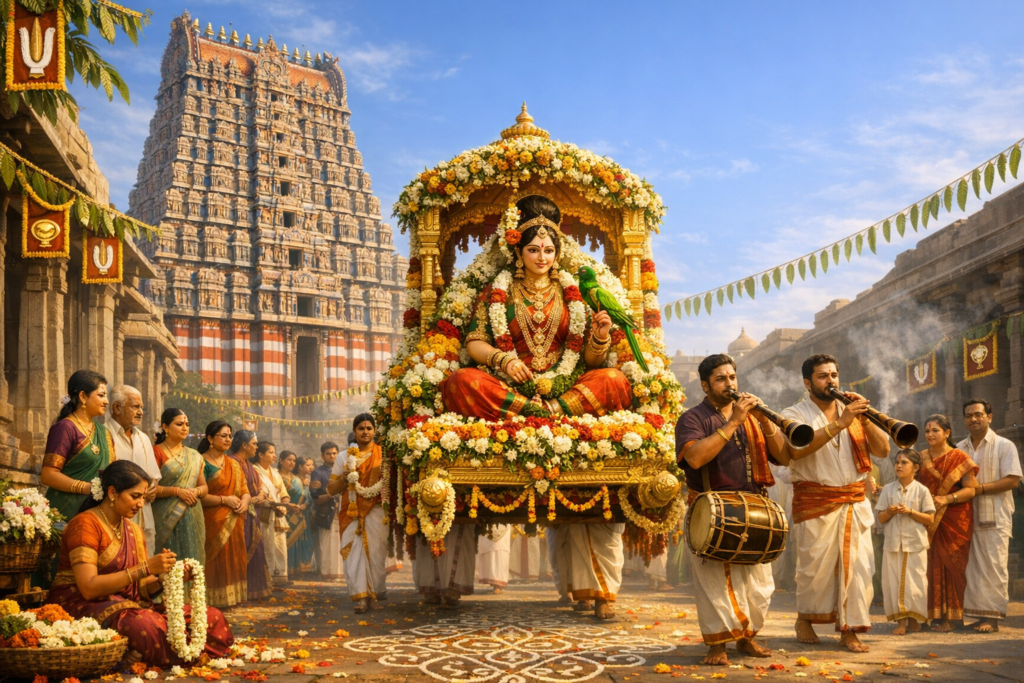
Regional variations add richness. In and around Tiruchirappalli, Samayapuram Mariamman traditions influence Tuesday alankarams; near Chennai, Mangadu Kamakshi Amman and Tiruverkadu Karumariamman see distinct Aadi Chevvai footfall; in Kanchipuram, Kamakshi-centric recitations shape the liturgy; in Madurai, Meenakshi Amman processions may adopt Aadi-specific embellishments. Avvayar Amman temple in Nagercoil is widely regarded as a sacred site in Tamil Nadu where Aadi Chevvai draws devout participation, reflecting local lore and strong community bonds.
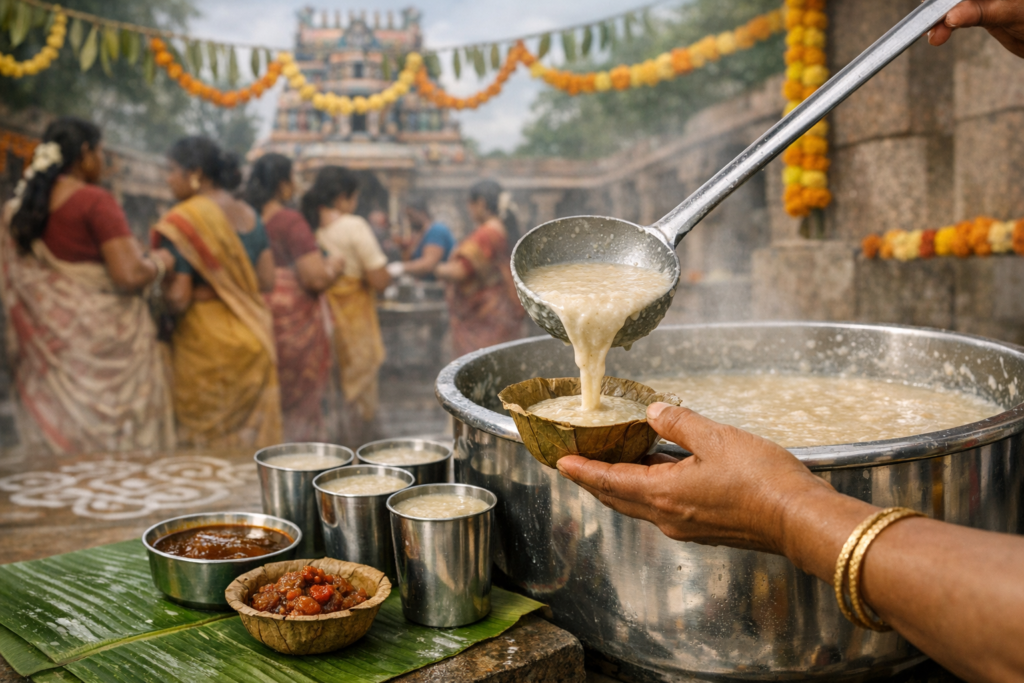
The monsoon-season positioning of Aadi Chevvai also fosters community cohesion. Many neighborhoods coordinate shared prasadam, distribute buttermilk and water to passersby, and support annadanam in temple precincts. Environmentally conscious observances—such as avoiding plastic, using eco-friendly lamps and plates, and sourcing local flowers—align devotion with stewardship of nature, a theme deeply compatible with Amman’s guardianship of land and life.
Read through a broader Dharmic lens, the reverence for the Sacred Feminine in Aadi Chevvai has resonances across kindred traditions. Buddhism honors compassionate wisdom in forms such as Tara; Jainism venerates protective yakshi attendants like Ambika and Padmavati; Sikh thought emphasizes the One without form while acknowledging creative potency in the Divine. Emphasizing shared ethical commitments—compassion, non-violence, service, and respect for nature—supports unity among Hindu, Buddhist, Jain, and Sikh communities without blurring doctrinal distinctions.
For practical planning in 2026, verifying the temple’s Aadi Chevvai timings a few days in advance is prudent, as larger shrines can schedule special abhishekams at specific morning muhurta. Arriving early helps maintain a sattvic focus; carrying a small bag with flowers, kumkum, turmeric, betel leaves, and a modest naivedyam simplifies participation. Those observing at home can set aside 20–40 minutes for puja, journaling sankalpa intentions quietly afterward to reinforce clarity and consistency across the four (or five) Tuesdays.
In essence, Aadi Chevvai unites seasonal gratitude, ritual precision, and inner discipline. Rooted in the Tamil calendar yet open in spirit, it offers a structured path to invoke Goddess Shakti’s protective grace for health, courage, and harmony—at home, in temple, and across the wider community. Approached with humility, ecological care, and inclusive goodwill, the 2026 observances can deepen both personal sadhana and collective well-being.
Inspired by this post on Hindu Pad.





Leave a Reply
You must be logged in to post a comment.