

Aadi month (Aadi masam) in the Tamil calendar marks a powerful seasonal and spiritual turning point, widely perceived as inauspicious for social celebrations yet profoundly auspicious for inward-focused worship, especially of Devi (Shakti). Spanning mid-July to mid-August, Aadi begins at Kataka Sankramana (Sun’s ingress into Cancer) and broadly aligns with Ashada masam in North Indian, Andhra, Telangana, and Karnataka lunisolar traditions. Understanding why Aadi is restrained for certain life-cycle rituals while exalted for sadhana requires examining astronomy, agrarian rhythms, Dharmaśāstra perspectives on muhurta, and temple traditions across South India.
In the Tamil solar system, months run from sankramana (solar ingress) to sankramana. Aadi, the fourth month, coincides with the onset of Dakshinayana—the Sun’s southward course—classically described in Jyotisha and Dharma texts as deva-rātri (the “night” of the devas) in contrast to Uttarayana, the deva-divasa (the “day” of the devas). This cosmological polarity frames conduct: community-facing ceremonies such as marriage (vivaha) and housewarming (griha pravesh) are deferred, while vrata, japa, homa, and Devi upasana intensify.
The common description of Aadi masam as inauspicious is therefore contextual, not categorical. It is inauspicious primarily for initiating new, expansive samskaras—marriage, upanayana, or major inaugurations—because the cosmic and seasonal currents counsel inner consolidation, rest, and protection. Simultaneously, Aadi is celebrated as deeply auspicious for Shakti sadhana, water-veneration, ancestral remembrance, agricultural thanksgiving, and vows (harake/vrata) that stabilize families and communities during the monsoon.
Seasonal logic reinforces this view. Aadi coincides with monsoon intensification across peninsular India. Travel becomes arduous, agriculture demands focus, and communities prioritize safety and continuity. The ritual calendar mirrors this reality: fewer public muhurta events, more home-centered worship, and temple festivals oriented to protective, nourishing feminine energies.
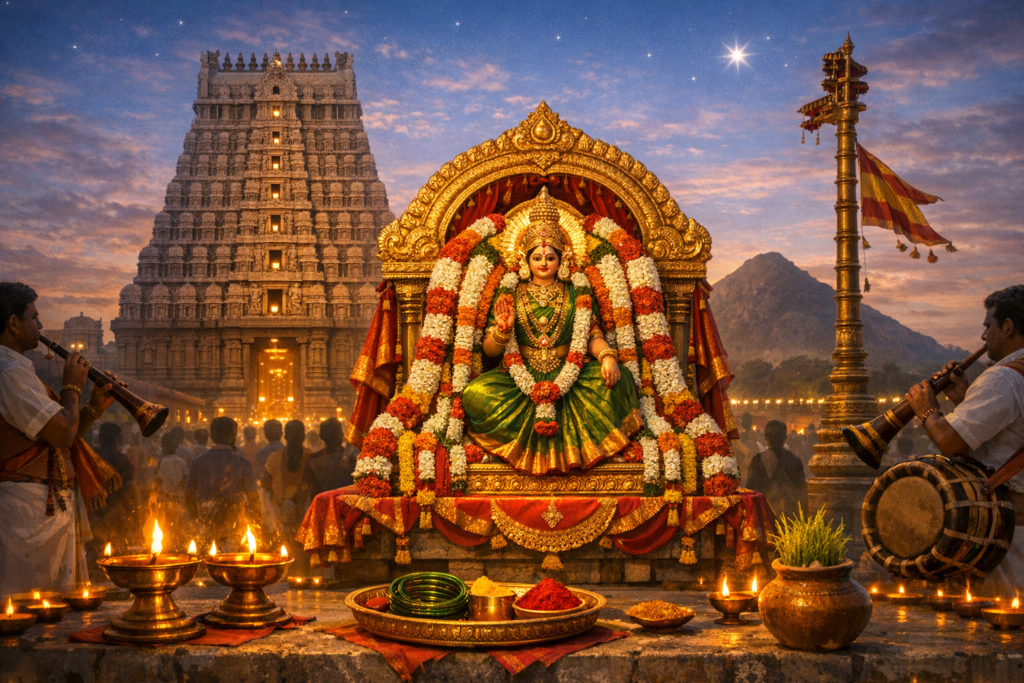
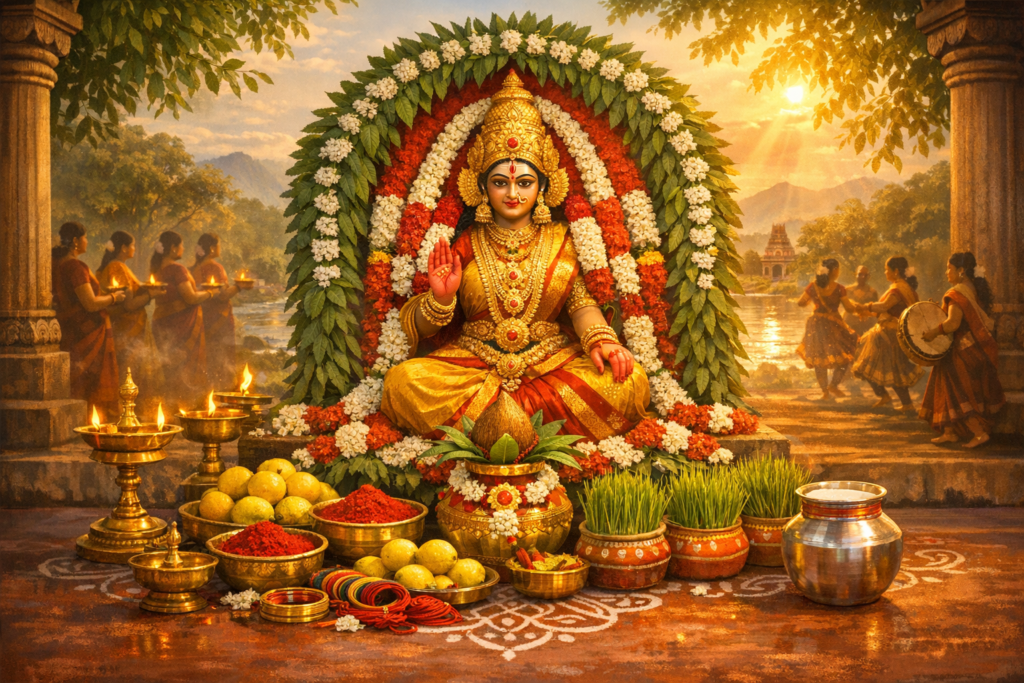
Among Aadi’s hallmark observances, Aadi Velli (the Fridays of Aadi) and Aadi Chevvai (the Tuesdays) are preeminent. These days are reserved for Amman temples and domestic Devi puja—lighting lamps, offering flowers, preparing maavilakku (edible lamp of rice flour and jaggery), and reciting Devi Mahatmya or Lalita Sahasranama. The devotional mood is protective and maternal: safeguarding households, seeking health, and invoking abundance as sowing begins in earnest.
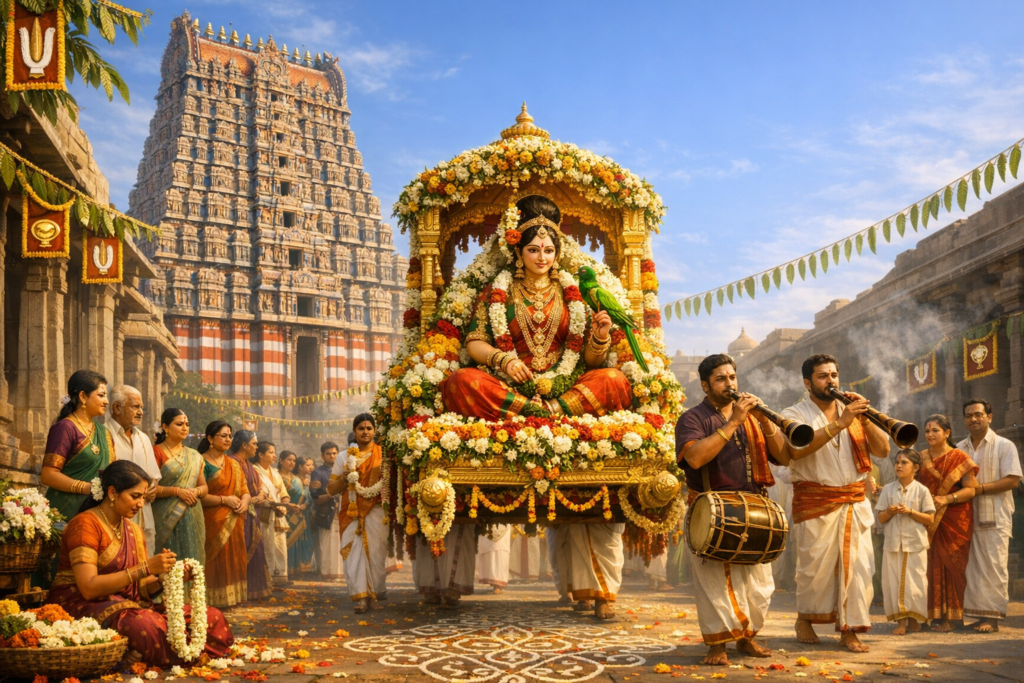
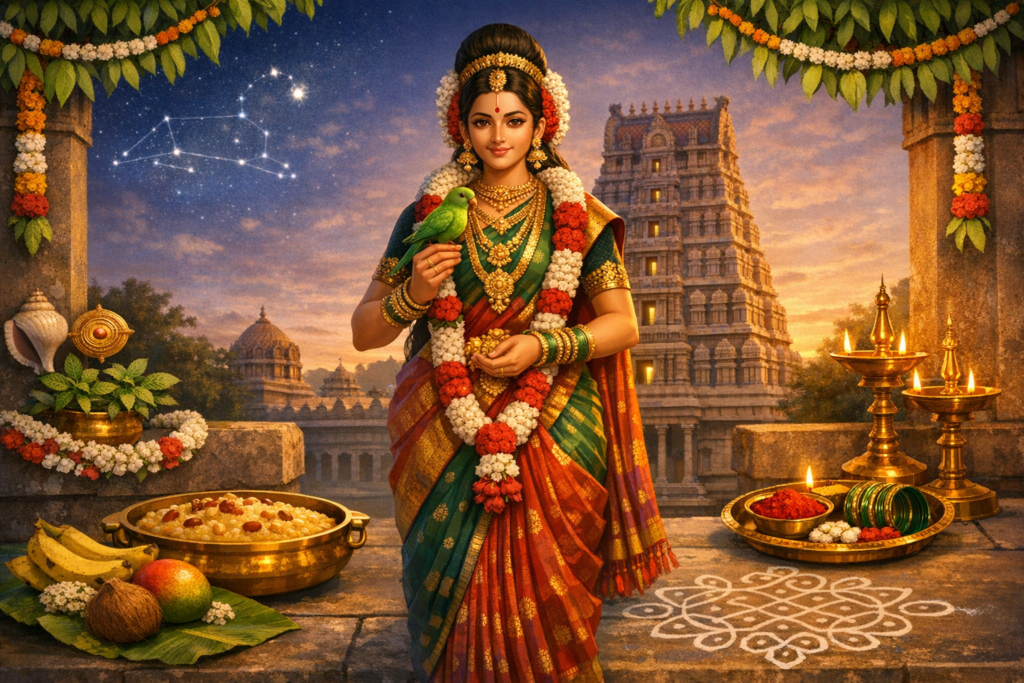
Aadi Pooram (also known as Thiruvadipooram) venerates Āṇḍāḷ (Goda Devi), the preeminent Tamil Vaishnava saint whose bhakti poetry in the Naalayira Divya Prabandham sanctified Srivilliputhur and the Vaishnava universe. Temples decorate with fragrant garlands and bangles, recalling Āṇḍāḷ’s bridal union with Sri Ranganatha, while families meditate on her ideal of total surrender (śaraṇāgati). Aadi Pooram fuses Shakti and Srivaisnava sensibilities—devotion as the highest organizing force of life.
Aadi Amavasya (new moon in Aadi) is devoted to pitru-karya (ancestral rites). Families perform tarpanam with tila (sesame), darbha, and water, often near sacred rivers, tanks, or the sea. The act sustains lineage memory, expresses gratitude, and symbolically nourishes forebears, aligning the living with a continuum of dharma. The rite is sober, ecological, and familial, emphasizing responsibility to both ancestors and the natural elements that sustain life.
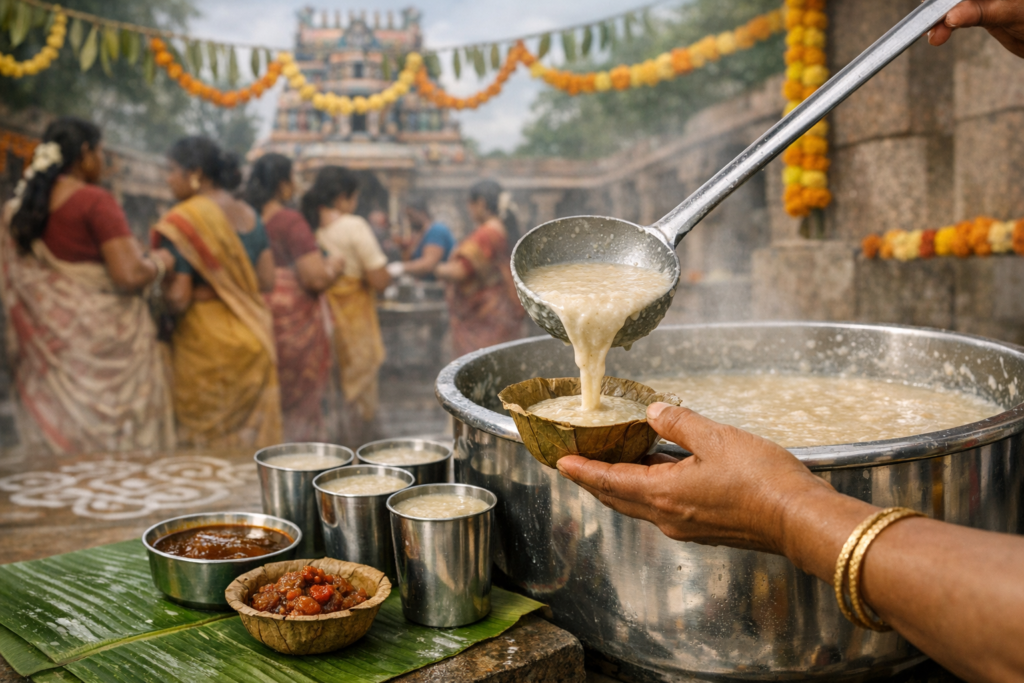
Padinettam Perukku—popularly Aadi Perukku—falls on the 18th day of Aadi and is a luminous confluence of ecology and devotion. As rivers swell with monsoon-fed abundance, communities venerate water as life-source, offering flowers, tumeric-kumkum, betel, cooked rice, and sweets along banks and canals. The custom blesses irrigation, invokes stable rainfall, and renews the covenant between agrarian society and sacred rivers. Aadi Perukku thus stands as a cultural charter for environmental stewardship and food security.
Aadi Krithigai, observed when the Krttika (Krittika) star rises in Aadi, honors Murugan (Subrahmanya). Temples perform deepa-alankara and spear (vel) worship, devotees undertake vows, and processions celebrate Murugan’s protective valor. The fire-star Krttika symbolically “hardens resolve,” aiding tapas and discipline as communities transition into the heart of the agricultural cycle.
Temple ecosystems intensify Aadi observances through Amman utsavams—paal kudam (milk-pot) vows, karagam, alagu kuthu (controlled mortification rites within regulated temple frameworks), and annadanam. These practices, embedded in local śāstra and custom, orient communities toward resilience, gratitude, and mutual aid during the rains. The animating principle is śakti: protective, nurturing, and brimful in monsoon time.
In muhurta practice, Aadi suspends or reduces major samskara initiations. Families frequently defer weddings, griha pravesh, or business inaugurations to Avani or later, while embracing Aadi for annadanam, vrata-samapti (completion of vows), Devi homa, and pitru karya. This distinction preserves momentum in spiritual disciplines without courting risk in social milestones that benefit from brighter, expansive muhurta windows.
Pan-Indic harmonies affirm this rhythm. Aadi substantially overlaps with Ashada masam in many regional calendars, a month likewise avoided for weddings in large parts of India. Devashayani Ekadashi in Ashadha initiates the Vaishnava Caturmasya vrata, when acharyas and monks traditionally settle in one place to teach and practice austerities. In Kerala, the cognate month Karkidakam is revered as Ramayana Masam, emphasizing daily recitation of the Ramayana. Tamil Aadi also sometimes brushes against early Shravana observances depending on year-specific tithi and nakshatra alignments.
These alignments extend naturally across the broader dharmic family. In Theravada Buddhism, Vassa (the rains retreat) begins around this same monsoon window; monks remain in one place for intensified practice and teaching. In Jain traditions, Caturmas begins around Ashadha-Shukla, with communities observing vrata, pratikraman, and ahimsa disciplines more stringently. Sikh scriptural poetry in the Barah Maha reflects Sawan’s emotive monsoon imagery as a time ripe for remembrance and inner longing for the Divine. Across Hinduism, Buddhism, Jainism, and Sikhism, the monsoon months catalyze introspection, moral restraint, and ecological gratitude—demonstrating a shared civilizational cadence.
From a technical calendar perspective, Aadi’s boundaries are determined by the Sun’s sidereal passage through Kataka (Cancer). Panchanga computations reference samskarana timings (exact ingress moments) and local sunrise to mark the start of Aadi. Festival dates within Aadi are then anchored by the interplay of solar month with tithi and nakshatra—hence observances such as Aadi Pooram (Purva Phalguni star) and Aadi Krithigai (Krittika star) are star-bound within the solar month.
The logic of “inauspiciousness” is further clarified in Dharmaśāstra by distinguishing between karya (activity) types. Pravritti-oriented rites (public-facing expansions) prefer Uttarayana-leaning windows or post-monsoon clarity, whereas nivritti-oriented disciplines (inward restraint, expiation, and tapas) intensify during Dakshinayana. Rather than a blanket taboo, Aadi encodes a seasonal ethic: conserve, consolidate, and cultivate inner strength.
Home observance during Aadi can follow simple, time-tested steps. At dawn or early evening, households may light an oil lamp, offer fresh flowers to Devi, recite select chapters of the Devi Mahatmya or Lalita Sahasranama, and prepare modest prasada. On Aadi Velli and Aadi Chevvai, a maavilakku offering or a small homa with sesame and ghee may be performed with basic mantras. On Aadi Amavasya, tarpanam is offered respectfully with tila, darbha, and pure water; if near water bodies, care is taken to avoid pollution and to maintain sanctity of place.
Women’s devotional leadership is especially visible in Aadi. The artistry of kolam at thresholds, preparation of prasada, and collective visits to Amman temples cultivate social solidarity and intergenerational learning. These domestic and community rituals generate a calm center during a meteorologically intense month, affirming feminine power as the ground of well-being.
Aadi also spotlights environmental ethics. Aadi Perukku sacralizes rivers and tanks, recognizing water as both spiritual presence and agricultural lifeline. Communities renew embankments, clean channels where possible, and offer thanks for rainfall. In contemporary terms, such observances can be read as frameworks for ecological stewardship—living consonant with the rhythms that sustain food, culture, and health.
Culturally, many households treat Aadi as a planning horizon. Weddings and new business launches are often scheduled beyond Aadi, while education cycles and household budgets align to monsoon realities. In urban centers, the colloquial “Aadi sale” reflects seasonal retail adjustments rather than ritual endorsement—an economic echo of a devotional calendar.
Frequently asked questions about Aadi Masam Mahatmya converge on a single insight: Aadi is not “unlucky”; it is intentional. It privileges tapas over spectacle, gratitude over excess, and protection over risk. By channeling attention to Devi worship, water veneration, and ancestral remembrance, Aadi sustains the moral and material infrastructure that makes future celebrations safe, prosperous, and meaningful.
Ultimately, Aadi masam offers a blueprint for civilizational resilience. It integrates astronomy (Dakshinayana), ecology (monsoon and agrarian cycles), ethics (restraint and remembrance), and aesthetics (temple ritual, kolam, music) into a coherent way of life. Seen through this integrated lens—and in companionship with parallel monsoon disciplines in Buddhism, Jainism, and Sikhism—Aadi stands as a luminous testament to the unity-in-diversity of the dharmic world.
Inspired by this post on Hindu Pad.






Leave a Reply
You must be logged in to post a comment.