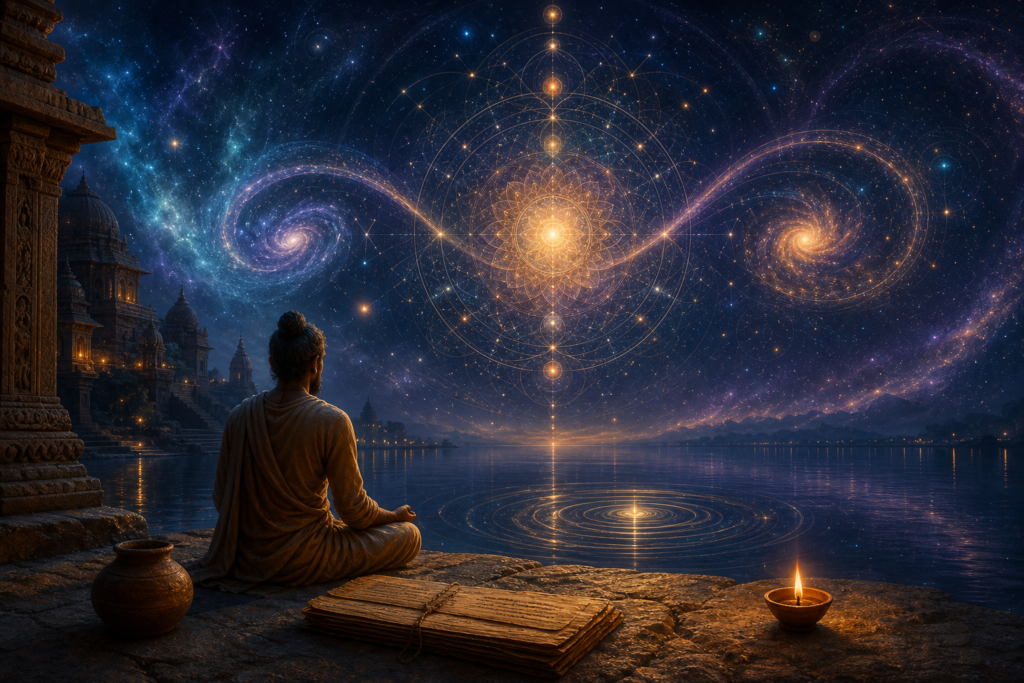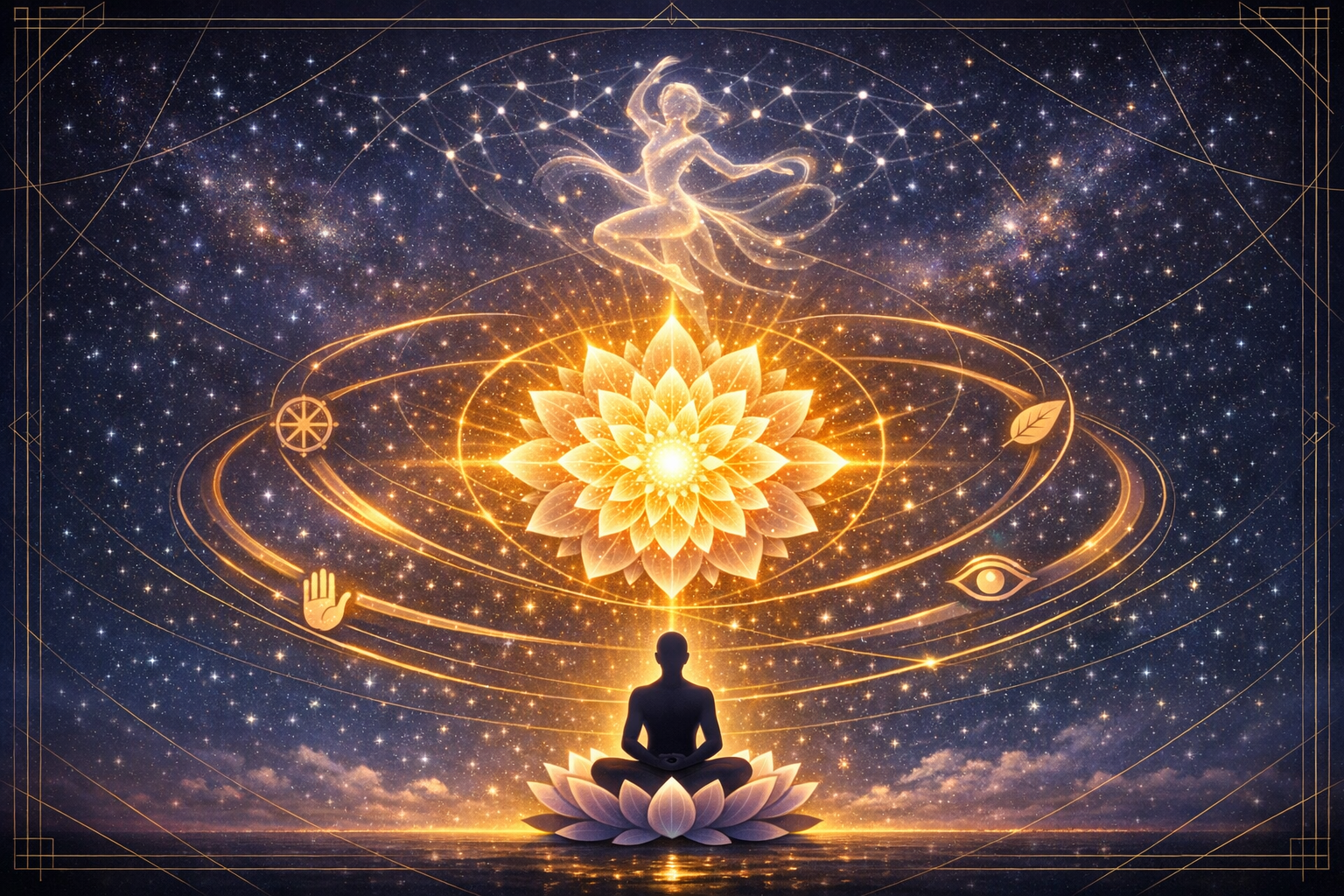
“What is the purpose of this creation?” is a question that recurs across spiritual inquiry and philosophical reflection. In an Art of Living satsang, Sri Sri Ravi Shankar answered with a disarmingly simple analogy: just as the purpose of sports is playjoy, spontaneity, and participationso, too, creation expresses “play.” This formulation resonates powerfully with a classical Vedāntic intuition: the cosmos is līlā, a spontaneous, non-instrumental display of consciousness. Properly understood, this “play” is not frivolous diversion but the overflowing self-expression of reality itself.
Within Hindu philosophy, līlā denotes an action done for its own sake, free of any deficit, motive, or need. The image is one of plenitude in motion: what is perfect does not act to gain fulfillment but acts because it is fulfilled. A compact aphorism recurrently cited in Vedānta exegesislokavat tu līlā kaivalyamencapsulates the insight that ultimate causality is not utilitarian; it is akin to play “as in ordinary life,” but on an absolute plane, without dependence or compulsion. The move from human sport to cosmic līlā reframes purpose not as outcome-chasing but as expressive freedom.
Upaniṣadic language grounds this vision in ānanda (bliss). The Taittirīya Upaniṣad famously intimates that beings arise from bliss, live by bliss, and return to blissānandād eva khalv imāni bhūtāni jāyante, ānandenā jātāni jīvanti, ānandaṁ prayanty abhisamviśanti. If Brahman is sat–cit–ānandabeing, consciousness, and blissthen creation may be read as bliss’s unfolding form: not a production line with a fixed utility, but a radiant flowering of what already is.
Classical cosmogonies also preserve the motif of self-contemplation and creative abundance: tad aikṣata, bahu syāṁ prajāyeyeti“That (Reality) beheld (Itself): ‘Let me be many, let me be born.’” In this idiom, “purpose” is better translated as an ontological tendency rather than a goal: the One manifests the many as a revelation of its intrinsic plenitude. The human demand for a specific endprofit, power, or problem-solvingmisreads the register at which the question is being asked.
Advaita Vedānta renders this in a distinctive way. Brahman alone is real; multiplicity appears through māyā, not as an error of arithmetic but as the possibility of experience within time and space. Līlā here signals that Brahman’s sovereignty is complete and unpressured. For the jīva, however, the soteriological “purpose” becomes clear: to awaken to non-dual knowledge (jñāna), loosening avidyā through viveka and leading to mokṣa. Thus, while creation as a whole has no extrinsic end, existence for the seeker is charged with a definitive telosSelf-realization.
Vişiṣṭādvaita nuances the picture by affirming a personal, compassionate Lord (Nārāyaṇa) for whom creation is both līlā and grace. The universe is the body of God; manifestation enables bound beings to exhaust karma, receive divine aid, and ultimately participate in God’s bliss. Līlā here is far from caprice; it is ineffable delight intertwined with a moral and devotional arc culminating in prapatti (surrender) and bhakti.
In Dvaita, the world’s reality and difference are emphatic, and God’s lordship is unambiguous. Creation serves a purposive order: to sustain dharma, to enable loving service (bhakti), and to provide a field where merit and demerit mature under divine governance. The language of līlā remains, but it is constrained by the clarity that the Lord’s “sport” never violates justice, compassion, or truth. Here again, the soteriological purpose for personsdevotion and liberationstands out.
Kashmir Śaivism elaborates līlā as the free pulsation (spanda) of Śiva’s svātantrya-śakti. Consciousness manifests, conceals, and reveals itself through five acts (pañcakṛtya): creation, maintenance, dissolution, concealment, and grace. This cyclical choreography is play and pedagogy at once; it is the cosmic dance where awareness meets form, forgets itself, and rediscovers its luminosity.
Beyond the Vedāntic and Śaiva frames, Sāṁkhya–Yoga offers a refined non-theistic teleology. Prakṛti evolves for the sake of Puruṣabhoga (experience) and apavarga (liberation). Sāṁkhya Kārikā classically presents the conjunction of consciousness and nature as a didactic encounter: the seen exists to be seen through, so that seer and seen may stand distinct. Though not invoking a creator, the system preserves the ethical and liberative “purpose” of lived experience.
Mīmāṁsā and many Purāṇic cosmologies underscore the beginninglessness of the world-process. Creation (sṛṣṭi) and dissolution (pralaya) recur in kalpas, eschewing a single originary moment. In this cyclicality, speaking of a one-time purpose is misplaced; what endures is a law-governed order (ṛta/dharma) within which beings mature, learn, and seek freedom.
Purāṇic literature often turns to theatrical imagery. The Bhāgavata Purāṇa likens the Lord to an actor who dons roles without losing identity, and Kṛṣṇa’s celebrated rāsa-līlā symbolizes a divine artistry where love, rhythm, and reciprocity disclose metaphysical truths. Aesthetic theory (Nāṭyaśāstra) reinforces the bridge: when rasa is savored, consciousness recognizes itselfraso vai saḥ is an Upaniṣadic clue that aesthetic fullness and metaphysical bliss converge.
Objections arise quickly: if all is play, how can suffering be justified? Dhārmic traditions respond in complementary registers. In Advaita, pain is real for the empirical self but dissolves with knowledge as avidyā lifts; compassion remains essential because the appearance of suffering persists until realization stabilizes. In Vişiṣṭādvaita and Dvaita, karma and divine justice preserve meaning: suffering is neither random nor eternal, and grace actively rescues. In Sāṁkhya–Yoga, duḥkha is diagnostic, propelling viveka-khyāti (discriminative insight). Each view safeguards ethics while resisting a deterministic fatalism.
This broad reflection harmonizes with other dharmic traditions. Buddhism reframes the very question: without a creator, “creation” is replaced by pratītyasamutpāda (dependent co-arising). Phenomena arise in networks of conditions; the practical “purpose” of insight is the cessation of duḥkha through the Noble Eightfold Path. Later Buddhist poetics occasionally speak of the “play” of emptiness, but always to emphasize compassion and wisdom rather than a maker’s intention. The alignment with līlā is thus analogical, not doctrinal: both stress freedom from grasping and a luminous immediacy of experience.
Jainism similarly affirms an anādi (beginningless) cosmos without a creator. Beings (jīvas) are bound by karmic matter and attain kevala‑jñāna (omniscience) through strict ethical discipline: ahiṁsā (non-violence), aparigraha (non-possessiveness), and tapas (austerity). In this lens, to ask “why was the world created?” misplaces causality; the more urgent task is purification. Yet the unity with a līlā-informed sensibility appears in the calm witness stance: engage fully, cling to nothing, and realize innate luminosity.
Sikh thought centers creation in Hukamdivine order and commandwhereby the Karta Purakh (Creator) manifests the cosmos. Gurbani frequently portrays the world as a khel (play), not to trivialize existence but to teach humility and reliance on Naam, seva, and simran. The “purpose” for embodied beings is union with Waheguru and the flowering of truthful conduct; the play metaphor integrates joy with responsibility under the sovereignty of Hukam.
Taken together, these dharmic perspectives transform the sports analogy from a casual quip into a philosophically robust image. “Entertainment” in ordinary speech connotes distraction; līlā, by contrast, connotes creative freedom informed by bliss, wisdom, and compassion. The cosmos, viewed thus, is not a moral vacuum but a meaningful arena where dharma is learned, tested, and lived.
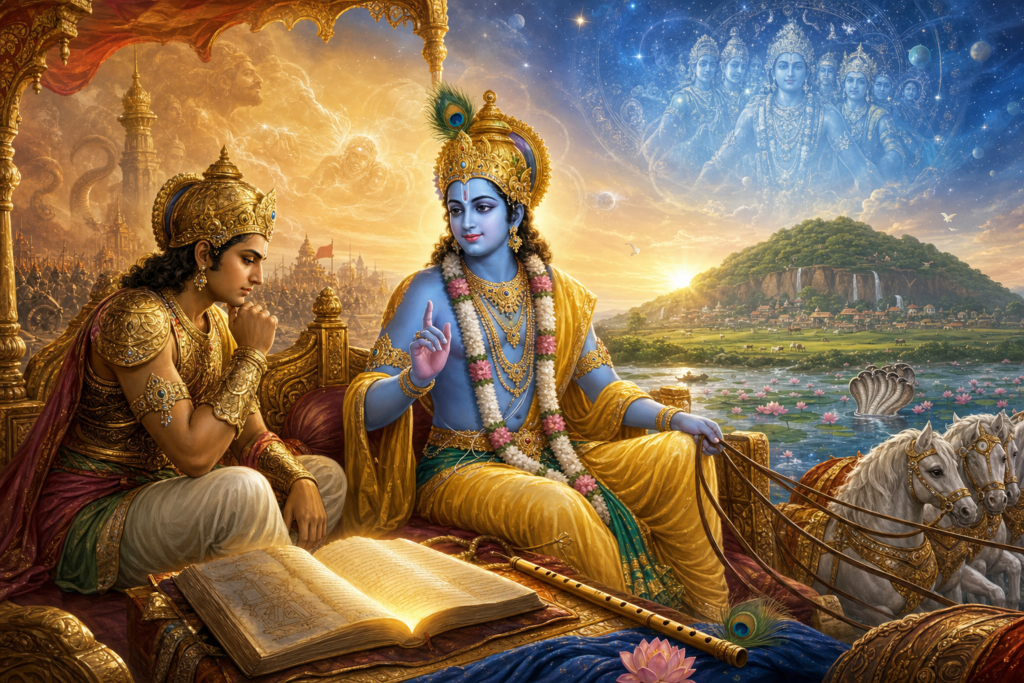
Ethics remains indispensable in a world interpreted as līlā. Dharma may be likened to the rules that make play intelligible and generative: it channels energy, protects participants, and allows excellence to emerge. In the Bhagavad‑Gītā, the counsel to act without attachment (2.47; 3.19) pairs precisely with this view: play one’s role with mastery and surrender, offering outcomes to the Highest. Joy and responsibility are not adversaries; they are dimensions of the same realization.
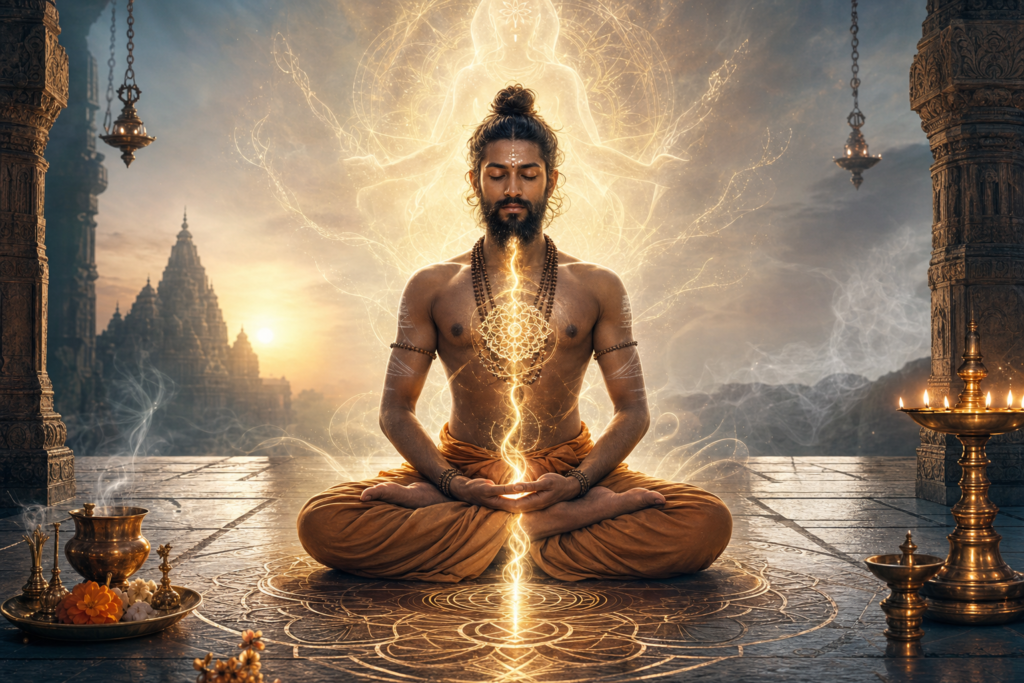
Psychologically, a līlā‑dṛṣṭi (vision of play) cultivates resilience. When events are seen as the fluid theater of consciousness rather than a punitive maze, fear loosens and creativity returns. This does not minimize grief or injustice; it contextualizes them within a wider field of meaning that supports compassionate action. Practically, the stance can be trained through dhyāna (meditation), prāṇāyāma, mantra‑japa, and sevadisciplines that stabilize attention while expanding care.
From a soteriological standpoint, the frameworks cohere around a shared destination. Whether named mokṣa (Vedānta), kaivalya (Yoga), nirvāṇa (Buddhism), kevala‑jñāna (Jainism), or union with the Divine through Hukam (Sikh tradition), the arc is emancipation from compulsive grasping and forgetfulness. Unity in spiritual diversity is not a diplomatic slogan here but a lived convergence: distinct metaphysics, common flourishing.
Contemporary readers may also notice convergences with scientific metaphorsemergence, complexity, and self-organization. While categories must not be collapsed, the intuition that order can arise without an external engineer mirrors the dharmic refusal to reduce meaning to external ends. In both domains, intrinsic dynamics yield surprising harmonies.
The original satsang question thus invites a layered answer. On the ultimate plane, creation needs no purpose beyond its being; it is the self‑articulation of consciousness, līlā of Brahman, the khel under Hukam, the open display of what is. On the existential plane, purposeful human life is unmistakable: to know, to love, to serve, and to awaken. These planes are not opposed; they illuminate each other.
In daily conduct, this synthesis offers a practical ethic: participate in the cosmic play with integrity (dharma), clarity (jñāna), devotion (bhakti), compassionate service (seva), and meditative equipoise (dhyāna). When the field of action is embraced as līlā, effort becomes graceful, success becomes humble, and adversity becomes instructive. The “purpose of creation” ceases to be a riddle and becomes a way of seeing.
Seen in this light, Sri Sri Ravi Shankar’s sports analogy is not a dismissal of depth but an invitation to it. Play is how freedom moves; freedom is how wisdom breathes; and wisdom is how compassion acts. In the dharmic imagination, all three converge in the living, ever‑renewed purpose of existence.
Inspired by this post on Hindu Pad.