
-

From Empath Burnout to Authentic Calm: Ending People-Pleasing with Nervous System Science
Read more: From Empath Burnout to Authentic Calm: Ending People-Pleasing with Nervous System ScienceThis research-informed guide reframes “empath burnout” as a trainable appeasing (fawn) response within the autonomic nervous system. It explains why avoidance strategies rarely work in close relationships and shows how awareness, interoception, and bottom-up somatic tools restore agency. A step-by-step orienting practice teaches the body real-time safety, while boundary scripts and a deliberate pause prevent…
-
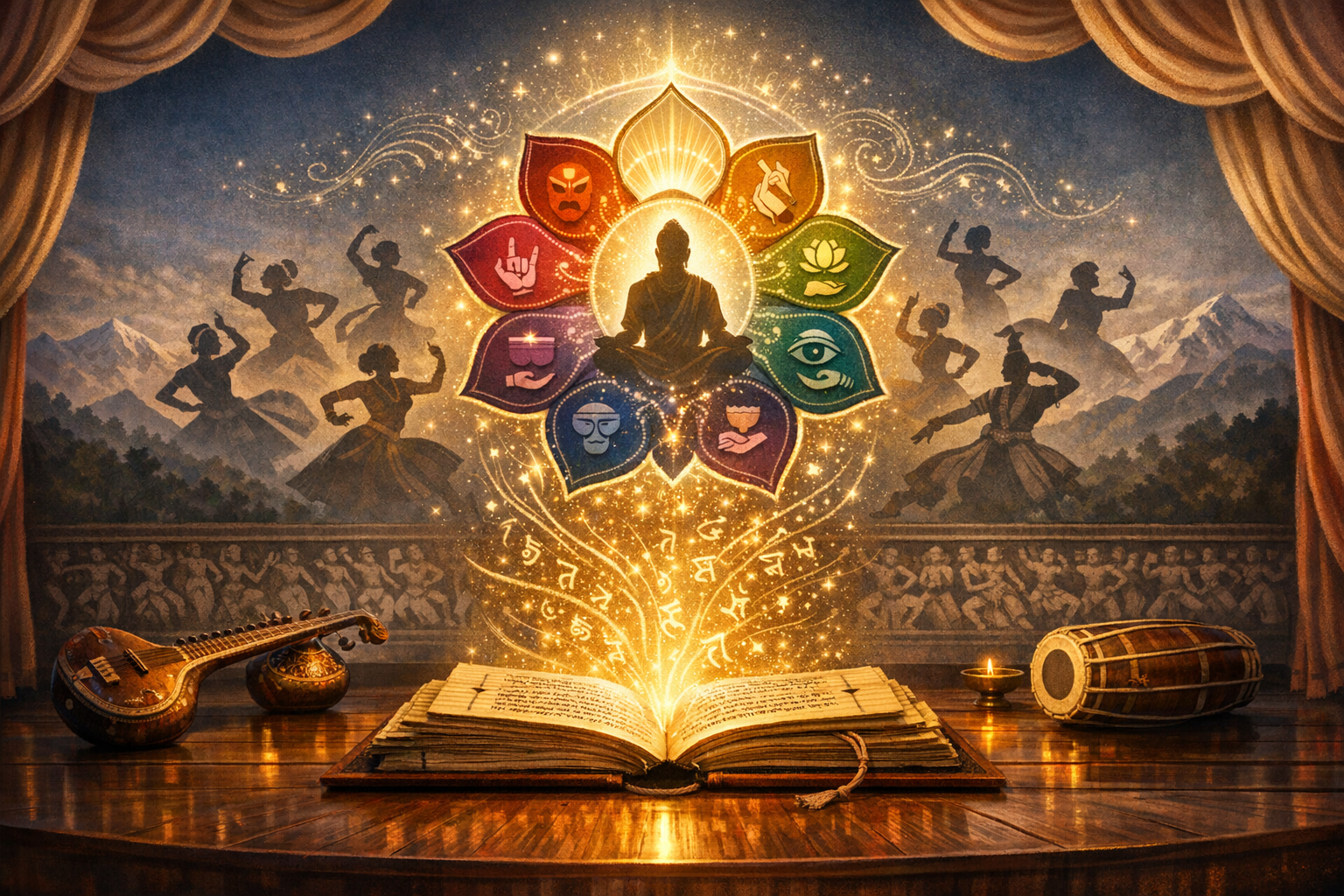
Abhinavabharati Unveiled: Abhinavagupta’s Masterwork on Bharata’s Natyashastra and Rasa Theory
Read more: Abhinavabharati Unveiled: Abhinavagupta’s Masterwork on Bharata’s Natyashastra and Rasa TheoryAbhinavabharati, Abhinavagupta’s celebrated commentary on Bharata Muni’s Natyashastra, clarifies how drama, dance, and music yield rasa through vibhavas, anubhavas, and vyabhicari-bhavas in the receptive sahridaya. It accepts śānta rasa as the apex, harmonizing aesthetic passion with contemplative calm in line with dharmic ideals shared across Hinduism, Buddhism, Jainism, and Sikhism. By integrating dhvani (suggestion) from…
-

Prakamya Siddhi Explained: How Focused Intention Turns Inner Vision into Tangible Reality
Read more: Prakamya Siddhi Explained: How Focused Intention Turns Inner Vision into Tangible RealityPrakamya Siddhi in Hinduism is the disciplined capacity by which a clear, dharma-aligned inner intention becomes an outward result. Distinguished from mere desire or casual “manifestation,” it integrates ethical foundations, focused attention (samyama), embodied action, and surrender. Classical yoga, Vedanta, tantra, and bhakti converge to present prakamya as a lawful and ethical maturation of will,…
-
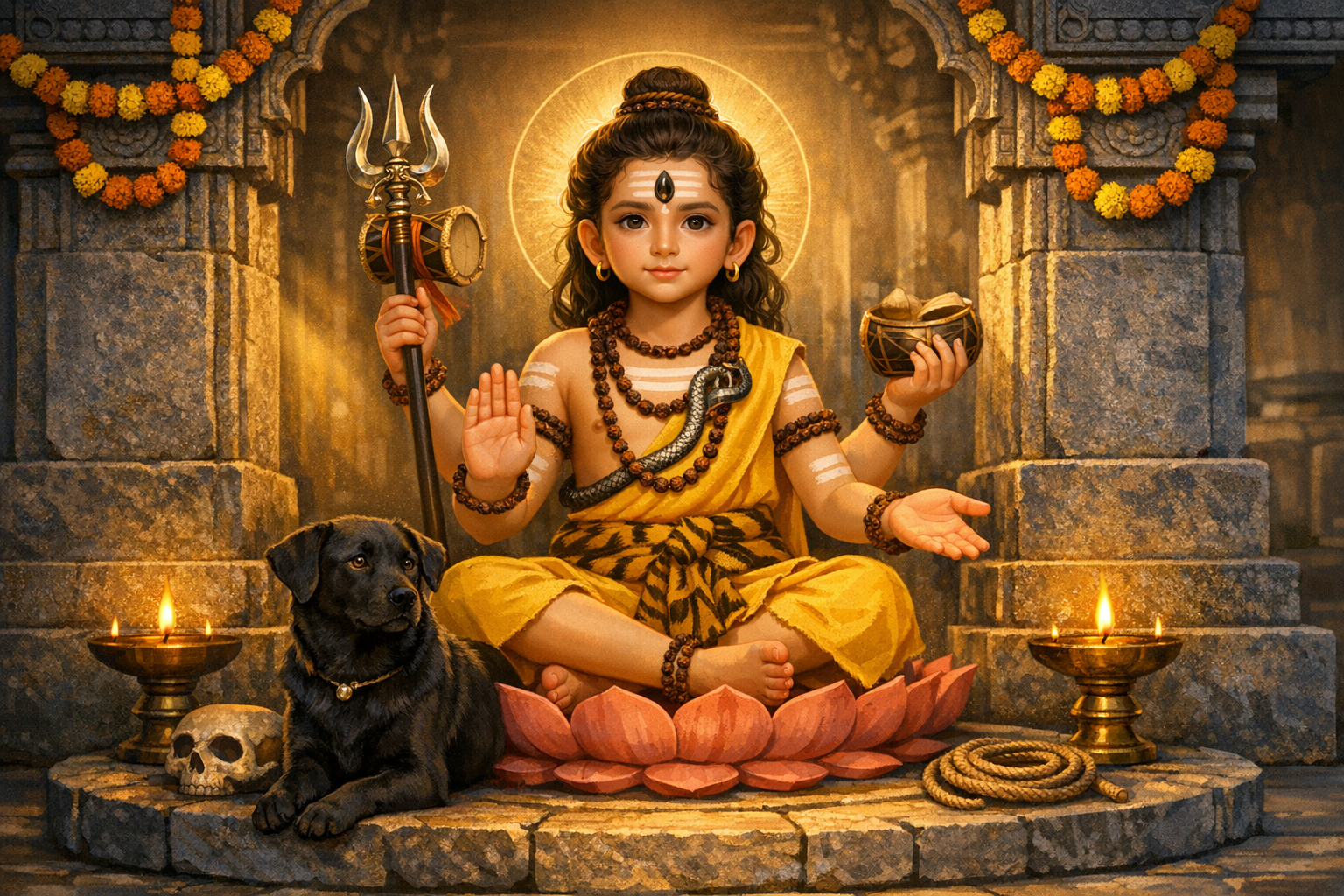
Batuk Bhairav Iconography Decoded: Symbols, Rituals, and the Guardian Child of Shiva
Read more: Batuk Bhairav Iconography Decoded: Symbols, Rituals, and the Guardian Child of ShivaBatuk Bhairav, the youthful guardian form of Shiva, unites fierce protection with approachable grace. This iconography guide decodes his attributes—trident, drum, skull-bowl, dog vahana—and explains how each symbol teaches fearless clarity and compassionate vigilance. Readers learn how to identify Batuk Bhairav in temples, where to look for threshold shrines, and how regional styles (Varanasi, Bengal–Nepal,…
-

Decoding Ashta Bhairava’s Eight Directions: Names, Fierce Symbolism, and Sacred Geometry
Read more: Decoding Ashta Bhairava’s Eight Directions: Names, Fierce Symbolism, and Sacred GeometryAshta Bhairava, the eight directional manifestations of Bhairava, unify Tantric metaphysics with temple architecture, ritual time, and ethical practice. This guide clarifies widely attested mappings of names to directions and explains how each form functions as a guardian of thresholds, conduct, and clarity. It situates the Ashta Bhairava within Agamic design, sacred geometry, and living…
-

June 1, 2026 Panchang: Pratipada to Dwitiya, Shubh Muhurats, Nakshatra and Rashi Guide
Read more: June 1, 2026 Panchang: Pratipada to Dwitiya, Shubh Muhurats, Nakshatra and Rashi GuideJune 1, 2026 falls on Krishna Paksha Pratipada until about 3:04 PM (IST), then shifts to Krishna Paksha Dwitiya, shaping the day’s rhythm for worship, work, and planning. This guide explains the technical basis of the Panchang—tithi, nakshatra, rashi, yoga, karana—and how to apply them for shubh muhurats with attention to Abhijit Muhurat and avoidance…
-
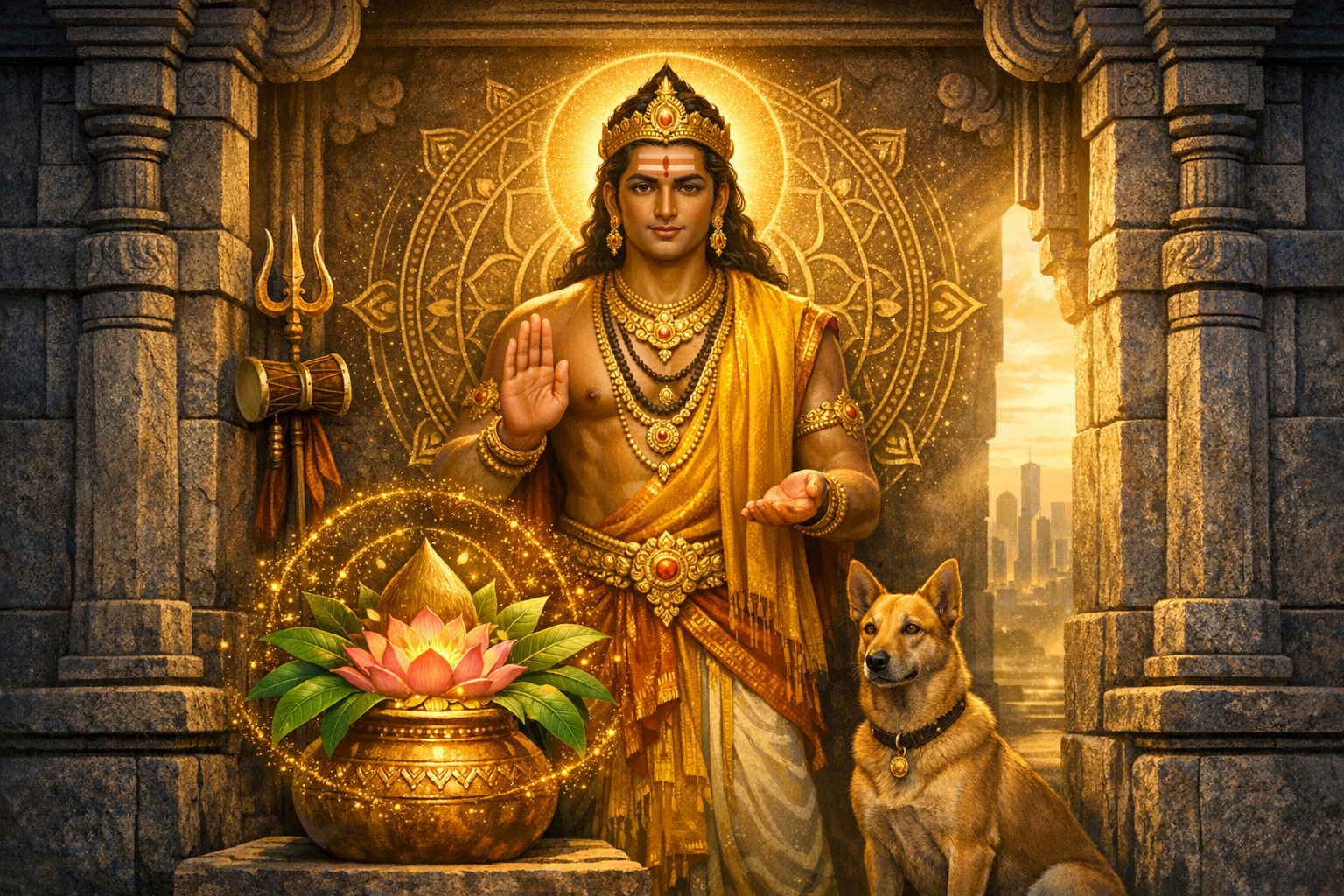
Swarnakarshana Bhairava: Guardian of Gold, Prosperity, and Dharma in Kali Yuga
Read more: Swarnakarshana Bhairava: Guardian of Gold, Prosperity, and Dharma in Kali YugaSwarnakarshana Bhairava—“the one who draws gold”—is a Shaiva Tantric form that links prosperity to disciplined guardianship, especially relevant in Kali Yuga. The iconography, often golden and protective, signals plenitude anchored in vigilance and ethics rather than greed. Textual and ritual traditions frame this Bhairava as a kṣetrapāla of resources, aligning wealth with dharma, responsibility, and…
-
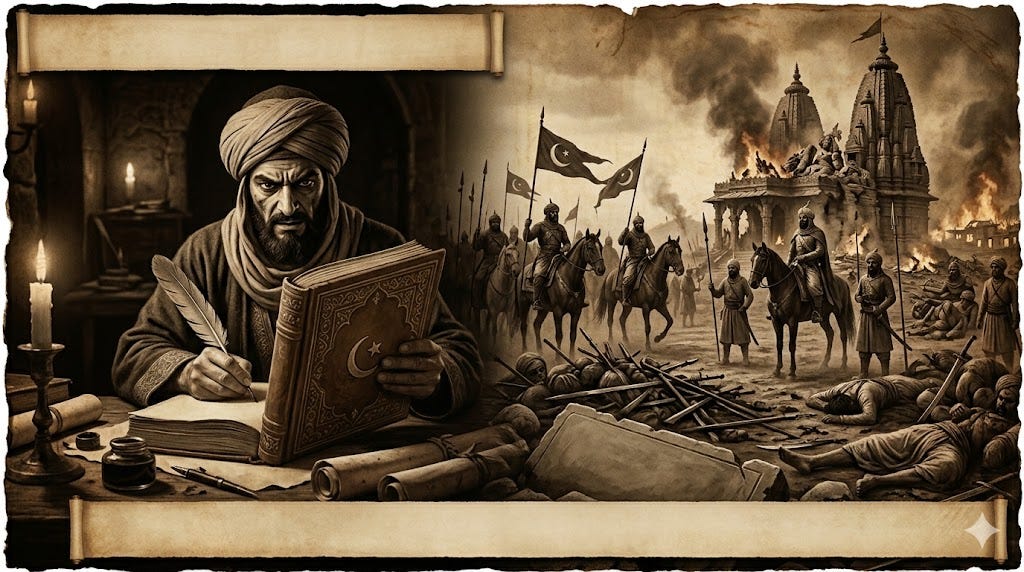
Unmasking Medieval Indo-Persian Chronicles: How Propaganda and Piety Shaped India’s Memory
Read more: Unmasking Medieval Indo-Persian Chronicles: How Propaganda and Piety Shaped India’s MemoryMedieval Arabic and Persian court chronicles in India did more than list battles and dates—they engineered collective memory by merging piety, patronage, and propaganda. This analysis maps their genres (Sirah, Tabaqat, Tarikh, Malfuzat, Maghazi, Maktubat), clarifies how narratives framed Darul Harb and the Ghazi ideal, and explains why panegyric conventions celebrated conquest as sanctity. It…
-

Kon‑Tiki’s Daring Proof: 5,000 Miles on a Balsa Raft—and What It Revealed About Polynesia
Read more: Kon‑Tiki’s Daring Proof: 5,000 Miles on a Balsa Raft—and What It Revealed About PolynesiaKon‑Tiki tested an audacious question in maritime history: could a prehistoric-style balsa raft ride Pacific currents from Peru to Eastern Polynesia? Built with period-faithful materials and steered by guara centerboards and a square sail, the raft launched in April 1947 and made landfall at Raroia after roughly 101 days, validating transport feasibility. The expedition proved…
-

Beyond Appearance: How Karma and Dharma, not Looks, Define True Greatness across Dharmic Paths
Read more: Beyond Appearance: How Karma and Dharma, not Looks, Define True Greatness across Dharmic PathsSocieties often confuse status and surface with substance. Dharmic traditions counter that true greatness rests on karma and dharma—ethical action aligned with sustaining principles—rather than on appearance. Drawing on the Bhagavad Gita and parallel insights from Buddhism, Jainism, and Sikhism, this analysis defines karma with its causal layers and presents dharma as a context-sensitive compass…
-

Rethinking Diplomatic Symbolism: Why Rubio’s Kolkata Stop Should Honor India’s Civilizational Depth
Read more: Rethinking Diplomatic Symbolism: Why Rubio’s Kolkata Stop Should Honor India’s Civilizational DepthThis analysis examines why Marco Rubio’s Kolkata stop at the Missionaries of Charity drew criticism in India and what it reveals about diplomatic symbolism. It explains how itinerary choices function as soft-power signals that can strengthen or weaken trust in U.S.–India relations. Readers will find a concise overview of India’s civilizational continuity and dharmic plurality…
-

Bhairava as Kshetrapala: Fierce Guardian of Sacred Space and Why Temples Map the Cosmos
Read more: Bhairava as Kshetrapala: Fierce Guardian of Sacred Space and Why Temples Map the CosmosBhairava’s identity as Kshetrapala—guardian of the sacred field—explains why Hindu temples are built and maintained as living cosmologies, not just monuments. Drawing on the Shaiva Agamas, Tantras, and the Kashi Khanda, the discussion shows how guardianship works architecturally (gateways, prakaras, bali-pithas) and ritually (bali circuits, threshold vigilance). It clarifies Bhairava’s fierce iconography as a theology…
-

Chosen People or People Who Choose? A Dharmic Analysis of Free Will, Karma, and Grace
Read more: Chosen People or People Who Choose? A Dharmic Analysis of Free Will, Karma, and GraceThis long-form, comparative analysis reframes the classic debate over predestination and free will by drawing on Hindu, Buddhist, Jain, and Sikh philosophies. It explains how dharmic traditions balance karma (conditioning causes), meaningful choice (puruṣārtha), disciplined practice (dharma, śīla, simran, seva), and grace (kṛpā/nādar) where affirmed. Rather than privileging an exclusive elect, these frameworks uphold universal…
-

Vedic Intelligent Design Revisited: Bhaktivedanta Institute, Flagellum, and Dharmic Unity
Read more: Vedic Intelligent Design Revisited: Bhaktivedanta Institute, Flagellum, and Dharmic UnityThis essay revisits the Vedic conversation on Intelligent Design, spotlighting the Bhaktivedanta Institute’s early engagement with the bacterial flagellum while honoring the integrity of evolutionary biology. It explains the flagellum’s rotary motor in technical terms, outlines design arguments such as irreducible and specified complexity, and summarizes mainstream evolutionary responses involving modularity and exaptation. It then…
-

From Fear to Devotion: A Practical, Dharmic Guide to Bhakti, Satsanga, and Inner Peace
Read more: From Fear to Devotion: A Practical, Dharmic Guide to Bhakti, Satsanga, and Inner PeaceA once fiercely independent seeker confronted fear, relinquished familiar habits, and adopted a measured bhakti practice that produced real inner peace without chasing mystical fireworks. His progress—punctuated by honest setbacks—illustrates a practical application of the Bhagavad Gita’s abhyāsa and vairāgya, where consistency and compassionate self-correction matter more than intensity. Community proved pivotal: devotees offered strength,…
-

Rakshasas Reconsidered: Three Orders, Genealogies, and Dharma Across Hindu Scriptures
Read more: Rakshasas Reconsidered: Three Orders, Genealogies, and Dharma Across Hindu ScripturesRakshasas in Hindu scriptures are not a single moral type but a spectrum of beings whose actions and destinies illuminate dharma. A threefold interpretive model—sattva-, rajas-, and tamas-aligned Rakshasas—maps consistent patterns across the Ramayana, Mahabharata, and Puranic genealogies. Vibhishana, Ravana, and figures such as Khara and Kirmira exemplify distinct ethical orientations that readers can recognize…
-
Political Subjugation, Internal Faultlines, and Hindu Civilisation: An Evidence-Based Reappraisal
Read more: Political Subjugation, Internal Faultlines, and Hindu Civilisation: An Evidence-Based ReappraisalUPSC Secretary Shashi Ranjan Kumar’s remarks—linking Hindu civilisation’s decline to political subjugation and internal shortcomings—have revived a vital debate. This evidence-based analysis distinguishes between transient state contraction and enduring civilisational continuity across Hinduism, Buddhism, Jainism, and Sikhism. It maps key turning points from the Delhi Sultanate and Mughal Empire to British Colonial Rule, while highlighting…
-

Dasa Bhairava Unveiled: A Powerful Shaiva-Tantric Journey through Fear, Time, and Grace
Read more: Dasa Bhairava Unveiled: A Powerful Shaiva-Tantric Journey through Fear, Time, and GraceThis long-form, research-based exploration presents Dasa Bhairava (the Tenfold Fierce One) as a living Shaiva-Tantric framework that transforms fear into clarity and ethical action. It clarifies how tenfold schemas vary by lineage, situating them alongside Ashta Bhairava and sixty-four Bhairava traditions without imposing a single orthodoxy. Readers gain a technical yet accessible view of iconography,…
-

Bhairava’s Untamed Jata: Shiva’s Tantric Iconography, Cosmic Fire, and the Discipline of Time
Read more: Bhairava’s Untamed Jata: Shiva’s Tantric Iconography, Cosmic Fire, and the Discipline of TimeBhairava’s untamed jata—often described as a “matted flame”—is a precise iconographic language rather than a dramatic flourish. Drawing on Agamic and Purāṇic traditions (including the Skanda Purāṇa’s Kāśī Khaṇḍa), the flame-like hair encodes tapas (ascetic heat), the governance of time (kāla), and the ethics of vigilant guardianship. Read through a yogic lens, it symbolizes the…
-

Unconditional Love as Social Dharma: A Dharmic Path to Harmony, Justice, and Peace
Read more: Unconditional Love as Social Dharma: A Dharmic Path to Harmony, Justice, and PeaceThis article examines unconditional love as a rigorous social ethic in Hinduism and its sister dharmic traditions, showing how it functions as metaphysical insight, moral psychology, and institutional practice. Drawing on the Upanishads, the Bhagavad Gita, Bhakti literature, and parallel teachings in Buddhism, Jainism, and Sikhism, it articulates an integrated framework for societal harmony. The…
-

May 31, 2026 Panchang: Precise Purnima Tithi, Auspicious Timings, Nakshatra & Rashi Guide
Read more: May 31, 2026 Panchang: Precise Purnima Tithi, Auspicious Timings, Nakshatra & Rashi GuideMay 31, 2026 features Purnima tithi until 1:02 PM IST, followed by Krishna Paksha Pratipada until 3:04 PM on June 1. The guide explains how to align worship, vrata, and day planning with these precise Panchang timings. It outlines a reliable method for locating Sunday Rahu Kalam, Yamaganda, and Gulika Kalam by dividing daylight into…
-

Adhika Masa Ekadashi 2026 (Purushottam Maas): Padmini & Parama Dates, Vrat and Puja Guide
Read more: Adhika Masa Ekadashi 2026 (Purushottam Maas): Padmini & Parama Dates, Vrat and Puja GuideAdhika masa (Purushottam Maas) in 2026 falls as Adhik Jyeshtha, bringing two special Ekadashi vrats: Padmini (Kamala) and Parama. Indicative India dates are Tuesday, 26 May 2026 for Padmini Ekadashi and Thursday, 11 June 2026 for Parama Ekadashi, with local panchang and time zone differences potentially shifting observance by a day. The guide explains why…
-

Ekadashi June 2026: Parama (Kamala) & Nirjala Dates in Jyeshtha, Meaning and Fasting Guide
Read more: Ekadashi June 2026: Parama (Kamala) & Nirjala Dates in Jyeshtha, Meaning and Fasting GuideEkadashi in June 2026 falls on 11 June (Parama, also referenced as Kamala) and 25 June (Nirjala) during Jyeshtha Month. This academically grounded guide explains how Ekadasi Vrata is determined by tithi at local sunrise, why certain panchangs list an Adhik Jyeshta Maas in 2026, and how that informs the Parama/Kamala designation. It outlines the…
-

Panjurli Daiva: Sacred Boar Guardian of Tulunadu—Origin, Kola Rituals, and Dharma
Read more: Panjurli Daiva: Sacred Boar Guardian of Tulunadu—Origin, Kola Rituals, and DharmaPanjurli Daiva is a revered guardian of Tulunadu, celebrated in coastal Karnataka through the living ritual of Bhuta Kola. The sacred narrative often begins in Kailasa with Shiva and Parvati, emphasizing compassion and the restoration of balance. Detailed paddanas, refined iconography, and disciplined performance lineages together transform the ceremony into a mobile shrine and a…
Categories
- Agriculture (20)
- Akhand Bharat (30)
- Aryan Migration -vs- Out of India (8)
- Ayurveda (20)
- Celebrations (882)
- Community (150)
- Community Events (228)
- Cross Posted (105)
- Cultural Advocacy (33)
- Cultural Commentary (61)
- Cultural Heritage (556)
- Cultural Insights (142)
- Cultural Issues (29)
- Cultural Traditions (757)
- Culture (33)
- Economics (22)
- Education (151)
- Geo-Politics (60)
- History (377)
- Indian Authors (6)
- International Trade (8)
- Labor Market (8)
- Literature (97)
- News (618)
- Opinion Pieces (143)
- Personal Reflections (161)
- Personalities (186)
- Philosophy (1,036)
- Politics (208)
- Scripts (3)
- Scriptures (974)
- Spiritual Insight (3,205)
- Spirituality (750)
- Temples (730)
- Tribute (65)
- Uncategorized (6)
- Yoga (103)
Archive