
-

Under the Naga’s Canopy: The Powerful, Timeless Meaning of Serpent Hoods in Hindu Icons
Read more: Under the Naga’s Canopy: The Powerful, Timeless Meaning of Serpent Hoods in Hindu IconsHooded serpents above Hindu deities are not mere ornaments but condensed philosophies. The motif announces protection and sovereignty, like a living royal canopy (chatra), while symbolizing time’s cycles and awakened energy. In Vaiṣṇava art, Ananta-Śeṣa frames Vishnu as the still center of an infinite cosmos; in Śaiva icons, Vāsuki’s presence proclaims mastery over fear, poison,…
-
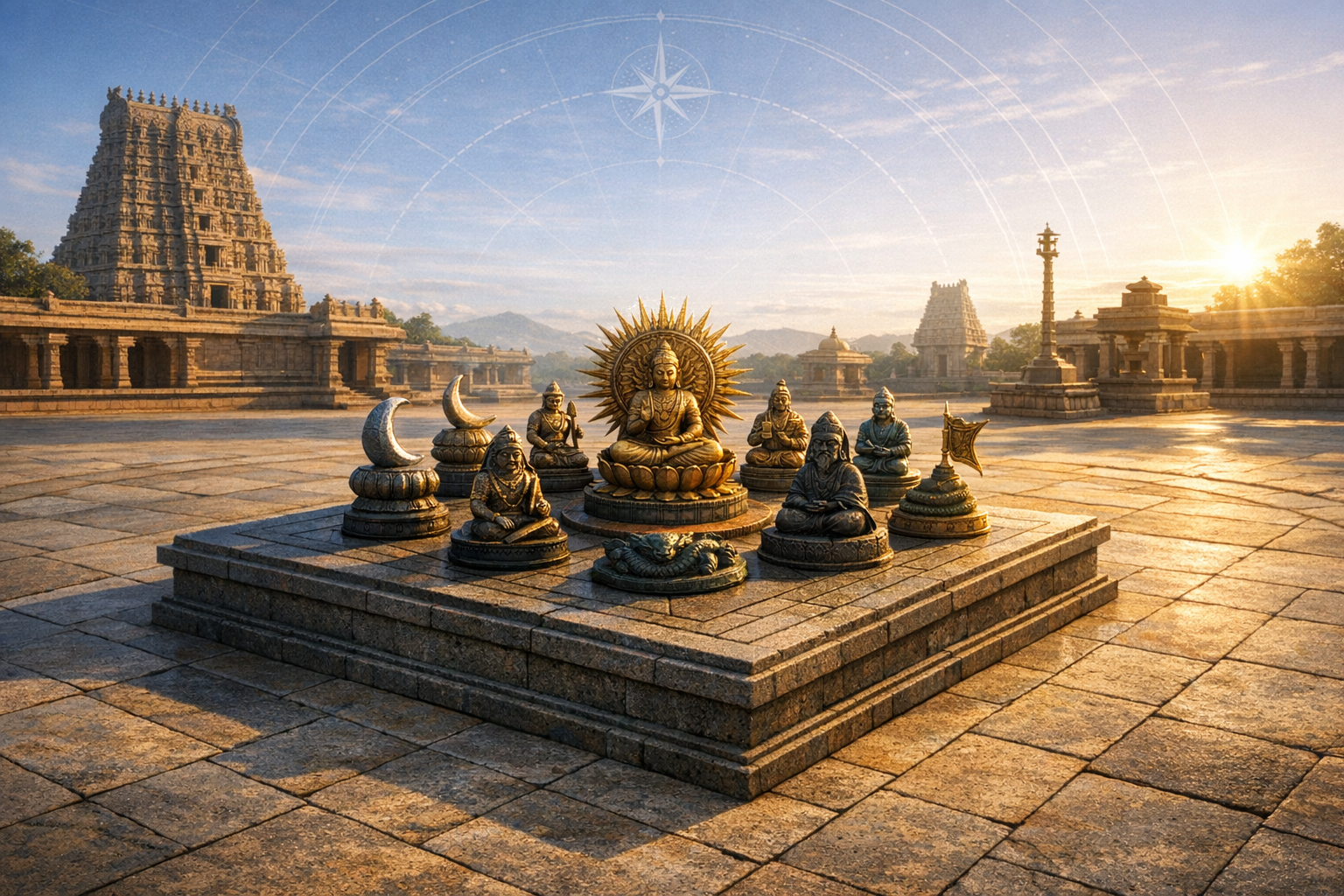
Unlocking the Sacred Geometry of Navagrahas: How Temple Placement Shapes Cosmic Harmony
Read more: Unlocking the Sacred Geometry of Navagrahas: How Temple Placement Shapes Cosmic HarmonyThis in-depth exploration explains how the Navagrahas—Surya, Chandra, Mangala, Budha, Guru, Shukra, Shani, Rahu, and Ketu—are positioned within Hindu temple architecture to embody sacred geometry and ritual function. It synthesizes guidance from Sthāpatya-śāstra, Āgama-śāstra, and the Vāstu Puruṣa Maṇḍala, while highlighting regional variations that preserve core principles. Readers learn why the Navagraha mandala typically resides…
-
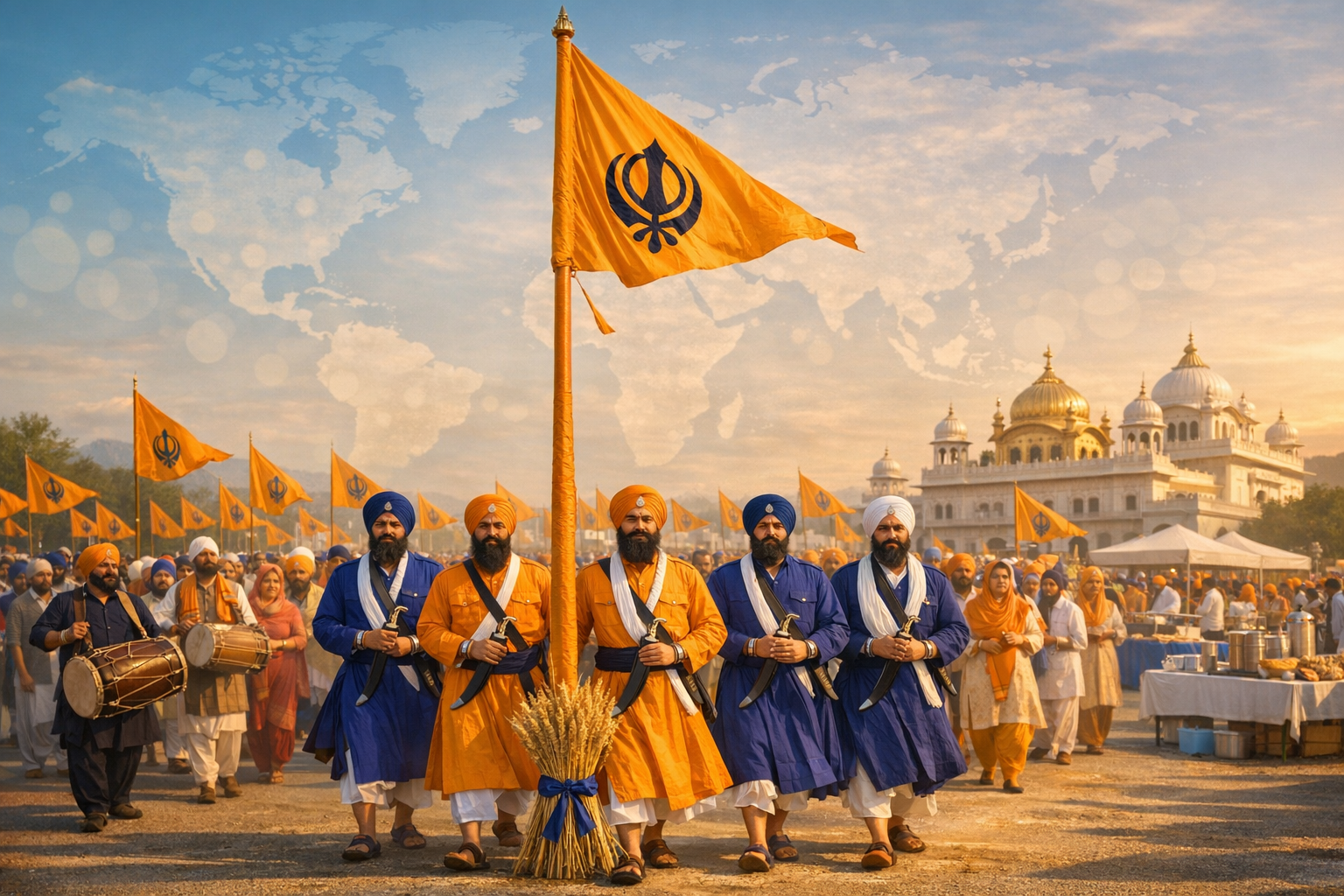
Historic 327th Baisakhi: Khalsa Spirit and Dharmic Unity Ignite Gatherings Worldwide
Read more: Historic 327th Baisakhi: Khalsa Spirit and Dharmic Unity Ignite Gatherings WorldwideThe historic 327th Baisakhi united Sikh communities across India and the global diaspora in a powerful commemoration of Khalsa Sirjana Diwas. Centered on Amrit Sanchar, kirtan, Ardas, and the Hukamnama, observances highlighted discipline, equality, and the living legacy of Guru Gobind Singh’s 1699 institution of the Khalsa. Processions (Nagar Kirtan) and Gatka demonstrations intertwined martial…
-
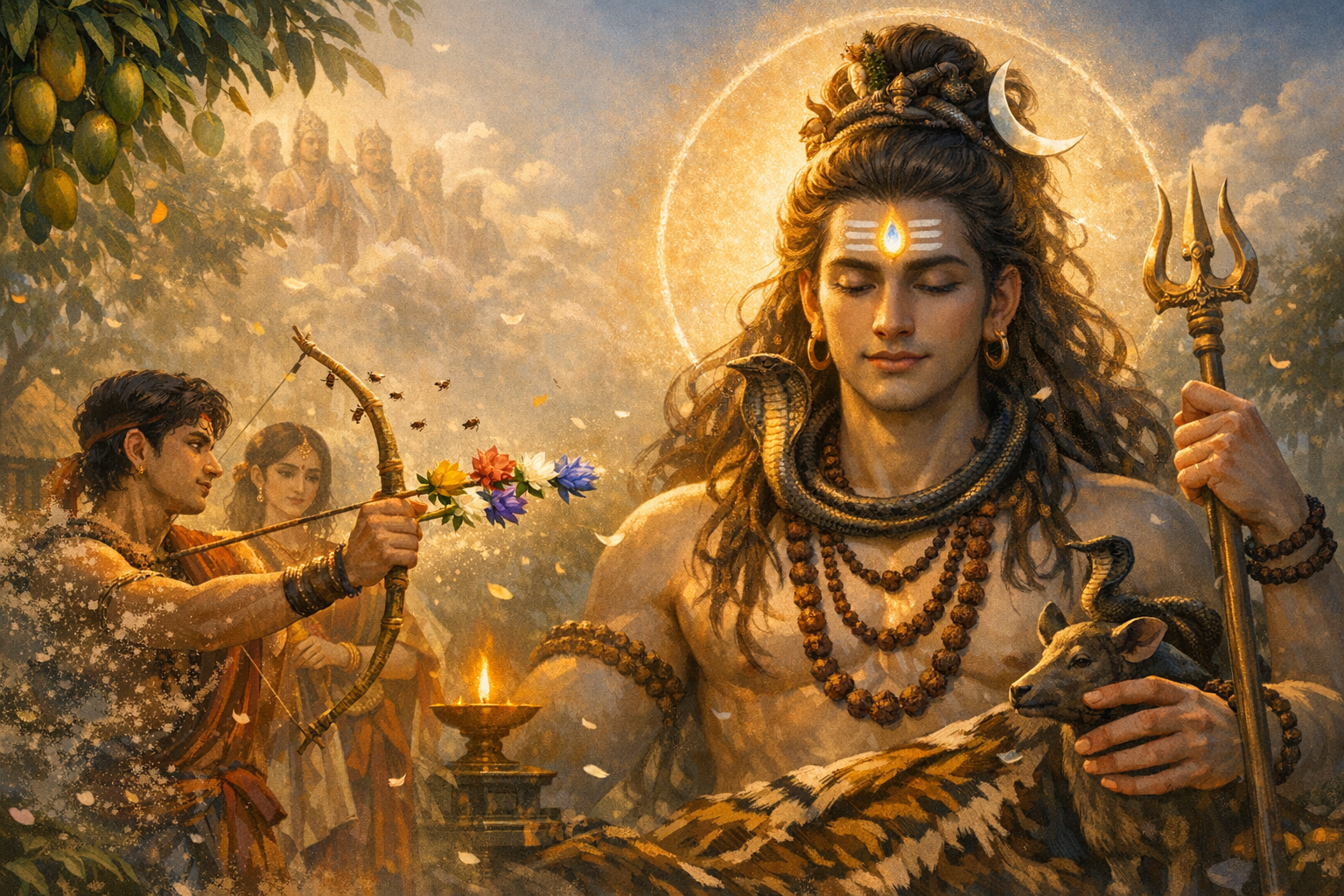
Kamantaka Murti of Shiva: Awe-Inspiring Iconography, Third-Eye Fire, and Mastering Desire
Read more: Kamantaka Murti of Shiva: Awe-Inspiring Iconography, Third-Eye Fire, and Mastering DesireThis in-depth study decodes Kamantaka (Madana Dahana), the powerful murti of Shiva who burns Kama with the third eye’s jñāna-agni, as a visual pedagogy on mastering desire. It explains field-ready markers—Kama’s sugarcane bow, bee-string, five flower-arrows, and Rati—so readers can confidently identify the scene in temples and sculpture. It situates the form in Purāṇic, Āgamic,…
-

Across the Waters: Divine Protection, Tirtha Symbolism, and Rebirth in Dharmic Traditions
Read more: Across the Waters: Divine Protection, Tirtha Symbolism, and Rebirth in Dharmic TraditionsSacred river crossings in Dharmic traditions encode a shared grammar of divine protection, purification, and rebirth. From Krishna’s midnight passage over the Yamuna in the Bhagavata Purana to the Jain ideal of the Tirthankara as a “ford-maker,” from Buddhism’s raft simile to Sikh teachings on crossing the bhavsagar through the Guru’s Naam, each tradition converges…
-

Curiosity as Sacred Practice: How Hinduism Champions Inquiry, Dialogue, and Self-Realization
Read more: Curiosity as Sacred Practice: How Hinduism Champions Inquiry, Dialogue, and Self-RealizationThis article presents a rigorous, accessible account of why Hinduism treats curiosity as a sacred discipline. It traces the spirit of inquiry from the Upanishadic dialogues and Bhagavad Gita to Nyaya logic, Mimamsa hermeneutics, Vedanta inquiry, and Yoga’s epistemology. It explains pramana—valid means of knowledge—and shows how disciplined questioning is bound to ethics, humility, and…
-

May 26, 2026 Panchang: Dashami to Ekadashi, Shubh Muhurat, Nakshatra and Rashi Explained
Read more: May 26, 2026 Panchang: Dashami to Ekadashi, Shubh Muhurat, Nakshatra and Rashi ExplainedMay 26, 2026 begins with Shukla Paksha Dashami and transitions to Shukla Paksha Ekadashi at approximately 07:40 IST in most Indian regions, shaping how households plan worship, fasting, and Shubh Muhurat. The article explains what a tithi is, why its clock-time shift matters, and how to use the Dashami–Ekadashi transition for practical scheduling. It outlines…
-

Cannes 2026: Aarti Khetarpal’s Vedic Couture and Bhagavad Gita Redefine Red-Carpet Diplomacy
Read more: Cannes 2026: Aarti Khetarpal’s Vedic Couture and Bhagavad Gita Redefine Red-Carpet DiplomacyAt the 79th Cannes Film Festival in May 2026, Aarti Khetarpal reframed the red carpet as a platform for cultural diplomacy by carrying a miniature Shrimad Bhagavad Gita from Gita Press and a red Gomukhi chanting bag. Her Vrindavan-inspired golden-yellow lehenga by Sulakshana Monga featured hand-painted motifs of sacred trees, the Yamuna, and dancing gopis,…
-

Safeguarding the Sacred in Goa: A Strong Policy Case to Rename Deity-Named Liquor Shops
Read more: Safeguarding the Sacred in Goa: A Strong Policy Case to Rename Deity-Named Liquor ShopsThe Gomantak Mandir Mahasangh has urged Goa Chief Minister Dr Pramod Sawant to bar liquor outlets from using names of Hindu deities and to require existing shops to rename. A carefully designed, religion-neutral policy that covers sacred signifiers across Hindu, Buddhist, Jain, and Sikh traditions can protect sanctity while preserving business freedoms. Constitutionally, a narrow…
-

West Bengal Ends Religion-Based Aid: Imam–Muezzin–Purohit Stipends Reviewed for Neutral Welfare
Read more: West Bengal Ends Religion-Based Aid: Imam–Muezzin–Purohit Stipends Reviewed for Neutral WelfareWest Bengal has announced the sunset of religion-based aid schemes and a comprehensive review of imam, muezzin, and purohit stipends, signaling a transition toward religion-neutral welfare. The move is framed within Articles 14, 15, 25–27 of the Constitution and long-standing jurisprudence that safeguards religious freedom while prohibiting the promotion of any particular denomination using tax…
-
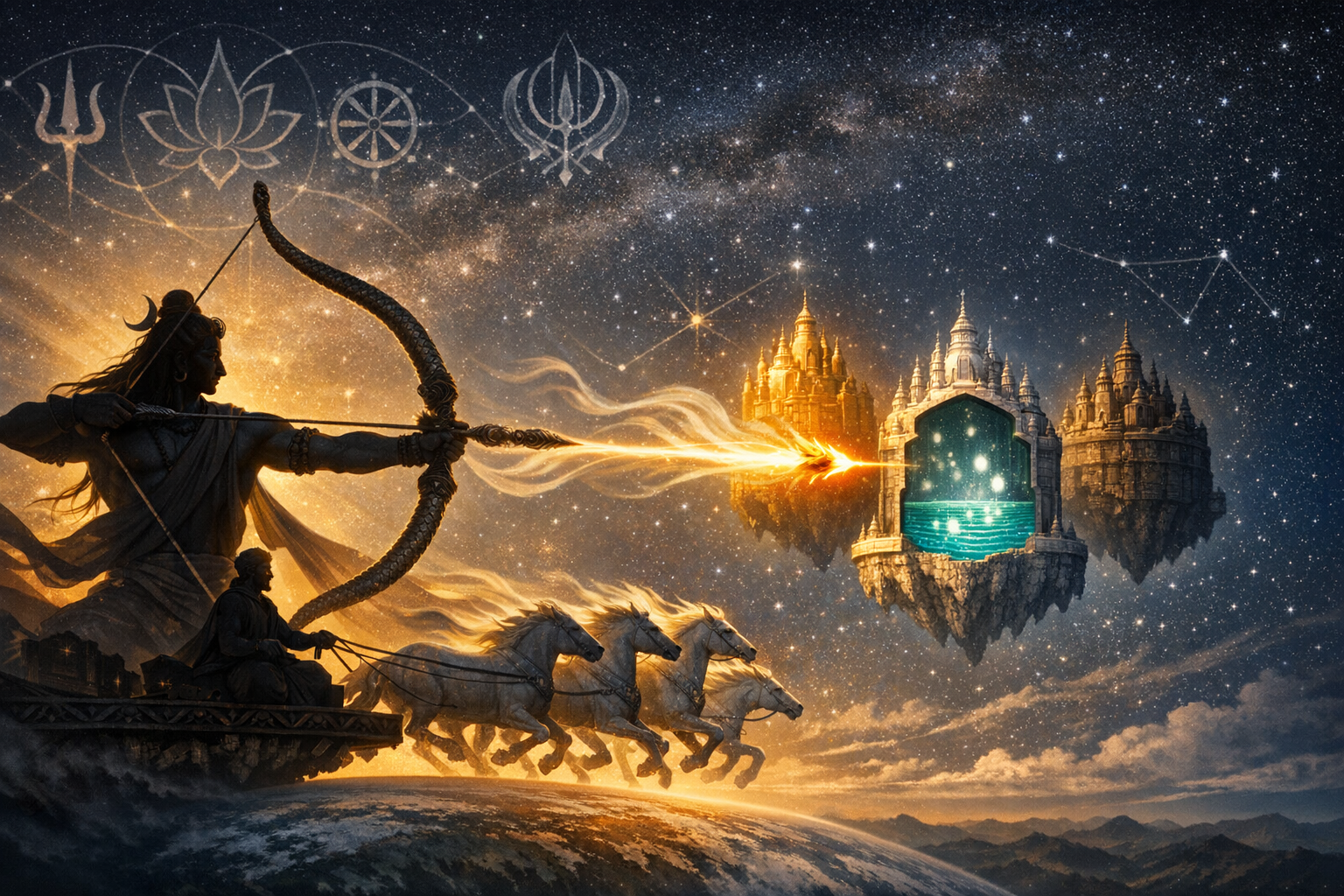
Tripura’s Death-Reviving Nectar and Shiva’s Cosmic Arrow: Power, Ethics, and Dharmic Unity
Read more: Tripura’s Death-Reviving Nectar and Shiva’s Cosmic Arrow: Power, Ethics, and Dharmic UnityThis long-form, research-informed retelling examines the Purāṇic episode of Tripura, three mobile fortresses granted by Brahma to the asura brothers and sustained by a sacred reservoir of death‑reviving nectar. It outlines how Shiva’s single cosmic arrow—released at a rare celestial alignment—resolved a conflict made otherwise insoluble by continual revivification. Drawing on Shiva Purana, Linga Purana,…
-
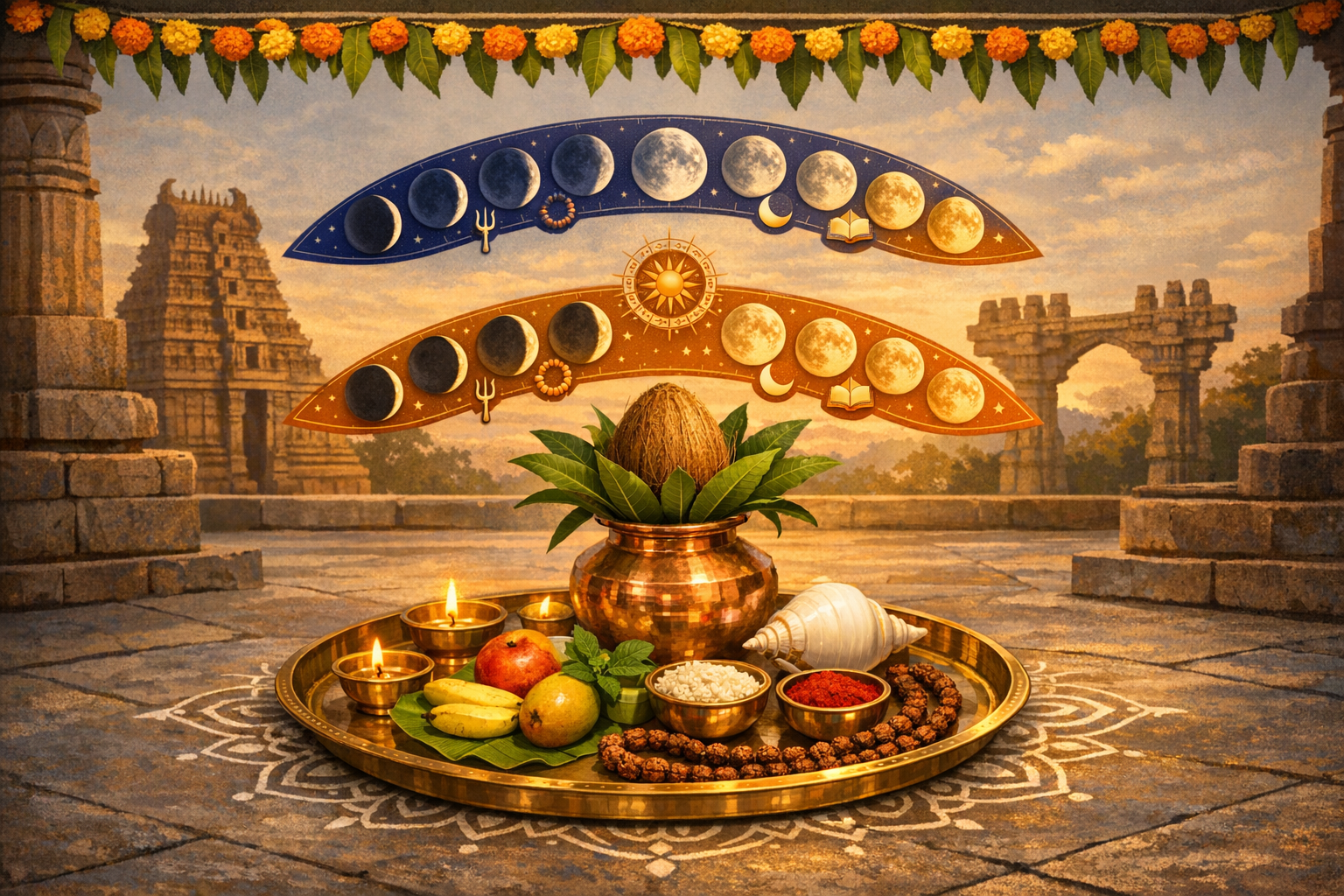
Jyeshta Masam 2026 (Telugu): Complete Adhika & Nija Dates, Rituals, and Festival Guide
Read more: Jyeshta Masam 2026 (Telugu): Complete Adhika & Nija Dates, Rituals, and Festival GuideJyeshta Masam appears twice in the 2026 Telugu calendar due to Adhika Masa, first as Adhika Jyeshta and then as Nija Jyeshta. In the amanta system used in Andhra Pradesh and Telangana, Adhika Jyeshta Masam is expected from 9 May to 6 June 2026 (IST), followed by Nija Jyeshta Masam from 7 June to 5…
-
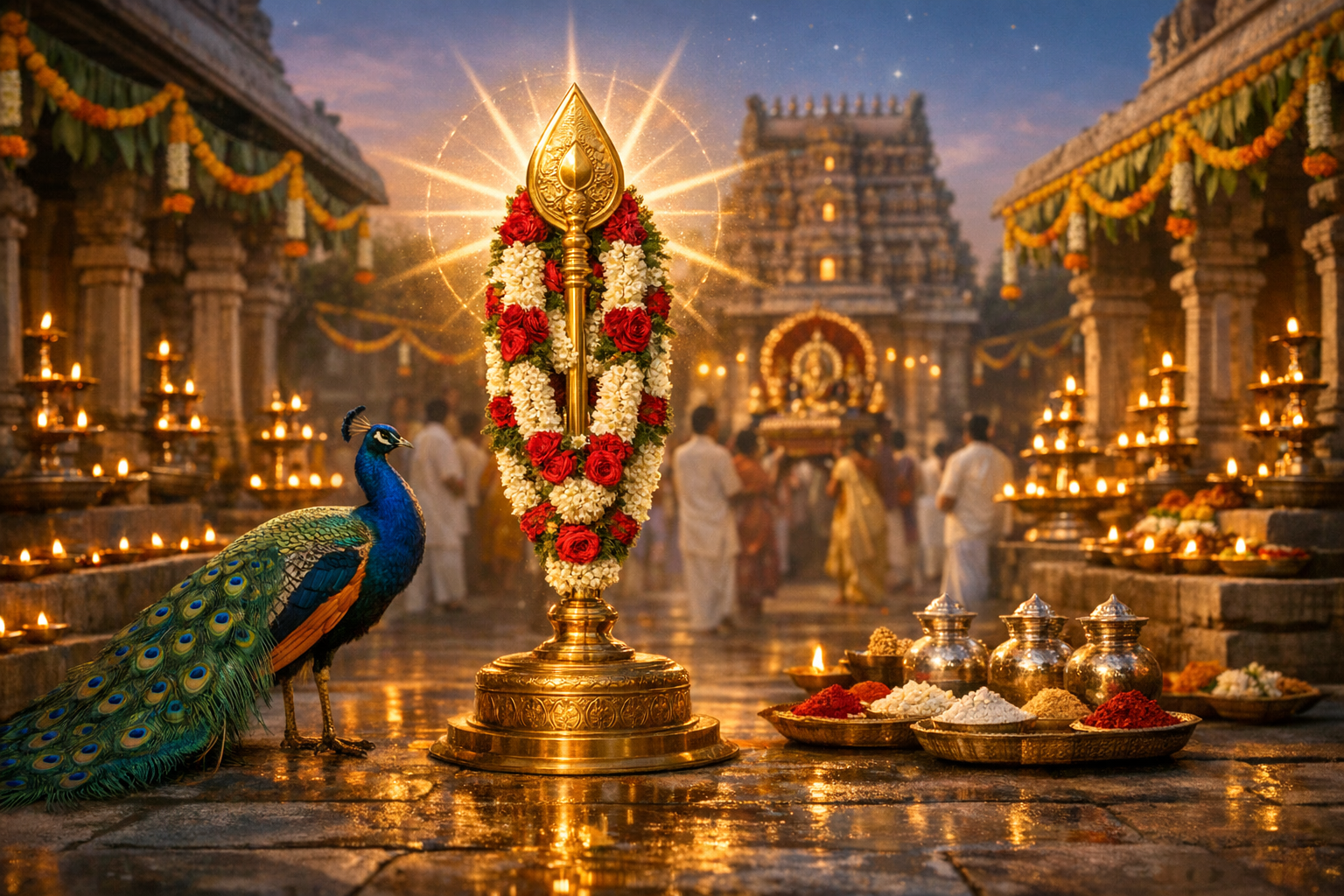
Vaikasi Visakam 2026: Date, Rituals, Temple Highlights, and Deep Significance
Read more: Vaikasi Visakam 2026: Date, Rituals, Temple Highlights, and Deep SignificanceVaikasi Visakam 2026, the birth-star festival of Lord Muruga (Subramanya, Shanmuga), will be observed on 30 May, when Visakam Nakshatra aligns with the Tamil solar month of Vaikasi. The festival is star-based, not tithi-based, and temples set muhurta locally, often guided by the sunrise rule or the dominant duration of Visakam. This comprehensive guide explains…
-

Purusha, the All-Pervading Cosmic Being: Vedic origins, Yogic meaning, living significance
Read more: Purusha, the All-Pervading Cosmic Being: Vedic origins, Yogic meaning, living significancePurusha, the all-pervading Cosmic Being, bridges Vedic cosmology, Upanishadic self-knowledge, Yoga philosophy, and everyday spiritual practice. The article clarifies etymology and the ‘city of the body’ metaphor, then unpacks the Purusha Sukta as a symbolic vision of interdependence rather than rigid social prescription. It examines Advaita, Vishishtadvaita, and Dvaita perspectives, and presents Samkhya-Yoga’s precise account…
-
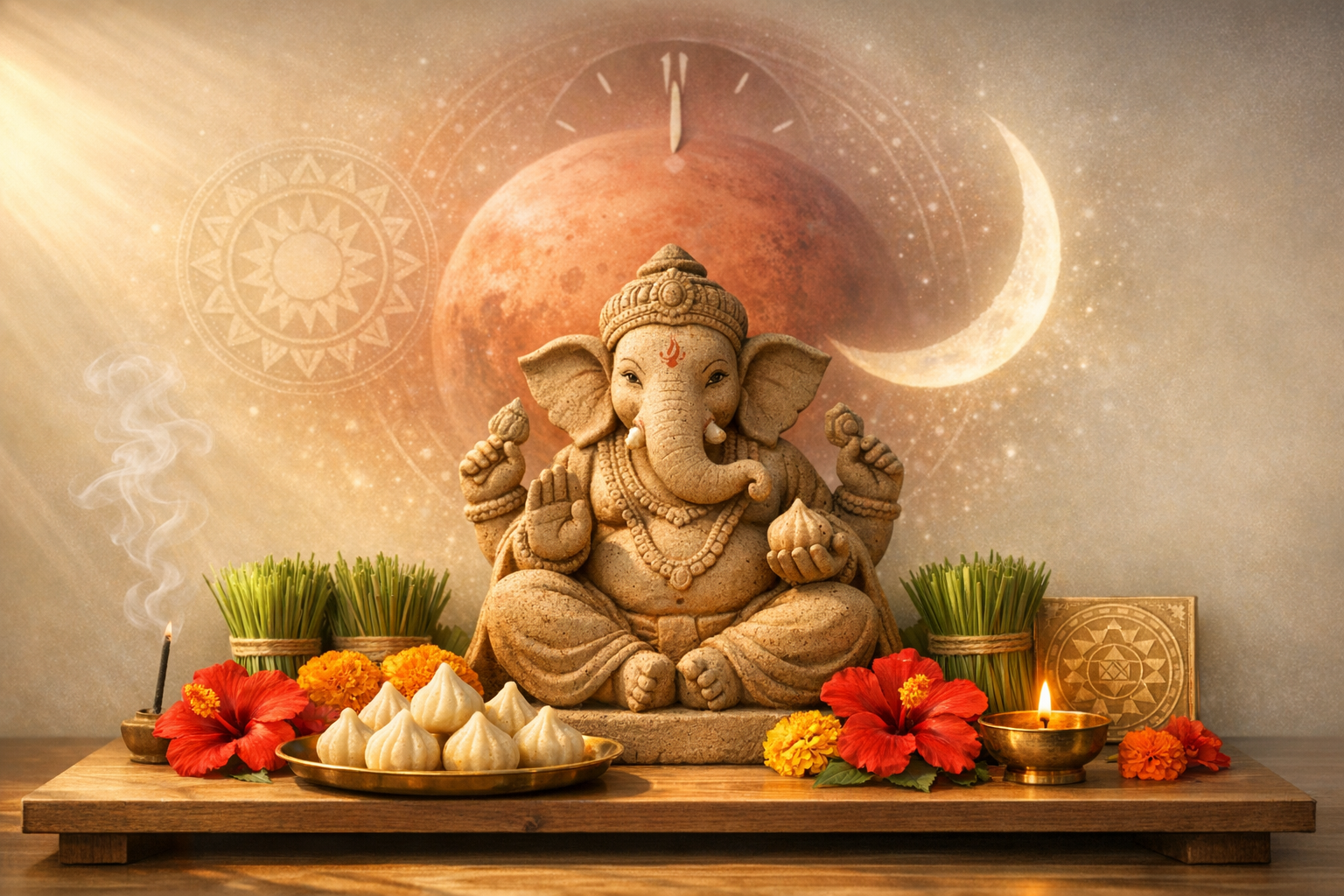
19 May 2026 Angarak Vinayaki Chaturthi: Powerful Mars-aligned Ganesha Puja, Vrat, and Timing Guide
Read more: 19 May 2026 Angarak Vinayaki Chaturthi: Powerful Mars-aligned Ganesha Puja, Vrat, and Timing GuideOn 19 May 2026, Vinayaki Chaturthi coincides with Angarak Yog, the Tuesday occurrence of Shukla Paksha Chaturthi in Adhik Jyeshtha Maas, recognized across Purnimant and Amavasyant Hindu calendars. The day is prized for harmonizing Mars-like drive with Ganesha’s calm intelligence, turning impulsivity into disciplined initiative. Observance centers on madhyahna puja while Chaturthi prevails locally, with…
-

From Heartbreak to Resilience: How Facing Fear Powered Breakup Recovery and Purpose
Read more: From Heartbreak to Resilience: How Facing Fear Powered Breakup Recovery and PurposeA structured Year of Fear—one deliberately chosen challenge per month—built the psychological flexibility and self-efficacy needed to navigate job loss, bereavement, and a painful breakup. Through graduated exposure, mindfulness meditation, and values-based action, avoidance gave way to agency and durable emotional resilience. The narrative shows how reframing rejection as decision-useful data, not a verdict on…
-
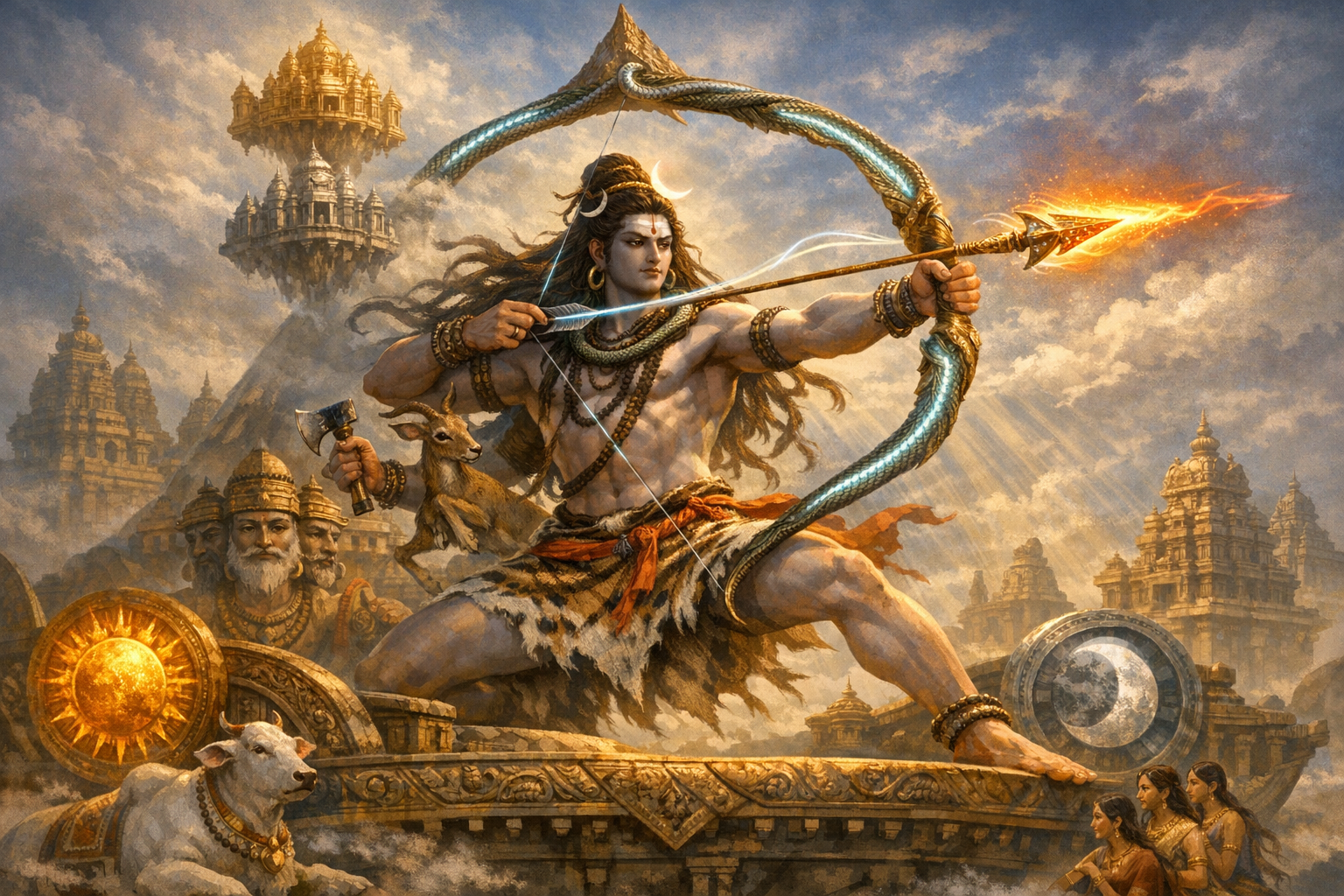
Unlocking Tripurantaka: Shiva’s Cosmic Archer—Iconography, Temple Art, and Inner Alchemy
Read more: Unlocking Tripurantaka: Shiva’s Cosmic Archer—Iconography, Temple Art, and Inner AlchemyTripurantaka, Shiva’s cosmic archer, unites myth, philosophy, and temple art into a single visual theology. This long-form exploration traces the Puranic narrative of Tripura Samhara, decodes canonical iconography from bow to chariot, and surveys major temple depictions from Ellora to the Chola heartland. Readers learn how to identify Tripurantaka murtis, understand Agamic design rules, and…
-

How ISKCON’s Devotee Care Builds Compassionate, Safe, and Thriving Communities Worldwide
Read more: How ISKCON’s Devotee Care Builds Compassionate, Safe, and Thriving Communities WorldwideDevotee Care in ISKCON is evolving into a structured, measurable culture that unites compassion with robust governance and safeguarding. Recent implementations in Auckland and Fiji highlight how coordinated training, clear SOPs, and survivor-centered safety policies strengthen both devotion and community resilience. A practical framework—covering spiritual support, psychosocial care, life-stage transitions, and conflict transformation—ensures well-being without…
-
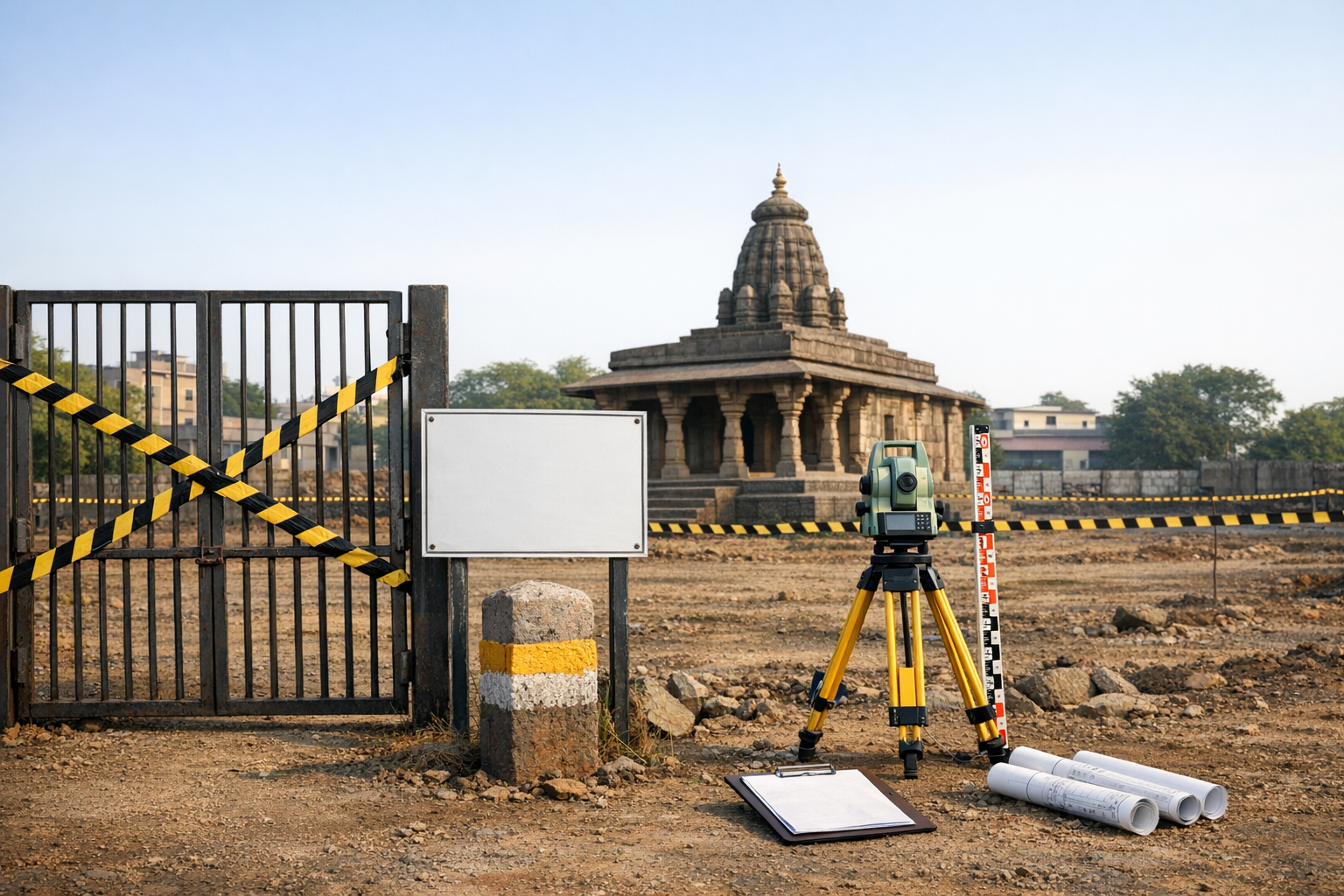
Miraj Temple Trust Land Encroachment Halted: Authorities Seal Site, 30‑Day Resolution Sought
Read more: Miraj Temple Trust Land Encroachment Halted: Authorities Seal Site, 30‑Day Resolution SoughtAuthorities in Miraj halted unauthorized construction on Shri Dnyangiri Swami Maharaj Trust land and sealed the site, initiating a due-process pathway for resolution. The legal framework—including Article 26 of the Constitution, the Bombay Public Trusts Act, 1950, and the MRTP Act, 1966—supports firm, fair enforcement against encroachment. Community representatives have requested complete removal of the…
-

Unraveling the Indo-European Homeland: Evidence, Myths, and South Asia’s Living Heritage
Read more: Unraveling the Indo-European Homeland: Evidence, Myths, and South Asia’s Living HeritageThe search for the Indo-European homeland remains unsettled, but today it is informed by a stronger synthesis of comparative linguistics, archaeology, and ancient DNA. This article surveys the three leading proposals—Anatolian-Neolithic, South Caucasus, and Pontic-Caspian steppe—and distills J. P. Mallory’s critiques, including the problem of massive language shifts without clear archaeological correlates. It explains how…
-
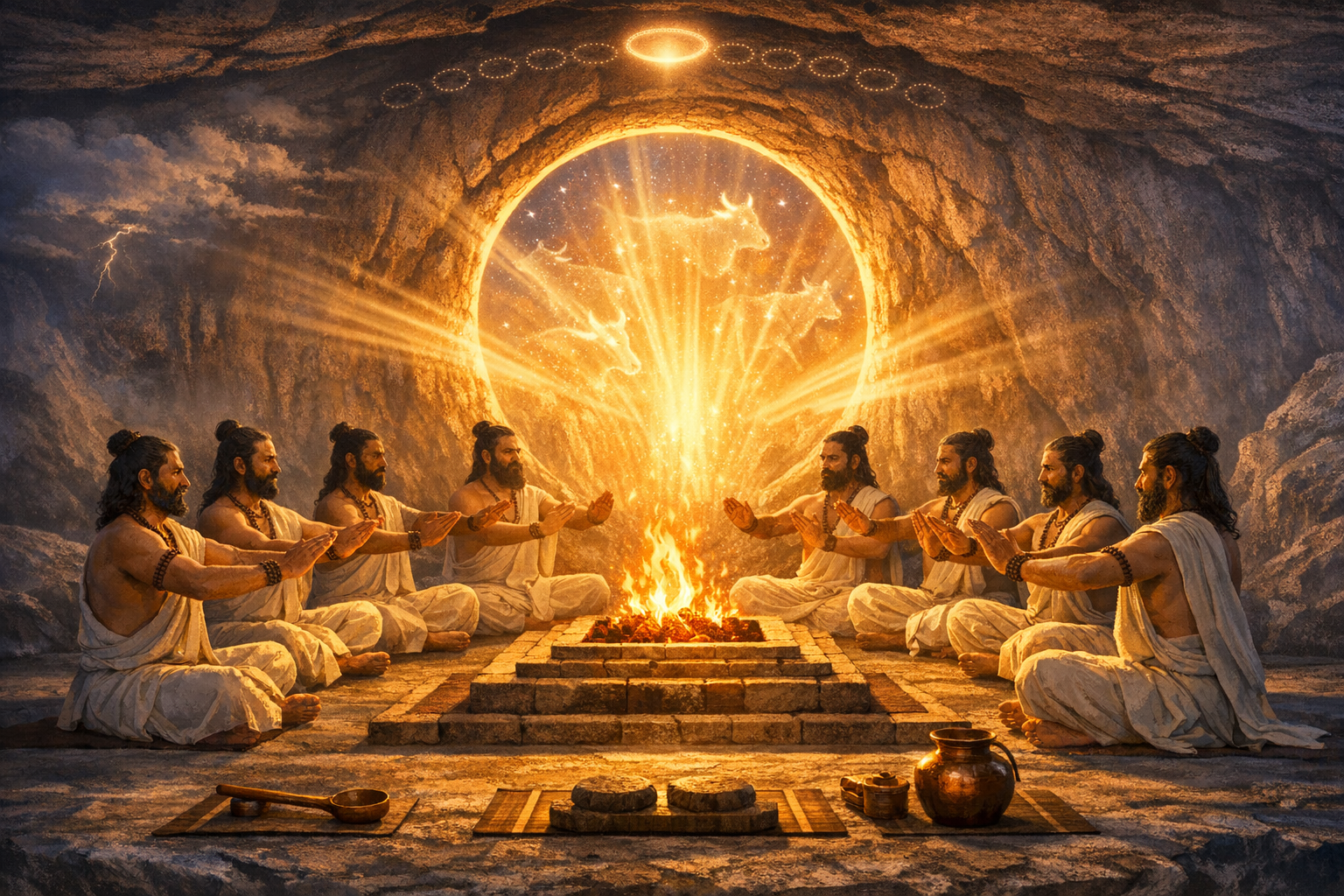
Decoding the Dashagvas: Swift Angirasa Sages of the Rigveda and Their Living Legacy
Read more: Decoding the Dashagvas: Swift Angirasa Sages of the Rigveda and Their Living LegacyThe Dashagvas, remembered in the Rigveda as Angirasa-aligned priests, exemplify the Vedic fusion of disciplined speech, precise timing, and communal practice. Tradition pairs them with the Navagvas and links their names to nine- and ten-month sacrificial cycles that culminate in the release of light symbolized as cows and dawns. Rather than celebrating haste, their famed…
-
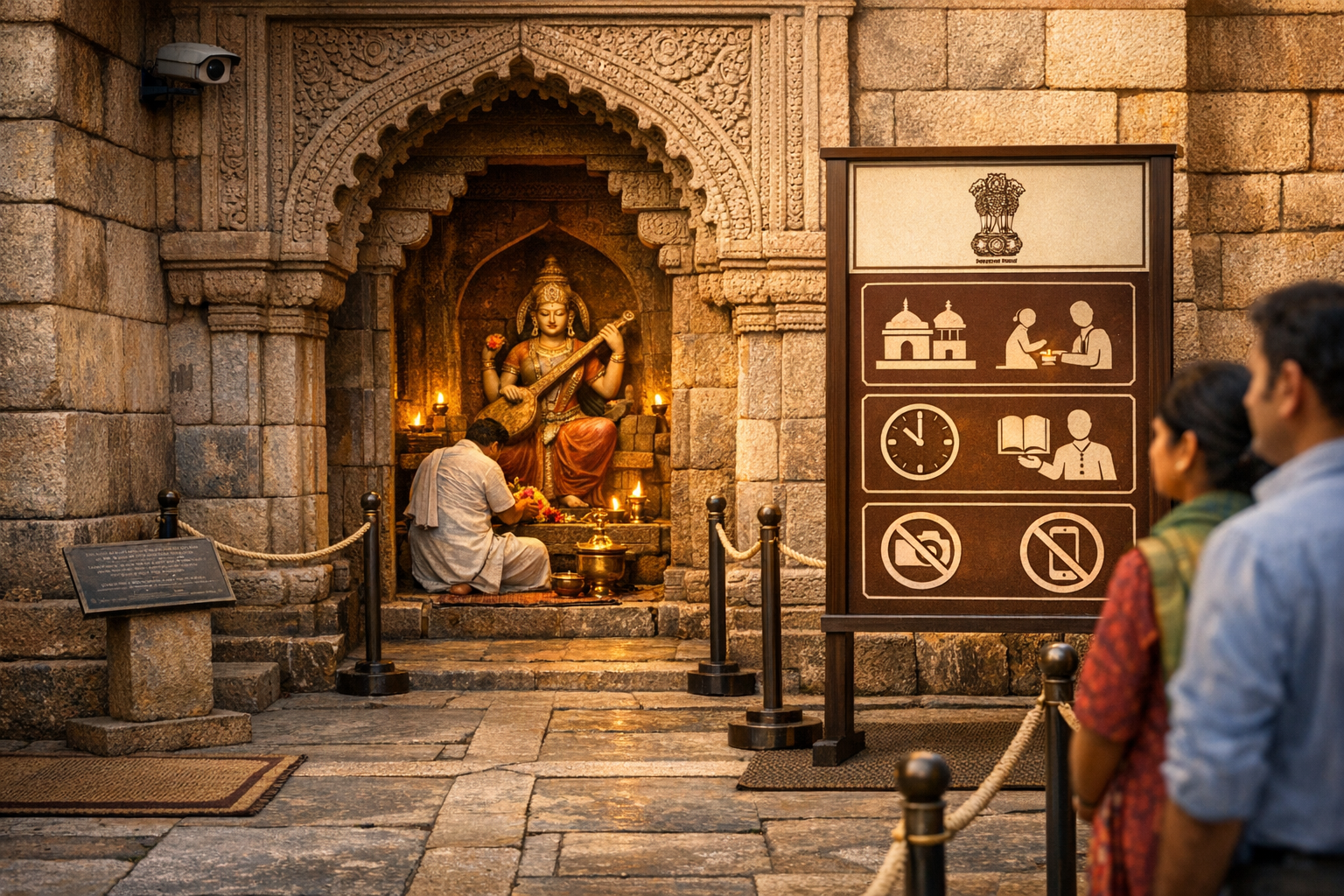
Bhojshala at a crossroads: Saraswati idol reportedly installed; entry rules tighten after court
Read more: Bhojshala at a crossroads: Saraswati idol reportedly installed; entry rules tighten after courtReports from Dhar, Madhya Pradesh suggest that a consecrated idol of Mata Saraswati has been installed at Bhojshala with daily worship commencing, and that entry protocols have tightened following a court directive. This analysis explains the legal frameworks (Articles 25–26, AMASR Act, and the Places of Worship Act) that shape permissible action. It outlines how…
-

Kumar Chellappan on HJS Outreach: A Powerful Call to Unite and Empower Every Hindu
Read more: Kumar Chellappan on HJS Outreach: A Powerful Call to Unite and Empower Every HinduA courtesy visit by a Hindu Janajagruti Samiti (HJS) delegation to senior journalist and Sanatan Prabhat contributor Kumar Chellappan spotlighted a shared priority: scaling inclusive, evidence-based outreach so that HJS’s work reaches every Hindu household. The engagement illustrates how responsible journalism and civil society can co-create value through accurate reporting, ethical collaboration, and community-centered communication.…
-

Shahuwadi Tehsildar Office Toilets: Hindu Vidhidnya Parishad Demands Urgent, Dignity-Centered Steps
Read more: Shahuwadi Tehsildar Office Toilets: Hindu Vidhidnya Parishad Demands Urgent, Dignity-Centered StepsHindu Vidhidnya Parishad has sought urgent remediation of unhygienic public toilets at the Shahuwadi Tehsildar office in Kolhapur, placing public health and dignity at the center of the discussion. The issue engages constitutional protections for sanitation under Article 21 and long-standing Supreme Court guidance on abating public health nuisances. National standards (Swachh Bharat Mission, National…
Categories
- Agriculture (20)
- Akhand Bharat (30)
- Aryan Migration -vs- Out of India (8)
- Ayurveda (20)
- Celebrations (882)
- Community (150)
- Community Events (231)
- Cross Posted (105)
- Cultural Advocacy (33)
- Cultural Commentary (61)
- Cultural Heritage (556)
- Cultural Insights (142)
- Cultural Issues (29)
- Cultural Traditions (757)
- Culture (33)
- Economics (22)
- Education (152)
- Geo-Politics (60)
- History (377)
- Indian Authors (6)
- International Trade (8)
- Labor Market (8)
- Literature (97)
- News (619)
- Opinion Pieces (143)
- Personal Reflections (161)
- Personalities (186)
- Philosophy (1,036)
- Politics (208)
- Scripts (3)
- Scriptures (975)
- Spiritual Insight (3,207)
- Spirituality (750)
- Temples (731)
- Tribute (65)
- Uncategorized (6)
- Yoga (103)
Archive