

A recent courtesy visit by a delegation of Hindu Janajagruti Samiti (HJS) to senior journalist and Sanatan Prabhat contributor Kumar Chellappan highlighted a clear strategic priority: community education and cultural stewardship must scale so that the Samiti’s work reaches every Hindu household. In acknowledging the Samiti’s initiatives, the engagement underscored how dialogue between journalism and civil society can strengthen cultural continuity, public reasoning, and community resilience across India’s plural social fabric.
Positioned at the intersection of public communication and civic action, such exchanges show how responsible media and grassroots organisations co-create value. Journalism ethics demand accuracy, balance, and context; civil-society platforms contribute ground-level knowledge, volunteer energy, and sustained CommunityEngagement. Together, they can elevate evidence-based discourse, reduce noise in polarised environments, and advance Cultural Preservation Efforts without compromising editorial independence.
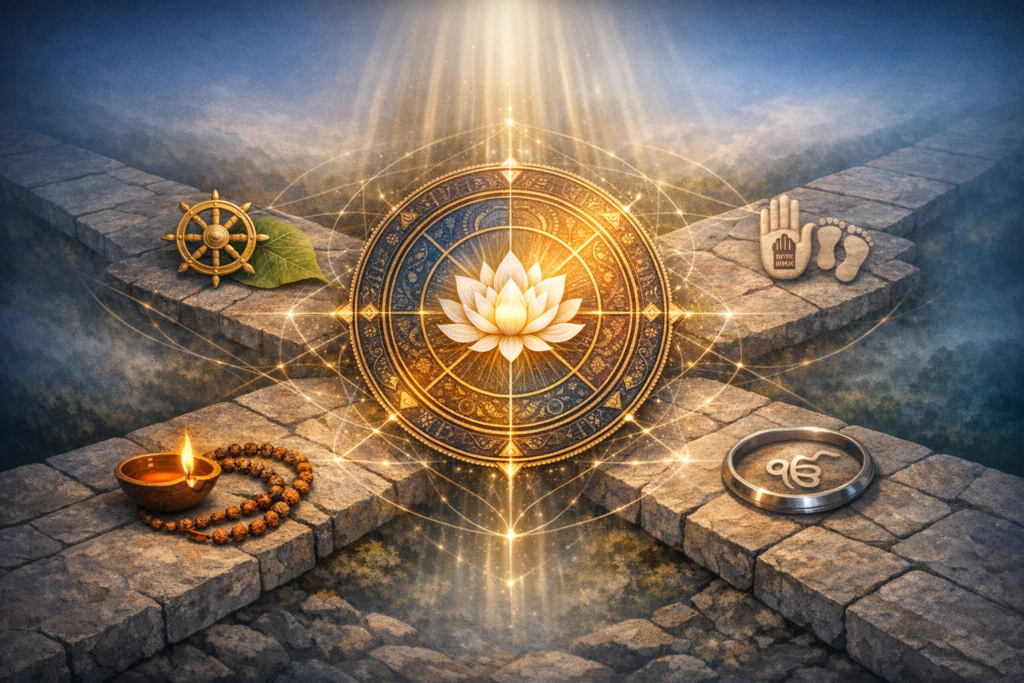
Hindu Janajagruti Samiti (HJS) operates in a space where cultural literacy, civic awareness, and HeritagePreservation converge. Its programmes typically focus on safeguarding heritage, encouraging ethical living aligned with Sanatana Dharma, and nurturing Hindu Unity through constructive, lawful participation in public life. When framed inclusively, this orientation complements broader Dharmic traditions—Buddhism, Jainism, and Sikhism—by emphasising shared values such as ahimsa, seva, satya, and karuna.
The participation of a senior journalist such as Kumar Chellappan is instructive for the wider media ecosystem. It illustrates how rigorous reporting and fair commentary—practices central to true journalism—can document, scrutinise, and contextualise community efforts while also illuminating their societal significance. In this way, civic narratives avoid partisan caricature and instead foreground verifiable contributions to Hindu Society and public benefit.
Operationally, the idea that this work must reach every Hindu requires precision. Reach is not a single metric; it spans geographic coverage (urban, peri-urban, rural), linguistic plurality, age cohorts, and socioeconomic strata. It also implies accessibility for persons with disabilities and sensitivity to local customs. Critically, reach must be inclusive in spirit—advancing Hindu Dharma in a manner that strengthens social harmony and invites Dharmic kinship with Buddhists, Jains, and Sikhs—thereby aligning with Unity in spiritual diversity and Interfaith cooperation in India.
A Dharmic-unity frame offers practical guidance. Jain anekantavada encourages many-sided understanding; Buddhist karuna anchors compassionate service; Sikh seva animates duty to community; and Hindu dharma provides a capacious ethic for social order. Woven together, these streams affirm Vasudhaiva Kutumbakam and provide a language for outreach that is principled, plural, and solution-focused—ideal conditions for constructive Cultural Advocacy.
A scalable message architecture can translate these principles into practice. At the core, condense values (dharma, seva, satya, karuna) into concise statements supported by lived examples. Around the core, develop region-specific narratives in local languages and scripts. At the edge, craft micro-targeted materials for students, women, professionals, and elders, ensuring high readability and cultural authenticity. This layered approach balances cohesion with contextual sensitivity.
Distribution benefits from a PESO model—Paid, Earned, Shared, and Owned media—implemented ethically. Owned channels (websites, newsletters, podcasts) ensure message fidelity; Earned media (journalistic coverage, op-eds, interviews) builds trust; Shared media (community groups, messaging apps) scales peer-to-peer dissemination; and carefully bounded Paid placements extend to under-reached segments. Partnerships with temples, mathas, viharas, and gurdwaras for offline engagements can reinforce online messaging through credible, local touchpoints.
Digital quality and accessibility are essential. Search discoverability improves through sound SEO practices, well-structured headings, descriptive slugs, and schema markup for events and articles. Reliability is strengthened by transparent citations, editorial bios, and content-update logs that reflect E-E-A-T principles (experience, expertise, authoritativeness, trustworthiness). Accessibility features—alt text, captioned video, legible contrast, and mobile-first layouts—widen inclusion and improve Core Web Vitals, directly enhancing reach.
Measurement should track both breadth and depth. A balanced scorecard might include awareness (unique reach, geographic spread), engagement (dwell time, repeat visits, event participation), trust (subscriber retention, testimonial quality), and action (volunteer onboarding, skill-training completion, policy-literacy gains). Periodic sentiment analysis and structured feedback loops can identify gaps, counter misinformation, and iterate content for clarity and impact.
Editorial governance provides the guardrails for credibility. Clear sourcing standards, version control for updates, and conflict-of-interest disclosures protect journalistic integrity while enabling constructive collaboration with advocacy groups. An independent advisory panel—comprising scholars of History, Philosophy, and Cultural Heritage—can review materials that interpret scriptures or contested historical claims, thereby reducing the risk of distorted history while welcoming legitimate scholarly debate.
Civic-literacy components further stabilise outreach. Awareness of constitutional rights and responsibilities—particularly Article 25 (freedom of conscience and free profession, practice, and propagation of religion) and Article 26 (freedom to manage religious affairs)—helps communities engage lawfully and confidently. Educational materials should emphasise due process, peaceful expression, and evidence-led advocacy to reinforce Social Cohesion and democratic values.
Conflict-sensitive communication reduces polarisation risk. Preferred practices include avoiding pejoratives, focusing on shared interests (education, environment, service), and foregrounding community service outcomes rather than identity competition. Where disagreements exist, facilitative dialogue rooted in mutual respect and verifiable facts is more effective than reactive rhetoric, aligning with the blog’s objective of unity among Dharmic traditions.
Programmatically, community learning circles, temple-heritage walks, and youth-led service projects create low-barrier entry points that blend knowledge with action. Content developed from such initiatives—oral histories, local case studies, and practical guides—can humanise HeritagePreservation, showing how culture and ethics live in everyday choices rather than only in commemorative events.
Capacity building compounds impact. Volunteer training in media literacy, fact-checking, translation, and inclusive design raises the overall quality of content and delivery. Partnerships with educators, legal practitioners, and mental-health professionals can diversify perspectives and improve the social relevance of outreach, ensuring that Hindu Unity matures as an ethic of shared responsibility rather than a slogan.
Viewed through this lens, the HJS–Kumar Chellappan interaction is more than a courtesy call. It models a constructive relationship between independent journalism and community action, signalling that principled storytelling, strong editorial standards, and inclusive outreach can coexist. When sustained, such collaboration can help ensure that the values and practices associated with Sanatana Dharma reach every Hindu—while also strengthening bridges with Buddhism, Jainism, and Sikhism—so that unity in spiritual diversity is not merely affirmed, but methodically enabled in public life.
Inspired by this post on Hindu Jagruti Samiti.









Leave a Reply
You must be logged in to post a comment.