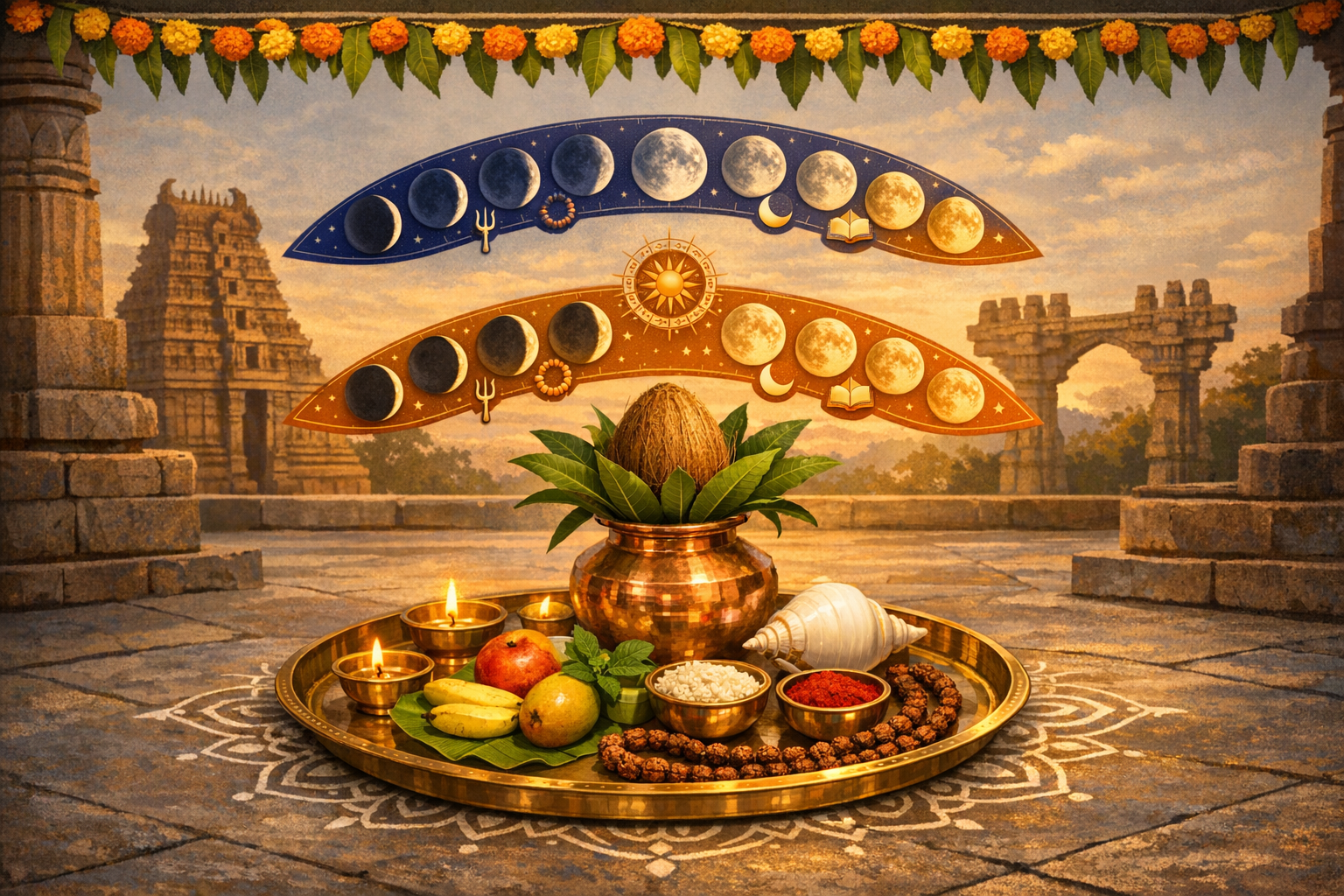
Jyeshta Masam is the third lunar month in the traditional Telugu calendar (amanta system) followed across Andhra Pradesh and Telangana. In 2026, this month occurs twice—first as Adhika Jyeshta Masam and then as Nija Jyeshta Masam—owing to the calendrical correction known as Adhika Masa. This rare alignment deepens the spiritual cadence of late summer, offering extended opportunities for vrata, dana, and satsangha, while guiding households on when to schedule auspicious samskaras.
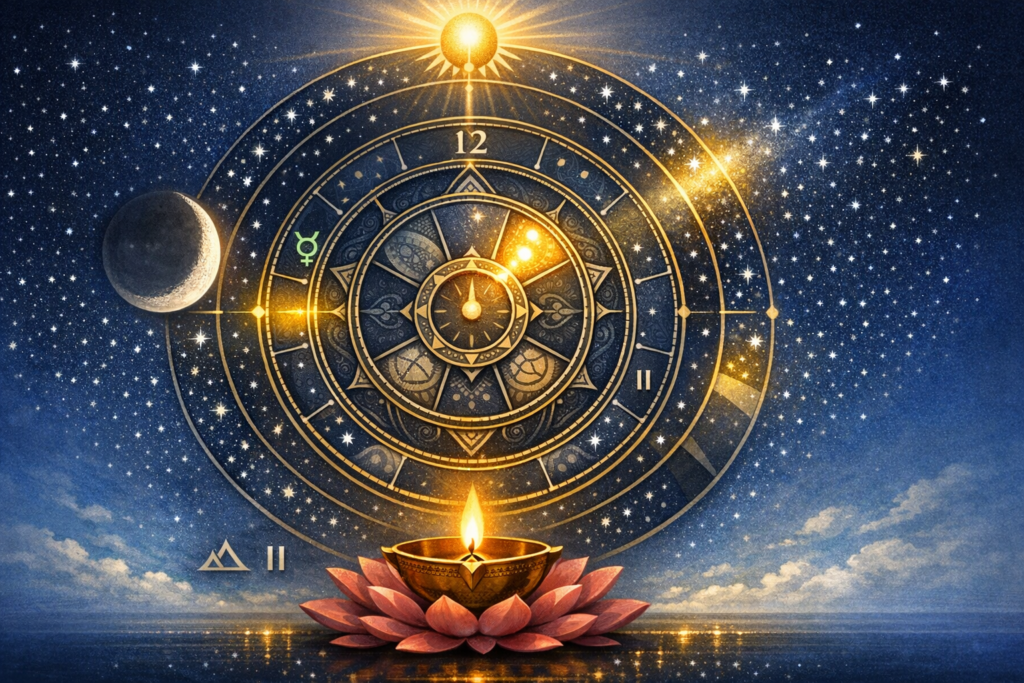
Adhika Masa arises when there is no solar transit (saṅkrānti) between two successive new moons (amāvasyā). In such a case, the intercalary month inherits the name of the adjacent lunar month, here producing Adhika Jyeshta followed immediately by Nija Jyeshta. This mechanism preserves seasonal alignment in the Hindu lunisolar framework without disturbing tithi-based observances.
Indicative IST dates for the Telugu (amanta) reckoning in 2026 are as follows: Adhika Jyeshta Masam is expected from 9 May 2026 (Shukla Pratipada, the day after Amavasya) to 6 June 2026 (Amavasya), and Nija Jyeshta Masam from 7 June 2026 (Shukla Pratipada) to 5 July 2026 (Amavasya). Minor one-day variations may occur by locality and by panchangam (Drik vs. Surya Siddhanta), especially where Amavasya or Purnima end times fall near midnight.
Under the amanta convention used in the Telugu calendar, a lunar month begins the day after Amavasya and concludes on Amavasya. Each month therefore unfolds as Shukla Paksha (waxing phase) followed by Krishna Paksha (waning phase), with Purnima (full moon) near the midpoint and Amavasya marking the close.
The spiritual mood of Jyeshta is shaped by heat, scarcity of rain, and a collective emphasis on inner tapas. Many families in Andhra Pradesh and Telangana recall Jyeshta Masam as a time of steady discipline—early-morning snana, streamlined meals, and quiet evening japa—to conserve energy and focus the mind. The twin months in 2026 often evoke shared memories of summer temple visits, cool well-water baths, and community satsangs that bring relief and connection.
Across both Adhika and Nija Jyeshta, core observances include Sankatahara Chaturthi, both Pradoshams, Masa Shivaratri (Krishna Chaturdashi), and Satyanarayana Vratham on Purnima. Regionally popular vows such as Nirjala Ekadashi (observed in Jyeshta Shukla Ekadashi) underscore the value of restraint and charity. In some traditions, Ganga Dussehra (Jyeshta Shukla Dashami) and Shani Jayanti (Jyeshta Amavasya) are marked, even if emphasis varies by community.
Dharmashastra and Purana guidance converge in advising that Adhika Masa is ideal for vrata, japa, svadhyaya, tirtha-snana, and dana. Many traditions defer major shubha-karyas—such as vivaha and griha-pravesha—to the immediately following Nija month. At the same time, samskaras tied to necessity or health proceed with due counsel, reflecting the compassionate pragmatism at the heart of Sanatana Dharma.
The unity of dharmic traditions is particularly evident during Adhika Masa. While nomenclature and emphasis may differ, the shared ethos of inner purification, compassion, and seva resonates across Hindu, Buddhist, and Jain communities; Sikh families, often aligning observances to the solar Nanakshahi, likewise join seva and community upliftment efforts. This inclusive spirit reflects Vasudhaiva Kutumbakam and encourages mutual respect for diverse calendars anchored in common ethical commitments.
Calendrical variation is natural. Telugu panchangams typically follow the amanta system; North Indian almanacs often use the purnimanta model (month ending on Purnima). Computational approaches also differ: Drik (observational/astronomical) vis-à-vis Surya Siddhanta (traditional astronomical parameters). Outside India, time-zone offsets can shift the civil date of tithi transitions, occasionally moving an observance by a day.
A practical verification method is straightforward: identify local Amavasya end times in IST (or your time zone). The day after marks Shukla Pratipada and therefore the start of the new lunar month. Next, confirm whether a solar saṅkrānti (Sun entering a new rāshi) occurs within that lunar span. If not, that month is Adhika; the subsequent month of the same name is Nija.
For households planning samskaras, muhurta selection in 2026 benefits from this clarity: prioritize vrata, dana, and study during Adhika Jyeshta, and reserve celebratory shubha-karyas for Nija Jyeshta, barring urgent needs. Temples in Andhra Pradesh and Telangana often schedule extended parayanams and annadanam in Adhika Masa, followed by larger utsavams in the ensuing Nija month.
In sum, Jyeshta Masam 2026 in the Telugu calendar presents an extended spiritual season: Adhika Jyeshta Masam from 9 May to 6 June 2026 (IST) and Nija Jyeshta Masam from 7 June to 5 July 2026 (IST). With mindful attention to local panchangam and community guidance, families can harmonize vrata, seva, and celebration—strengthening bonds, deepening practice, and honoring the shared dharmic heritage that unites diverse paths.
Inspired by this post on Hindu Pad.