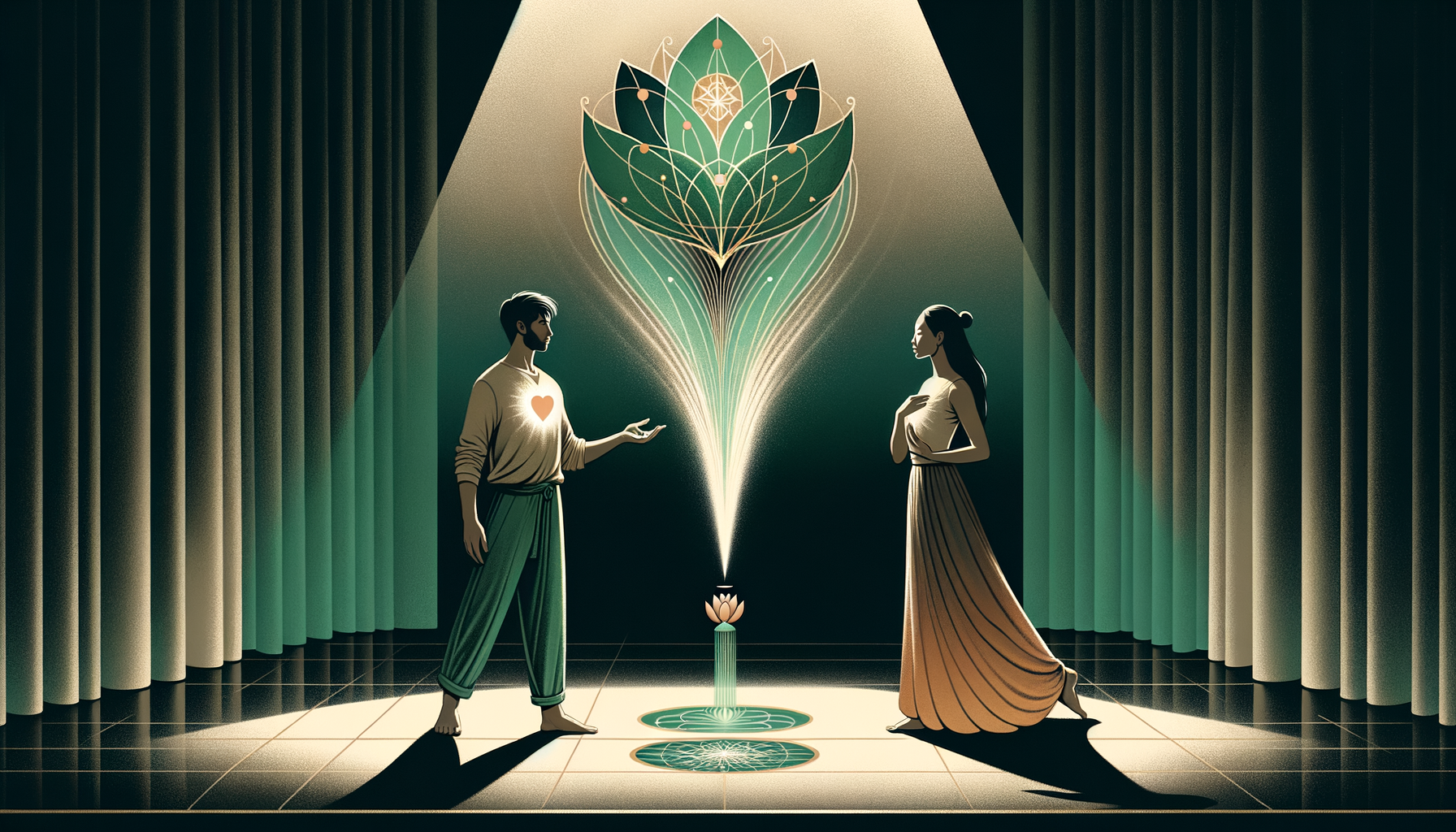
A philosophical pantomime titled “Long Dream” presented a resonant tableau: Chaitanya Prabhu embodying the soul and Ilavati Mataji portraying Material Nature. The staging was simple, yet the symbolism was profound. What emerged was not merely a performance but a disciplined inquiry into how attention, breath, and bhava can open the tap of the hearttransforming stagecraft into sadhana and theater into a living meditation on dharma.
In the silence of pantomime, meaning travels through posture, drishti, and gesture. When breath steadies like pranayama and the chest softens through anahata (Heart Chakra) awareness, presence acquires gravitas. The result is palpable: bhava clarifies, rasa deepens, and the audience experiences an authentic exchange rather than a display. This is where Yoga, Bhakti Tradition, and mindful performance intersectdevotion becomes method, and method becomes devotion.
Three insights, in particular, strengthened the performance and offer guidance for daily life. First, clarity of sankalpa (clear intention) simplifies choices on stage and off, allowing aligned action without inner friction. Second, karuna (compassionate attention) refines expression; even a still stance communicates when attention is warm and non-judgmental. Third, vairagya (disciplined letting go) removes excessunnecessary movement in theater, unnecessary reactivity in lifeso the essential can be seen and felt.
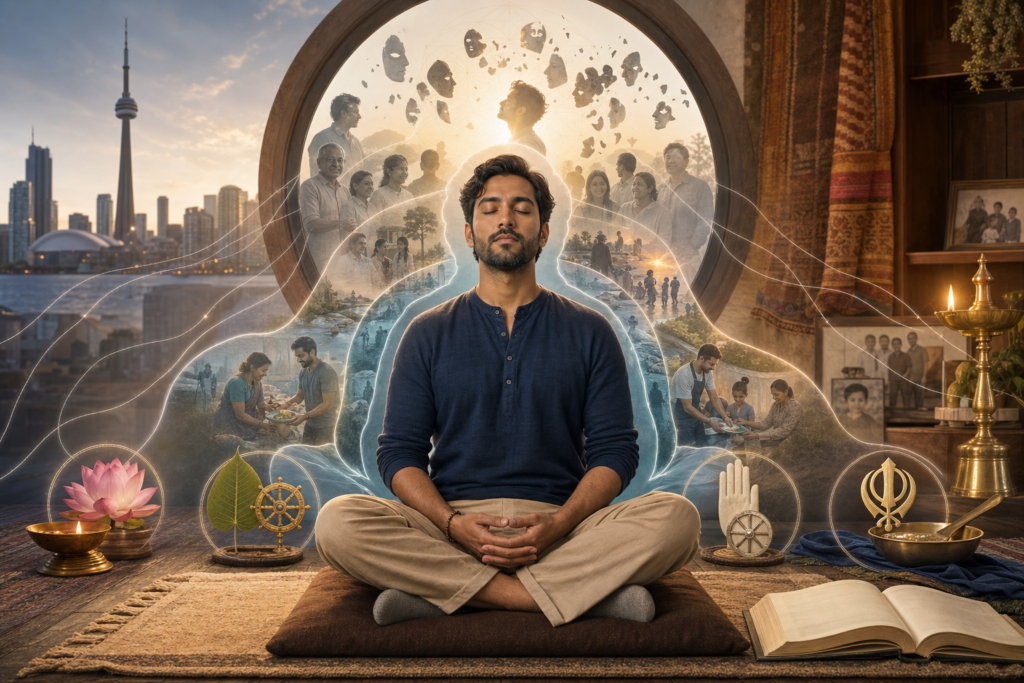
These insights echo shared values across Hinduism, Buddhism, Jainism, and Sikhism: ahimsa, karuna, seva, and remembrance. The heart’s tap opens through consistent, small choices: speaking gently, honoring truth, and returning to mindful awareness in the midst of action. In this sense, a stage rehearsal becomes a field of practice, and a performance becomes a mirrorrevealing how the soul relates to prakriti and how devotion, discernment, and discipline harmonize the inner and outer.
Practical application is straightforward. Begin with a minute of steady exhalation before any significant task to calm the nervous system and collect attention. Approach each relationship with the same compassion cultivated in silence, treating every interaction as an opportunity for seva. Choose one daily act of simplificationreducing haste, interrupting unhelpful speech, or releasing a minor grievanceto strengthen vairagya. End each day with brief svadhyaya (self-reflection) to transform experience into learning and to anchor the Spiritual Journey in lived reality.
When these elements converge, theater becomes a contemplative practice and life becomes art guided by dharma. The “Long Dream” then is not only a story but an instruction: awaken from compulsive motion, meet Material Nature with clarity and kindness, and allow Devotion to shape conduct. Opening the tap of the heart is neither sentiment nor abstraction; it is a repeatable methodgrounded in Mindfulness, refined by Yoga, and enriched by Bhakti Traditionfor steady Inner transformation and unity in spiritual diversity.
Inspired by this post on Dandavats.