-
Decoding the Sacred: How Sanatana Dharma Explains, Verifies, and Integrates Divine Experiences

This essay clarifies how Sanatana Dharma interprets divine experiences through a rigorous, compassionate framework. It explains how pramana (direct experience, inference, and trustworthy testimony) aids discernment, and how practices in Bhakti, Jnana, Raja, and Karma Yoga shape reliable transformation. Readers learn practical integration methods—daily discipline, reflective journaling, scriptural study, and seva—that convert brief insights into…
-
When the Formless Takes Form: Skanda Purana on Parvati’s Awe‑Inspiring Union with Shiva

This in-depth exploration of the Skanda Purana’s teaching on Goddess Parvati and Lord Shiva presents their union as a precise account of how formless consciousness and living form are inseparably one. Readers will learn how the nirguna–saguna dialectic, familiar from the Upanishads, is rendered experiential through Shaiva iconography such as Ardhanarishvara, the Shivalinga, and Shiva…
-
Shaubhari Muni’s Fall and Redemption: A Bhagavatam Lesson on Pride, Grace, and Sense Control

The Ninth Canto narrative of Shaubhari Muni in the Srimad Bhagavatam offers a rigorous lesson on the limits of yogic power without humility and divine grace. A single offense to Garuda precipitates the muni’s vulnerability to Maya, demonstrating how aparadha toward saintly beings clouds discernment and destabilizes sense control. The episode traces a full arc—asceticism,…
-
Srila Bhaktisiddhanta’s Timeless Guidance: Find Pilgrimage, Purpose, and Strength in Trials

This reflection synthesizes Srila Bhaktisiddhanta Sarasvati Thakura’s concise teachings into practical guidance that unites Hindu, Buddhist, Jain, and Sikh perspectives. It recasts any sincere discourse on ultimate reality as a true place of pilgrimage, encouraging readers to transform everyday spaces through satsanga and thoughtful dialogue. It identifies attachment as a spiritual malady and recommends aparigraha…
-
Sitayana: A Powerful Ramayana Retelling Celebrating Sita’s Courage, Grace, and Dharma

Sitayana presents the Ramayana through Ma Sita Devi’s perspective, highlighting courage, grace, and dharma with academic clarity and devotional warmth. It complements classical tellings by foregrounding Sita’s agency, compassion, and steadfastness during exile and separation. Readers gain ethical insights grounded in shared dharmic values that resonate across Hinduism, Buddhism, Jainism, and Sikhism. The text enriches…
-
Sri Radha’s Transcendent Eyes and the Guru’s Gaze: Ecstatic Love, Purifying Grace

This analysis presents Sri Radha’s eyes as the highest emblem of ecstatic love for Krishna and links that vision to the purifying grace of the guru’s compassionate glance. Readers gain a clear understanding of how darshan functions in the Bhakti Tradition to transform attention, soften the heart, and support steady practice. The lecture’s themes are…
-
Conquering the Fear of Death through Krishna Consciousness: Lessons from Maharaja Parikshit

This reflection on Srimad Bhagavatam presents how Krishna consciousness transforms the fear of death into composure and clarity. Using Maharaja Parikshit’s fearless surrender as a living example, it explains that consistent remembrance of Vishnu/Krishna dissolves anxiety by anchoring awareness in the eternal nature of the soul. Practical disciplines—scriptural study, japa, kirtan, and ethical service—build daily…
-
Sukhmani Sahib: A Timeless Pathway to Inner Peace, Compassion, and Dharmic Unity

Sukhmani Sahib, a revered composition in the Guru Granth Sahib, offers a structured path to inner peace through Naam, Simran, humility, and Seva. Organized in 24 ashtapadis, it marries clear doctrine with musical cadence to aid contemplation and practice. The scripture translates spiritual insight into actionable ethics—truthfulness, compassion, and community service—that improve emotional balance and…
-
Wealth of the Heart: Hinduism’s Abundance Through Simplicity, Devotion, and Dharma

Hinduism redefines wealth as an inner abundance nurtured by love, devotion, and dharma rather than by material accumulation. Across dharmic traditions, simplicity and service—bhakti, dana, aparigraha, and seva—create shared dignity and social cohesion. The Bhagavad Gita and the Upanishads frame purposeful action and mindful restraint as pathways to enduring fulfillment. Everyday experiences like bhajan, langar,…
-
Decoding Kali’s Fierce Grace: Kali Tantra Symbolism, South-Facing Form, and Liberation

The Kali Tantra presents Goddess Kali as the south-facing embodiment of fierce grace, uniting destruction and liberation in a single, illuminating form. Kali’s orientation toward the south symbolizes a fearless encounter with death and change, transforming dread into wisdom. Her sword signifies discriminating insight, while the cremation-ground setting teaches impermanence without despair. Mudras of fearlessness…
-
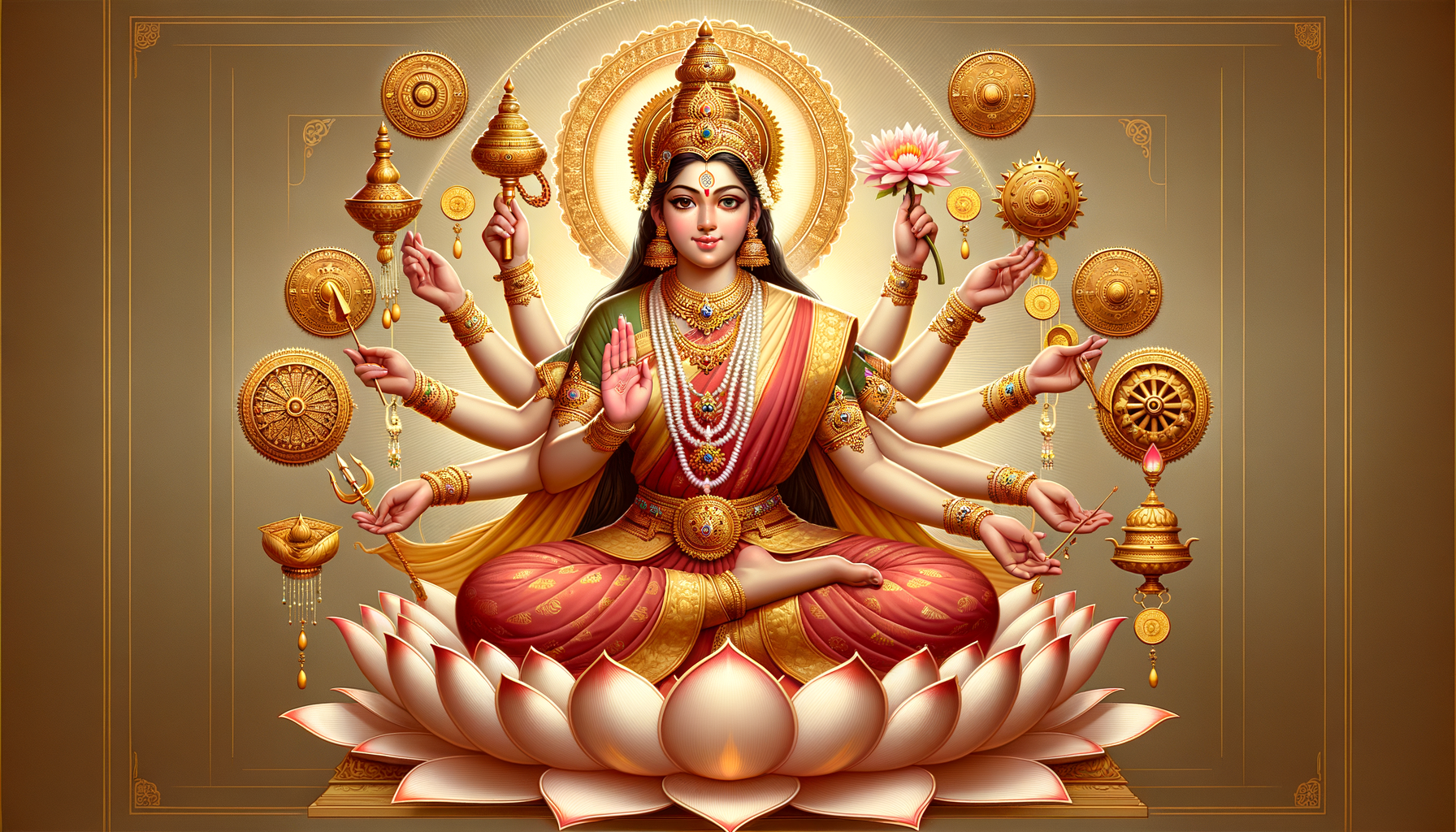
Six-Armed Dhanalakshmi Decoded: Powerful Symbols of Fearlessness, Prosperity, and Dharma

This article clarifies the two principal iconographic forms of Dhanalakshmi—four-armed and six-armed—and decodes the meaning of each sacred attribute. Readers learn how the chakra, padma, shankha, kalasha, bow and arrow, and abhaya mudra together convey prosperity grounded in dharma. The discussion highlights practical applications: ethical earning, mindful use of resources, and generosity. It also connects…
-
Daily Dharmic Wisdom for Calm and Clarity: A Grounding Companion for 2026 and Beyond

This piece presents a calm, academically grounded overview of a daily reflection practice designed to foster mindfulness, clarity, and emotional resilience. It situates the practice within a community that values honest stories, compassionate self-acceptance, and unity across Hinduism, Buddhism, Jainism, and Sikhism. The 2026 cycle continues a sixth year of concise daily insights, offering a…
-
Prevent the Ripple: Dharmic Wisdom on Mindful Action, Karma, Ahimsa, and Non‑Emergence

This essay explores a unifying Dharmic insight: what has not yet emerged is easiest to prevent. Drawing on Hindu philosophy and the Bhagavad Gita, it explains how mindful intention, disciplined attention, and skillful action avert harm at its source. The discussion highlights parallel teachings in Buddhism (Right Effort and Mindfulness), Jainism (ahimsa and pratikraman with…
-
Muktakeshi—Kali’s Disheveled Hair: A Fearless Symbol of Liberation, Compassion, and Power

Muktakeshi—“one with disheveled hair”—illuminates the fearless, compassionate power of Goddess Kali. Unbound hair signifies boundaryless śakti, autonomy, and the dissolution of fear and attachment. Shakta and Tantric readings frame this iconography as a metaphysical lesson in freedom, courage, and renewal rather than mere aesthetic. Devotees engage the symbol as a meditative cue to loosen rigid…
-
Beyond Circumstances: The Transformative Hindu Truth of Inner Freedom and the Ever-Free Self

This essay explains a core Hindu philosophical insight: true freedom is inner and independent of circumstance. Drawing on the Upanishads and the Bhagavad Gita, it clarifies how bondage stems from misidentification and how moksha is the recognition of the ever-free Self. It outlines practical pathways—Karma, Bhakti, Jnana, and Raja Yoga—that cultivate equanimity and clarity in…
-
Supersoul and Free Will: How Krishna Guides Choices, Karma, and Spiritual Growth

Hindu philosophy holds that Krishna as the Supersoul (Paramatma) guides from within while fully honoring human free will. When intentions lean toward material aims, inner guidance equips practical intelligence for success, while karmic responsibility remains. When the focus turns spiritual, discernment and compassion deepen, aligning choices with dharma and lasting well-being. Practices across dharmic traditions—japa…
-
Unmasking the Golden Deer: The Ramayana’s Allegory of Desire, Maya, and Dharma

The golden deer episode in the Ramayana functions as a refined allegory of human desire, maya (cosmic illusion), and ethical vigilance. By tracing Sita’s captivation, Rama’s pursuit, and Ravana’s exploitation, the narrative shows how alluring appearances disperse attention and compromise dharma. Read symbolically, the deer represents desire’s shimmer—radiant yet elusive—while the episode models the need…
-
Makara Lagna 2026–2027: Powerful Capricorn Ascendant Forecasts for Growth and Stability

Makara Lagna (Capricorn Ascendant) natives can expect 2026–2027 to favor disciplined growth, steady career elevation, prudent finances, and warmer family bonds. Professional strength builds through reliability and systems thinking, while conservative wealth strategies outperform speculation. Health improves with routine, rest, and mindful stress management. Structured learning, purposeful travel, and documentation aid progress. Dharmic practices honored…
-
Karka Lagna 2026–2027 Deep-Dive: Empowering Predictions for Career, Wealth, Love, Health

Karka Lagna (Cancer Ascendant) can expect 2026–2027 to deliver steady progress grounded in discipline, compassion, and practical planning. Career growth rewards reliability, leadership through empathy, and skill-building, while finances benefit from prudent savings and measured investments. Relationships deepen through attentive communication and clear boundaries; health improves with routine, rest, and contemplative practices. Education, research, and…