Abhinaya Dharma in Hinduism refers to the guiding codes of dance-drama. Here, dharma denotes a normative code, while abhinayaliterally “enactment”signifies the art of dramatic expression. Rooted in the Natya Shastra and embodied across Indian classical dance and theatre, Abhinaya Dharma structures how meaning, emotion, and ethics are communicated on stage. Its insights continue to inform performance traditions that nurture empathy, discipline, and cultural continuity across the broader dharmic world.
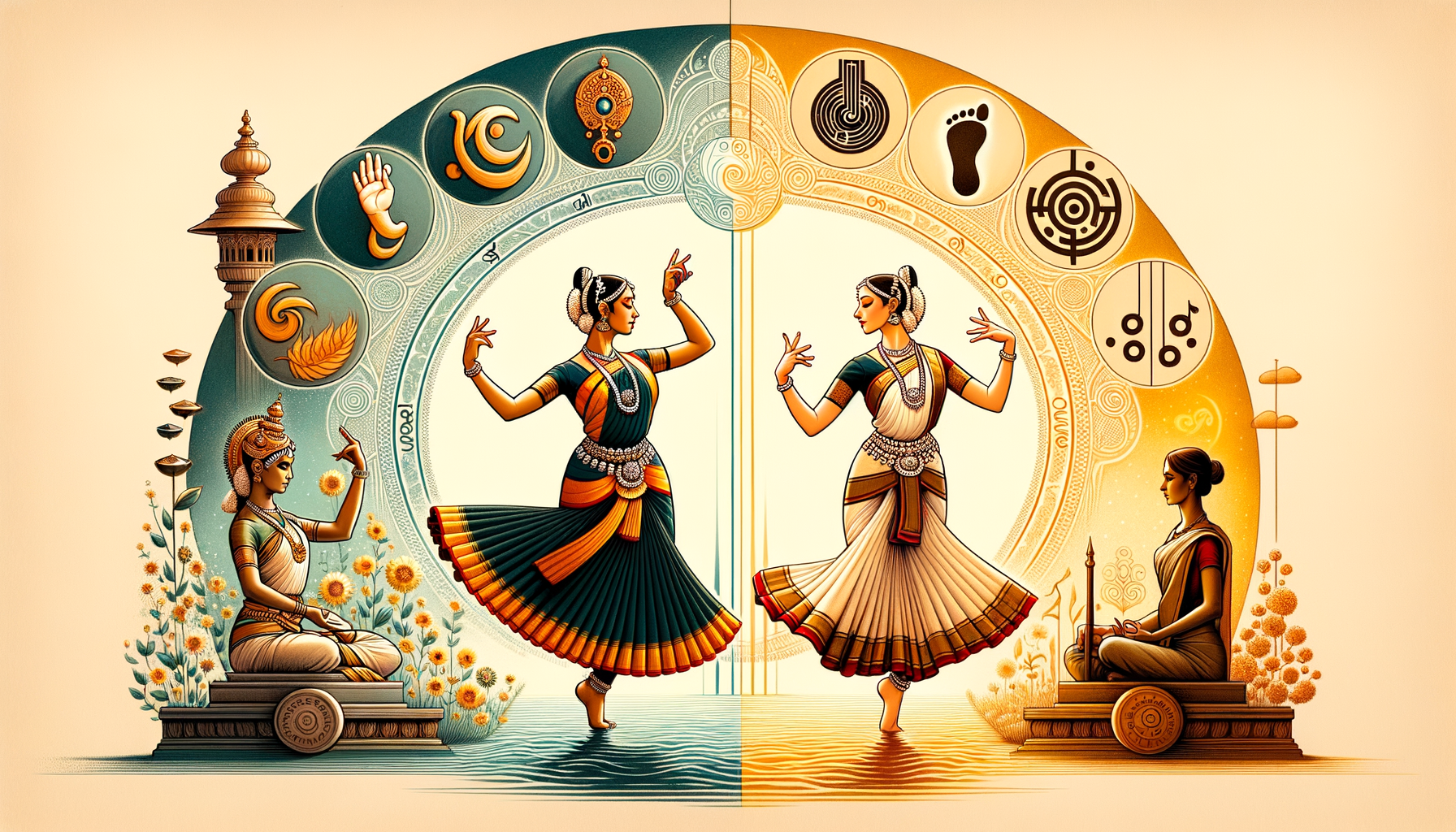
Two principal modes frame Abhinaya Dharma: Natyadharma and Lokadharma. Natyadharma designates stylized, codified expression aligned with canonical technique; Lokadharma emphasizes naturalistic behavior grounded in everyday life. Together they form complementary pathways for transmitting narrative, value, and sentiment, enabling artists to evoke bhava (inner feeling) and guide audiences toward rasa (aesthetic experience).
Natyadharma, as a code of conduct for the performer, demands precision, restraint, and clarity in deportment. It systematizes abhinaya through four classic channelsangika (body and gesture), vachika (speech and song), aharya (costume and design), and sattvika (inner affect). Through refined mudras, eye movements (drishti bheda), gait (gati), and canonical musical-poetic structures, Natyadharma cultivates sincerity and trust, allowing the stage language to rise above the ordinary toward archetype and symbolism.
Lokadharma exhorts the performer to employ lifelike behavior: colloquial speech patterns, spontaneous rhythms, and familiar social cues. This mode privileges observation, plausibility, and immediacy, building bridges for audiences who resonate with realism. In practice, artists often integrate Lokadharma to ground stylized scenes in human recognizability, enhancing both narrative clarity and emotional accessibility.
In Indian classical dance and theatreBharatanatyam, Kathakali, Kuchipudi, Odissi, Yakshagana, and allied formsthese modes interweave. Stylization provides a luminous grammar; realism supplies relatable context. The synergy refines the movement from bhava to rasa, illuminating aesthetic states such as śṛṅgāra (love), karuṇa (compassion), raudra (fury), and adbhuta (wonder). Across temple, court, and community stages, this interplay sustains a shared heritage of performance and pedagogy.
Viewed within the broader dharmic tapestry, Abhinaya Dharma aligns with values that also find expression in Jain, Buddhist, and Sikh traditions. Jain and Buddhist performance literatures have long emphasized ethical clarity, restraint, and compassion, while Sikh kirtan exemplifies embodied devotion, community service (seva), and truthful expression (satya). These resonances affirm a unifying vision: performance as disciplined sadhana that nurtures harmony, dignity, and interfaith respect within the plurality of the subcontinent’s spiritual cultures.
For students, artists, and rasikas, understanding Natyadharma and Lokadharma clarifies technique and deepens appreciation. Recognizing when stylization heightens meaning, and when realism invites immediacy, helps decode staging choices and interpret character intent. Such awareness also strengthens pedagogyguiding practice, rehearsal, and audience engagementwhile honoring the lineages that preserve Hindu aesthetics and the Natya Shastra’s foundational insights.
Ultimately, Abhinaya Dharma is living heritage: a disciplined way to transmit truth through beauty. By harmonizing codified precision with human realism, it fosters empathy and discernment in performers and audiences alike. This balanced vision supports unity among dharmic traditions and keeps India’s sacred dance-drama vibrant, relevant, and ethically grounded.
Inspired by this post on Hindu Blog.