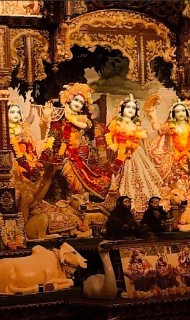
Mangal arati, the luminous pre-dawn ritual in Hindu temples and homes, especially within Gaudiya Vaishnavism and ISKCON, invites a quiet turning of the heart before sunrise. Lamps glow, bells soften the mind, and devotional singing steadies attention. This sacred atmosphere reveals why voice, mood, and intention matter so deeply in morning worship.
Within the sixty-four arts celebrated in Vedic culture, singing stands among the foremost. Krishna is described as learning to sing in the kula of Sandipani Muni, a reminder that sacred music is both art and discipline. Even today, students of Indian classical music may train for decades, underscoring that devotional singing deserves care, patience, and reverence.
Devotional singing in mangal arati is more than volume or memorized words. The key is bhavaa devotional emotion that carries prayer into song. Recordings of A.C. Bhaktivedanta Swami Prabhupada illustrate how sincerity and spiritual mood communicate beyond technique. When bhava and attention align, the simple refrain of a prayer can become a profound offering.
Standards also guide the experience: accurate lyrics, clear pronunciation, steady rhythm, and fidelity to the temple’s sequence are integral to reverent practice. Knowledge of melody and meter helps, yet the aim is to serve the Deity and sanctify the mind, not to perform. In this sense, devotional singing is a form of seva, a mindful offering.
When choosing who should lead, tradition privileges sincerity over virtuosity. If the choice is between a practitioner whose heart is aligned with the purpose of mangal arati and a professional singer without devotional intent, custom favors the sincere practitioner. The reason is simple: kirtan in mangal arati is not a concert; it is a prayerful offering meant to elevate communal consciousness.
Many lineages note, as texts like the Nectar of Devotion indicate, that direct ritual contact with the Deity is typically entrusted to initiated pujaris. By analogy, communities often invite those grounded in the purpose of the practice to lead congregational singing. At the same time, open participation is welcomedresponding to refrains, clapping in time, and absorbing the mood of bhakti draws everyone into the sacred moment.
The heart of this guidance resonates across dharmic traditions. Sikh kirtan during Amrit Vela, Buddhist morning chanting, and Jain pratikraman all emphasize purity of intention, humility, and disciplined attention at dawn. Mangal arati thus becomes a bridge of shared valuesdevotion, service, and inner stillnesssupporting unity among Hindu, Buddhist, Jain, and Sikh practices.
Practical preparation enhances the experience: arriving a few minutes early to quiet the breath, keeping lyrics close at hand, following the established lead, and avoiding showmanship preserve the sanctity of the rite. A gentle voice, clear enunciation, and steady pace help the congregation remain focused. Most of all, holding the mind in prayerful remembrance turns singing into a genuine offering.
Attended with care, mangal arati refines attention, steadies emotion, and nourishes community cohesion. Through devotional singing grounded in bhava and guided by tradition, the pre-dawn ritual elevates morning worship, aligning personal practice with universal dharmic ideals of devotion, discipline, and compassionate service.
Inspired by this post on Dandavats.