
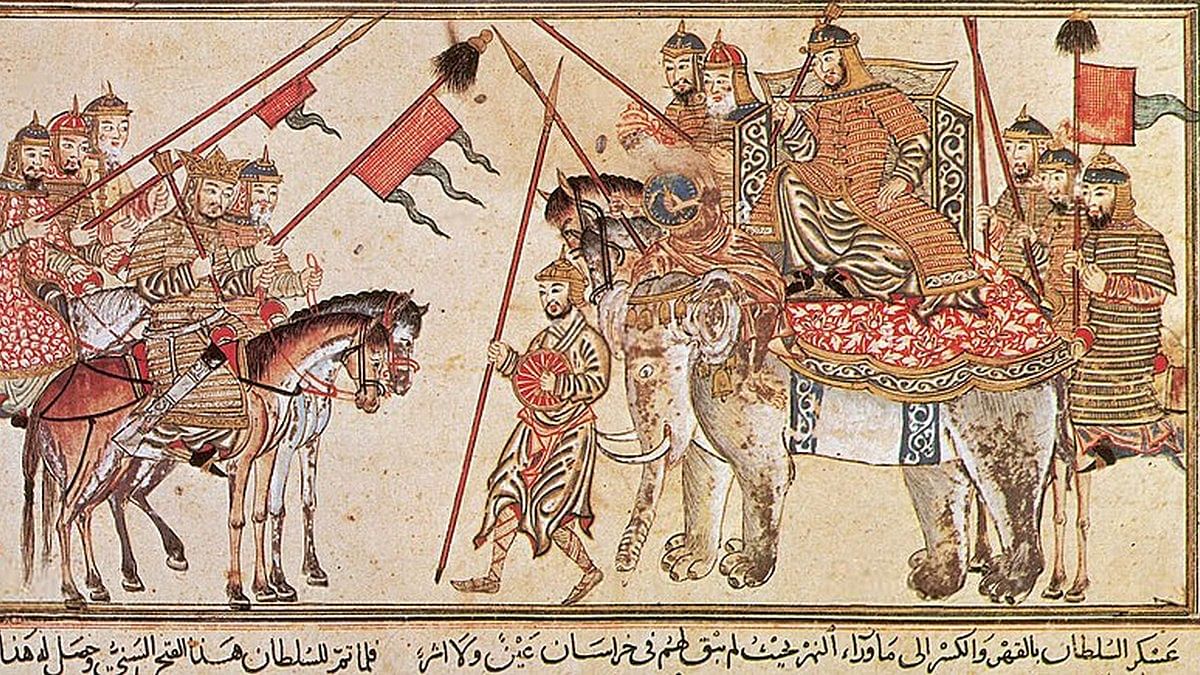
The following is a transcript of a speech by Vikram Sampat at the Jaipur Dialogues Conclave that discusses the Islamic conquest of India and its impact on Indian history. Sampat specializes in modern and early modern Indian history, as well as medieval history, which is highly relevant to the period being discussed. Sampat states that the Islamic conquest of India, as noted by historian Will Durant, is one of the bloodiest stories in human history, not just Indian history. He then questions whether the popular narrative, textbooks, and discourse give this subject the commensurate importance it deserves. Sampat notes that at least 40,000 temples were destroyed between 1000 CE and the end of the Delhi Sultanate in 1525. This number is a consensus among historians, but the population of the subcontinent fell by 80 million during the same period, indicating that there was much bloodshed, conquest, and enslavement.

Sampat notes that about 2.5 million women were taken away as slaves and sex traders to faraway lands such as the Middle East, Afghanistan, and Ghazni. There is a minaret in Ghazni with an infamous line that says, “Dukhtare Hindustan Neelam-e-do dinar,” meaning “the daughters of Hindustan are auctioned here for two dinars each.” Sampat also points out that the scale and kind of desecration of Indian knowledge systems and libraries were staggering. For example, when Bakhtiyar Khilji attacked Takshashila, Nalanda, and Vikram Shila, it is said that manuscripts and books were burned for close to six to eight months, leading to the destruction of a vast amount of knowledge.
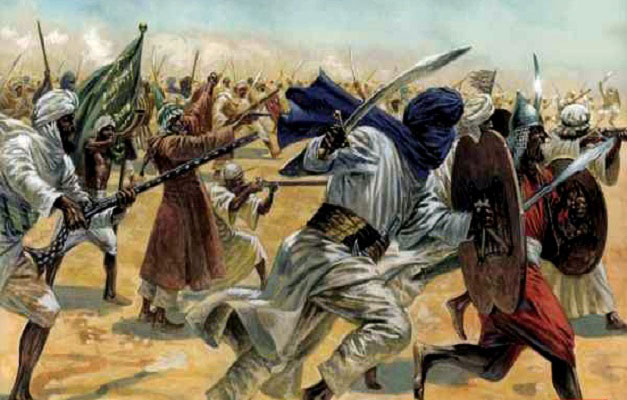
Sampat argues that India is the only country that eulogizes these barbarians of the past and the only country where removing these vestiges of desecration is considered detrimental to today’s social cohesion and unity between communities. He believes that the edifice of national unity and social cohesion cannot rest on the shaky foundations of fabricated and whitewashed history, which is what Indians are fed all along.
Sampat states that there were different waves of interaction with Islam and the Islamic conquest in India. It began with the Arabs, and even though they faced resistance, the first Arab invasion began in the seventh century around 636 CE. However, it took them about 70 years to capture parts of Sindh under Mohammed bin Qasim.
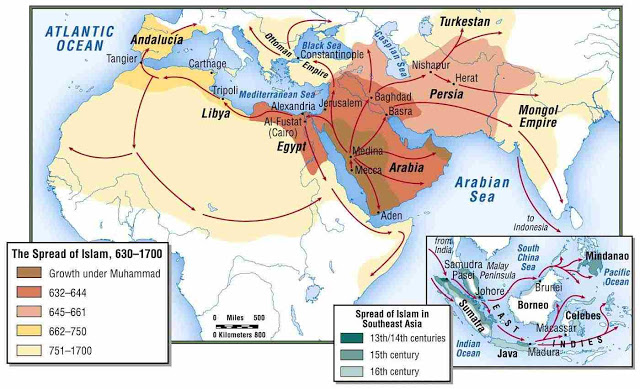
Within less than a century of the passing away of Prophet Mohammed, the forces of the Caliph went all over the world to crush the infidels. In no time, the Byzantine Empire, the Sassanid Empire, large parts of Central Africa, Central Asia, and Northern Africa were all Islamized. Syria, Palestine, Egypt, Iran, and Persia were all Islamized, and the Islamic empire stretched from the Atlantic in the west to the gates of India in the east. However, it took them 500 years to establish a proper Islamic kingdom in India in 1206 with the Delhi Sultanate.
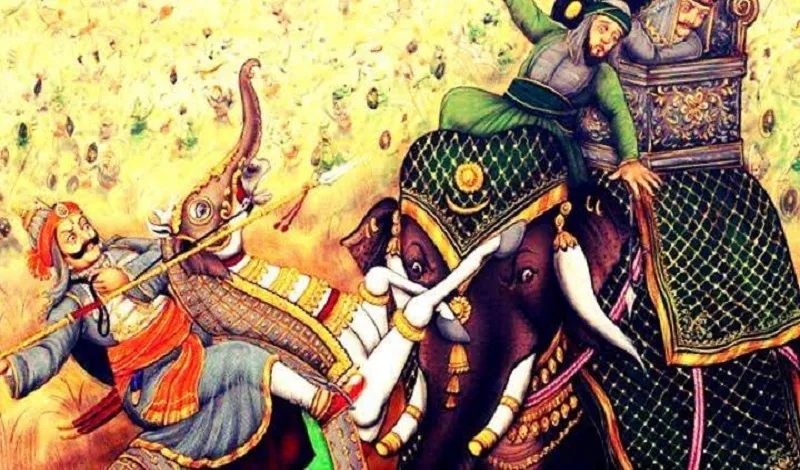
Sampat argues that when discussing resistance, it’s not accurate to say that Indians always cowered in front of invaders. Nations that fell to the sword within a couple of decades succumbed quickly, but Indians managed to push back for 500 years. There were waves and waves of conquest, whether it was Mahmud of Ghazni or Gauri, the Turks. Sampat notes that it’s essential to go to the primary sources themselves, where the chroniclers, the Persian chroniclers, and the court historians, revel in the fact or extol their Sultan for being iconoclastic. On the contrary, we have today’s historians who whitewash those crimes. The famous example is of Mahmud Ghazni, when he goes to Somnath Mandir. We are told, including by the likes of Professor Romila Thapar, that it was only economic considerations that brought Mohammed Ghazni there, and it was not for theological reasons or reasons of religion. But what do the court historians say? What does Farishtaah say? What does Al-Biruni say?
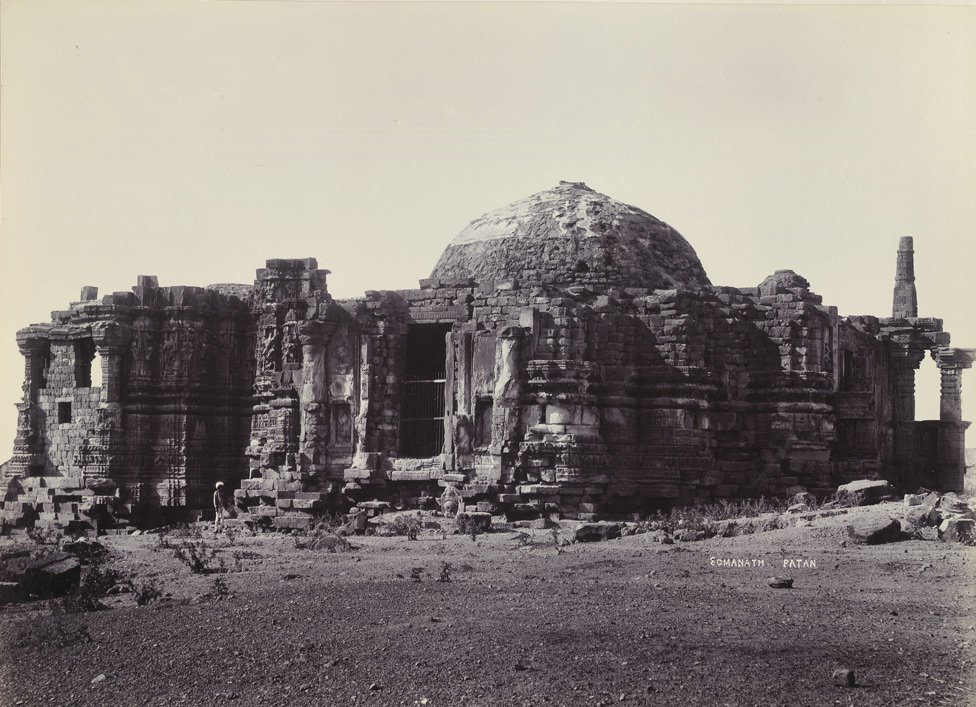
What does Minhaj-i-Siraj, who wrote about all this, say about Mahmud’s visit to Somnath? According to Minhaj-i-Siraj, when Mahmud went to Somnath, the Chalukyan ruler had already fled. Upon reaching Somnath, Mahmud was surprised to find 50,000 armed common Hindus who were trying to resist him and protect their deity. It took him a week to defeat them all. After his victory, Mahmud entered the Sanctum Sanctorum, where the priests offered him money in exchange for sparing the deity. However, Mahmud refused, stating that he would rather be remembered as a Butshikan, or breaker of idols, than a trader of idols. He then proceeded to demolish the temple and took the lingam back to Ghazni.
Despite primary evidence like this, our historians today continue to talk about the Sultanate period as a time when conquest became untenable, and as a result, the four schools of Islam, Hanafi, Shafi, Maliki, and Hanbali, allowed for non-Muslims to live, but only under extremely humiliating conditions. For example, the Hanafi school allowed infidels to live, but they had to live under almost 18 to 20 humiliating conditions. They were required to stand up whenever a faithful person walked by, and even if the faithful spit in their face, they had to take it.
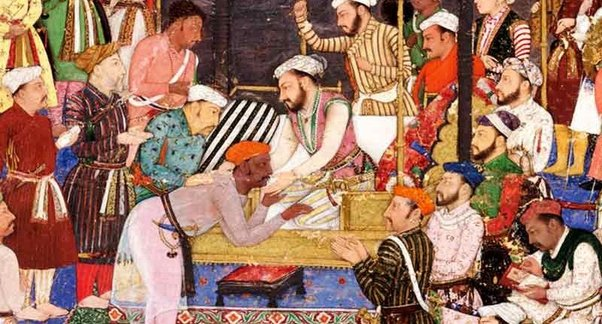
Slavery and sex trade were also common practices during this period, and the jizya tax, a discriminatory practice against those who did not belong to the faith, was about 20% of the revenue of the kingdom during the peak of the Mughal Empire under Aurangzeb. With such themes as part of the empire, it’s difficult to understand how the idea of Ganga-Jamuni Tehezeeb (a culture that reflects the confluence of Hindu and Muslim traditions) could exist. Instead, it seems that a large part of one group was appropriated, completely changed beyond recognition, and made into something else.
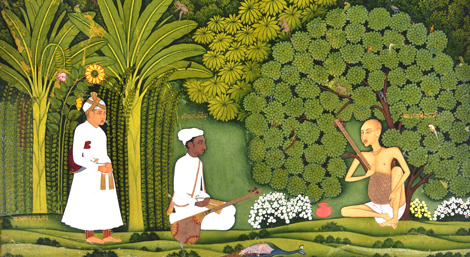
Meenakshi Ji also discussed how language was affected, and I would like to add that art forms were also impacted, such as classical music and dance, especially in North India, where Dhrupad was the oldest and most spiritual classical art form. Many of the greatest saints, mystics, and sovereigns practiced Dhrupad, such as Swami Haridas. However, references to gods like Shiva and Vishnu had to be exorcised from the music. Even now, the Dhrupad bandishes have elements of religious music, similar to what is found in Carnatic music in the South. However, the god element had to be removed, and it became more focused on shringar (romance), where the Shenshah (emperor) was eulogized instead of God. Lyrics like Piyaa and Balamaa were also transformed into something entirely different.
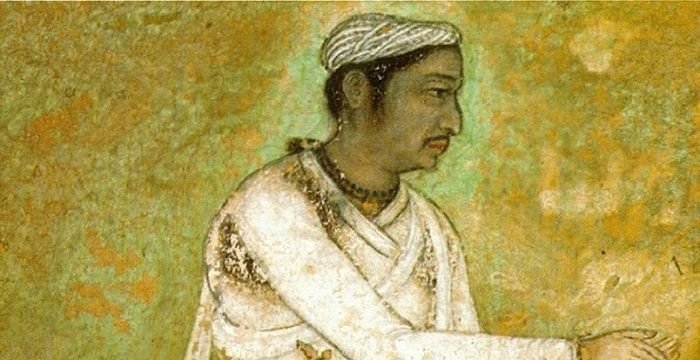
So, Tansen, who came from a Hindu Brahmin family, was brought in and then this transformation happened. Similarly, the Kathakaars across our temples, who sang and danced and gave the origins to our Kathak dance form, were also completely transformed. The faith aspect was completely stripped off, and the courtesan culture was changed into a shringaar pradhan-ness of this art form which took root in our Mughal courts. Of course, these are great art forms that we’re very proud of, but to say that they became us is a huge stretch of imagination. In the course of this long march of Indian history, particularly of invasions, I think it’s the wounded civilization that has lost a lot of its identity elements, and today it is time that we reclaim them.
In conclaves like this, it is common for us to sit and criticize leftist historians like Romila Thapar and Irfan Habib. However, as Professor Kapil Kumar said earlier, it is time to stop blaming them and start taking action to correct history. It is time for us to rewrite history and make it a national movement. Individuals on the stage, including myself, are doing our part to correct the history of Hindu genocide over the past 1000 years. However, it is important to ensure that this knowledge reaches the next generation through proper books and publications. This should become a national project and movement. I applaud people like Sanjay Dixit for their efforts in bringing out the fatwa-e-alamgiri in multiple languages. When translated, it will become a problem for scholars like Audrey.