
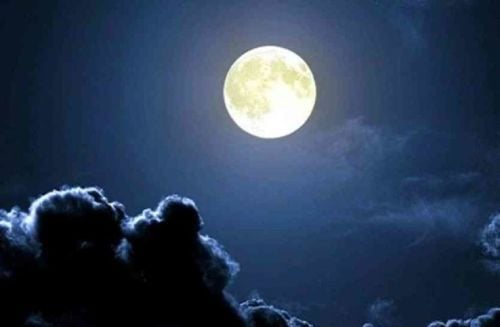
Chandra Darshan in Shravan 2026 brings together Hindu calendar knowledge, seasonal devotion, and the simple human act of observing the evening sky. In the India-oriented schedule used for this guide, the observance falls on Friday, August 14, 2026. It marks the first practical sighting of the waxing crescent after Amavasya and is regarded as an auspicious occasion for Ganesha Puja, Shiva Pooja, Gauri Pooja, or Chandra Graha Shanti Poojan. A household may follow one of these paths or combine them according to its sampradaya; none of the options is universally compulsory.
Chandra Darshan 2026 at a glance. The principal date is Friday, August 14, 2026. The relevant period begins after local sunset and ends when the young Moon sets below the western horizon. The lunar phase is a thin waxing crescent in the opening portion of Shukla Paksha. Traditional observances may include fasting, Chandra darshan, arghya, mantra japa, a lamp, simple food offerings, and charity. Because sunset, moonset, weather, and crescent visibility vary geographically, a location-specific panchang should always take precedence over a generic national time.
Date and puja timing for 2026. A general devotional schedule places Shravan Chandra Darshan on August 14 and gives an approximate evening interval of 6:45 p.m. to 7:50 p.m. That range should not be treated as universal. A location-specific calculation for New Delhi gives an observance window of approximately 7:02 p.m. to 8:01 p.m., while a Thane calculation gives approximately 7:07 p.m. to 8:16 p.m. Even nearby cities can differ by several minutes, and international locations may differ more substantially.
The expression Chandrodaya time is sometimes used loosely in festival calendars for the useful sighting interval. Astronomically, however, the young waxing Moon usually rises during daylight and remains above the horizon for a short period after sunset. In New Delhi on August 14, 2026, it is calculated to rise at about 7:17 a.m. and set at about 8:04 p.m. The devotional act therefore occurs between sunset and moonset; it does not require waiting for a literal evening moonrise.
What Chandra Darshan means. Chandra Darshan is the customary sighting of the first usable crescent after Amavasya. It is often described in devotional language as the appearance of the new Moon, but this wording differs from the modern astronomical definition. In astronomy, the new Moon is the nearly invisible phase at conjunction, when the Moon and Sun occupy approximately the same direction in the sky and the illuminated lunar hemisphere faces mostly away from Earth. Chandra Darshan occurs later, once a narrow sunlit arc becomes visible after sunset.
The astronomy behind the sacred sighting. The Moon does not produce its own light; the visible crescent is sunlight reflected from its surface. A complete sequence from one new Moon to the next takes approximately 29.5 days. After conjunction, the Moon moves progressively eastward relative to the Sun, increasing their angular separation. The growing separation allows a thin crescent to remain above the western horizon after sunset. The Moon is initially difficult to see because it is slender, low in the sky, and immersed in bright twilight.
How tithi differs from a civil date. A tithi is not a fixed 24-hour weekday. It is calculated from the angular separation between the geocentric longitudes of the Moon and Sun, with each 12-degree increment constituting one tithi. Thirty tithis form a synodic lunar month, divided between Krishna Paksha and Shukla Paksha. Because the apparent speeds of the Moon and Sun vary, a tithi can begin or end at any clock time. Consequently, Amavasya, Shukla Pratipada, the civil date, and the first practical crescent sighting do not always change at the same moment.
Why the observance falls on August 14. For New Delhi, the astronomical new Moon occurs late on August 12, 2026, at approximately 11:06 p.m. local time. On August 13, the crescent is calculated to be only about 0.5 percent illuminated and to set around 7:31 p.m., leaving very little darkened sky in which to locate it. By the evening of August 14, illumination is about 3.4 percent and moonset occurs around 8:04 p.m. This example shows why panchang makers select the first practical sighting evening rather than mechanically choosing the civil day immediately after conjunction.
Where to look. The crescent should be sought low above an unobstructed western or west-northwestern horizon after the Sun has completely set. Buildings, trees, hills, haze, monsoon clouds, and urban pollution can conceal it. The Moon’s orientation also changes with latitude, so the angle of the crescent may look different in India, Europe, North America, or the Southern Hemisphere. That visual difference has no effect on the religious meaning of the observance.
Why Shravan gives the occasion special resonance. Shravan, also called Shravana or Sawan in several regional traditions, is strongly associated with Shiva worship, vrata, pilgrimage, water offerings, and disciplined living. The monsoon season gives these practices a distinctive emotional setting: rain, renewed vegetation, and cooler evenings naturally evoke restoration. The first crescent after Amavasya adds another image of renewal, allowing the dark lunar phase to yield gradually to visible light.
Shravan Somwar observances, Mangala Gauri traditions, Shiva abhisheka, and household vows give the month a dense devotional rhythm, although customs differ by region and lineage. Chandra Darshan does not replace these practices. It offers a concise lunar observance that can stand independently or be integrated into an established Shravan routine. Its simplicity makes it accessible to households unable to conduct an elaborate temple-style puja.
Regional calendar differences. Purnimanta and Amanta lunar calendars arrange month boundaries differently, while Tamil, Malayalam, and Bengali calendars also maintain solar or regional systems. The corresponding period may be identified with Aadi Masam in the Tamil calendar, Karkidaka Masam in the Malayalam calendar, or Shraban in the Bengali Panjika. These names should not be treated as mathematically identical month systems. They illustrate how a shared celestial event can be interpreted through several legitimate regional calendars.
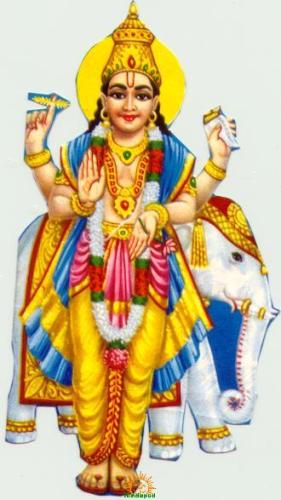
Chandra as physical Moon and sacred presence. Academic clarity requires a distinction between astronomy and ritual language. Astronomy studies the Moon as Earth’s natural satellite and explains its phases through geometry and reflected sunlight. Hindu ritual traditions personify Chandra or Soma as a deity and include Chandra among the Navagraha. These frameworks answer different kinds of questions: one describes physical mechanisms, while the other conveys inherited symbolism, worship, ethics, and relationships with sacred time.
The Shiva connection. Shiva is frequently represented as Chandrashekhara, the one who bears the crescent Moon upon the matted locks. The image has been interpreted within Shaiva traditions through ideas such as mastery over time, the regulation of cosmic rhythms, coolness amid intensity, and the recurring movement of dissolution and renewal. A crescent sighting during Shravan therefore carries particular significance for Shiva devotees, even though a full Shiva Pooja is not mandatory for every observer.
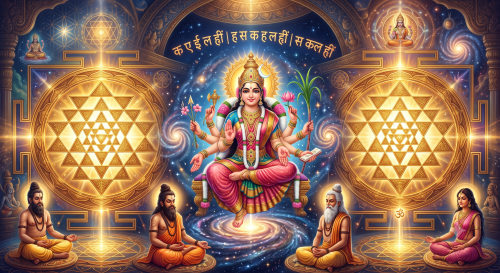
The place of Ganesha and Gauri. Ganesha is commonly invoked at the beginning of a puja so that the rite may proceed with attentiveness and without avoidable obstacles. Gauri Pooja may be included because Shravan contains several traditions dedicated to Parvati in her auspicious and nurturing forms. A balanced household sequence may therefore begin with Ganesha, continue with Shiva and Gauri, and conclude with Chandra darshan and arghya. Families following a different order may preserve their inherited practice.
Chandra Graha Shanti Poojan. Within Jyotisha, Chandra is traditionally associated with manas, receptivity, memory, maternal symbolism, nourishment, and emotional responsiveness. Some practitioners perform Chandra Graha Shanti when a horoscope is interpreted as showing a difficult lunar placement or planetary period. These are traditional astrological interpretations rather than conclusions of empirical astronomy or medicine. No ritual should be presented as a guaranteed cure for anxiety, depression, insomnia, or another health condition.
The human meaning of the first crescent. The observance has emotional force without requiring exaggerated supernatural claims. A delicate arc of light appearing after Amavasya offers a relatable model of gradual recovery: renewal begins modestly, becomes visible through patience, and develops over time. For many households, the most memorable element is not an elaborate ritual but the shared pause on a terrace, balcony, courtyard, or open field while several generations search the same horizon.
No single puja manual governs every household. Chandra Darshan practices vary across regions, temples, families, and sampradayas. Some observers undertake a full-day vrata and formal worship; others offer only water, recite a short mantra, and bow to the crescent. Some emphasize Shiva, while others focus directly on Chandra or include Gauri and Ganesha. Local temple guidance, family tradition, and a trusted panchang are therefore more authoritative for practice than a generic online checklist.
Preparing for Chandra Darshan. The date and local visibility period should be confirmed in advance. A safe observation point with a clear western horizon can be selected before sunset, especially during the wet Shravan season. The puja space may be cleaned, and the necessary items placed together so that the brief sighting window is not lost in last-minute preparation. Elaborate decoration is optional; orderliness and attention are more important than expense.
Suggested puja materials. A simple arrangement may include a clean cloth, a Ganesha image, a Shiva Linga or image, a representation of Gauri, a ghee or oil lamp, incense if appropriate, sandal paste, akshata, white flowers, fruit, kheer or another sattvic sweet, and a clean lota containing water. A small quantity of milk may be added to the arghya where family custom prescribes it. Every item is optional unless required by the household’s specific vrata.
Fasting with discernment. Some practitioners fast from sunrise until the crescent has been sighted and the evening puja completed. The vrata may be nirjala, fruit-based, milk-based, or a simplified sattvic fast, depending on tradition and personal capacity. Extreme fasting is not appropriate for everyone. Children, older adults, pregnant or breastfeeding people, and anyone managing diabetes, medication, an eating disorder, or another medical condition should use a safe adaptation and seek professional medical guidance when needed.
Step 1: morning preparation. The observance may begin with bathing, clean clothing, and a calm resolution to maintain truthfulness, restraint, and non-harm throughout the day. White or light-coloured clothing is customary in some families because it reflects the cool and luminous symbolism associated with Chandra, but it is not a universal rule. Ordinary duties may continue when the vrata does not prescribe seclusion.
Step 2: sankalpa. Before the main puja, the practitioner may state a concise intention that identifies the date, place, observance, and purpose. The purpose may be devotion, gratitude, family welfare, clarity, disciplined living, or the fulfilment of a traditional vrata. A sankalpa is most meaningful when it expresses an ethical and devotional commitment rather than fear of punishment or a demand for guaranteed material results.
Step 3: Ganesha invocation. A lamp may be lit, followed by a brief prayer to Ganesha. Flowers, akshata, fruit, or a small sweet may be offered according to household custom. The invocation need not be lengthy. Its ritual function is to establish attentiveness and begin the sequence in an orderly manner. Families that already follow a prescribed Ganesha Puja may retain that complete procedure.
Step 4: Shiva and Gauri worship. Shiva may be honoured with water, bilva leaves where available and appropriate, flowers, a lamp, and the mantra ॐ नमः शिवाय. Gauri may be offered flowers, kumkum, fruit, or another customary upachara. These acts should remain proportionate to the household’s resources. A small, carefully performed puja is fully compatible with the contemplative character of Chandra Darshan.
Step 5: move to the observation point. The western horizon should be checked immediately after sunset. The young Moon may appear as a fine silver curve within the remaining twilight and can be easy to overlook. Quiet observation is more effective than repeatedly changing locations. A compass or reputable sky application may help identify the correct direction, but technology serves only as an aid; the local panchang determines the religious window.
Step 6: receive darshan. Once the crescent becomes visible, the observer may join the palms, bow, and remain still for a few moments. Darshan in this context is not merely visual detection. It is a disciplined act of sacred attention in which the visible Moon is approached through the inherited language of Chandra. A brief prayer for wisdom, steadiness, gratitude, and the welfare of all beings keeps the rite ethically grounded.
Step 7: offer arghya. Water may be poured slowly from a lota while facing the Moon. Where custom permits, the stream can be received in a clean plate or poured onto suitable soil rather than wasted on concrete or allowed to fall onto neighbours below. A very small quantity of milk may be mixed with the water, but large volumes are unnecessary. The gesture expresses honour and reciprocity; extravagance does not increase its devotional value.
Step 8: flowers, lamp, and naivedya. White flowers, sandal paste, akshata, kheer, milk, fruit, or a white sweet may be offered symbolically to Chandra. The colour white is conventionally linked with luminosity, coolness, and the traditional iconography of Soma. These associations are cultural and ritual rather than scientific properties of the offerings. When open flames are unsafe because of wind, rain, apartment regulations, or children, a lamp may remain protected at the indoor altar.
A concise Chandra mantra. A widely used formula is ॐ सोम सोमाय नमः (Om Som Somaya Namah). It may be recited 11, 27, or 108 times according to capacity and lineage. Numerical counts vary, and no universal rule requires an unwell or inexperienced practitioner to complete 108 repetitions. Clear, attentive recitation is preferable to hurried repetition. Anyone following a formal Chandra Graha Shanti should use the mantra and pronunciation prescribed by the officiating tradition.
Silent contemplation may follow the mantra. Attention can rest on the gradual return of light, the regularity of lunar cycles, or the ethical intention expressed in the sankalpa. This reflective interval gives the rite personal depth while preserving its third-person, tradition-centred interpretation. It also prevents the observance from becoming a mechanical exchange in which an offering is assumed to purchase a predetermined result.
Step 9: closing and parana. The puja may conclude with namaskara, a brief aarti where safe, and a prayer for collective well-being. A person observing a fast may then undertake parana according to family custom, beginning with water, prasad, fruit, kheer, or a light sattvic meal. Food should be eaten gradually after a strict fast. The naivedya may be shared with family members rather than kept as an individual possession.
Charity as an ethical extension. Traditional Chandra-related charity may include rice, milk, sugar, white cloth, or support for someone facing material hardship. The recipient’s dignity should guide the act. Useful food, school supplies, healthcare assistance, or another locally needed contribution can express the same principle more responsibly than a purely symbolic object. Charity is most consistent with dharma when it is voluntary, proportionate, and free from public humiliation.
When clouds hide the Moon. Shravan frequently brings rain, cloud, and haze, so physical sighting may be impossible even when the crescent is astronomically above the horizon. Many family traditions permit the observer to face west during the calculated window, offer prayer and arghya, and complete the vrata after a sincere attempt at darshan. Other lineages maintain a different rule. A cloudy sky should not lead to unsafe travel, anxiety, or repeated rooftop searching after the Moon has set.
Observance in apartments and outside India. A balcony, window, terrace, garden, or nearby open area may be used if it is safe and permitted. Diaspora households should not copy Indian clock times, because the Moon’s position, sunset, and moonset depend on longitude and latitude. A local panchang or temple calendar is essential. When the civil date differs across time zones, the locally calculated Chandra Darshan evening should be followed rather than the date in an Indian national list.
Eye and rooftop safety. The setting Sun must never be viewed through binoculars, a telescope, a camera viewfinder, or another optical device without certified solar equipment and expert procedures. For Chandra Darshan, optical aids should be considered only after the Sun has fully disappeared below the horizon. Wet roofs, parapet walls, traffic, electrical wires, and unstable ladders present more immediate dangers during the monsoon. No ritual benefit justifies unsafe observation.
Including children and elders. The crescent search can turn abstract calendar knowledge into a memorable shared experience. A child who learns why the Moon is difficult to see, an elder who explains a family mantra, and a parent who checks the local moonset time each contribute different forms of knowledge. Participation should remain patient and voluntary. Children require supervision, and elders should be given a comfortable, accessible viewing place rather than being expected to climb stairs or stand for long periods.
A sustainable Chandra Darshan. Reusable metal vessels, local flowers, modest quantities of food, and natural decorations reduce waste without diminishing the rite. Plastic packets, synthetic glitter, chemical colours, and disposable altar ware are unnecessary. Milk and edible offerings should not be poured in quantities that create waste or sanitation problems. Prasad can be shared, compostable materials can return to clean soil where lawful, and public water bodies should remain free of ritual litter.
Devotion without medical or astronomical confusion. Ritual regularity, family support, silence, and mindful attention may feel calming to participants, but Chandra worship is not a substitute for evidence-based healthcare. Likewise, the physical Moon’s phases are caused by changing viewing geometry, not by the Moon repeatedly gaining and losing matter. An academically responsible presentation can honour sacred symbolism while remaining precise about astronomy, psychology, and the limits of astrological claims.
Is Chandra Darshan the same as Amavasya? No. Amavasya is the concluding tithi of Krishna Paksha and is associated with the invisible or nearly invisible lunar phase around conjunction. Chandra Darshan is observed afterward, when the waxing crescent can practically be seen in the evening. The two occasions are sequentially related but ritually and observationally distinct.
Must the crescent appear on Shukla Pratipada? Not necessarily on every civil evening or at every location. Pratipada is defined through lunar-solar angular separation, whereas visibility also depends on crescent age, elongation, altitude, atmospheric clarity, and the interval between sunset and moonset. A panchang may therefore assign Chandra Darshan to the next suitable evening in early Shukla Paksha.
Must Ganesha, Shiva, Gauri, and Chandra all be worshipped? No universal requirement demands four complete pujas. Ganesha may be invoked briefly before direct Chandra worship; a Shaiva household may emphasize Shiva; another family may include Gauri; and a Jyotisha-guided observance may focus on Chandra Graha Shanti. A coherent, sincere sequence is preferable to combining unrelated procedures merely for completeness.
Is fasting compulsory? Fasting is central to some forms of Chandra Darshana Vrata, Chandra Vratham, or Chandrodaya Vrata, but practice differs. A person may observe a full fast, a fruit-based fast, dietary restraint, or prayer without fasting when health or duty requires it. Ethical self-discipline remains more important than physical severity.
What happens if the observance is missed? Missing the date because of illness, work, travel, weather, or an honest calendar error should not be framed through fear. A family priest or elder may be consulted if a formal vow was undertaken. Otherwise, ordinary prayer may continue, and the next monthly Chandra Darshan offers another opportunity. Unsupported claims of inevitable misfortune should be avoided.
Why different websites sometimes show different dates. Calendar results can differ because of the selected city, time zone, sunrise convention, tithi boundaries, crescent criteria, or a page that has not been updated consistently from a previous year. A reliable entry should identify its location and year. The most defensible method is to compare a current local panchang with a trusted temple calendar and use astronomical data to understand, rather than replace, the religious calculation.
Chandra Darshan and harmony among Dharmic traditions. Chandra Darshan is specifically a Hindu observance and should not be attributed indiscriminately to Buddhism, Jainism, or Sikhism. Those traditions maintain their own calendars, vows, festivals, and theological vocabularies. Respectful unity emerges through accuracy rather than homogenization. Shared commitments such as disciplined conduct, compassion, non-harm, gratitude, community, and contemplation provide genuine grounds for dialogue while each tradition retains its distinct identity.
A quiet lesson in renewal. The first crescent is visually modest, yet that modesty is central to its appeal. It does not illuminate the whole night or announce completion. It shows that a new cycle has begun. In lived household practice, this can become a gentle reminder that clarity, trust, and spiritual discipline often return by degrees. The shared act of looking upward transforms calendar calculation into an intimate encounter with time.
Practical checklist for August 14, 2026. The household should confirm the local panchang, note sunset and moonset, identify a safe western view, prepare a modest altar, choose an appropriate form of fasting, begin with Ganesha if customary, perform Shiva or Gauri worship where relevant, seek the crescent only after sunset, offer arghya responsibly, recite the selected mantra, complete parana safely, and share prasad or charity. If clouds intervene, the family’s established rule should guide the conclusion.
Conclusion. Chandra Darshan in Shravan on Friday, August 14, 2026, is best understood as a meeting of precise lunar observation and inherited devotional meaning. Its core is uncomplicated: the first practical waxing crescent is greeted after Amavasya with reverence, restraint, and gratitude. Accurate local timing protects the calendar tradition, a measured puja protects its accessibility, and clear distinctions between symbolism and science protect its credibility. The result is an observance that can remain both intellectually responsible and spiritually moving.
Research note. The date and general timing were checked against HinduPad’s 2026 Chandra Darshan schedule and the original Shravan topic page. Location-specific windows were cross-checked with Drik Panchang’s 2026 calculations. The astronomical explanation follows NASA’s Moon phase guide, while the New Delhi example uses location-specific lunar data. Actual observance should still follow the practitioner’s local panchang and established parampara.
Inspired by this post on Hindu Pad.


Leave a Reply
You must be logged in to post a comment.