
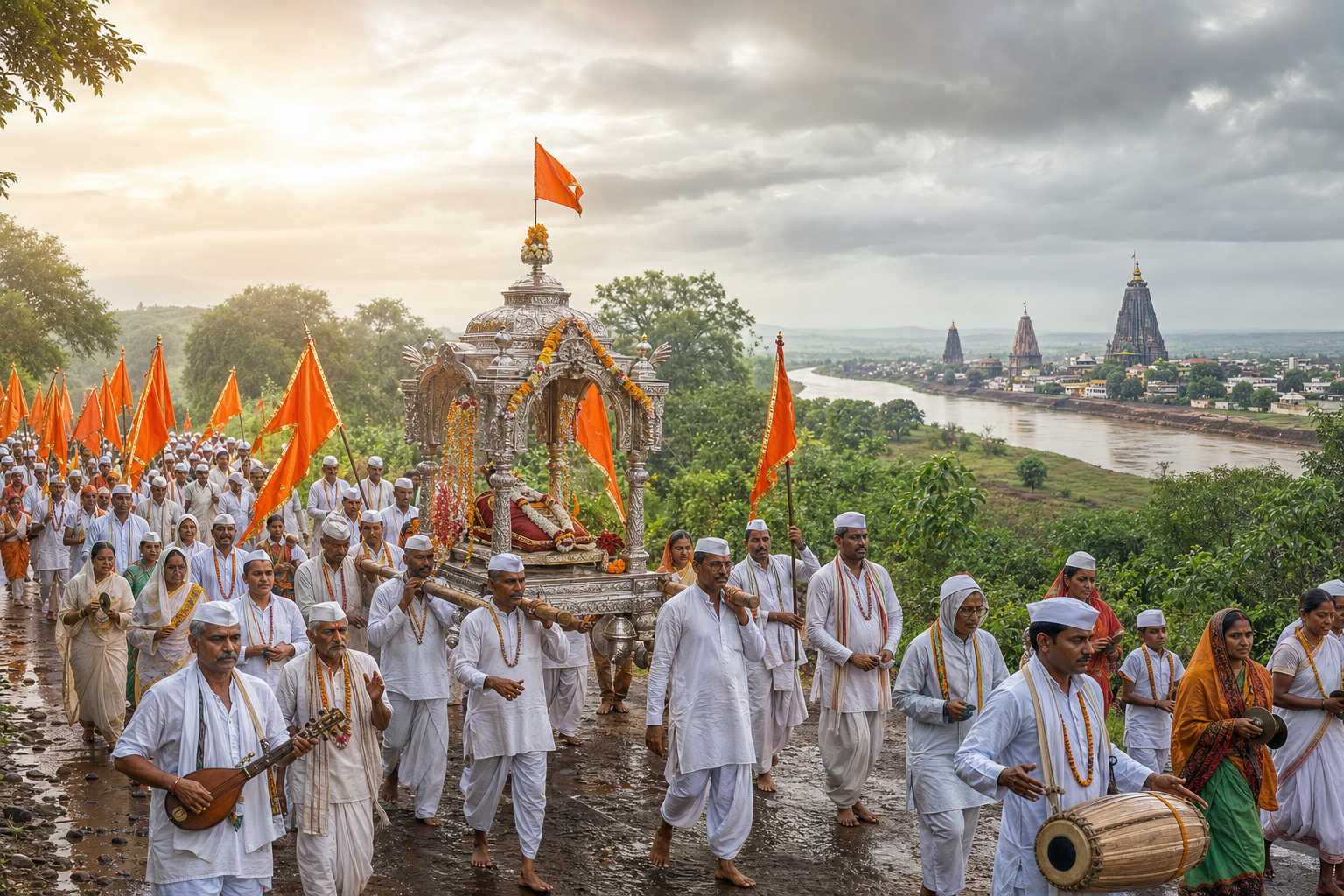
Sant Muktabai Palkhi Sohala 2026 is one of the important devotional processions associated with Maharashtra’s wider Ashadhi Wari tradition. In this pilgrimage, the padukas, or sacred sandals, of Sant Muktabai are ceremonially carried from Muktainagar toward Pandharpur, where devotees seek darshan of Shri Vithoba and Rakhumai during Ashadhi Ekadashi. The journey is not merely a religious procession; it is a moving institution of bhakti, community discipline, shared service, and cultural memory.
Sant Muktabai, also lovingly remembered as Muktai, occupies a revered place in the Varkari tradition. She is remembered as the younger sister of Sant Dnyaneshwar and as a saint-poet whose abhangs express spiritual maturity, compassion, and a strikingly inclusive vision of devotion. Her legacy belongs to the living world of Maharashtra’s saints, where knowledge, humility, kirtan, seva, and pilgrimage are not separate practices but interconnected paths toward inner refinement.
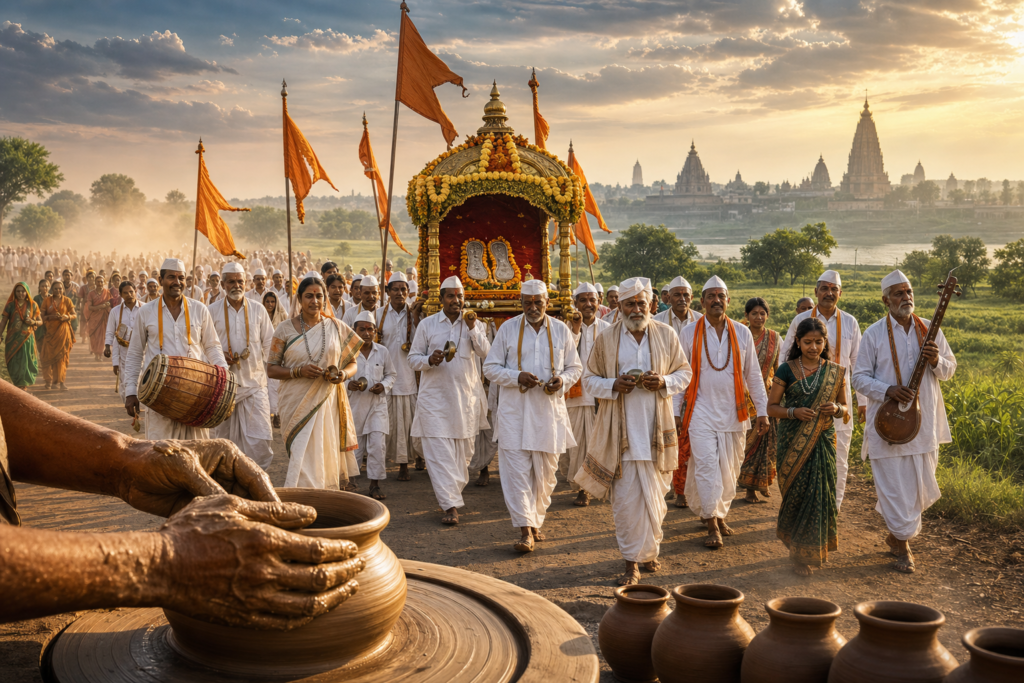
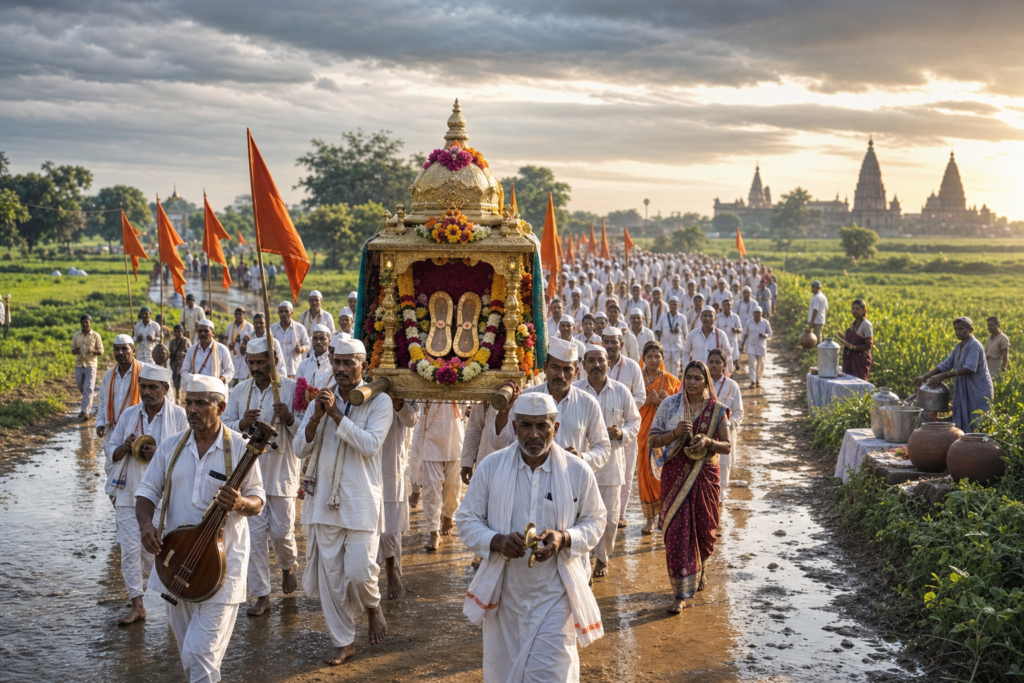
The Palkhi Sohala becomes especially meaningful because it carries the presence of the saint through the landscape of ordinary life. A palkhi is not treated simply as a vehicle. Within the devotional grammar of the Wari, it is a mobile shrine, a symbol of the saint’s continuing guidance, and a public reminder that sacred memory must be walked, sung, served, and shared. The padukas represent the saint’s feet, and in Indian spiritual vocabulary the feet of a guru or saint signify surrender, learning, reverence, and the path itself.
The 2026 Sohala is connected with Ashadhi Ekadashi, also known as Devshayani Ekadashi or Shayani Ekadashi. Published 2026 festival calendars place Ashadhi Ekadashi on July 25, 2026. As with all large Wari processions, devotees should confirm the final halt-wise schedule, local timings, route diversions, and administrative instructions through the Sant Muktabai Sansthan, local authorities, and district-level arrangements closer to the date.
The traditional movement of Sant Muktabai’s palkhi from Muktainagar to Pandharpur reflects the geographical breadth of the Varkari sampradaya. While the better-known palkhis of Sant Dnyaneshwar from Alandi and Sant Tukaram from Dehu receive wider public attention, the Muktabai Palkhi has its own devotional identity. It gives northern Maharashtra a powerful point of participation in the Pandharpur Wari and affirms that the path to Vithoba is sustained by many saints, many communities, and many local histories.
Muktainagar itself is central to Sant Muktabai’s memory. The town’s devotional identity is tied to Muktai, and many devotees approach the palkhi with the feeling that the saint is not confined to the past. In the emotional world of the Wari, Sant Muktabai walks with the devotees, hears their abhangs, receives their service, and quietly teaches endurance. This emotional connection is one reason the Wari continues to remain meaningful even in an age of fast transport, digital calendars, and changing social routines.
Historically, the Varkari tradition has been shaped by devotional egalitarianism. Its central practices are simple but profound: nama-smarana, singing abhangs, walking in discipline, serving fellow pilgrims, honoring saints, and seeking darshan of Vithoba at Pandharpur. The Wari places farmers, workers, scholars, householders, ascetics, women, elders, youth, and children in the same devotional rhythm. Its strength lies in this shared simplicity.
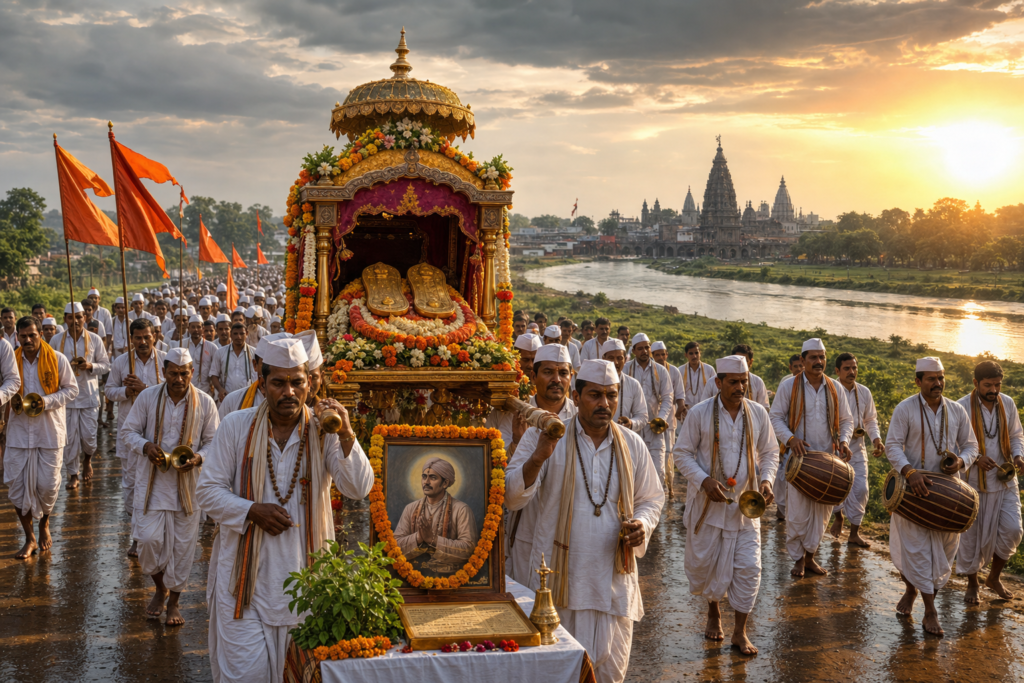
The technical structure of a palkhi procession is highly organized. Devotees often move in dindis, which are disciplined groups of pilgrims. These groups manage walking order, food distribution, rest, devotional singing, and mutual assistance. Tal, mridang, veena, flags, tulsi malas, saffron standards, and the repeated chanting of Vithoba’s name form the recognizable soundscape and visual identity of the Wari. This structure allows a vast human movement to remain devotional rather than chaotic.
The silver chariot associated with Sant Muktabai’s padukas adds ceremonial dignity to the procession. Yet the deeper message of the Sohala does not rest in ornamentation alone. The chariot, the padukas, the route, the abhangs, and the walking devotees together create a sacred ecology. Each element has a function: remembrance, discipline, surrender, movement, and collective worship. In this sense, the Wari is a ritual system as much as a pilgrimage.
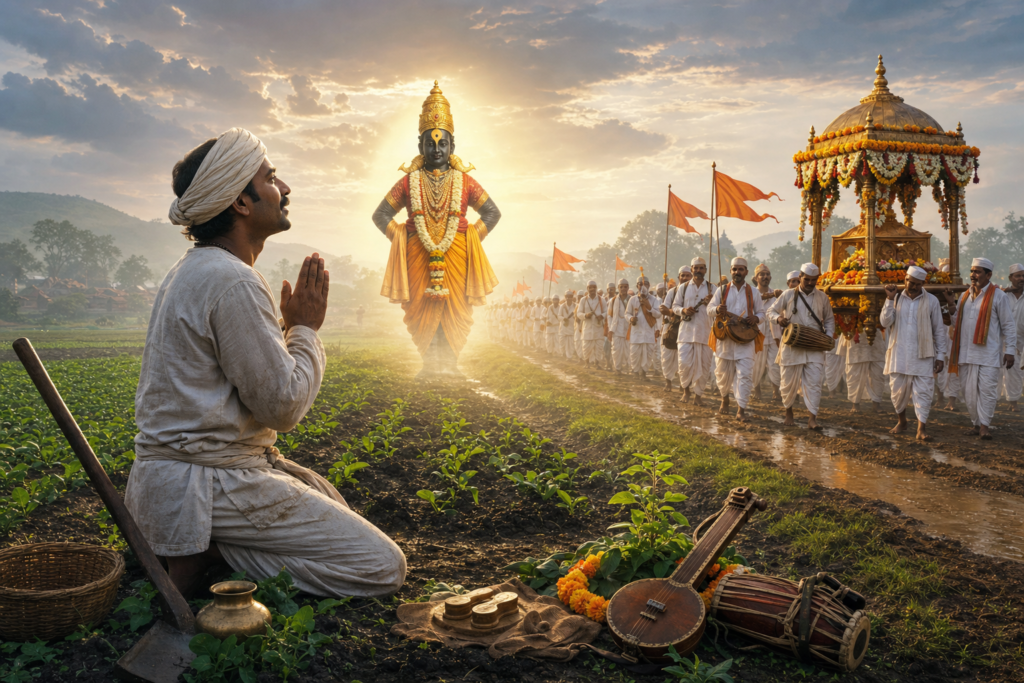
Ashadhi Ekadashi is sacred in Vaishnava practice because it marks the beginning of Chaturmas, the four-month period associated with Lord Vishnu’s cosmic rest. In the Pandharpur tradition, this theological idea is lived through the longing for Vithoba. Devotees walk across heat, rain, mud, and fatigue because darshan is understood not as a casual visit but as the culmination of effort, discipline, and grace.
Pandharpur, situated on the banks of the Chandrabhaga River, functions as the emotional center of the Wari. The crescent-shaped flow of the river, the presence of Shri Vitthal-Rukmini Mandir, and the memory of saints such as Dnyaneshwar, Tukaram, Namdev, Chokhamela, Janabai, Eknath, Nivruttinath, Sopan, and Muktabai make the town a major sacred geography of Maharashtra. The arrival of various palkhis transforms Pandharpur into a collective field of devotion.
Sant Muktabai’s teachings deepen the meaning of the pilgrimage. Her abhang tradition emphasizes inner purity, patience, humility, and the recognition of the Divine beyond narrow ego. One of the most powerful aspects of her memory is the way she is associated with wisdom at a young age. She stands as a reminder that spiritual insight is not measured only by age, status, or institutional power, but by realization, compassion, and clarity.
Her place in the lineage of Sant Dnyaneshwar also matters. The Dnyaneshwar family represents a remarkable convergence of Nath yogic influence, Bhagavata devotion, Marathi literary expression, and direct spiritual experience. Sant Muktabai’s voice within this lineage is not ornamental; it is philosophically significant. Her devotional poetry points toward the unity of existence and the need to respond to the world’s harshness with steadiness rather than bitterness.
For contemporary readers, the Sant Muktabai Palkhi Sohala 2026 offers more than festival information. It provides a framework for understanding how Dharmic traditions preserve wisdom through embodied practice. The Wari is not learned only from books. It is learned through walking, waiting, sharing water, listening to abhangs at dawn, accepting inconvenience, and seeing strangers become co-pilgrims. Such experiences create an emotional education in humility.
The unity of Dharmic traditions can also be understood through the ethical grammar of the Wari. Hindu bhakti, Buddhist compassion, Jain discipline, and Sikh seva all recognize the transformative power of self-restraint, remembrance, service, and community. The Sant Muktabai Palkhi Sohala belongs specifically to the Varkari Hindu tradition, yet its values resonate across the wider Dharmic family. It teaches that pilgrimage is not only movement toward a sacred place but movement away from ego, isolation, and indifference.
Women saints have played a vital role in the spiritual life of India, and Sant Muktabai’s presence in the Wari tradition is especially important. Her memory challenges any narrow reading of bhakti history that overlooks women’s spiritual authority. Alongside figures such as Janabai, Soyarabai, Akka Mahadevi, Andal, and Mirabai, Muktabai demonstrates that devotion can become a vehicle for philosophical insight, poetic expression, and social dignity.
From a cultural studies perspective, the Palkhi Sohala preserves oral tradition, music, regional identity, pilgrimage management, ritual symbolism, and collective ethics. The abhangs sung on the route are not entertainment; they are portable theology. The rhythm of the dindi is not merely logistical; it disciplines the body and mind. The repeated names of Vithoba and the saints create a shared sacred vocabulary that binds generations.
From a social perspective, the Wari is a large-scale practice of cooperation. Food, shelter, health support, route management, sanitation, crowd discipline, and local hospitality all become part of the pilgrimage. Villages and towns along the way often participate by serving the pilgrims. This is why the Wari should be studied not only as a religious event but also as a model of community organization sustained by faith.
Devotees planning to participate in Sant Muktabai Palkhi Sohala 2026 should prepare with both devotion and practicality. Comfortable walking discipline, basic health precautions, weather awareness, simple food habits, respect for dindi rules, and attention to official instructions are essential. Since the Wari occurs during the monsoon period, pilgrims should be prepared for rain, slippery roads, crowd density, and changes in local arrangements.
Those who cannot physically join the procession can still participate meaningfully through nama-smarana, reading Sant Muktabai’s abhangs, supporting pilgrims with food or water, studying the Varkari tradition, or visiting local temples dedicated to Vithoba and the saints. The essence of the Wari is not limited to distance walked. Its deeper measure is the sincerity with which one remembers the Divine and serves the community.
The Sant Muktabai Palkhi Sohala 2026 therefore deserves attention as a sacred, cultural, and civilizational event. It links Muktainagar to Pandharpur, the saint to the devotee, poetry to practice, and personal longing to collective worship. Its enduring power lies in its ability to make bhakti visible in public life without losing its inward tenderness.
At its heart, the pilgrimage teaches a disciplined form of love. The devotee walks not to display hardship but to soften the self. The community gathers not to create spectacle but to remember Vithoba through shared devotion. Sant Muktabai’s palkhi reminds Maharashtra and the wider Dharmic world that wisdom is carried forward when reverence becomes action, when song becomes service, and when the journey itself becomes worship.
Inspired by this post on Hindu Pad.



Leave a Reply
You must be logged in to post a comment.