

The question of whether the Divine is personal or impersonal has shaped Hindu philosophy, Vedanta, bhakti, yoga, and wider Dharmic reflection for centuries. It is not a minor theological dispute, because it influences how a seeker prays, meditates, serves, studies scripture, understands the self, and relates to the world. In the Upanishadic and Vedantic traditions, Brahman is described in language that can appear paradoxical: beyond name and form, yet also the inner controller; untouched by material qualities, yet the source of all auspicious qualities; impossible to grasp through ordinary thought, yet accessible through devotion, discipline, and realization.
This tension between the personal and impersonal God is better understood as a spectrum of spiritual insight rather than as a simple opposition. The impersonal view emphasizes Brahman as nirguna, the attributeless and formless Absolute beyond all limitation. The personal view emphasizes Brahman as saguna, the Supreme Reality known through qualities, relationship, grace, form, name, and loving presence. Both approaches arise within the vast intellectual and spiritual landscape of Sanatana Dharma, and both have been interpreted through scripture, reason, meditation, and lived practice.
A historically careful account must begin with the wider Indian setting. Early medieval India was a world of intense philosophical debate among Hindu, Buddhist, Jain, and other traditions. These traditions did not merely compete; they also shaped one another through argument, adaptation, shared vocabulary, and disciplined inquiry into suffering, liberation, consciousness, ethics, and ultimate reality. Buddhist traditions developed powerful analyses of impermanence, non-self, causality, and liberation. Jain traditions developed subtle doctrines of the soul, karma, non-violence, and many-sided reality. Hindu darshanas preserved and expanded Vedic, Upanishadic, devotional, ritual, yogic, and metaphysical approaches. The result was not intellectual isolation, but a dynamic Dharmic conversation.
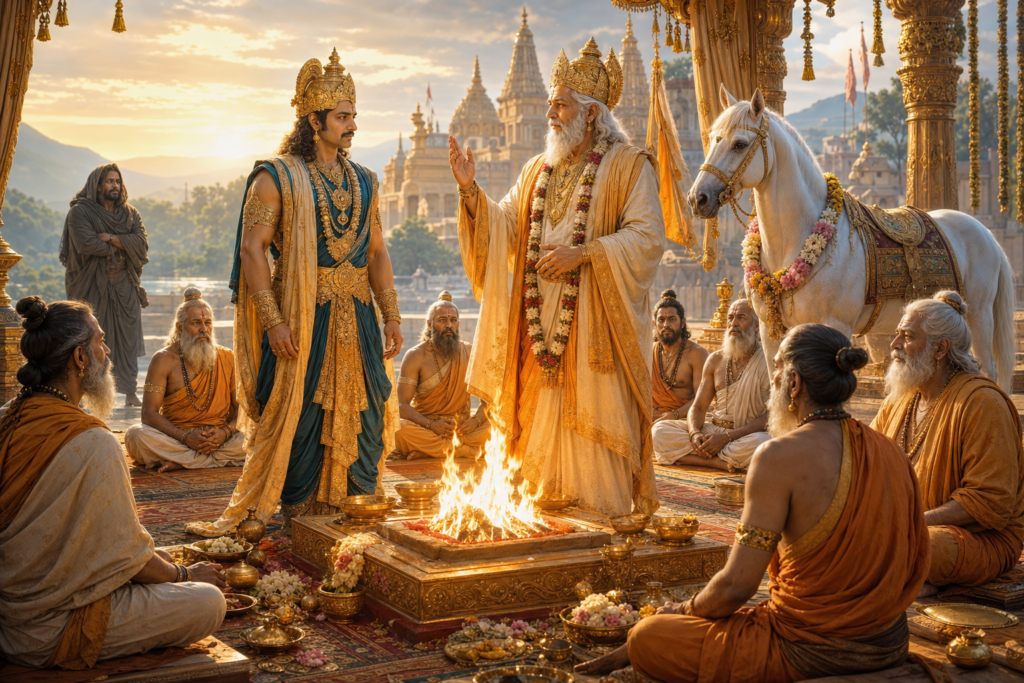
Within this environment, Adi Shankara, generally placed by modern scholarship in the early medieval period, became one of the most influential systematizers of Advaita Vedanta. Advaita means non-duality. Its central insight is that the deepest self, atman, is not ultimately separate from Brahman. The world as ordinarily perceived is conditioned by maya, not necessarily in the shallow sense of being nothing at all, but in the deeper sense that perception mistakes the changing, dependent, and name-and-form world for independent ultimate reality. Liberation, or moksha, comes through knowledge that removes ignorance and reveals the non-dual nature of reality.
The Advaitic emphasis on nirguna Brahman offers a radical spiritual discipline. It asks the seeker to move beyond identification with body, mind, role, emotion, possession, and social identity. It resists the tendency to reduce God to a projection of human preference. It protects the transcendence of the Divine by refusing to confine Brahman within any single image, form, or concept. For contemplative temperaments, this can be profoundly liberating: the Divine is not elsewhere, not limited by space, and not dependent on imagination. Reality itself, when rightly known, is Brahman.
Yet this same view raises an existential and devotional question. If God is understood only as an impersonal Absolute, how does one love, serve, surrender, or cultivate intimacy with the Divine? Human beings do not experience life as pure abstraction. Love is relational. Gratitude is directed. Service becomes meaningful when there is a beloved, a teacher, a parent, a friend, a deity, or a sacred presence toward whom the heart can move. This is why personal devotion has remained one of the strongest currents in Hindu spirituality, not merely as sentiment, but as a disciplined theology of relationship.
Ramanujacharya, associated with the 11th and 12th centuries and the Sri Vaishnava tradition, offered one of the most important responses through Vishishtadvaita Vedanta, or qualified non-duality. In this view, the Ultimate Reality is one, but that unity is internally rich and qualified. The individual souls and the universe are real, dependent on Brahman, and inseparable from Brahman, yet not identical to the whole in an absolute sense. A helpful analogy is the relationship between body and self: the parts are distinct, but they belong to an organic unity. This preserves divine unity while also preserving relationship, devotion, and the reality of the world.
Vishishtadvaita gives philosophical depth to the personal God without denying transcendence. Vishnu/Narayana is not a finite being among other beings, but the Supreme Reality endowed with infinite auspicious qualities. The individual atma is not dismissed as an illusion, nor inflated into absolute identity with God. It is real, dependent, capable of knowledge and love, and fulfilled through surrender and devotion. This makes bhakti not merely an emotional practice, but a complete path of metaphysics, ethics, worship, and liberation.
The Bhagavad Gita gives a scriptural framework for holding these strands together. It acknowledges contemplative knowledge, disciplined action, meditation, renunciation, and devotion. In the twelfth chapter, the contrast between worship of the unmanifest and devotion to the personal Lord is treated with philosophical seriousness. The unmanifest path is recognized as valid, but difficult for embodied beings. Devotion to the personal Divine is presented as accessible because it engages memory, action, emotion, ethics, and surrender. This does not trivialize metaphysics; it brings metaphysics into daily life.
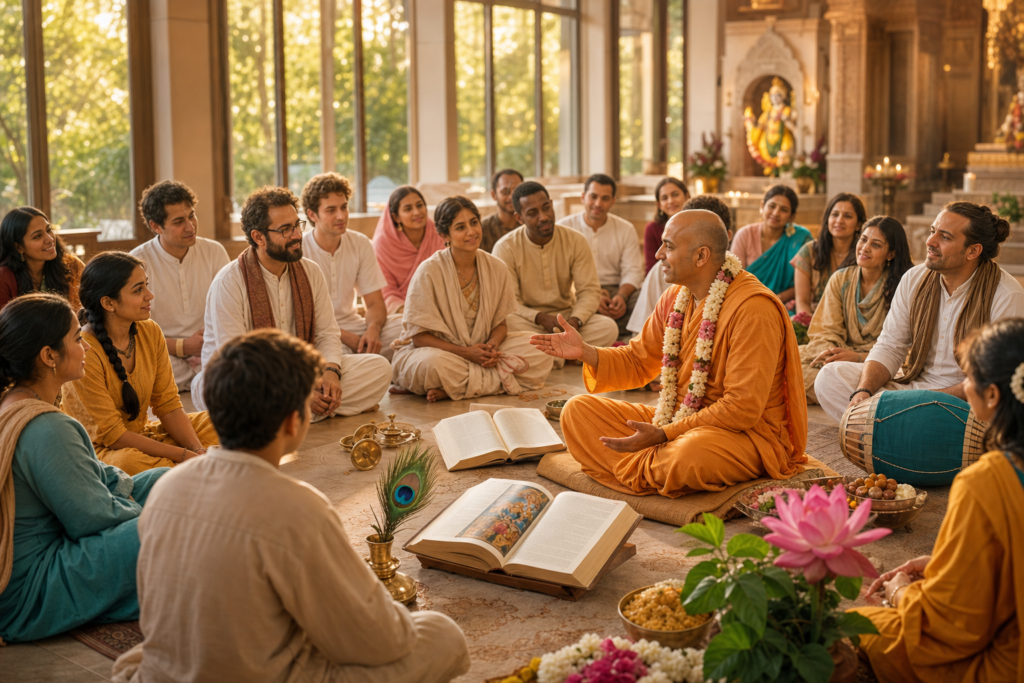
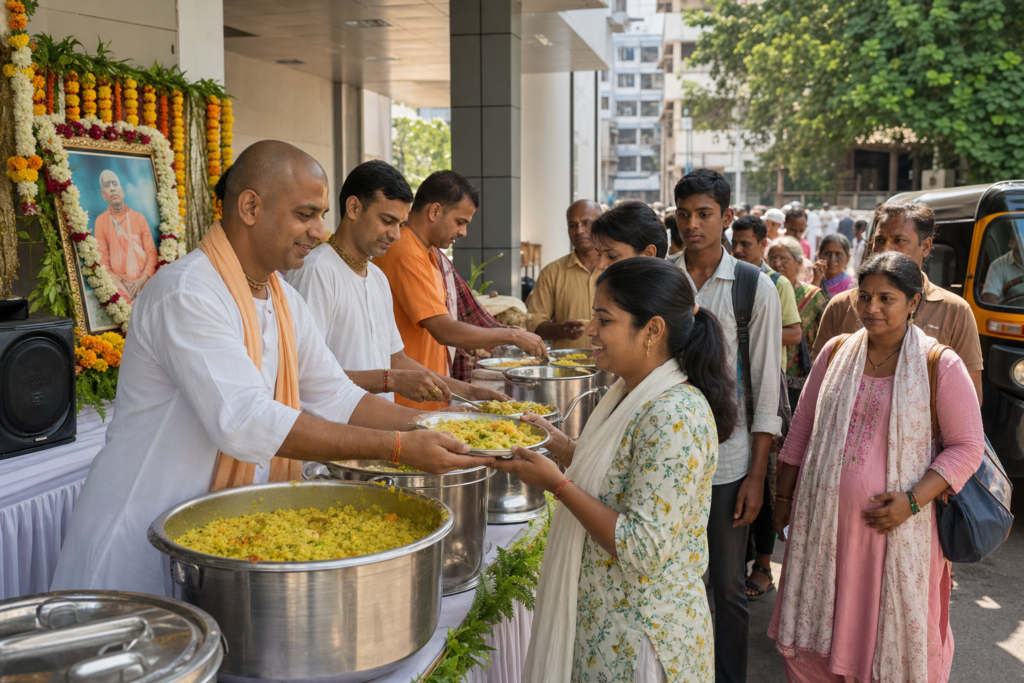
For many seekers, the personal God becomes spiritually transformative because devotion gives the senses and emotions a sacred direction. Food can become offering. Music can become kirtan. Speech can become mantra. Memory can become smarana. Work can become seva. The mind, which often wanders through anxiety, comparison, and distraction, is gently trained to rest in the Divine. A deity’s form, name, stories, and qualities become not limitations imposed upon God, but compassionate points of contact through which finite consciousness approaches the Infinite.
This is why the personal and impersonal understandings should not be reduced to a crude conflict between intellect and emotion. Advaita is not cold abstraction when practiced deeply; it can dissolve ego, fear, and separation. Bhakti is not mere emotionalism when practiced deeply; it can purify desire, discipline conduct, and refine perception. The mature traditions of Vedanta recognize that spiritual practice must address the whole person: reason, heart, body, memory, action, and moral responsibility.
Other Vedantic traditions further enrich this discussion. Dvaita Vedanta, associated with Madhvacharya, emphasizes a real distinction between God, soul, and world, making devotion a relationship between the dependent soul and the Supreme Lord. Bhedabheda and Achintya Bhedabheda traditions explore forms of difference-and-non-difference, arguing that the soul is both connected to and distinct from the Divine in ways that may exceed ordinary logic. Shaiva and Shakta traditions likewise interpret ultimate reality through both transcendent consciousness and manifest divine power. These schools differ technically, yet all ask how finite beings encounter the Infinite.
The terms nirguna and saguna must also be handled carefully. In some interpretations, nirguna means without any qualities whatsoever. In other interpretations, especially in devotional Vedanta, it means free from material or limiting qualities, not empty of divine excellence. This distinction is crucial. A personal God in bhakti traditions is not imagined as a magnified human personality subject to ego, anger, insecurity, or ignorance. The personal Divine is personal in the sense of being conscious, relational, compassionate, beautiful, and responsive, while remaining infinite and sovereign.
The concept of maya requires similar precision. In popular speech, it is often translated simply as illusion, but Vedantic traditions interpret it in more nuanced ways. For Advaita, maya explains how the One appears as many and how ignorance gives rise to mistaken identification. For theistic Vedanta, the world is often understood as real but dependent, a field of divine manifestation and moral action. In that view, the world is not to be despised; it is to be sanctified through dharma, devotion, and service.
This distinction matters in everyday life. If the world is treated only as a trap, ethical responsibility may become weak. If the world is treated as the only reality, spiritual depth may disappear. Dharmic traditions often seek a middle discipline: recognize the impermanence of worldly experience, but do not abandon compassion, duty, or reverence. The personal God helps many seekers see the world as a place of service. The impersonal Absolute helps many seekers avoid possessiveness and egoic attachment. Together, they can deepen both wisdom and love.
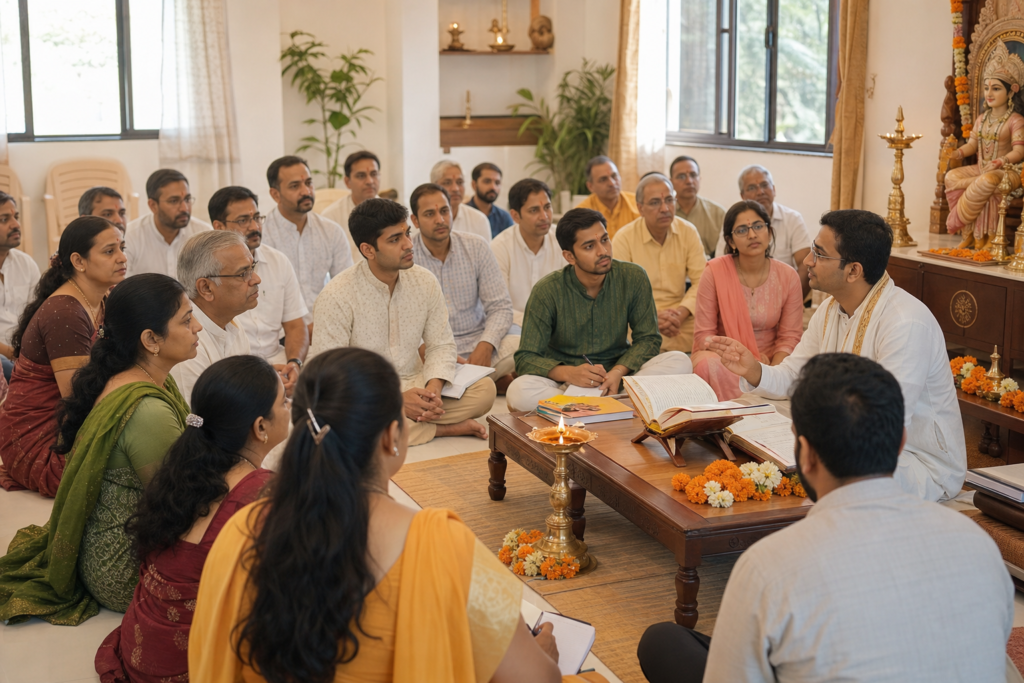
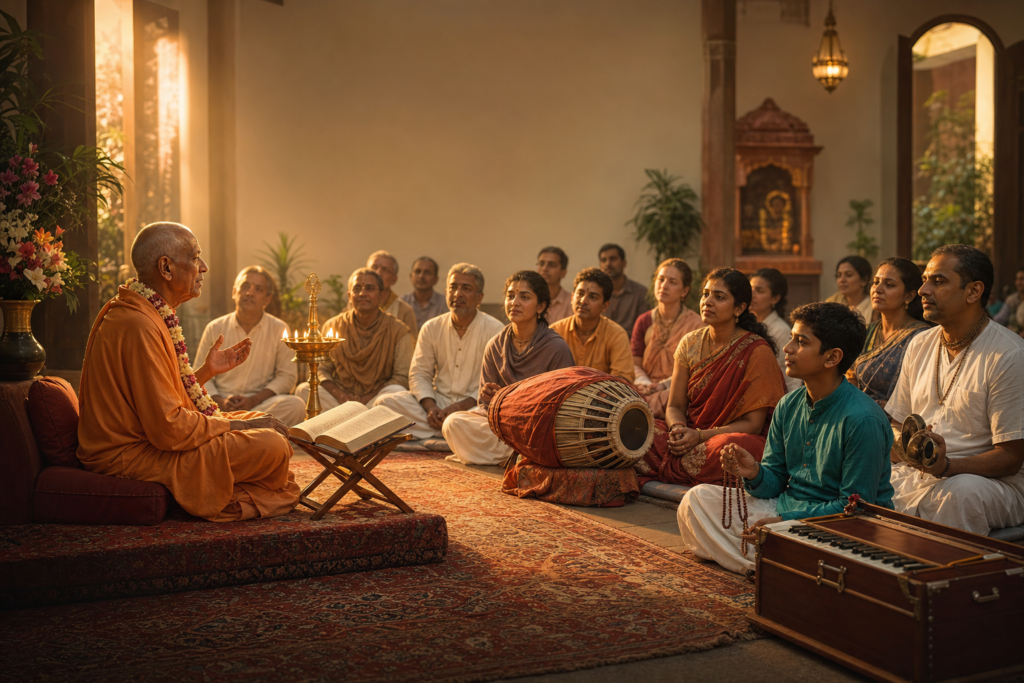
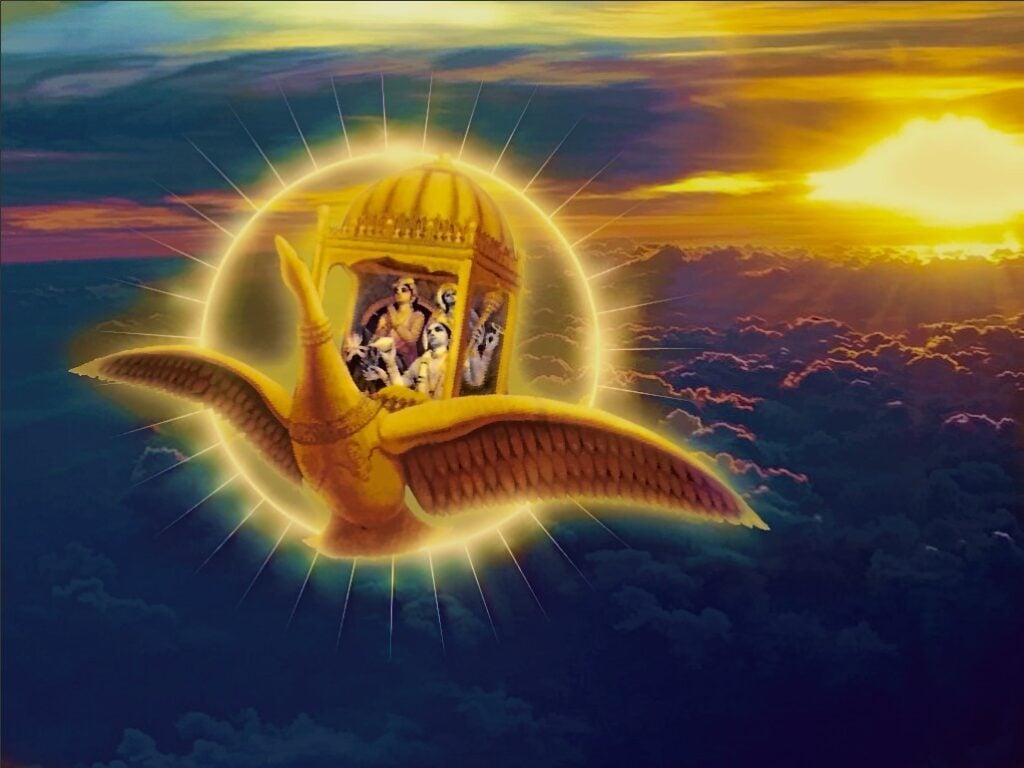
The guru occupies a significant place in this landscape, but the subject must be approached with discernment. In Hindu traditions, a true guru is not merely a lecturer, institution-builder, or charismatic personality. The guru is a spiritual guide who helps remove ignorance, clarify scripture, discipline practice, and direct the seeker toward realization. The title paramahamsa, often translated as supreme swan, symbolizes the capacity to distinguish the essential from the non-essential, just as traditional imagery says the swan separates milk from water. The symbolism points to discrimination, purity, and freedom from binding attachment.
In devotional communities, the guru may be honored as a living representative of divine grace. This can provide profound emotional and spiritual support, especially for seekers who need guidance that is embodied, compassionate, and practical. At the same time, Dharmic wisdom also insists on discernment, humility, scriptural grounding, and ethical accountability. Reverence for the guru should deepen devotion to truth, not replace it with personality-centered dependence. A healthy guru-shishya relationship leads the disciple toward God-realisation, self-discipline, compassion, and inner freedom.
The wider Dharmic family offers further insight into how ultimate reality can be approached without hostility between paths. Buddhism may not frame the goal through a creator God, yet it offers rigorous methods for overcoming ignorance, craving, and suffering. Jainism emphasizes the purification of the jiva through non-violence, restraint, and many-sided understanding. Sikhism proclaims Ik Onkar, the One Reality, while preserving a deeply devotional relationship with the Divine through Naam, seva, sangat, and the Guru Granth Sahib. Hinduism contains both formless contemplation and richly personal worship. These traditions differ, but their shared concern for liberation, ethical life, discipline, and transcendence creates a basis for mutual respect.
Unity among Dharmic traditions does not require erasing real differences. It requires understanding differences without contempt. A Buddhist analysis of selfhood, a Jain doctrine of anekantavada, a Sikh devotion to the One, and a Hindu Vedantic account of Brahman are not interchangeable systems. Yet each can remind the seeker that spiritual life must move beyond ego, violence, narrowness, and superficial identity. The highest purpose of philosophy is not argument for its own sake, but transformation of consciousness and conduct.
The personal God answers one set of spiritual needs with unusual power. It allows love to become a path of knowledge. It allows ritual to become embodied philosophy. It allows the heart to participate in metaphysics. In the presence of Krishna, Rama, Shiva, Devi, Vishnu, Narayana, or another chosen form of the Divine, the seeker does not merely think about ultimate reality; the seeker offers, sings, remembers, bows, serves, and gradually becomes reshaped by devotion. The chosen form, or Ishta, becomes a bridge between finite affection and infinite truth.
The impersonal Absolute answers another set of spiritual needs with equal seriousness. It prevents spiritual imagination from becoming possessive. It warns against making God a tribal emblem or a projection of personal preference. It teaches that the Real exceeds concept, image, language, and mental construction. It calls the seeker inward, toward silence, inquiry, discrimination, and direct insight. In a world crowded with noise and identity conflict, the contemplative vision of nirguna Brahman can be a powerful discipline of humility.
The most fruitful approach may be to recognize that different temperaments require different emphases. Some seekers begin with devotion and later discover philosophical subtlety. Others begin with inquiry and later find that knowledge without tenderness becomes incomplete. Some are drawn to mantra, temple worship, and sacred form. Others are drawn to meditation, silence, and the inward witness. The Dharmic genius lies in allowing multiple legitimate paths while still insisting on discipline, sincerity, and transformation.
For contemporary spiritual life, this discussion is more than historical. Modern people often experience alienation, abstraction, loneliness, and moral fragmentation. An impersonal universe can feel intellectually elegant but emotionally distant. A personal God can feel intimate and healing, but may be misunderstood if reduced to sectarian preference. Vedanta offers a deeper possibility: the Divine is beyond all limitation, yet graciously approachable; transcendent, yet immanent; formless, yet available through form; one, yet encountered through many names and relationships.
The debate between personal and impersonal God should therefore be approached as a disciplined exploration of divine reality, not as a reason for division. Advaita Vedanta highlights the non-dual ground of being. Vishishtadvaita Vedanta highlights unity enriched by real relationship. Bhakti traditions show how love becomes a means of realization. Yoga disciplines the mind and body. Sikh, Jain, and Buddhist traditions contribute profound insights into devotion, ethics, restraint, awareness, and liberation. Together, they form a vast civilizational conversation about how human beings may awaken from ignorance and live with truth.
The mature conclusion is not that one vocabulary must defeat all others. Rather, the personal and impersonal dimensions of the Divine illuminate different aspects of the spiritual journey. The formless Absolute protects transcendence. The personal Lord nourishes love. The guru clarifies the path. Scripture provides tested language. Practice turns doctrine into experience. Dharma ensures that realization expresses itself as compassion, restraint, service, and reverence. When held together, these insights make Hindu philosophy and the wider Dharmic traditions not a battlefield of competing abstractions, but a living path toward wisdom and Divine Love.
References consulted for context include the source essay at Bhakti Marga, standard summaries of Adi Shankara, Ramanuja, and the Bhagavad Gita.
Inspired by this post on Bhakti marga blog.



Leave a Reply
You must be logged in to post a comment.