

Śrīmad-Bhāgavatam 2.1.21 stands at a subtle but important point in the Second Canto, where the teaching moves from cosmic contemplation toward devotional realization. The verse belongs to the dialogue in which Śukadeva Gosvāmī instructs King Parīkṣit, a ruler facing death with unusual clarity, urgency, and spiritual seriousness. Its subject is not merely meditation as a technique, but meditation as a disciplined transformation of perception, memory, and relationship with the Divine.
The Sanskrit verse reads: “yasyāṁ sandhāryamāṇāyāṁ yogino bhakti-lakṣaṇaḥ āśu sampadyate yoga āśrayaṁ bhadram īkṣataḥ.” In a condensed form, the teaching explains that systematic remembrance, when steadily maintained, brings the yogī quickly toward bhakti, devotional connection, and shelter in the all-auspicious Lord. The language is technical, but its spiritual psychology is deeply practical: what one repeatedly holds in awareness gradually becomes the organizing center of life.
The context matters. In the earlier portion of the chapter, the Bhāgavatam describes meditation on the universal form, or virāṭ-puruṣa, as a way of training the mind to recognize sacred presence throughout existence. The practitioner is not asked to begin with abstraction alone. The mountains, rivers, planets, directions, cosmic elements, and living beings become part of a contemplative map. This method helps the mind move from fragmentation to reverence, from scattered sensory engagement to a unified vision of reality.
The word “sandhāryamāṇāyām” indicates sustained holding or fixing of consciousness. This is not casual recollection. It suggests disciplined remembrance, repeated placement of attention, and a gradual re-education of perception. In yogic terms, the verse addresses the movement from external awareness to internal absorption. In devotional terms, it shows how remembrance becomes relationship. The mind is not merely emptied; it is oriented toward an auspicious shelter.
The phrase “bhakti-lakṣaṇaḥ” is especially significant. It implies that the successful form of yoga being described is marked by devotion. The Bhāgavatam does not treat bhakti as a decorative emotion added after philosophical inquiry. Bhakti is presented as the defining characteristic of mature spiritual connection. Knowledge, meditation, restraint, and cosmic awareness all find their completion when they become infused with devotion, humility, and loving service.
This is why the verse is valuable for readers interested in Hindu philosophy, Yoga, Vedānta, and devotional traditions. It refuses to separate technique from character. A person may master posture, breath, analysis, or ritual vocabulary, yet the Bhāgavatam asks a sharper question: has the heart become more receptive to the Divine, more compassionate toward beings, and more steady in dharma? In that sense, the verse is both theological and ethical.
The term “āśrayaṁ” means shelter, support, or refuge. In Bhakti traditions, this is not weakness but wisdom. Human life is marked by uncertainty, aging, loss, desire, and change. King Parīkṣit hears this teaching while confronting his own approaching death, which makes the instruction intensely existential. The shelter described here is not an escape from reality; it is a way of seeing reality under the care of the all-auspicious, “bhadram,” principle of divine presence.
The verse also clarifies the relationship between impersonal contemplation and personal devotion. Meditation on the universal form can cultivate reverence for the presence of the sacred everywhere. Yet the Bhāgavatam’s trajectory moves toward personal devotional service, where the Divine is not only an all-pervading principle but also the object of love, surrender, and conscious relationship. This movement is not a rejection of cosmic vision; it is its devotional fulfillment.
Bhagavad-Gītā 12.5 offers a useful comparative lens, noting that the path focused on the unmanifest is more demanding for embodied beings. This does not deny the seriousness of contemplative or nondual disciplines. Rather, it recognizes a practical fact of spiritual life: the human mind often needs form, relationship, name, remembrance, and service to remain steady. Bhakti gives attention a living center.
From a technical standpoint, Śrīmad-Bhāgavatam 2.1.21 describes a progression. First comes systematic remembrance. Then comes steadiness in that remembrance. This steadiness shapes the yogī’s inner vision. The vision matures into devotional orientation. Devotional orientation becomes yoga in its relational sense: reconnection with the Divine. Finally, the practitioner comes under auspicious shelter. The verse is short, but its structure is remarkably complete.
For contemporary seekers, the teaching has immediate relevance. Modern life trains attention to be reactive, restless, and externally manipulated. Notifications, anxieties, social comparison, and ideological noise pull the mind outward. The Bhāgavatam proposes a different discipline: repeatedly remember what is sacred, see the world as connected to the Divine, and allow that vision to soften ego-centered perception. Such remembrance becomes a form of inner ecology.
This does not require withdrawal from responsibility. In the Hindu spiritual imagination, remembrance can accompany duty, family life, study, leadership, and service. King Parīkṣit himself is not an isolated ascetic in the usual sense; he is a ruler, heir, and public figure who turns toward ultimate questions when confronted with mortality. His situation gives the verse social depth. Spiritual practice is not merely private consolation; it can shape how one governs oneself and relates to others.
The teaching also supports unity among Dharmic traditions. Hinduism, Buddhism, Jainism, and Sikhism each preserve distinctive doctrines and disciplines, yet all recognize the transformative power of disciplined remembrance, ethical restraint, self-examination, and liberation from egoic bondage. Bhakti in the Vaiṣṇava sense has its own theological identity, but the broader principle of sacred recollection resonates across Dharmic life, whether expressed as nāma-smaraṇa, mindfulness, japa, svādhyāya, kīrtan, meditation, or reverent service.
In Sikh tradition, remembrance of the Divine Name occupies a central place in spiritual formation. In Jain practice, disciplined awareness and purification of intention are essential to liberation. In Buddhist traditions, sustained mindfulness exposes the instability of craving and ego. In Hindu bhakti, remembrance becomes loving relation with Bhagavān. These are not identical systems, and their differences should not be flattened. Yet their shared seriousness about attention, conduct, and inner transformation provides a basis for mutual respect.
Śrīmad-Bhāgavatam 2.1.21 is therefore not only a verse for sectarian study. It is a meditation on how consciousness is trained. The human being becomes shaped by repeated attention. If attention is repeatedly given to fear, resentment, consumption, or pride, those forces become internal habits. If attention is repeatedly placed on the all-auspicious Divine, the inner life gradually becomes more devotional, more stable, and more capable of service.
The emotional power of the verse lies in its confidence that transformation can be “āśu,” or swift, when remembrance is sincere and steady. This swiftness should not be misunderstood as a shortcut or a denial of discipline. Rather, it suggests that the heart responds quickly when it is properly oriented. A single moment of genuine remembrance can reveal the poverty of years spent in distraction. A steady practice can make that moment durable.
For practitioners of Krishna consciousness, the verse reinforces the centrality of hearing, chanting, remembering, worship, service, and surrender. Devotional service is not simply religious activity; it is the reorganization of identity around the Divine. The practitioner begins to see the world not as an arena for domination but as a field for service. This is why bhakti has social consequences: humility before Bhagavān should mature into compassion toward living beings.
The academic importance of the verse lies in its integration of cosmology, psychology, and theology. The universal form provides cosmological scale. Systematic remembrance provides psychological method. Devotional shelter provides theological purpose. This layered structure is characteristic of the Bhāgavatam, where narrative, metaphysics, aesthetics, and practice are woven together rather than treated as isolated categories.
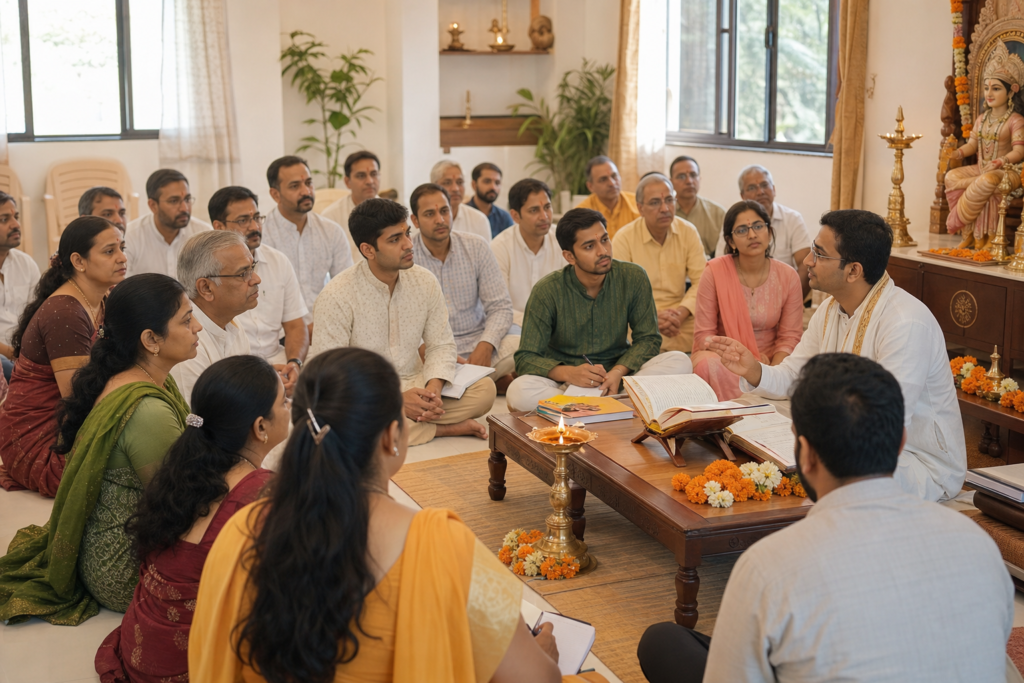
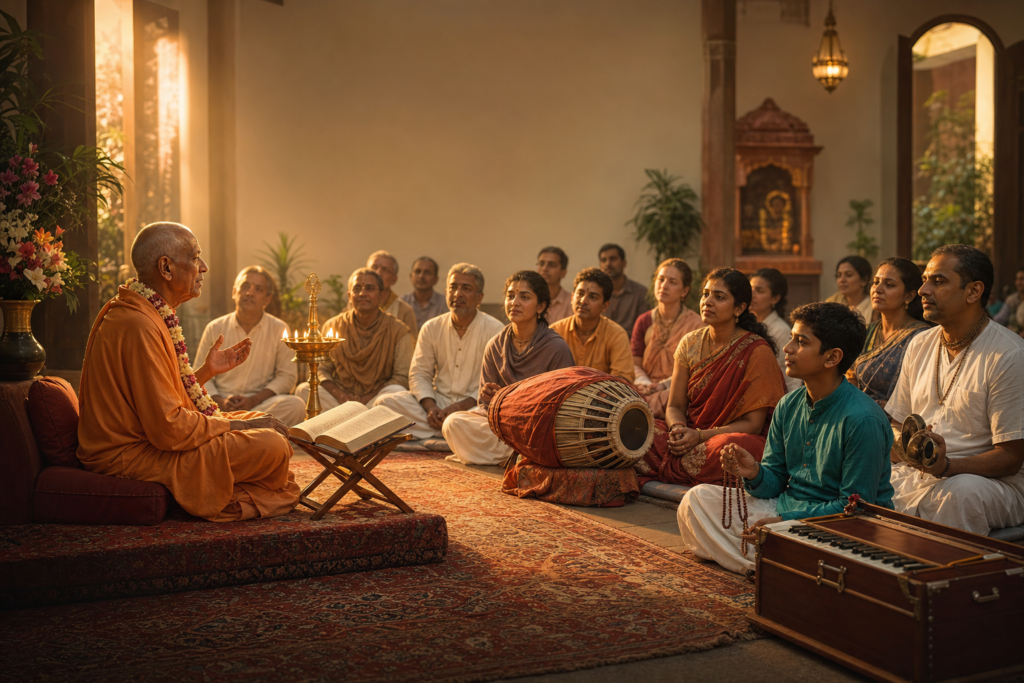
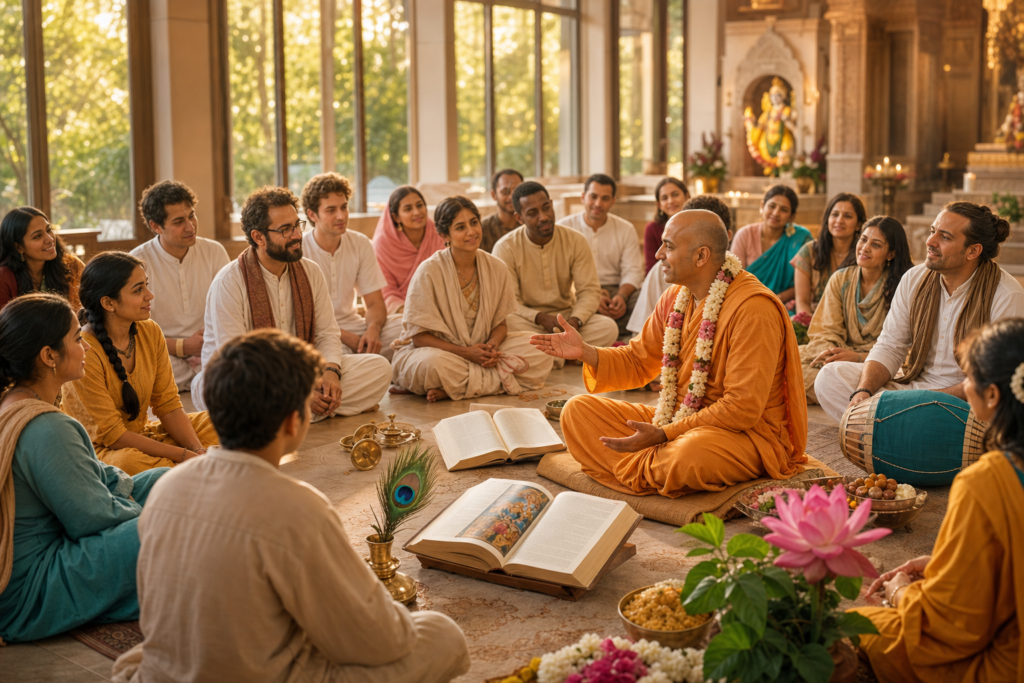
The title reference to a class by HH Hanumat Presak Swami dated June 19, 2026 suggests a spoken reflection on this verse within a living teaching tradition. Since the available source material preserves only the title and image reference, the safest approach is to focus on the scriptural verse itself rather than inventing lecture-specific details. This preserves accuracy while still allowing the teaching to be explored with depth, clarity, and relevance.
At its heart, Śrīmad-Bhāgavatam 2.1.21 teaches that remembrance is not passive memory. It is a sacred discipline. It trains perception, purifies intention, and opens the practitioner to shelter. In a world where attention is constantly bought, sold, and scattered, this verse offers a profound Dharmic alternative: remember the all-auspicious, see the Divine presence with steadiness, and let that vision become bhakti.
The result is a practical theology of hope. The mind can be retrained. The heart can become devotional. The world can be seen with reverence rather than exploitation. The path may begin with contemplation of the cosmos, but it matures into loving shelter under the Divine. That is the enduring power of SB 2.1.21: it shows how disciplined remembrance becomes living devotion.
Inspired by this post on Dandavats.








Leave a Reply
You must be logged in to post a comment.