-
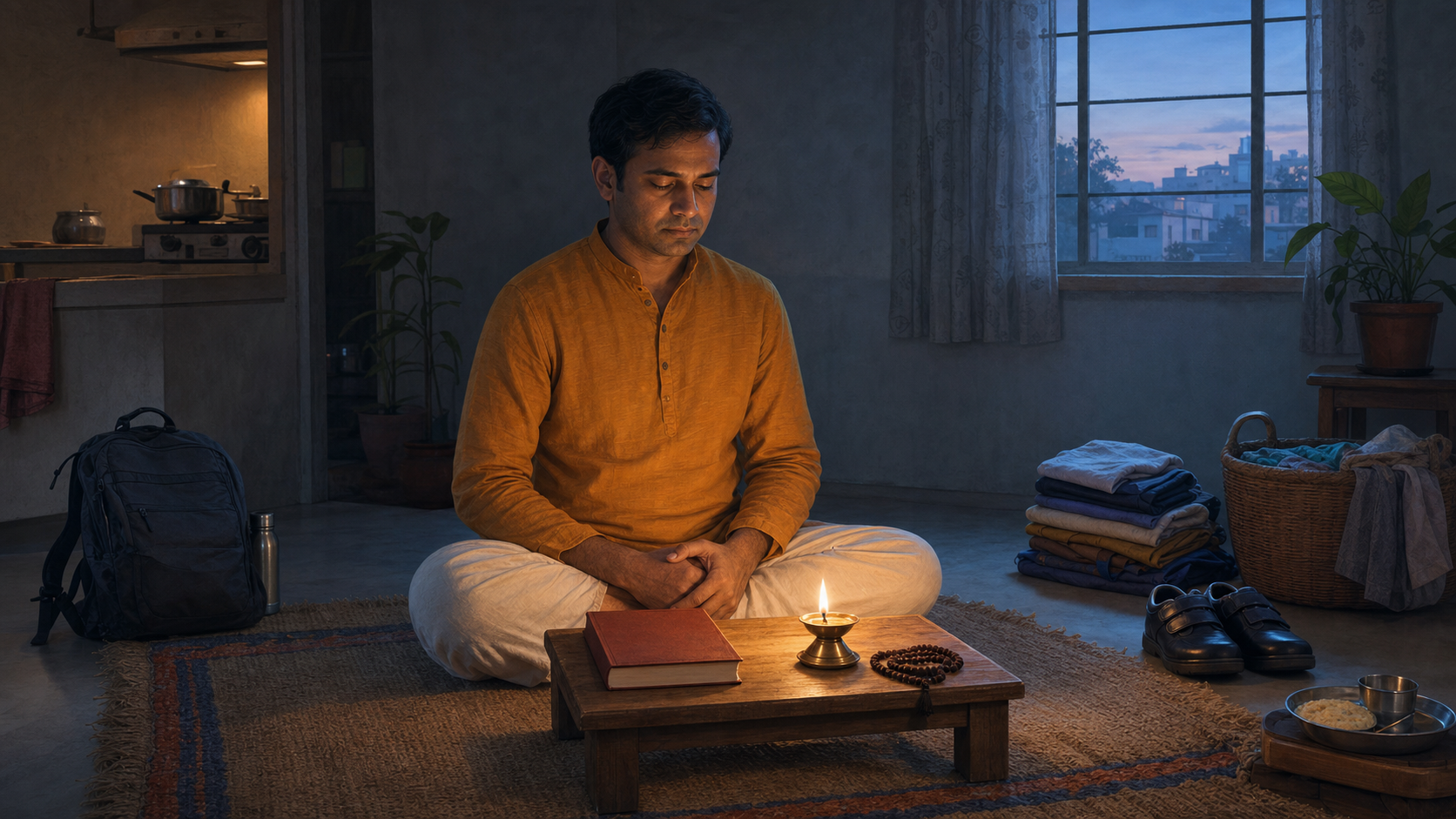
Jnana–Karma Samuccaya Vada in Vedanta: Unifying Knowledge and Action on the Path to Moksha

Jnana Karma Samuccaya Vada explains how knowledge (jnana) and action (karma) can operate together on the path to moksha without diluting the distinctive role of each. Drawing on the Bhagavad Gita, Brahma Sutra, and classical Vedanta, it clarifies why Advaita treats karma as preparatory, how Bhedabheda argues for a robust synthesis, and how Vishishtadvaita and…
-
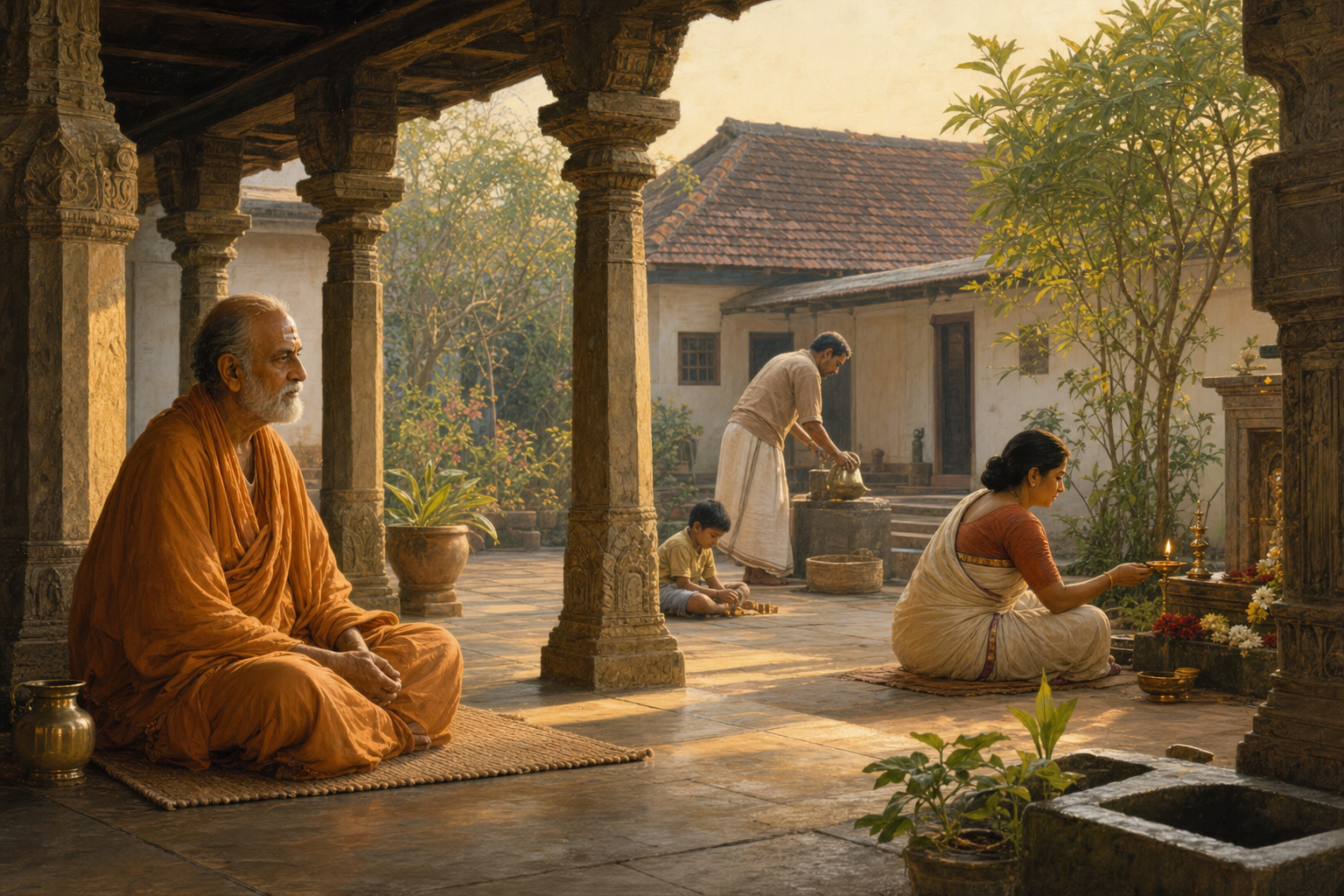
Mahaperiyava’s Living Grace: Academic Portrait of the Sage of Kanchi’s Path to Unity

Shri Chandrashekarendra Saraswati Swamigal (Mahaperiyava), the 68th Jagadguru of Kanchi Kamakoti Peetam, exemplified Advaita Vedanta through disciplined practice, inclusive compassion, and service. This academic portrait situates his life within the Shankaracharya Parampara, outlining how padayatra, temple revitalization, and Vedic learning strengthened communities. It clarifies core methods—sadhana-chatuṣṭaya and śravaṇa–manana–nididhyāsana—while showing how bhakti and karma integrate with…
-
Neo‑Vedanta Unveiled: A Powerful Modern Synthesis Bridging Dharmic Wisdom and Pluralism

This article examines Neo‑Vedanta as a rigorous, modern synthesis of Vedāntic wisdom grounded in the Prasthanatraya (Upanishads, Bhagavad Gita, Brahmasutras). It traces historical catalysts in nineteenth‑century India and explains how Sri Ramakrishna and Swami Vivekananda anchored a plural, practice‑oriented vision. Readers gain a clear understanding of Ishta as a principle of respectful diversity and see…
-
Dvaita vs Advaita in Hinduism: A Clear, Compassionate, Research‑Backed Guide to Vedanta

This research-backed guide clarifies the real differences between Dvaita and Advaita without reducing either system to caricature. It explains Advaita’s non-dual Brahman, Dvaita’s theistic realism, and why both accept the same core scriptures yet read them through distinct hermeneutics. Readers learn how Advaita’s three levels of reality and Dvaita’s Panchabheda lead to different, but equally…
-
Bhagavan Alone Is Real: Timeless Vedanta, Living Bhakti, and the Joy of Dharmic Unity

This article unpacks the aphorism “Know that Bhagavan alone is real. Nothing else matters” through the lenses of the Upanishads, Bhagavad Gita, and major Vedanta schools (Advaita, Vishishtadvaita, Dvaita). It clarifies Bhagavan as the sat-chit-ananda ground of being and explains why the phrase does not deny ethical life but re-centers it in the Real. Readers…
-
Nyayamrita of Vyasatirtha: A Dvaita Masterpiece of Logic, Metaphysics, and Pluralist Dialogue

Nyayamrita by Vyasatirtha is a landmark of Dvaita Vedanta that combines rigorous logic, careful scriptural exegesis, and a living devotional ethos. Composed in the Vijayanagara milieu, it clarifies Madhvacharya’s realism—affirming the fivefold difference and the integrity of bhakti—while engaging Advaita Vedanta with analytical precision. The work challenges the anirvachaniya status of the world, probes the…
-
Shankara Jayanti 2026: Exact Date, Rituals, and the Advaita Legacy of Adi Shankaracharya

Shankara Jayanthi (Shankaracharya Jayanti) in 2026 falls on April 21, aligned with Vaisakha Shukla Panchami, the fifth lunar day of Vaisakha masam (Vaisakh month). The date is determined by the tithi prevailing at local sunrise, so communities outside India should confirm with a regional panchang. The observance honors Jagadguru Shankaracharya’s Advaita legacy through Guru-puja, stotra…
-
Shankara Jayanthi 2026 (Adi Shankaracharya Jayanti): Date, Panchang, Rituals, and Dharmic Unity

Shankara Jayanthi (Shankaracharya Jayanti) in 2026 falls on Tuesday, 21 April, observed on Vaisakha Shukla Panchami as per the Hindu calendar. This guide explains the calendrical basis of the date, notes possible regional and time-zone variations, and outlines temple and home observances. It summarizes Adi Shankaracharya’s life, his Advaita Vedanta, and the enduring role of…
-
Caitanya Mahaprabhu in Kashi: Dialogue with Advaita Sannyasis and the Power of Nama-Bhakti

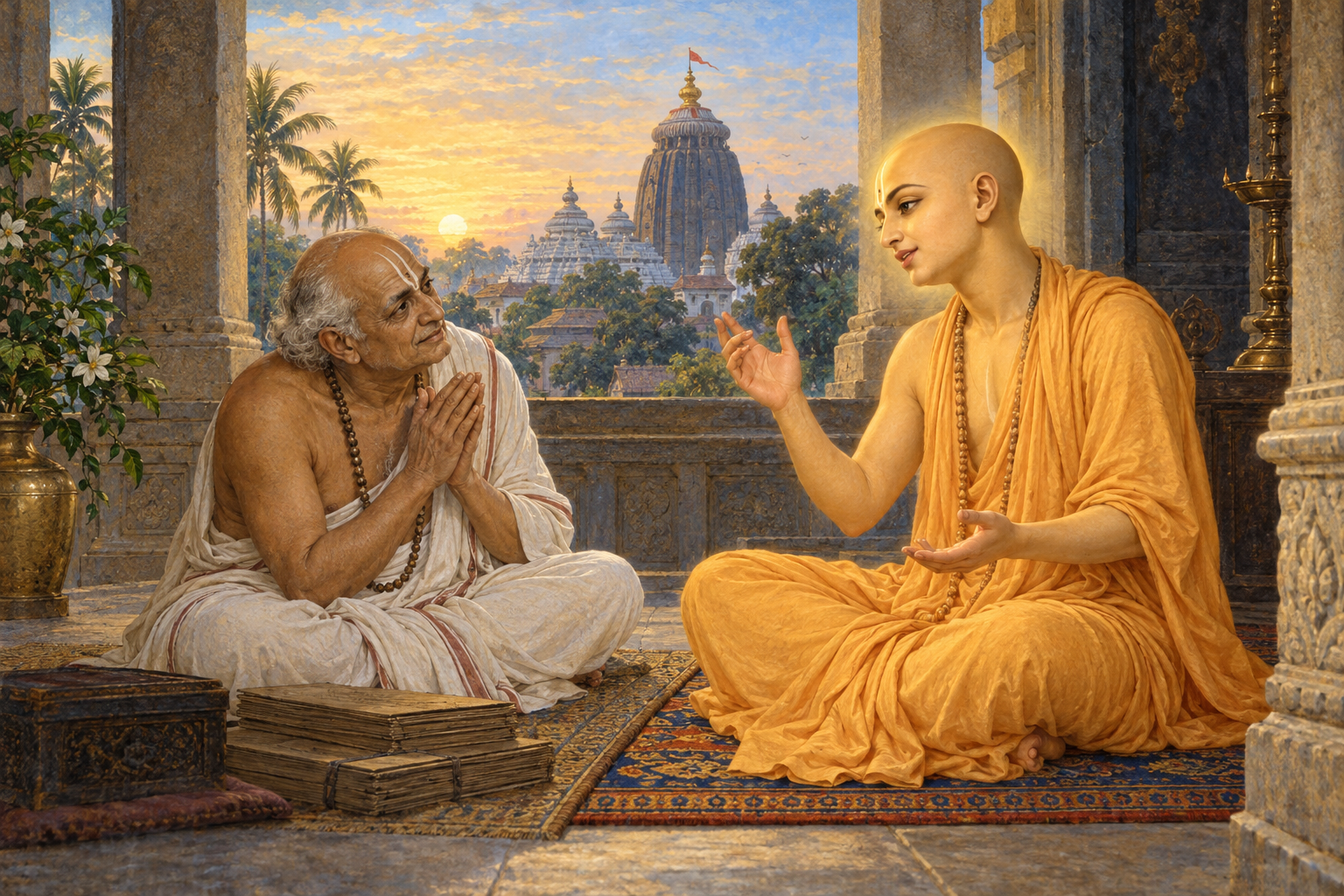
This essay revisits Sri Caitanya Mahaprabhu’s celebrated encounter with Advaita Vedanta sannyasis in Kashi, reframing it as a model of rigorous dialogue and inclusive practice. It explains why Caitanya emphasized chanting—Hare Krishna—as the Vedic essence, while demonstrating that such devotion complements, rather than contradicts, Vedantic study. Readers gain a clear, textually grounded view of nama-bhakti,…
-
Unmasking Avidya: Adi Shankaracharya’s Advaita roadmap to the wonders within the Self

This article presents an academically grounded overview of how Adi Shankaracharya diagnoses human suffering as avidya and prescribes Advaita Vedanta as a precise remedy. It explains adhyāsa, the superimposition error, and shows how Upanishadic mahāvākyas remove ignorance rather than create divinity. Readers learn the graded reality framework, the role of śruti as pramāṇa, and the…
-
Pranavopasana: Mastering Om for Self‑Realization, Inner Calm, and Dharmic Unity

Pranavopasana—meditation on the Pranava (ॐ)—is a disciplined path in Hinduism and Advaita Vedanta that moves attention from sound to silence and from symbol to the Ultimate Reality. Drawing on the Upanishads, Bhagavad Gita, and Patanjali, it unites devotion, meditation, and inquiry into a coherent practice for Self-realization. The article explains the A–U–M arc, the turiya…
-
Adi Shankaracharya at Guruvayur: The Meticulous Reforms That Still Shape Daily Worship

Guruvayur Temple’s daily worship offers a rare view of how sacred devotion and disciplined organization can reinforce each other. Drawing on temple lore and Kerala’s Tantric manuals, this analysis explores the traditional memory of Adi Shankaracharya’s visit and the enduring systematization it is said to have inspired. The article unpacks the shodashopachara sequence, the logic…
-
Timeless Lila: Exploring the Divine Play of Being and Becoming Across Dharmic Paths

This long-form exploration presents Lila—the eternal divine play—as a framework for understanding how being and becoming interrelate across Hinduism, Buddhism, Jainism, and Sikhism. Drawing on the Upanishads, Vedanta (Advaita, Vishishtadvaita, Dvaita), the Bhagavad Gita, and Shaiva–Shakta thought, it clarifies how creation, preservation, and dissolution express a living unity. It maps key concepts like dharma, karma,…
-
Anirvacanīya-khyāti in Advaita Vedanta: Decoding Illusion, Truth, and Liberation

Anirvacanīya-khyāti, often popularized as “Anirvachaniya Akhyati,” is Advaita Vedānta’s nuanced account of illusion: what appears in error is neither absolutely real nor absolutely unreal, but indeterminable until corrected. This theory situates everyday misrecognition—like mistaking nacre for silver or a rope for a snake—within Advaita’s three levels of reality and its method of sublation (bādha). It…
-
Unbroken Sacred Bonds of Bharatavarsha: Living Sanatana Dharma and India’s Cultural Unity

This essay examines how the cultural unity of Bharatavarsha endures through lived Sanatana Dharma—where sacred geography, pilgrimage, arts, and scholarship weave Hindus, Buddhists, Jains, and Sikhs into a shared civilizational fabric. It highlights the continuing vitality of Adi Sankara’s mathas, Sanskrit-centered scholarly debate, and inclusive canons such as the Guru Granth Sahib. It traces interregional…
-
Sri Shankara Gita: Timeless Advaita Wisdom on Shiva’s Grace to Elevate Daily Practice

Sri Shankara Gita, traditionally associated with Adi Shankaracharya, distills Advaita Vedanta through the devotional lens of Lord Shiva’s grace. The text presents Shiva as the symbol of the Supreme Reality, guiding seekers from multiplicity to oneness. Its balanced integration of jnana, bhakti, and dharma makes the teachings both elevating and practical for daily practice. Readers…
-
Sri Dharma Sastha Bhujangam: Adi Sankara’s Powerful Hymn of Unity, Devotion, and Dharma

Sri Dharma Sastha Bhujangam, attributed to Sri Adisankara, is a Sanskrit devotional hymn that praises Lord Dharma Sastha (Ayyappa) as a compassionate protector and guide to dharma. Composed in the bhujangam meter, its calming cadence supports mindful breathing and focused devotion. The hymn integrates Advaita insight with the Bhakti Tradition, showing how knowledge and love…
-
Ishvara in Advaita Vedanta: Unveiling the Compassionate Face of Non-Dual Reality

Advaita Vedanta explains Ishvara as Brahman perceived through Maya, reconciling devotion to a personal deity with the non-dual insight of Nirguna Brahman. This two-level approach—ultimate and empirical—anchors ethical life, ritual, and meditation without sacrificing philosophical rigor. Many practitioners find that devotion to Ishvara offers emotional solace and moral orientation, while inquiry reveals the one Reality.…
-
Ishtasiddhi by Vimuktatman: A Timeless Advaita Masterwork Illuminating Non-Dual Wisdom

Ishtasiddhi by Vimuktatman (9th–10th century CE) is a landmark Sanskrit treatise in Advaita Vedanta that unites rigorous reasoning with Upanishadic insight. It clarifies core non-dual themes—Brahman, Atman, māyā, and the role of knowledge in liberation—through a fair-minded purvapaksha–siddhanta method. Readers gain a dependable map of Advaita epistemology while experiencing a gradual movement from conceptual complexity…
-
Panchayatana Puja Explained: The Complete Guide to Pancha Deva Worship and Unity in Hinduism

Panchayatana Puja, or Pancha Deva Puja, offers a clear and compelling framework for unity in diversity within Hinduism. It venerates Shiva, Vishnu, Devi, Surya, and Ganesha together, typically in a quincunx arrangement that places one’s Ishta at the center while honoring the rest. Rooted in the Smarta tradition and associated with Adi Sankara, it integrates…