
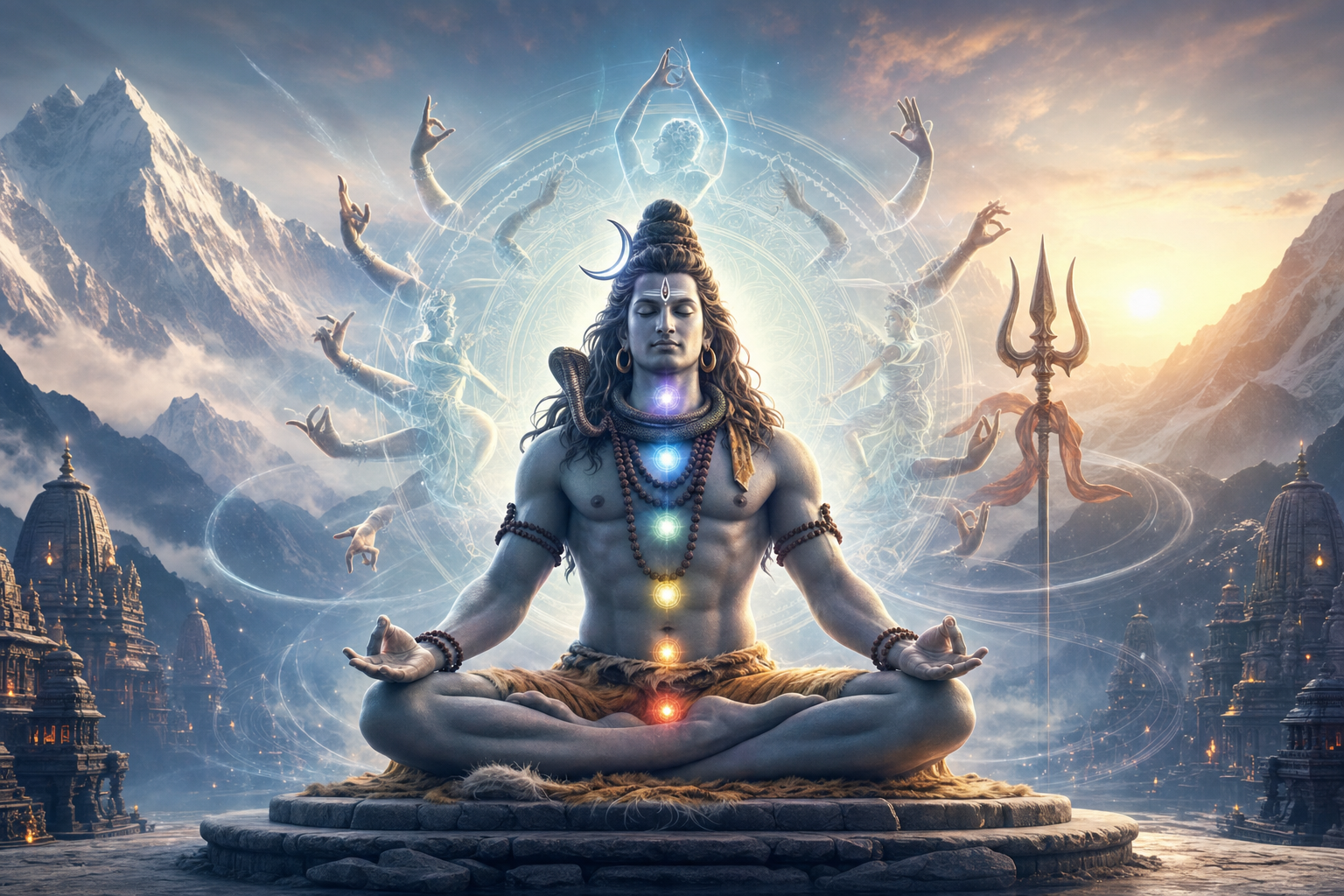
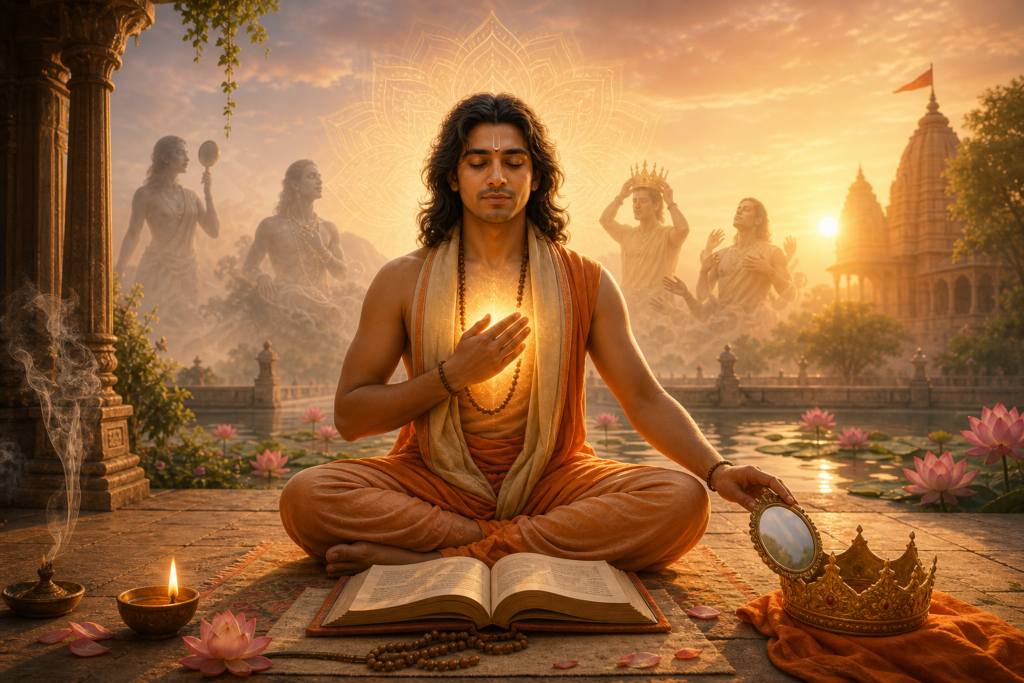
From stillness to sacred movement. In Shaiva tradition, Shiva is revered not only as the deity associated with dissolution and renewal, but also as Adiyogi, the primordial yogi who embodies the deepest possibilities of consciousness. The idea that Shiva gifted 84,000 mudras to humanity belongs to this larger sacred imagination: the human body is not treated as a mere physical instrument, but as a living field of awareness, energy, discipline, and liberation.
The number 84,000 should be approached with care. In many Indic traditions, large sacred numbers often signify fullness, immeasurable variety, or the vastness of spiritual methods rather than a simple numerical catalogue available in one surviving text. When the tradition speaks of 84,000 mudras, it points toward a profound principle: every movement, gesture, posture, breath pattern, and subtle alignment can become a doorway to transformation when it is joined with awareness, discipline, and dharma.
Shiva as Adiyogi represents stillness that contains all motion. This paradox is central to understanding mudra. A mudra is commonly translated as a “seal,” “gesture,” or “symbolic configuration,” but these translations only begin to capture its meaning. In yogic and tantric practice, a mudra seals intention, directs prana, focuses attention, shapes inner experience, and expresses a relationship between the visible body and the subtle body. It is not merely decorative hand movement; it is embodied philosophy.
Within Hindu spirituality, Shiva appears in several forms that illuminate this science of sacred movement. As Dakshinamurti, he teaches through silence, suggesting that the highest knowledge is transmitted beyond ordinary speech. As Nataraja, he dances the cosmic rhythm of creation, preservation, dissolution, concealment, and grace. As the meditating yogi, he sits in perfect stillness, showing that true movement begins in inner equilibrium. These forms are not contradictory; they reveal a single vision in which stillness and motion are two expressions of one consciousness.
The word mudra appears across several streams of Indian thought, including yoga, tantra, ritual, classical dance, iconography, meditation, and temple worship. In hatha yoga, mudras such as maha mudra, khechari mudra, viparita karani, vajroli, and yoga mudra are associated with pranic regulation, concentration, and the awakening of subtle energy. In ritual practice, hand gestures may accompany mantra, visualization, and offerings. In Bharatanatyam, Kuchipudi, Odissi, Kathakali, and other classical arts, hasta mudras communicate divine stories, emotions, natural forms, and philosophical ideas with remarkable precision.
This breadth explains why Shiva’s association with mudras is so powerful. Shiva is not limited to one school, one technique, or one community of practice. He becomes the archetype of the complete yogi: silent teacher, cosmic dancer, ascetic, householder, lord of beings, master of mantra, and witness-consciousness beyond all names and forms. The mudras attributed to him can therefore be understood as the many ways consciousness becomes readable through the body.
Technically, mudras may be grouped in several ways. Hasta mudras involve the hands and fingers. Kaya mudras involve the whole body. Mana mudras concern mental gestures, inner gazing, and subtle attention. Bandha-linked mudras use locks such as mula bandha, uddiyana bandha, and jalandhara bandha to regulate pranic movement. Some traditions also discuss adhar mudras connected with pelvic and lower-body energetic processes. These categories show that mudra is not a single practice but an entire discipline of embodied alignment.
The human hand has special importance in this science. Each finger is often associated in yogic symbolism with elemental or psychological principles. While interpretations vary by lineage, many practitioners understand the thumb as fire or divine consciousness, the index finger as individual identity, the middle finger as space, the ring finger as earth, and the little finger as water. In this symbolic language, joining, separating, extending, or folding the fingers becomes a contemplative act. The hand becomes a mandala of the body and cosmos.
Popular mudras such as jnana mudra and chin mudra show this principle clearly. The joining of thumb and index finger is often interpreted as the meeting of individual self and higher consciousness. The remaining fingers may symbolize the gunas, the layers of nature, or the tendencies that shape ordinary experience. Whether practiced in meditation, pranayama, or quiet reflection, such gestures create a physical reminder that knowledge is not merely intellectual. It must be embodied, stabilized, and lived.
From a yogic perspective, mudra works through the relationship between posture, breath, attention, and prana. Prana is not identical to breath, though breath is one of its most accessible vehicles. When the body is steady, the breath becomes refined. When the breath is refined, the mind becomes less scattered. When the mind becomes less scattered, awareness can turn inward. Mudra participates in this sequence by giving the body a precise form through which inner discipline can be sustained.
The traditional language of nadis and chakras further deepens this understanding. Yogic anatomy speaks of subtle channels such as ida, pingala, and sushumna nadi, and of energy centers such as muladhara, swadishtana, manipura, anahata, visudha, ajna, and sahasra. Mudras, bandhas, asana, pranayama, mantra, and dhyana are used in many lineages to harmonize these subtle dimensions of experience. Even when interpreted through a modern lens as psychophysical training, the underlying insight remains significant: the body and mind are inseparable in spiritual practice.
Shiva’s connection with 84,000 mudras also reflects the generosity of Sanatana Dharma. The tradition recognizes that human beings differ in temperament, capacity, devotion, intellect, discipline, and emotional nature. Some are drawn to meditation, some to mantra, some to seva, some to knowledge, some to devotion, some to art, some to pilgrimage, and some to disciplined yogic practice. A vast number of mudras symbolizes the compassionate availability of many paths for many kinds of seekers.
This pluralistic spirit also supports unity among dharmic traditions. Hinduism, Buddhism, Jainism, and Sikhism each preserve distinctive disciplines of body, speech, mind, devotion, ethics, and realization. Buddhist iconography uses mudras such as bhumisparsha, dharmachakra, dhyana, and abhaya to express awakening, teaching, meditation, and fearlessness. Jain images often communicate serenity, restraint, and liberation through posture and contemplative stillness. Sikh tradition emphasizes disciplined remembrance, seva, humility, and embodied devotion in daily life. Each tradition uses the body not as an obstacle to truth, but as a vehicle for ethical and spiritual refinement.
For this reason, Shiva’s mudras should not be reduced to sectarian ownership. Within Shaiva tradition, Shiva is the source and master of yogic movement; within the broader dharmic world, the principle is even larger. Sacred movement belongs to a shared civilizational understanding that human transformation requires attention, discipline, compassion, and alignment between inner intention and outer conduct. The gesture is meaningful only when it is supported by character.
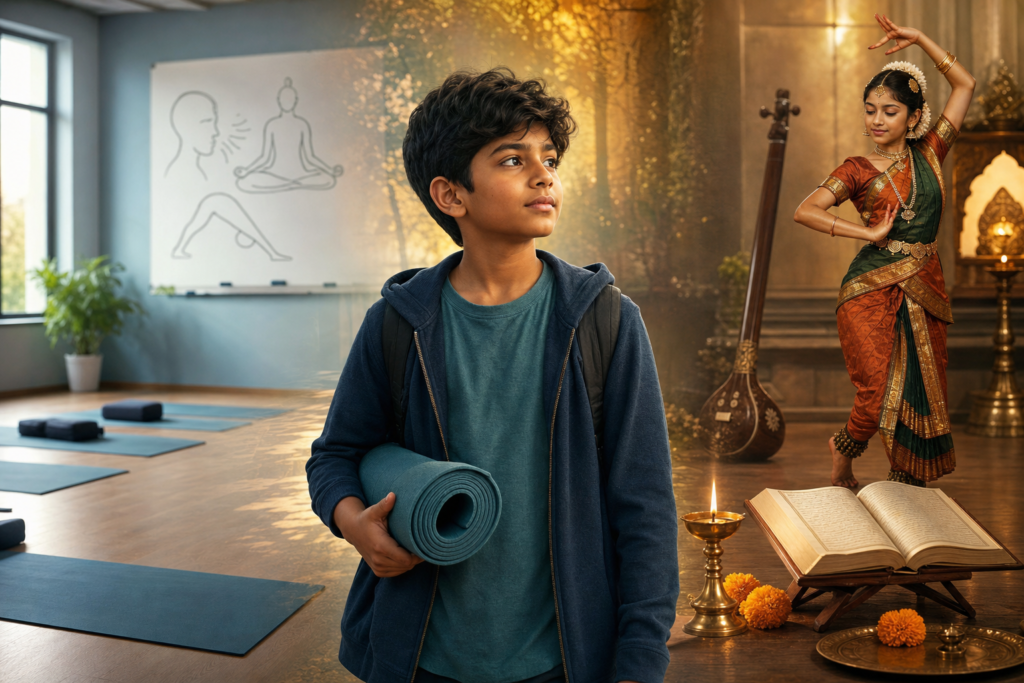
Classical Indian dance offers one of the most visible expressions of this principle. In the dance traditions associated with temples and sacred storytelling, mudras do not merely decorate performance. They transmit theology, emotion, aesthetics, and memory. A raised hand may become a mountain, a river, a blessing, a weapon, a lotus, a bird, a divine presence, or a state of longing. The dancer’s body becomes scripture in motion, and the audience is invited to perceive meaning through rhythm, form, and rasa.
Shiva Nataraja stands at the center of this vision. His dance is not random motion; it is ordered energy. The drum suggests creation and time. The fire suggests dissolution and purification. The lifted foot suggests grace and release. The gesture of fearlessness offers protection. The dwarf beneath his foot represents ignorance overcome by awakened consciousness. In this image, iconography, philosophy, cosmology, and mudra unite into one compact teaching.
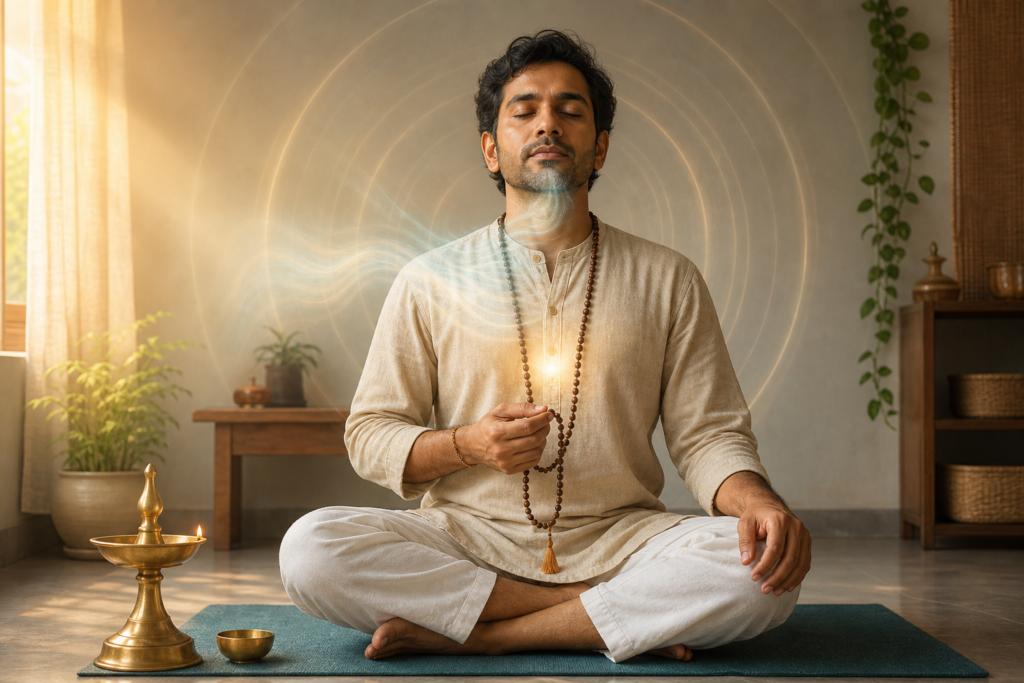
The spiritual value of mudra lies in its ability to make philosophy tactile. Concepts such as self-control, surrender, awareness, non-attachment, devotion, and inner steadiness can remain abstract until the body participates in them. A practitioner sitting in stillness with a simple hand gesture may begin to understand that inner life is shaped by repeated forms. Just as careless habits disturb the mind, intentional forms can stabilize it.
Modern readers may also appreciate mudra through the language of attention and nervous system regulation. Slow breathing, stable posture, gentle muscular tone, and repeated symbolic gestures can influence mood, concentration, and emotional balance. This does not require reducing sacred practice to physiology. Rather, it shows that ancient yogic disciplines often recognized, through observation and practice, the intimate connection between body, breath, perception, and mental states.
Yet caution is necessary. Mudras should not be presented as mechanical shortcuts or universal cures. Traditional practice places them within a larger framework that includes yama, niyama, asana, pranayama, pratyahara, dharana, dhyana, and samadhi, along with ethical living, humility, guidance, and discernment. Certain advanced mudras, especially those involving breath retention, bandhas, or intense energetic methods, are traditionally learned under qualified instruction. The sacred science is powerful precisely because it is disciplined, not casual.
The claim of 84,000 mudras becomes most meaningful when understood as a symbol of inexhaustible spiritual possibility. It suggests that dharma meets human beings where they are. The seeker who cannot yet grasp metaphysics may begin with breath. The one who struggles with scattered thought may begin with posture. The one who cannot meditate deeply may begin with a simple gesture of reverence. The one who is emotionally burdened may begin with a gesture of surrender, protection, or compassion.
There is also an ethical dimension to sacred movement. A hand can bless, serve, protect, write, build, feed, heal, and worship. The same hand can also harm, exploit, and divide. Mudra trains the hand to remember its dharmic purpose. In that sense, the practice extends beyond meditation seats and ritual spaces. Every action becomes a possible mudra when it is performed with awareness, responsibility, and alignment with dharma.
This insight is especially relevant in contemporary life, where the body is often treated as either an object of appearance or a machine of productivity. The dharmic view is more integrated. The body is a temple, a discipline, a responsibility, and a means of realization. Shiva’s gift of mudras reminds humanity that spiritual knowledge is not confined to books or doctrines. It can be carried in the spine, expressed through the hands, refined through breath, and stabilized through conduct.
The academic study of mudras must therefore avoid two extremes. One extreme dismisses them as superstition without understanding their symbolic, ritual, aesthetic, and psychological sophistication. The other extreme exaggerates them into instant solutions detached from tradition and practice. A more balanced view recognizes mudras as refined cultural technologies of attention, devotion, memory, and transformation, developed within living spiritual systems over centuries.
In Shaiva spirituality, Shiva is the silent center from which these forms arise. His stillness is not emptiness in the ordinary sense; it is fullness beyond agitation. His dance is not restlessness; it is cosmic intelligence made visible. His mudras are not isolated gestures; they are expressions of the bridge between the finite and the infinite. The body becomes a sacred alphabet, and each gesture becomes a syllable in the language of awakening.
The reference to 84,000 mudras also encourages humility. No single practitioner, school, or generation can exhaust the possibilities of dharmic wisdom. The tradition is vast because human life is vast. There are gestures for worship, meditation, teaching, protection, renunciation, offering, concentration, storytelling, and inner transformation. Each gesture becomes meaningful only when joined to sincerity and disciplined awareness.
Ultimately, Shiva’s sacred movement teaches that liberation is not an escape from embodied life but a transformation of it. The hands that once grasped can learn to offer. The breath that once reflected anxiety can become steady. The posture that once collapsed under distraction can become upright with dignity. The mind that once wandered through countless impressions can return to stillness. In this journey, mudra becomes both method and metaphor.
The enduring beauty of Shiva and the 84,000 mudras lies in this synthesis of philosophy, yoga, art, ritual, and inner experience. It preserves the dharmic conviction that truth is not merely believed; it is practiced. It is not merely spoken; it is embodied. It is not merely inherited; it is awakened again through disciplined living. From stillness to motion, and from motion back to stillness, Shiva’s gift continues to invite seekers toward clarity, unity, and sacred self-transformation.
Inspired by this post on Hindu Blog.



Leave a Reply
You must be logged in to post a comment.