
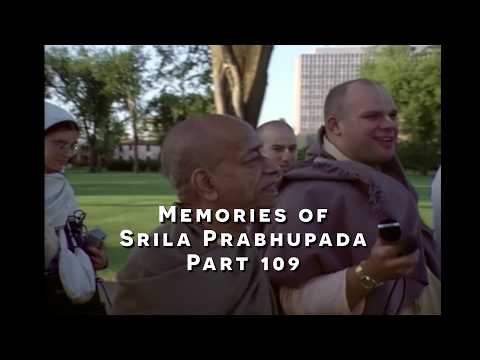

Prabhupada Memories – DVD 109 – Anandamaya, Ghosh Thakur, Nayanabhirama, Ramestha offers a valuable point of entry into the living memory of Srila Prabhupada, the founder-acharya of ISKCON and one of the most influential modern teachers of Gaudiya Vaishnava spirituality. Rather than functioning only as a devotional video, it belongs to a wider archive of remembered experience, where disciples and contemporaries preserve the human texture of a spiritual movement that reshaped the global understanding of bhakti, kirtan, prasadam, scriptural study, and disciplined sadhana.
The names associated with this featured episode, Anandamaya, Ghosh Thakur, Nayanabhirama, and Ramestha, point toward the importance of personal testimony in religious history. Academic study often relies on institutions, dates, publications, and public events, but dharmic traditions also transmit knowledge through recollection, practice, discipline, and lived relationship. In the guru-shishya tradition, memory is not merely nostalgia. It becomes a mode of preserving values, habits, speech, conduct, and spiritual priorities that cannot always be captured through formal biography alone.
Srila Prabhupada, born Abhay Charan De in Calcutta in 1896, carried the teachings of Chaitanya Mahaprabhu and the Gaudiya Vaishnava lineage into a global context during the twentieth century. His journey to the United States in 1965, his founding of the International Society for Krishna Consciousness in New York in 1966, and his extensive publication work through translations and commentaries on the Bhagavad Gita, Srimad Bhagavatam, and other Vaishnava texts established a durable institutional and literary foundation. These historical facts matter because they show that the movement was not built on personality alone, but on scripture, discipline, practice, community, and a clear theological framework centered on loving devotion to Krishna.
The deeper value of Prabhupada Memories lies in how such recollections illuminate the practical side of bhakti. Viewers encounter not only a teacher associated with books and temples, but a spiritual guide remembered through gestures, conversations, corrections, encouragement, standards, and everyday discipline. This dimension is especially important for readers and seekers who approach Hindu spirituality, Sanatana Dharma, and the Vaishnava tradition not as abstract philosophy, but as a way of living with attention, humility, service, and responsibility.
From an academic perspective, oral memories require careful handling. They are personal, selective, and shaped by devotion, time, and community identity. Yet their importance should not be underestimated. Oral history helps preserve how teachings are received, embodied, and transmitted. In the case of Srila Prabhupada, these memories document the formation of a modern dharmic institution across cultures, languages, and social environments. They also reveal how traditional Hindu categories such as guru, seva, sadhu-sanga, mantra, murti worship, prasadam, and shastra study were taught in settings far removed from their Indian cultural origins.
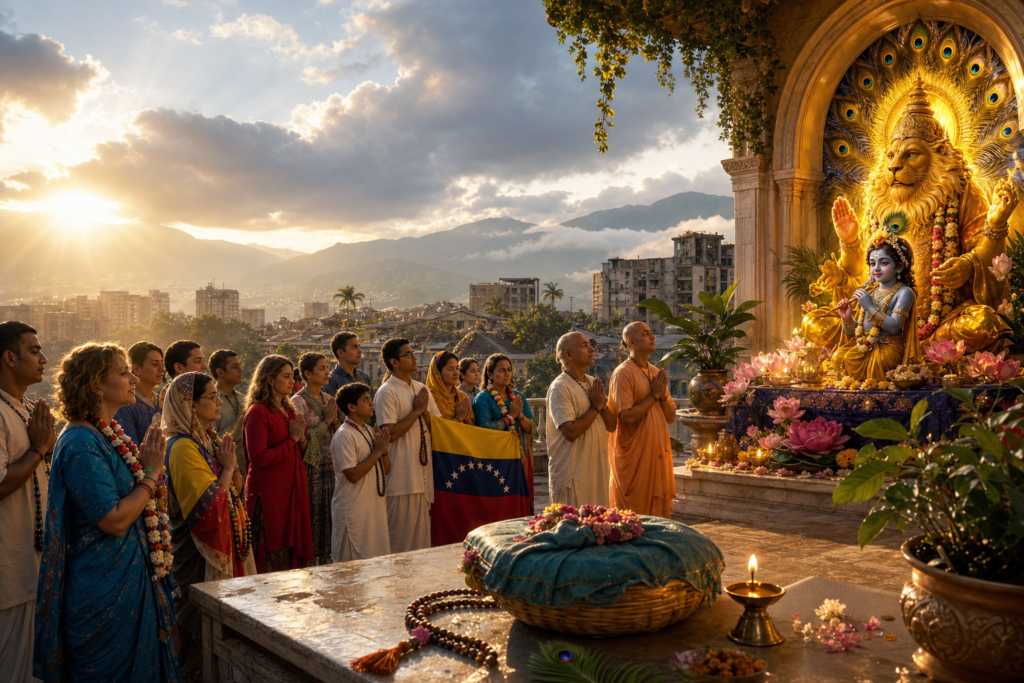
What makes this subject emotionally compelling is the contrast between historical scale and personal intimacy. Srila Prabhupada is often remembered as the acharya who carried Krishna bhakti across oceans, established temples, inspired book distribution, and made Sanskritic wisdom available to readers around the world. Yet disciples frequently remember him through small moments: a glance, a question, a correction, a meal, a class, a walk, or a simple instruction. Such memories humanize religious history without diminishing its seriousness.
This is also where the video supports the broader unity of dharmic traditions. Although Srila Prabhupada taught from a distinct Gaudiya Vaishnava standpoint, the values emphasized in these memories resonate widely across Hinduism, Buddhism, Jainism, and Sikhism: discipline over distraction, compassion over ego, service over self-importance, remembrance over forgetfulness, and spiritual practice over mere intellectual display. The dharmic world contains many paths, vocabularies, and metaphysical frameworks, but it repeatedly returns to the transformation of character through self-control, devotion, knowledge, and ethical action.
Prabhupada’s legacy also invites serious reflection on translation and cultural transmission. His work involved more than rendering Sanskrit and Bengali texts into English. It required presenting a traditional theology to people shaped by modernity, secular education, counterculture, consumerism, and religious skepticism. This demanded institutional clarity, pedagogical repetition, and a structured daily practice. Chanting the Hare Krishna maha-mantra, studying Bhagavad Gita, honoring prasadam, rising early, associating with devotees, and engaging in seva became practical technologies of spiritual formation.
The technical vocabulary of bhakti is essential here. Bhakti is not simply emotion, though it includes refined emotion. It is a disciplined orientation of consciousness toward the Divine. Seva is not ordinary volunteerism, though it may appear outwardly as work. It is service offered with sacred intention. Guru is not merely a lecturer or public personality, but a guide who connects the disciple to shastra, sadhana, and a lineage of realization. Sadhu-sanga is not casual social belonging, but association that shapes aspiration and conduct. These concepts help explain why memories of Prabhupada continue to matter decades after his physical departure in 1977.
For contemporary audiences, the practical lesson is clear: spiritual culture survives when it is remembered, practiced, taught, and embodied. Temples, books, festivals, and institutions are necessary, but they become most meaningful when they cultivate integrity, humility, compassion, and devotion. A video such as this therefore serves not only as archival material for ISKCON history, but as an invitation to examine how dharma is carried from one generation to another through disciplined lives.
The memories of Anandamaya, Ghosh Thakur, Nayanabhirama, and Ramestha should be approached with that seriousness. They are part of a larger effort to preserve the texture of a movement that made Krishna bhakti visible in global public life. Their recollections help viewers understand Srila Prabhupada not only as a historical figure, but as a teacher whose influence continues through practice, remembrance, and community formation.
In that sense, Prabhupada Memories is more than a featured video. It is a small but meaningful contribution to the preservation of Hindu spiritual heritage, Vaishnava theology, guru-shishya tradition, and the lived history of modern bhakti. Its enduring relevance lies in reminding viewers that dharma is not sustained by argument alone. It is sustained by remembrance, disciplined practice, shared service, and the quiet transformation of the heart.
Inspired by this post on Dandavats.




Leave a Reply
You must be logged in to post a comment.