

The 2026 FIFA World Cup has created one of the largest public gathering points in contemporary sport, bringing supporters, players, volunteers, and diaspora communities into shared civic spaces across North America. Within that setting, the reported Massive Arabic & Farsi Book Distribution represents more than a logistical exercise. It is a notable moment in cultural advocacy, interfaith dialogue, and the global circulation of spiritual literature connected with the Hare Krishna and wider Vaishnava tradition.
The significance of this effort lies in its audience as much as in its scale. Books in Arabic and Farsi are being distributed at football and soccer matches in the United States and Canada to team members and fans connected with Algeria, Egypt, Iraq, Jordan, Morocco, Qatar, Saudi Arabia, Tunisia, and Iran. These countries represent diverse histories, linguistic communities, religious cultures, and diaspora networks. A single book accepted in a stadium may later travel through a household, a student circle, a community center, or a family conversation far beyond the original match venue.

From an academic perspective, major sporting events function as temporary global cities. The World Cup compresses migration, memory, national identity, commerce, and celebration into a concentrated public arena. According to the official FIFA World Cup 26 tournament framework, the 2026 edition is hosted across Canada, Mexico, and the United States, making North America a rare meeting ground for supporters from every continent. In that environment, literature distribution becomes a form of soft cultural exchange rather than a narrow act of publicity.

Arabic and Farsi translations are especially important because language determines whether a text feels distant or intimate. Spiritual literature that appears only in English can remain inaccessible to many readers, even when the themes are universal. Translation allows concepts such as devotion, discipline, humility, compassion, food ethics, chanting, service, and the search for the self to enter the reader’s own linguistic world. In this sense, translation is not merely technical; it is relational. It signals respect for the reader’s inherited culture and intellectual dignity.

The dharmic traditions of Hinduism, Buddhism, Jainism, and Sikhism have long preserved knowledge through teaching lineages, manuscripts, commentaries, songs, public recitation, and community transmission. The distribution of spiritual books at an international sporting event belongs to that older civilizational pattern, even though the setting is thoroughly modern. Stadiums, airports, public transit systems, fan zones, and hotel districts become the new crossroads where texts encounter people who may never have visited a temple, ashram, gurudwara, vihara, or Jain center.

The emotional dimension should not be understated. For many volunteers, offering a book in a crowded stadium is a small act of faith performed in a demanding environment. For many recipients, accepting a book in their own language can feel unexpectedly personal amid the noise of flags, chants, and match-day excitement. The encounter may last only seconds, but it can still carry warmth: a smile, a respectful greeting, a shared recognition that human beings are not defined solely by nationality, competition, or religious difference.

Care is required in describing such outreach. It should not be framed as a triumph over another community, nor as a confrontation with Islam, the Middle East, or any culture represented by the fans. A dharmic approach is strongest when it is grounded in respect, voluntary engagement, and the recognition that every tradition contains sincere seekers. The more constructive interpretation is that these books are being offered as bridges: invitations to learn about Krishna-bhakti, Sanatana Dharma, spiritual discipline, and the broader dharmic vocabulary of self-realization without diminishing the dignity of any recipient.

The World Cup context also highlights diaspora dynamics. Fans from Algeria, Egypt, Iraq, Jordan, Morocco, Qatar, Saudi Arabia, Tunisia, and Iran often travel with layered identities: national, linguistic, religious, family-based, and transnational. Some live in North America; others are visiting temporarily; still others are part of extended family networks spanning several countries. When books are taken back home or shared with friends and relatives, the distribution no longer remains a local North American event. It becomes part of a wider movement of cultural circulation across the Middle East, North Africa, South Asia, Europe, and the Americas.

Technically, a large-scale book distribution effort depends on several coordinated systems. Translation quality must be reliable. Print supply must match expected demand. Volunteers need cultural sensitivity, basic language awareness, and clear guidance on respectful public engagement. Distribution points must be chosen with attention to crowd flow, event security, local regulations, and the natural movement of fans before and after matches. The success of such a project therefore depends not only on enthusiasm, but also on planning, training, publishing infrastructure, and disciplined service.

The use of Arabic and Farsi also raises an important point about dharmic universality. Sanatana Dharma is often associated with Sanskrit, Hindi, Bengali, Tamil, Gujarati, and other Indian languages, but its philosophical questions are not confined to one linguistic family. Questions about the soul, duty, divine love, suffering, ego, moral action, and liberation are human questions. When those questions are presented in Arabic or Farsi, dharmic thought enters a conversation with literary civilizations that have their own deep traditions of poetry, theology, metaphysics, and devotion.
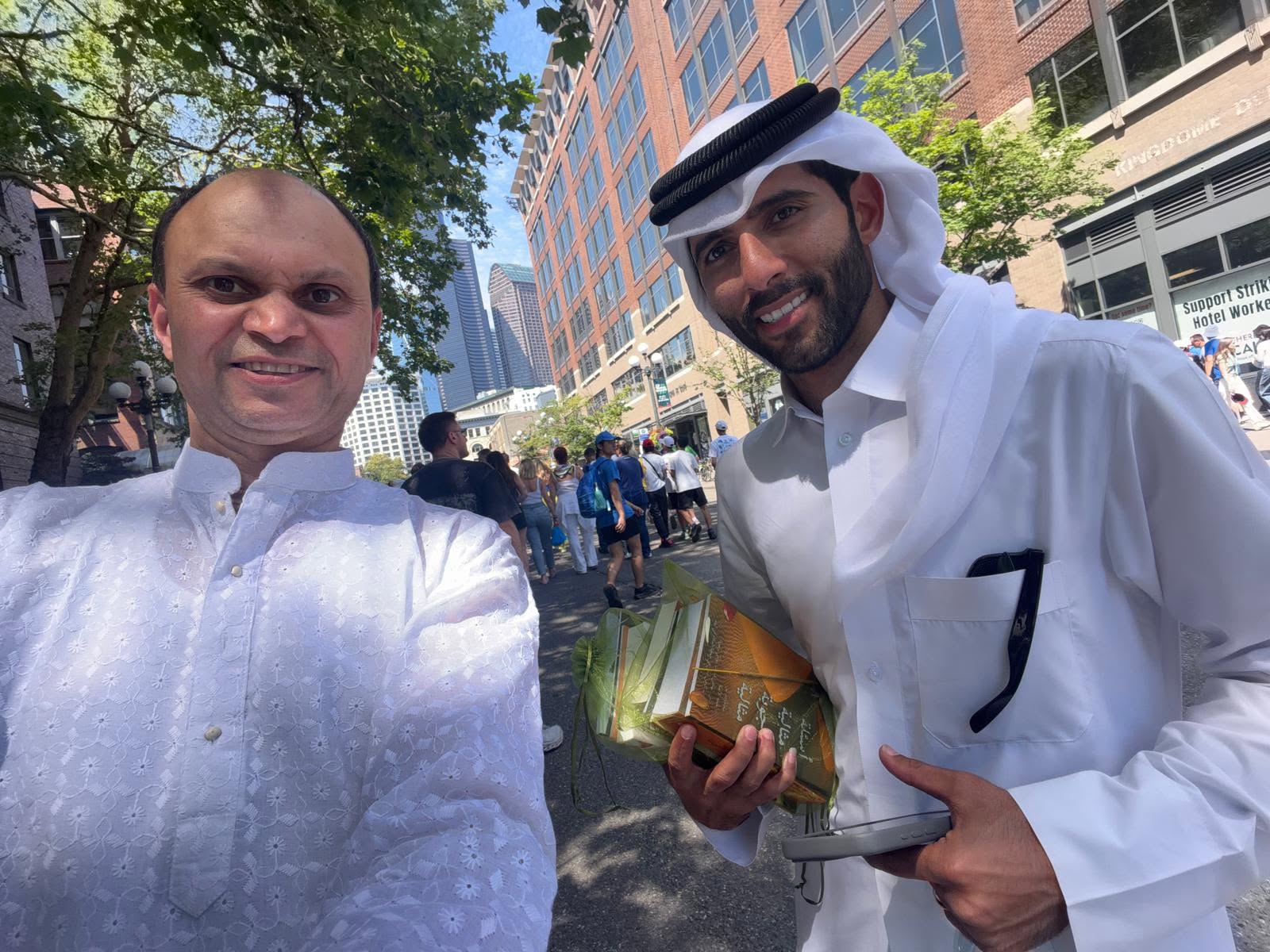
In practical terms, this kind of outreach may also correct a common misconception: that religious communities can only meet one another through debate or polemic. A book quietly offered at a football match suggests a different model. It is neither a political argument nor a demand for agreement. It is a gesture of intellectual hospitality. The recipient remains free to read, question, accept, reject, share, or simply keep the text as a memory of the tournament. That freedom is central to any ethical form of spiritual exchange.
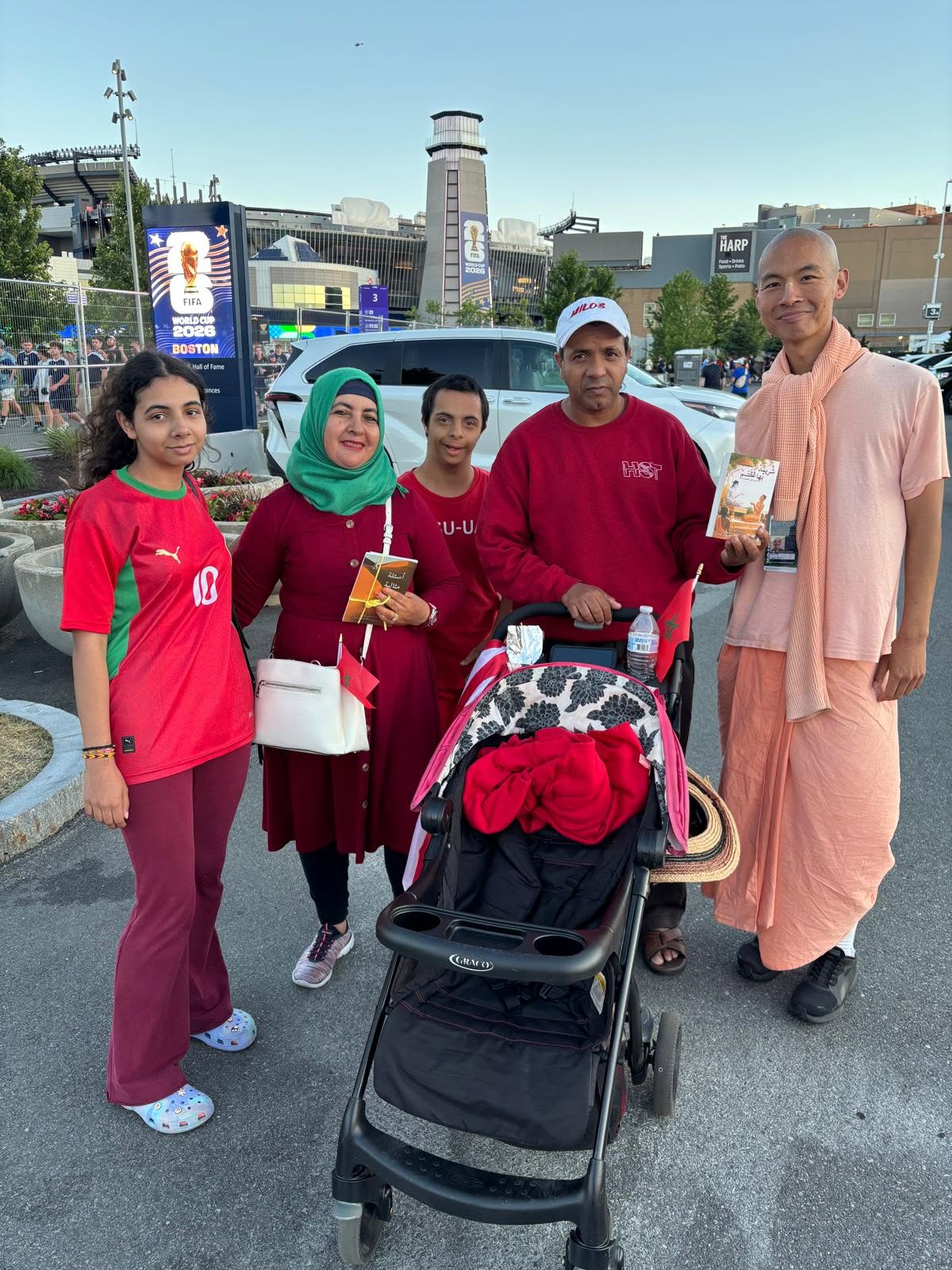
The project is also significant for ISKCON and the Hare Krishna movement because book distribution has historically been one of its defining forms of public engagement. Since the twentieth century, translations of the Bhagavad-gita, Srimad Bhagavatam, and related Vaishnava texts have circulated through airports, streets, universities, festivals, and homes. The World Cup setting extends that tradition into one of the world’s most visible cultural arenas, where football enthusiasm creates openings for unexpected human connection.
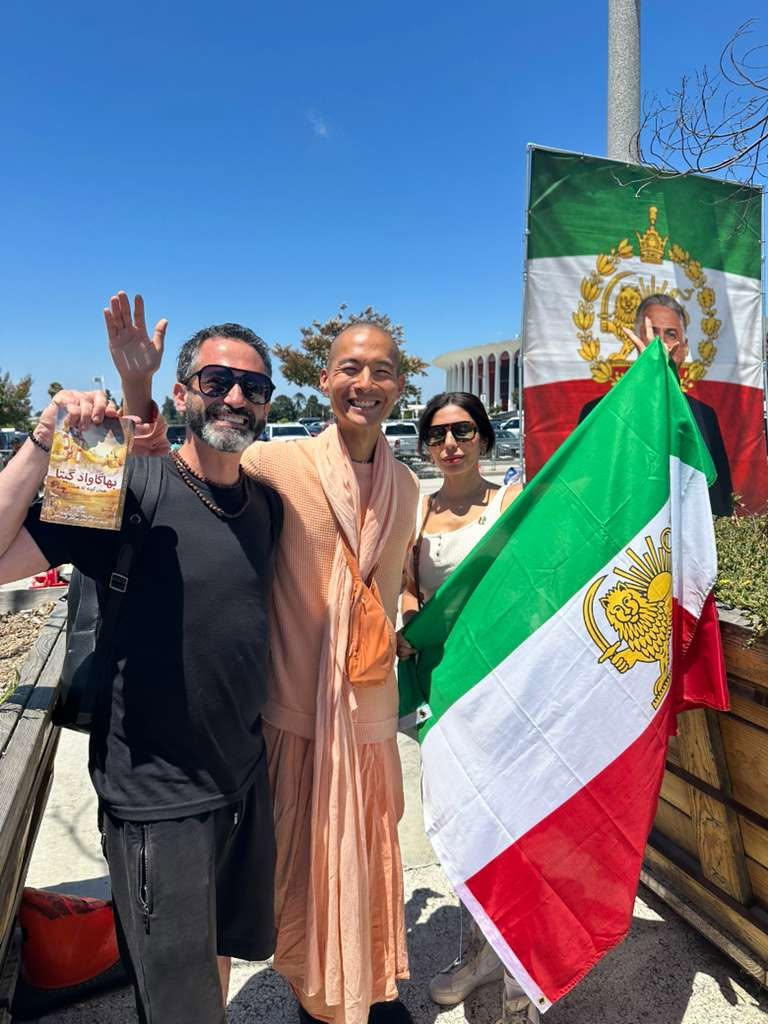
For the broader dharmic community, the lesson is larger than one organization or one event. Hindu, Buddhist, Jain, and Sikh traditions all depend on the transmission of knowledge through living communities. Books, when distributed with humility, become instruments of memory and continuity. They help preserve teachings across migration and language barriers. They also allow younger generations to encounter spiritual vocabulary in contexts that feel contemporary rather than remote.
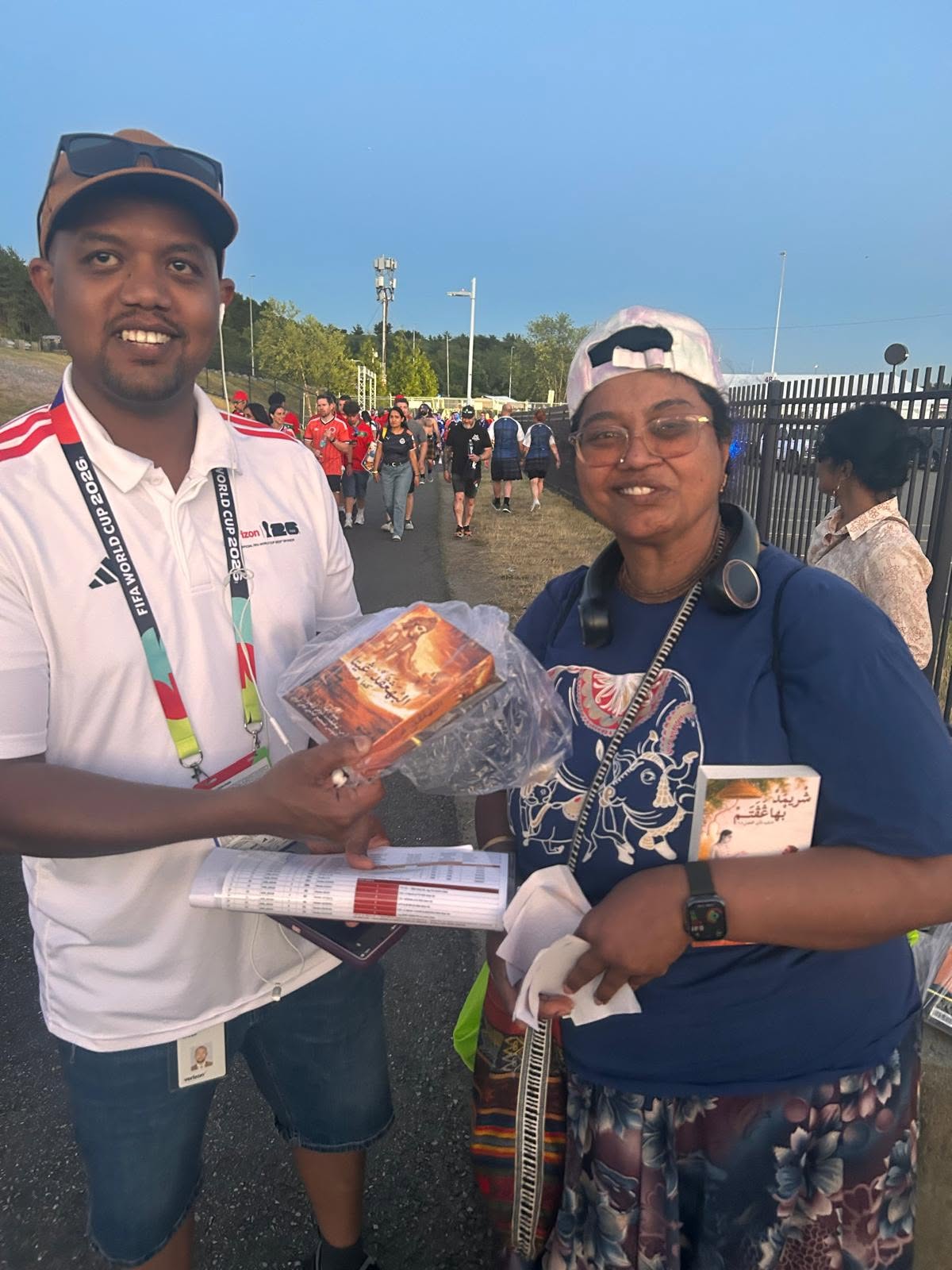
The images from the distribution effort show the visible side of a deeper process: books in hand, volunteers in public spaces, and fans moving between sport and reflection. Yet the more important effects may unfold later and quietly. A traveler may read a chapter on a flight home. A parent may leave the book on a family table. A student may search for more information online. A conversation may begin between friends who had never discussed dharma, Krishna, meditation, or spiritual practice before.
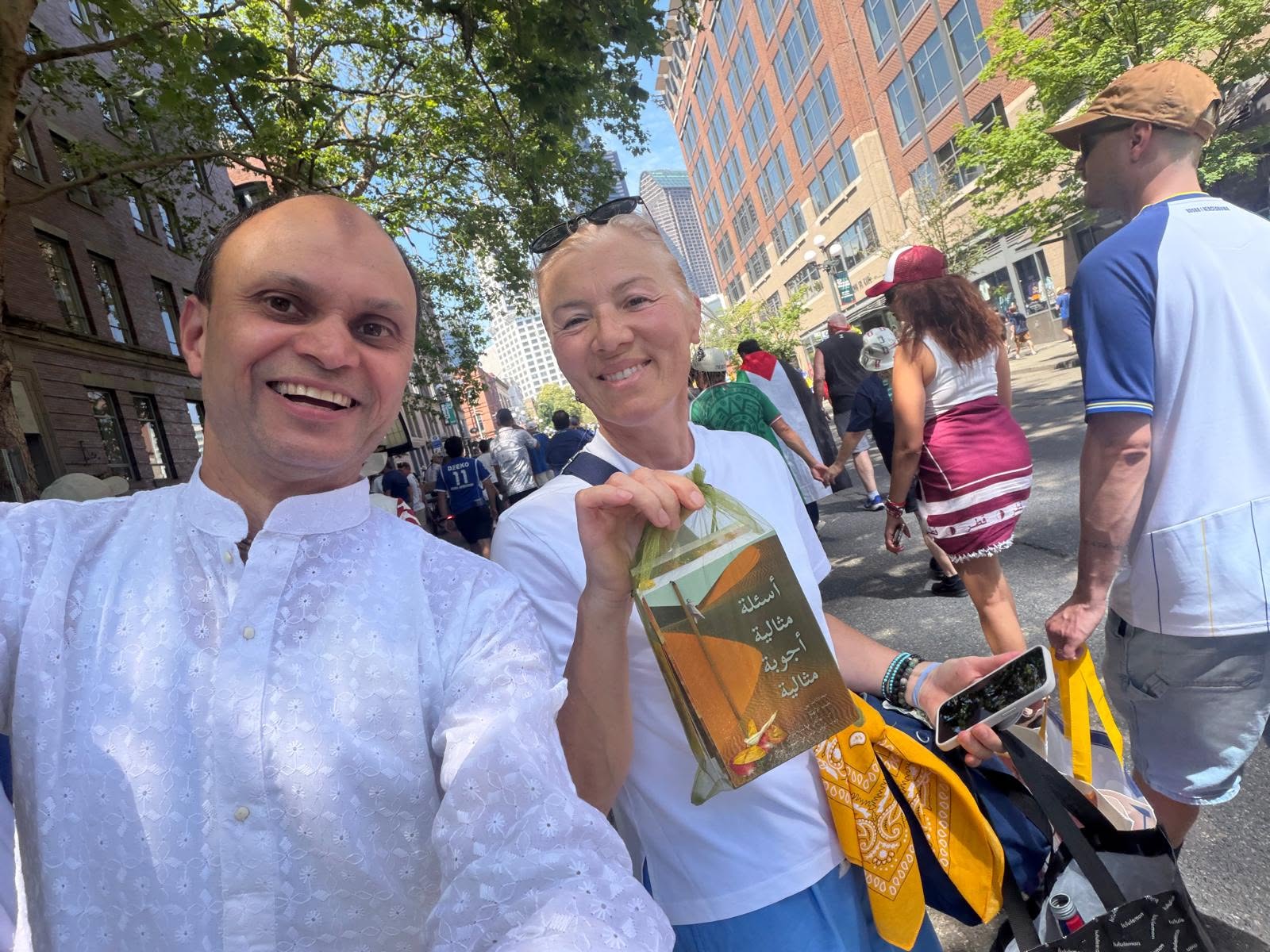
This is why the moment deserves careful attention. It combines sports diplomacy, translation work, diaspora engagement, spiritual education, and interfaith respect. It also demonstrates how dharmic traditions can participate in global culture without losing their depth. The most meaningful outcome is not measured only by the number of books distributed, but by the quality of the encounters created and the possibility that sincere study may continue long after the final whistle.
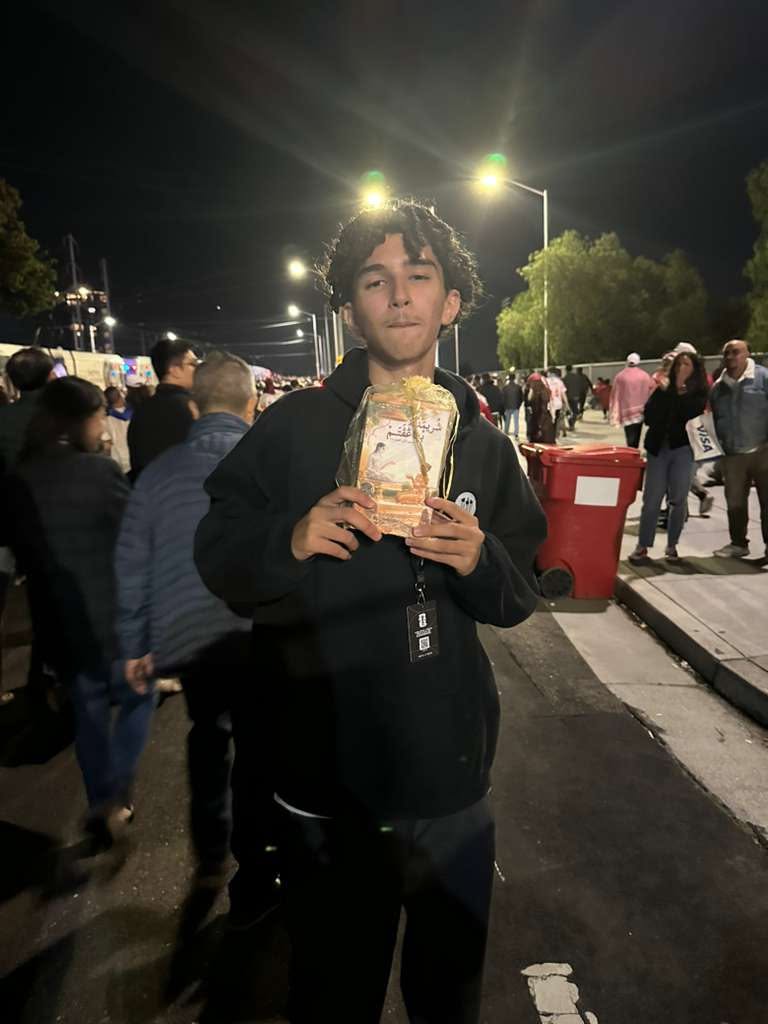
In a time when public religious discourse is often shaped by suspicion, polarization, and cultural defensiveness, a respectful literature distribution effort at the World Cup offers a more constructive model. It affirms that spiritual knowledge can travel through friendship, translation, and voluntary curiosity. It also shows that global gatherings need not be limited to entertainment and commerce; they can become spaces where civilizations meet, where dharmic wisdom is shared with dignity, and where unity becomes a lived practice rather than a slogan.


Inspired by this post on Dandavats.
