Sultan-ul-Qaum, the honorific most closely associated with Jassa Singh Ahluwalia (1718–1783), encapsulates an 18th-century Sikh leader whose statecraft, military acumen, and ethical imagination reshaped the political landscape of North India. Remembered popularly as Nawab Jassa Singh Ahluwalia, he led the Dal Khalsa during an era of Afghan invasions and Mughal decline, and helped lay the institutional and moral groundwork that later enabled stable polities such as the Kapurthala State and, ultimately, Maharaja Ranjit Singh’s consolidation. In Sikh memory and regional history alike, his legacy stands at the confluence of resistance, reconstruction, and inter-communal protectionan enduring affirmation of dharmic unity.
The historical context of his rise was unforgiving. 18th-century Punjab was repeatedly convulsed by conflict: the Little Ghallughara of 1746 and the Vadda Ghallughara of 1762 scarred communities and disrupted agrarian life. The Sikh misls emerged as agile confederacies in this churn, while the Mughal Empire waned and Ahmad Shah Abdali’s Afghan forces crossed the Indus in recurrent campaigns. In the broader subcontinental frame, the Marathas contested imperial authority further south, culminating in the Third Battle of Panipat (1761). Within this fractured space, Jassa Singh Ahluwalia’s leadership offered organizational clarity, ethical restraint, and strategic patiencequalities that made Sikh history in the period both resilient and forward-looking.
Jassa Singh Ahluwalia was born in the village of Ahlu (near Lahore), from which the Ahluwalia lineage name later derived. Early Sikh tradition recalls his devotion and discipline from a young age; his gifts were quickly recognized by senior leaders, especially Nawab Kapur Singh, under whose guidance he matured into a commander of uncommon composure and foresight. Immersed in the living discipline of the Khalsa, he internalized a balanced ideal of service and sovereignty that would come to define his public life: welfare and justice, charity and defense, humility and strength.
By mid-century, as Sikh confederacies reorganized at Sarbat Khalsa assemblies in Amritsar, Jassa Singh Ahluwalia emerged as the elected head of the Dal Khalsa. The choice reflected confidence in his judgment as much as in his courage. Under his stewardship, the Dal Khalsa coordinated the efforts of multiple misls, sharing intelligence, synchronizing raids and relief operations, safeguarding trade and pilgrimage routes, and distributing responsibilities across a federated network. This loose but effective institutional architecture became a defining feature of Sikh political culture in the era: collective deliberation paired with decentralized execution.
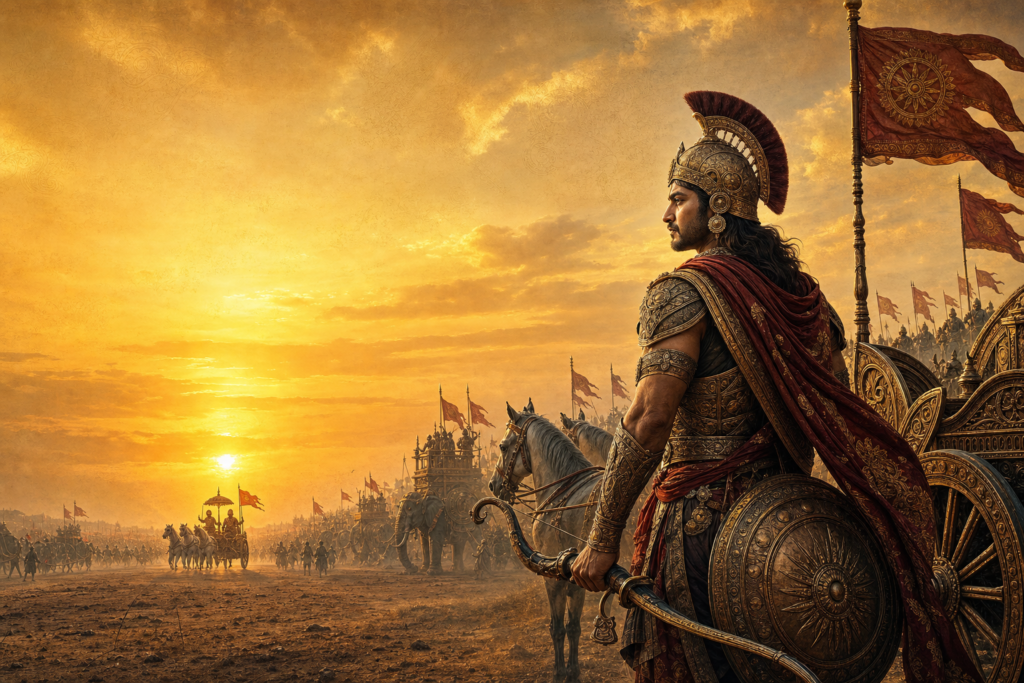
His battlefield methods were notable for mobility, timing, and restraint. Against larger, better-provisioned adversaries, he favored operational surprise, riverine awareness, and harassing maneuvers designed to erode an enemy’s confidence before any decisive clash. Yet his campaigns were anchored in a moral grammar that prioritized the protection of non-combatants and relief for the vulnerable. The most cherished remembrance in Punjabi lore recounts Sikh attacks on Afghan convoys to free abducted women and children; Jassa Singh Ahluwalia’s role in such rescues earned intense popular esteem. For many families across Punjab, recollections of these acts remain living memorystories that grandparents transmitted as lessons in courage that preserved dignity across communities.
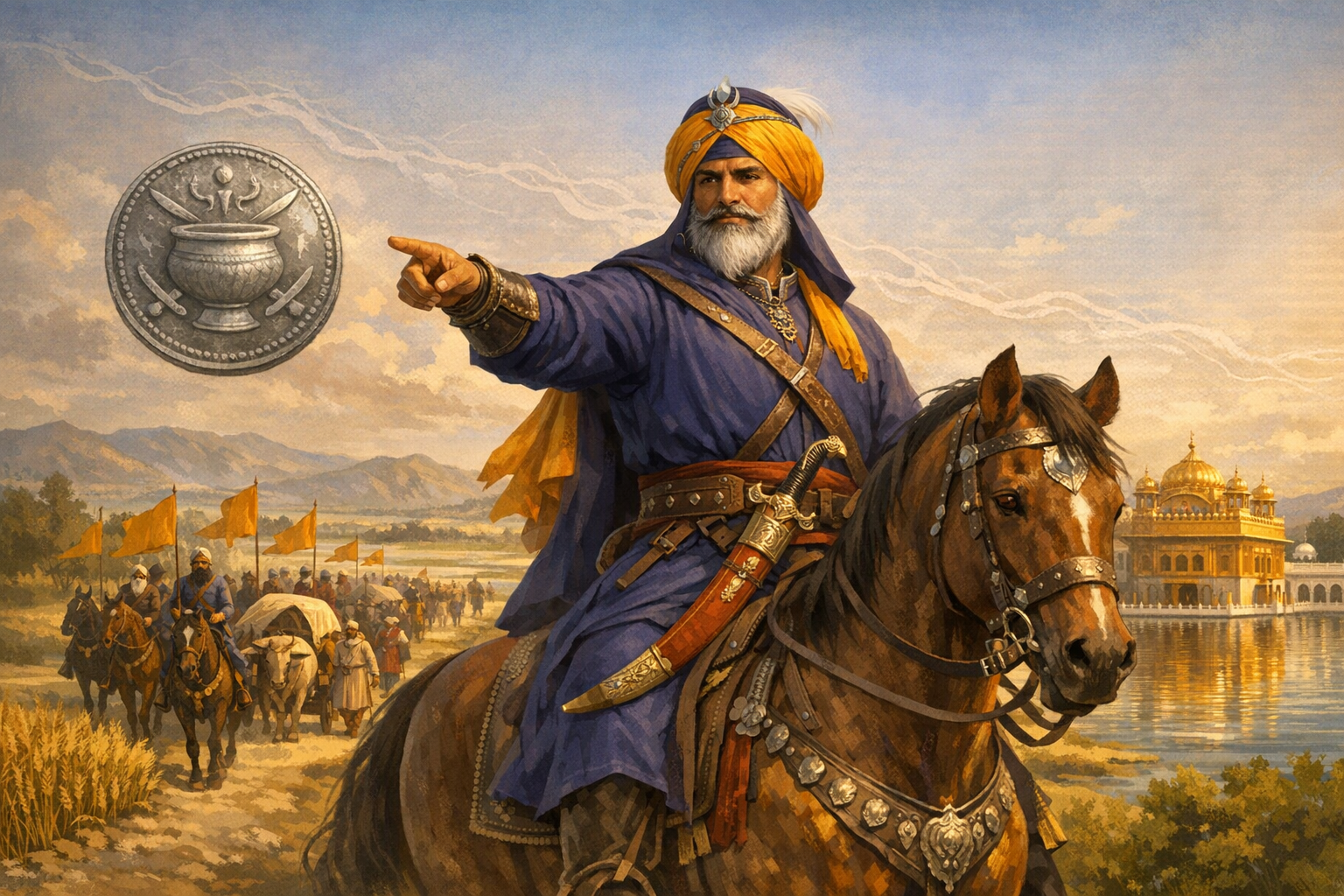
In the volatile aftermath of Panipat, Sikh forces repeatedly entered Lahore, not merely to unseat transient governors but to stabilize civic life, lighten arbitrary burdens, and reassure artisans, traders, and peasants. The symbolism of their authority reached a high point when the Khalsa leadership issued coinage bearing the celebrated legend: Deg Tegh Fateh, Nusrat be-darang, yaft az Nanak Guru Gobind Singh. Struck at Lahore in the mid-1760s, this Persian formula expressed a constitutional ethic as much as victory: the deg (cauldron) signified welfare and community kitchens, while the tegh (sword) stood for the just defense of the innocent. The invocation of Guru Nanak and Guru Gobind Singh articulated continuityethical nourishment and fearless guardianship as inseparable commitments of Sikh governance.
As territorial nodes cohered into more durable centers, Jassa Singh Ahluwalia consolidated holdings around Kapurthala, laying the foundation for a principality that would acquire lasting form as Kapurthala State. The administrative culture that took shape balanced revenue pragmatism with local consensus, encouraged agrarian recovery after cycles of displacement, and sustained religious institutions that anchored social morale. In this period, gurdwaras functioned not only as devotional spaces but also as nodes of relief, instruction, and arbitrationorgans of civil society in the truest sense.
The honorific Nawab attached to his name in many historical retellings reflects the idiom of the time as well as later convention. Within Sikh remembrance, however, Sultan-ul-Qaum remained the more organic epithet, capturing the community’s sense that Jassa Singh Ahluwalia’s authority sprang from service and shared sacrifice rather than courtly grant alone. In a century suspicious of unchecked sovereignty, his leadership modelelective command, federated organization, and transparent purposewas both radical and stabilizing.
Relationships with neighboring powers revealed the breadth of his statecraft. With Maratha resurgence and Mughal weakness, and against the backdrop of Afghan interventions, the Sikh confederacy’s moves under his guidance complemented broader Indian efforts to resist predatory incursions and reassert local responsibility for security and justice. Trade corridors across the Sutlej and Beas, as well as pilgrimage routes to Amritsar and Anandpur Sahib, benefited from improved safety, thereby reviving artisanal and agrarian confidencekey engines of any premodern regional economy.
Jassa Singh Ahluwalia’s Delhi expedition in 1783undertaken in concert with leading sardars such as Baghel Singh and Jassa Singh Ramgarhiasignaled a decisive shift in North Indian power dynamics. Though brief, the Sikh presence in the Red Fort carried immense symbolic weight: it demonstrated parity with imperial centers that had long claimed unchallenged legitimacy and underlined the Khalsa’s insistence on ethical governance. In the months that followed, the emphasis returned to restoring civic order and sacred sites rather than seeking ornamental sovereignty.
His political ethic resonates strongly with the principle of dharmic unity that binds Hinduism, Buddhism, Jainism, and Sikhism. The Deg Tegh ideal foregrounded care for the vulnerable and the defense of the oppressed without sectarian distinction. In practice, this meant escorting pilgrim groups regardless of identity, ensuring fair levies for merchants, and offering sanctuary during seasons of turmoil. For communities across North India, these were not abstractions but concrete experiencesreasons why memories of Jassa Singh Ahluwalia carry gratitude that transcends confessional lines.
Technically, his military success rested on several interlocking elements: intelligence networks built through village alliances; riverine logistics exploiting monsoon and winter flows; cavalry mobility calibrated to the rhythms of sowing and harvest; and a disciplined code that curbed predation. Administratively, he promoted predictable revenue arrangements and mediated disputes through locally trusted figures, thereby lowering transaction costs for cultivators and traders. Collectively, these measures accelerated the transition from episodic resistance to steady governancea precondition for the prosperity that the Punjab heartland would increasingly exhibit by the century’s end.
Jassa Singh Ahluwalia passed away in 1783, but the institutions he strengthened endured. Kapurthala State matured under his successors, and the precedent of coinage in the Gurus’ name reinforced a constitutional understanding of sovereignty that would flower more fully under Maharaja Ranjit Singh. In Sikh history and Indian history more broadly, he stands as a bridge between a ravaged mid-century and a renewed regional orderan exemplar of how ethical resolve, federated strategy, and social welfare can move a people from survival to self-confidence.
Today, the memory of Sultan-ul-Qaum continues to inspire. School groups visiting Kapurthala’s heritage sites often remark on the quiet pride these spaces induce; families narrate the rescues of captives as lessons in courage and compassion; scholars note how the Sarbat Khalsa and misls anticipated modern debates on constitutionalism and collective security. For readers seeking to understand 18th-century India beyond imperial decline, Jassa Singh Ahluwalia offers an integrative lensSikh history as a story of reconstruction, Punjabi history as a story of resilience, and dharmic history as a story of unity and service.
Inspired by this post on SikhNet – News.