Beyond Sectarianism: Dharmic Wisdom for an Inclusive, Boundless Vision of the Divine
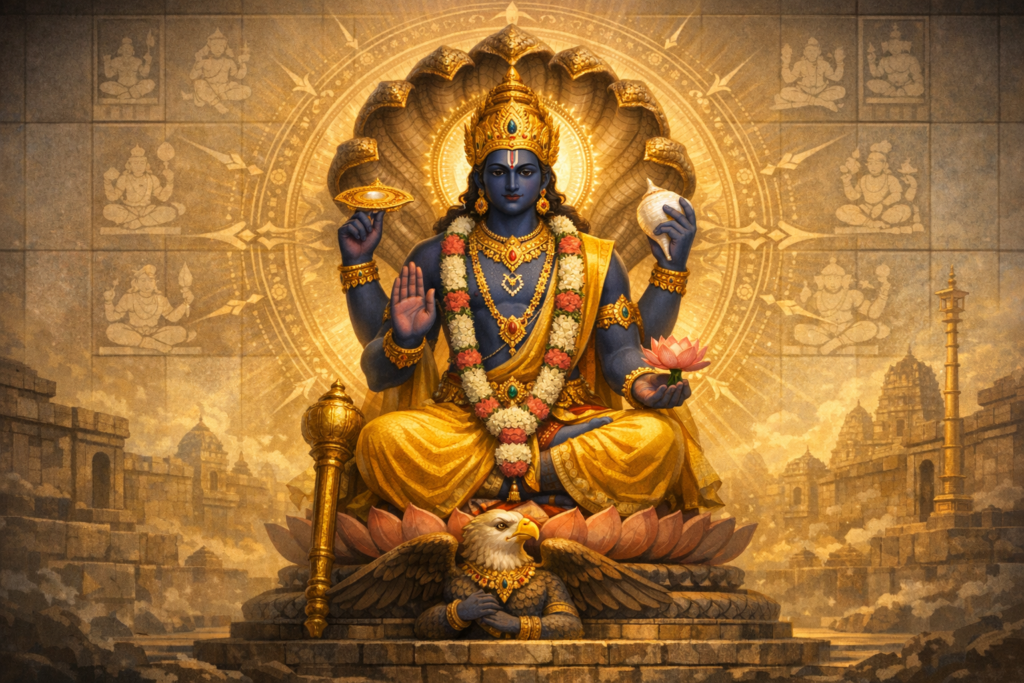
The aphorism “God you know will be defective if you have a sectarian mind” captures a perennial insight of Hindu philosophy and the wider Dharmic traditions: narrow, exclusionary thinking fragments what is intrinsically whole. A sectarian frame reduces the infinite to the measure of a single creed or method, mistaking a partial view for the totality. Dharmic wisdom instead cultivates a capacious, integrative vision—one that recognizes the sacred in diverse forms of practice, language, and experience while affirming a single, all-pervading reality.
Sectarianism, in an academic sense, is a cognitive and social narrowing that absolutizes a single doctrinal lens, ritual form, or community boundary. It operates by confining metaphysical truth to one map, then forgetting that maps are not the territory. Such reductionism generates theological blind spots: it privileges one vocabulary of the Divine as definitive and treats others as error. A Dharmic approach reframes the issue as one of epistemology—how human beings know—and humility—how finite minds approach the Infinite.
Vedic and Upanishadic sources establish the classical horizon for this inquiry. The Rig Veda (1.164.46) proclaims, “ekam sat viprā bahudhā vadanti”—Truth is One; sages speak of it in many ways. The Īśā Upaniṣad opens with the sweeping vision “īśā vāsyam idam sarvam”—all this is pervaded by the Lord—while the Bṛhadāraṇyaka Upaniṣad trains the mind through “neti neti” (not this, not this), disciplining language to avoid premature closure. The Kaṭha Upaniṣad warns against unexamined dogma with “andhenaiva niyamanā yathāndhāḥ”—the blind led by the blind.
The Bhagavad Gītā synthesizes this inclusivity into a theocentric pluralism. In 4.11, the Divine affirms, “ye yathā māṁ prapadyante tāṁs tathaiva bhajāmy aham”—as people approach Me, so do I graciously respond. In 7.21–22, the text recognizes varied devotional dispositions, sustaining them with unwavering śraddhā while leading seekers forward. The Gītā thereby grounds a non-sectarian theology of grace, where multiple legitimate approaches unfold toward the same Reality according to adhikāra (fitness) and svabhāva (inward temperament).
Within Hinduism, this principle is rendered pastoral and practical through the concept of Ishta—Ishta-devatā and Ishta-mārga, a chosen form and way aligned with inner nature. Swami Vivekananda crystallized the Dharmic stance by insisting not on mere tolerance but acceptance: diverse paths are not regrettable deviations but valid trajectories toward the One. This is Hinduism’s inclusiveness in action: honoring difference without fragmenting unity, and nurturing unity without erasing difference.
The Vedānta schools explore this One-and-many problem with rigorous subtlety. Advaita Vedānta emphasizes nondual Brahman, clarifying the roles of nirguṇa (without attributes) and saguṇa (with attributes) as pedagogical levels. Viśiṣṭādvaita affirms a qualified nondualism where all beings and worlds are real modes of the Divine, while Dvaita maintains an eternal distinction within devotion. Read together through the hermeneutics of samanvaya (systematic reconciliation), these darśanas function as complementary lenses rather than mutually exclusive dogmas.
Jainism contributes a precise epistemology of humility through anekāntavāda (the doctrine of many-sidedness) and syādvāda (sevenfold predication). These tools show how any single proposition about reality captures only a conditioned aspect—”in one respect” true—without exhausting the real. Anekāntavāda is thus an intellectual antidote to sectarian overreach, encouraging dialogue across viewpoints while safeguarding logical rigor.
Buddhism offers a pragmatic and contemplative corrective through upāya (skillful means) and the doctrine of two truths: saṁvṛti-satya (conventional truth) and paramārtha-satya (ultimate truth). Doctrinal forms are compassionate rafts, not final shores; they serve to calm suffering and cultivate wisdom until direct realization obviates conceptual crutches. This disciplined non-clinging to views prevents reifying any single religious formulation into an idol of thought.
Sikhism grounds spiritual plurality in the ontological oneness of Ik Onkar. The Guru Granth Sahib resounds with the affirmation that a single Light shines through all beings—”Aval Allah noor upaya … Ek noor te sabh jag upjaya”—challenging hierarchies of birth, caste, and creed. The living ethos of langar (shared kitchen) institutionalizes this insight, transforming theology into daily equality and service.
Across these Dharmic traditions, soteriological plurality is not a concession but a design feature. The Hindu way of life recognizes multiple yogas—jñāna (knowledge), bhakti (devotion), karma (selfless action), and rāja (meditation)—each valid, each necessary for different temperaments and stages. Buddhism grades meditative and ethical paths; Jainism calibrates vows by capacity; Sikhism intertwines nām-simran, kīrtan, and seva. Unity in spiritual diversity is the norm, not the exception.
Technically, Dharmic traditions restrain sectarian closure through robust epistemics. Hindu darśanas appeal to pramāṇas (means of knowledge) such as śruti (revelation), yukti (reasoning), and anubhava (direct experience), refining interpretation with Mīmāṁsā tools—upakrama-upasaṁhāra (opening-conclusion), abhyāsa (repetition), apūrvatā (novelty), phala (result), and arthavāda (eulogy)—to ascertain purport without absolutizing a single verse or ritual. Such hermeneutics make room for coherence without coercion.
A classic Indian teaching parable—the blind men and the elephant—captures the defect of a sectarian mind. Each person grasps one aspect (tusk, ear, leg) and absolutizes it as the whole animal. Dharmic pedagogy invites stepping back, integrating partial insights into a fuller picture. This intellectual hospitality is not relativism; it is disciplined realism about the limits of standpoint-bound perception.
At the ethical and civic level, the Mahā Upaniṣad ideal of “Vasudhaiva Kutumbakam”—the world as one family—extends metaphysical unity into social practice. In plural societies, religious tolerance matures into active friendship across traditions, where Hindus, Buddhists, Jains, and Sikhs cooperate in service (seva), ecological stewardship, and shared moral education. Such collaboration strengthens community resilience while honoring distinct lineages.
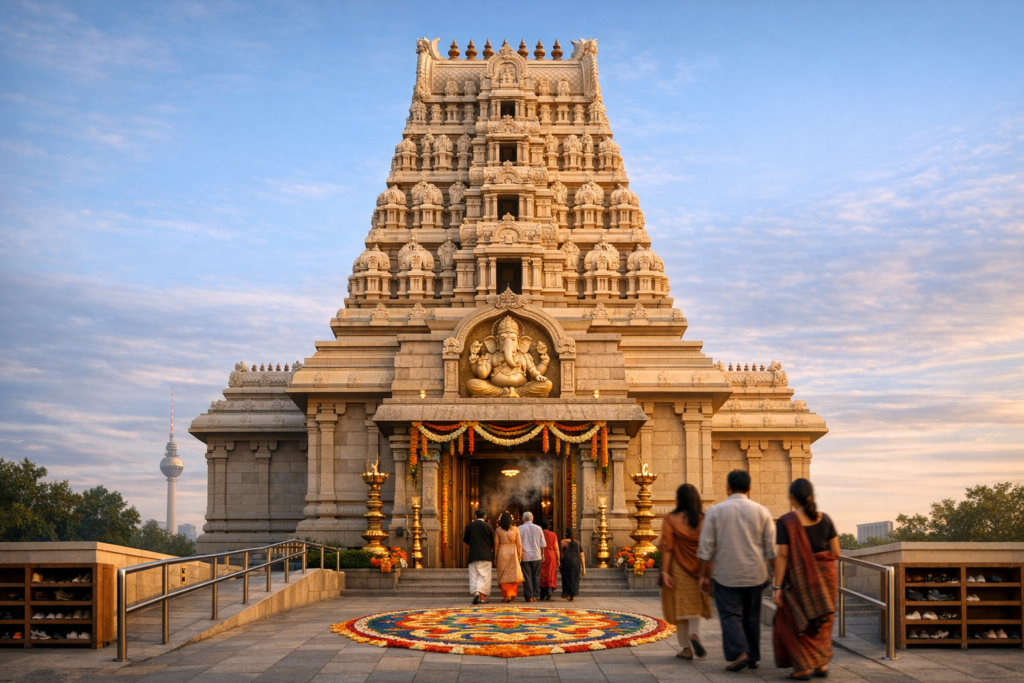
Consider how this unfolds in lived experience. A visitor who has sat in a gurdwara during kīrtan, meditated in a vihāra, listened to Vedic chanting in a temple, or reflected quietly in a Jain derāsar often reports a recognizable stillness: breath slows, the mind settles, ethics deepens. Different sanctuaries, shared interior resonance. The emotional signature of reverence and compassion is a phenomenological bridge across forms.
For students of Hindu philosophy seeking practical methods to transcend sectarian bias, classical sādhanā offers reliable disciplines: svādhyāya (self-study of scriptures across traditions), dhyāna (meditation cultivating non-clinging to views), japa (mantra that steadies attention), and seva (service that dissolves ego-boundary). Cultivating viveka (discriminative discernment) and pratipakṣa-bhāvanā (countering mental fixations with opposite reflections) prevents absolutizing one’s Ishta while deepening fidelity to it.
Addressing interfaith dialogue within the Dharmic family benefits from a simple norm: dialogue over domination, accompaniment over conversion. Differences in metaphysics—ātman and Brahman in Vedānta, śūnyatā in Buddhism, jīva and anekānta in Jainism, Ik Onkar in Sikhism—need not be flattened. They can be honored as complementary disclosures that enlarge the shared horizon of truth, ethics, and liberation.
The philosophical payoff is twofold. First, it clarifies that exclusivist truth-claims are not necessary for depth; rigor and devotion flourish within an accepting framework. Second, it discloses why sectarian thinking yields a “defective” image of God: it confuses a functional symbol or method for the ineffable source it points to. By contrast, Dharmic pluralism lets symbols breathe, methods serve, and realization guide.
In sum, the phrase “God you know will be defective if you have a sectarian mind” does not belittle conviction; it purifies it. Guided by the Rig Veda’s “ekam sat viprā bahudhā vadanti,” the Gītā’s “ye yathā māṁ prapadyante,” and the civilizational ethic of Vasudhaiva Kutumbakam, the Dharmic traditions invite seekers to hold firm to their Ishta while honoring many doors to the same sanctum. This is philosophical clarity with social grace—an inclusive, boundless vision of the Divine that deepens personal practice and nurtures unity in religious diversity.
Why does the article argue that sectarian thinking yields a defective image of the Divine?
Sectarian thinking fragments the infinite by confining truth to a single creed or method. The piece argues that Dharmic wisdom cultivates a capacious, integrative vision that honors diverse practices and experiences while affirming the same ultimate reality.
What practical tools does the piece offer to counter bias?
The post highlights svadhyāya, dhyāna, japa, and seva as practical disciplines. It also advocates viveka and pratipakṣa-bhāvanā to counter mental fixation and deepen fidelity to one’s Ishta.
How does the Bhagavad Gita contribute to the inclusive approach?
The Gita supports a non-sectarian theology of grace by acknowledging varied devotional dispositions. It explains that different paths unfold toward the same Reality according to a seeker’s fitness and temperament.
What parable is used to illustrate the risk of sectarian thinking?
The blind men and the elephant is cited to show how partial views can mistake the whole. The piece invites stepping back to integrate diverse insights into a fuller understanding.
What social-civic principle anchors the article’s call for unity in spiritual diversity?
Vasudhaiva Kutumbakam frames the world as one family and extends unity into daily social practice. It encourages cooperation across traditions through seva, service, and shared moral education.