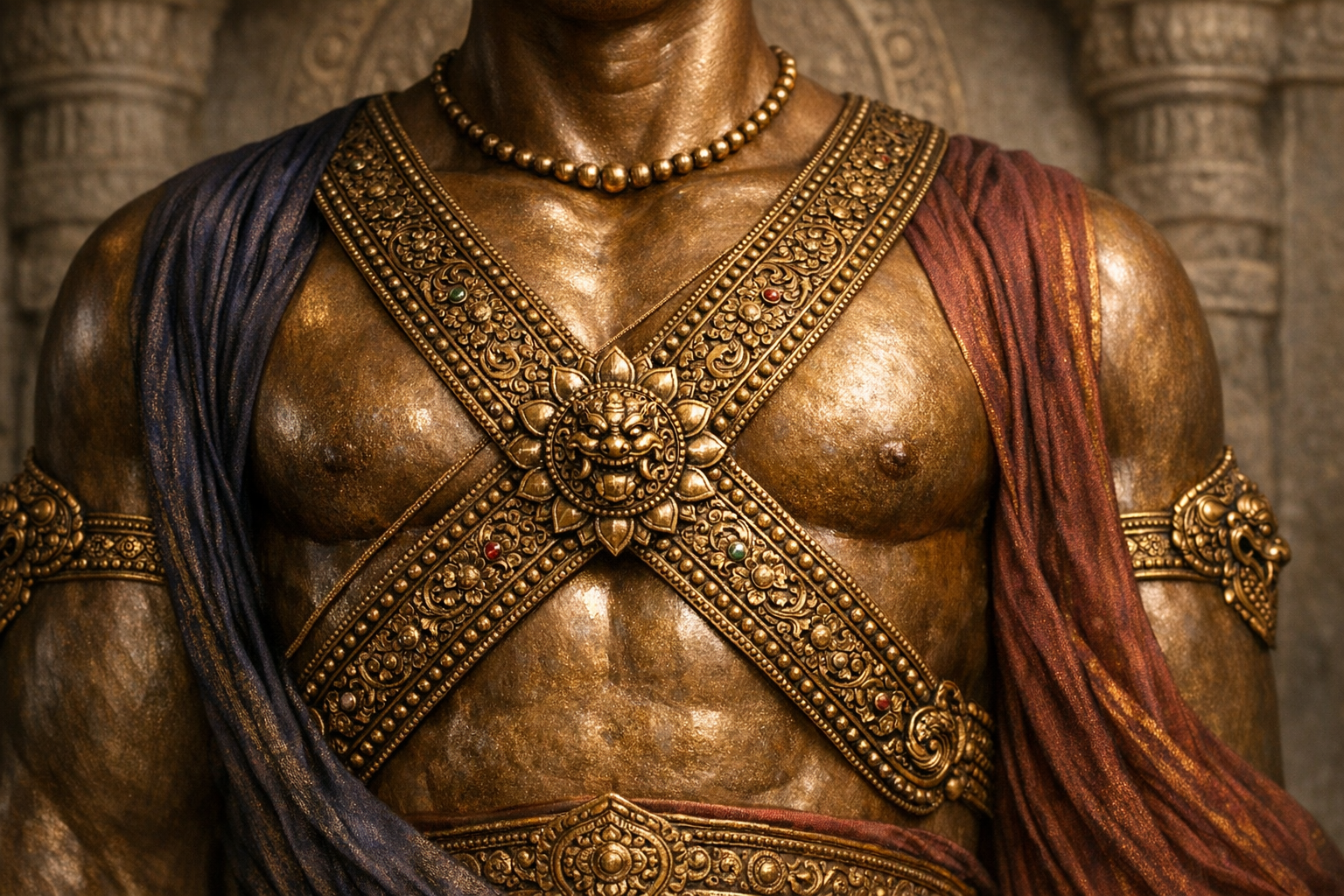
Channa Vira, also rendered as channavīra in art-historical literature, is a distinctive Vaksha Abharanaan ornament for the chestin Hindu iconography. Unlike conventional necklaces or garlands, this ornament consists of diagonal straps that traverse the torso from the shoulders, often crossing over the sternum to form an elegant and emphatic X-shaped harness. Within the visual language of Hindu Sculptures and Temple Architecture, Channa Vira communicates a layered symbolism of protection, heroism, and sacred duty (dharma), announcing the bearer’s kshātra ethosthe dignified, protective aspect of sovereignty and guardianship.
Etymologically, the compound draws from Sanskrit roots: channa (covered, sheathed) and vīra (hero), a formulation frequently glossed by scholars as a “hero’s protective harness.” Textual traditions of the Śilpa-śāstraespecially broad codifications like the Manasara, Mayamata, Śilparatna, and the iconographic sections of the Vishnudharmottara Puranaprovide typologies of ābharaṇa (ornaments) in which vaksha-ābharaṇa form a distinct class. While terminological variants occur across regions and periods, the consensus in art history positions Channa Vira as a martial-cum-sacral chest ornament that both adorns and signifies.
In formal terms, Channa Vira is typically realized as a pair of straps issuing from the shoulders and descending across the chest, intersecting centrally and continuing toward the flanks or waist. The crossing point is often accentuated with a rosette, kīrtimukha medallion, or jewel stud. Strap edges may display granulated beading, floral filigree, or makara-head terminals, and the overall harness can be slender and cord-like or broad and jeweled, depending on patronage, period style, medium, and the status of the deity or guardian figure represented.
Distinguishing Channa Vira from the yajnopavita (sacred thread) is critical for accurate reading in Hindu iconography. The yajnopavita is a single, typically thin cord worn diagonally from the left shoulder to the right hip, tied to ritual purity and initiatory rites. By contrast, Channa Vira is a symmetrical cross-body harness, frequently forming an X over the chest and communicating protective and heroic connotations. Both may appear simultaneously on a single image: the sacred thread signaling ritual status while the Channa Vira marks martial guardianship and the readiness to uphold dharma.
Across regions and centuries, the ornament’s morphology and emphasis evolved with local aesthetics. Early southern stone sculpture of the Pallavas (7th–8th centuries), the refined Chola bronzes (10th–13th centuries), and the intricately carved Hoysala reliefs (12th–13th centuries) all host eloquent instances of Channa Vira. Vijayanagara and Nayaka ateliers further elaborated the harness with luxuriant beading and central bosses. Beyond the subcontinent, related chest harnesses appear in Southeast Asian Indic traditionsKhmer and Cham visual cultures, for examplewhere chest straps and crossed bands on guardian deities register analogous ideals of protection and sovereignty, reaffirming a shared Indic visual vocabulary spread through maritime and temple networks.
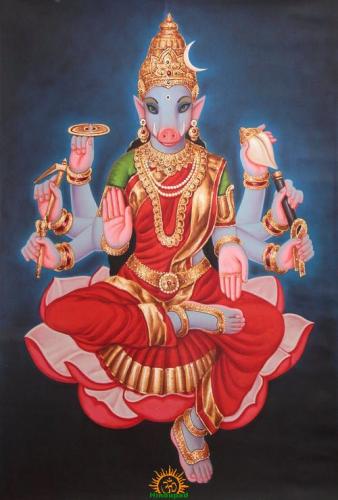
In deity typologies, the Channa Vira often accompanies forms whose identities are explicitly protective, heroic, or martial. Śiva as Naṭarāja, Bhairava, or Tripurāntaka may display a conspicuous cross-chest harness in dialogue with other ornaments such as the udarabandha (waist band) and hārā (necklace). Skanda (Kārttikeya), commander of divine hosts, frequently bears the Channa Vira to underline his warrior leadership. Vaishnava imagesespecially the ferocious Narasimha or the boar-headed Varahamay wear the harness as a sign of cosmic rescue and sovereign power, while goddesses like Durgā as Mahiṣāsuramardinī occasionally receive the same ornament to articulate dynamic, protective energy (śakti) in the heat of righteous combat (dharma-yuddha). Dvārapālas (temple guardians), ganas, yakṣas, and bhūtasfigures responsible for liminal protectionroutinely display the harness with emphatic clarity.
As a symbol, Channa Vira is best read through the confluence of kshātra (valorous protection), bhakti (devotion), and rāja-dharma (just rulership). Historically, cross-belts and baldrics stabilized armor or bore weapons; in sculptural translation, this practical gear becomes an encoded sign of inner resolve, exterior vigilance, and the cosmic duty to defend order (ṛta). In many compositions, the ornament’s crisply delineated diagonals establish a compelling visual architecture on the torso, guiding the viewer’s gaze from the face and chest to the dynamic axis of the hipsa compositional device central to the kinetic balance of Chola bronzes and later South Indian bronzework.
Buddhist and Jain traditions within the broader dharmic sphere articulate closely related connotations. In Buddhist sculpture, guardian figuresdvarapālas, lokapālas, and certain manifestations of Vajrapāṇimay wear cross-body chest harnesses that underscore protective intent and the safeguarding of sacred space. In Jain art, the Tirthaṅkaras themselves remain austere and unadorned, but associated yakṣa-yakṣi attendants and regional guardian deities sometimes feature chest straps or harness-like ornaments consistent with their custodial roles. Read together, these shared visual cues affirm a common dharmic emphasis on the sanctity of protection, the ethics of guardianship, and the valor required to sustain a moral cosmos.
Materials and techniques reveal further nuances. In stone relief, Channa Vira appears as low or high relief bands embellished with stippled beads, rosettes, and cut-back contours for shadow play. On South Indian bronzescast by the lost-wax (cire perdue) methodthe harness is often integral to the figure, its surfaces sharpened by chasing and cold working after casting. Nepalese gilt-copper repoussé images and Himalayan bronzes sometimes enliven the cross-point with inset stones or cabochons, lending a jeweled resplendence to the protective sign. Polychromy and gilding, now largely lost to time, likely heightened the harness’s visual assertiveness in many medieval sanctuaries.
A practical guide can help viewers and students identify Channa Vira in situ. First, look for symmetrical diagonals issuing from the shoulder regions and converging near the sternum; this is the primary cue distinguishing it from the unilateral yajnopavita. Second, examine the intersection for a central plaque, rosette, or kīrtimukha bosssmall but telling anchors of the harness. Third, note how the straps interface with other ornaments: do they pass over the vanamāla (garland) of a Vishnu image or under the layers of hārā on a Śaiva bronze? Such relationships help confirm function and iconographic intent while revealing workshop habits and regional grammar.
Representative case studies clarify the ornament’s narrative power. A Chola-period Naṭarāja might exhibit a crisply modeled Channa Vira whose diagonals cue the viewer to the dynamic torque of the dancing body, supporting the sense of controlled energy that animates the circle of prabhāmaṇḍala (flaming aureole). A Hoysala dvārapāla could bear a broader, more tactile harness with beaded margins and a lotus-boss at the cross-point, underscoring the sentry’s alert awareness at the temple threshold. A Vijayanagara Varaha panel might render the harness with lavish granulation and rosette clasps, enhancing the avatar’s role as upholder of earth and cosmic stability.
Chronological shifts in style correspond to broader currents in Indian art history. Early medieval sculptors emphasized structural clarity and iconographic legibility; later ateliers elaborated surface opulence without sacrificing the crisp diagonals that define the harness. Wherever it appearsfrom Tamilakam to Karnataka and Andhra, and in cognate forms across Southeast Asiathe Channa Vira reliably mediates between aesthetics and ethos: it is ornament and utterance, embellishment and ethical declaration.
Dance and ritual perpetuate the motif in living tradition. In Bharatanatyam and Kuchipudi, costuming for heroic deities and guardians may echo the cross-chest geometry of Channa Vira through fabric bands and jewelry arrangements. Processional utsava-murtis in South Indian temples sometimes highlight the harness with gilded or silvered elements during festival adornment, reminding congregants that beauty (saundarya) and protection (rakṣaṇa) are intertwined offerings to the divine.
Conservation and curatorial practice benefit from recognizing the harness’s prominence. The chest is a high-contact zone vulnerable to abrasion and over-cleaning; undue polishing of bronzes can attenuate beading on the straps and efface the small bosses that convey meaning. Thoughtful lighting that rakes across the torso helps the cross-bands cast legible shadows, reconstituting the harness’s sculptural voice for contemporary audiences and supporting accurate cataloging in museum and temple archives.
Ultimately, Channa Vira is more than an accessory; it is a compact statement about dharma performed through form. It aligns the body of the deity or guardian with the discipline of protection, projects valor without aggression, and celebrates a shared dharmic understandingacross Hinduism, Buddhism, and Jainismthat safeguarding the sacred is itself sacred. As a result, the cross-body ornament reads as both a visual anchor and an ethical axis, tying together aesthetics, theology, and lived devotion in the enduring language of Indian art.
Inspired by this post on Hindu Blog.