Across the living landscape of Sanatana Dharma, few sacred narratives communicate divine protection as vividly as those surrounding Lord Nrsimhadeva. Accounts associated with Pankajanghri dasa longtime pujari of Lord Nrsimhadeva in Mayapur (ISKCON)present a carefully observed pattern: when devotees approach in sincerity and urgency, grace seems to answer with striking immediacy. While these “lilas” (pastimes) are not positioned as canonical in the sense of the “sastras” (scriptures), their consistency and devotional impact invite close, compassionate study.
Within the Vaishnava Bhakti Tradition, Lord Narasimha (Nrsimhadeva) embodies Vishnu’s protective vow to uphold dharma, famously revealed in the Bhagavata Purana’s Prahlada narrative (Canto 7). The iconography ranges from fierce (ugra) to serene (shanta) forms, each communicating a theological dialectic: uncompromising defense of truth alongside intimate compassion for the devotee. This dual grammar of ferocity and tenderness underlies the perception that responses can be both rapid and transformative.
Devotional literature frequently names the Divine as bhava-grahione who receives the inner mood more than external perfection. In temple arcana (puja) and personal sadhana, intention (sankalpa), remembrance (smarana), and the Holy Name are the primary mediums through which devotees seek reciprocity. Mantras glorifying Nrsimhadeva and the worship of Prahlada–Narasimha emphasize that courage born of surrender is itself a form of immediate protection, whether outwardly visible or inwardly realized.
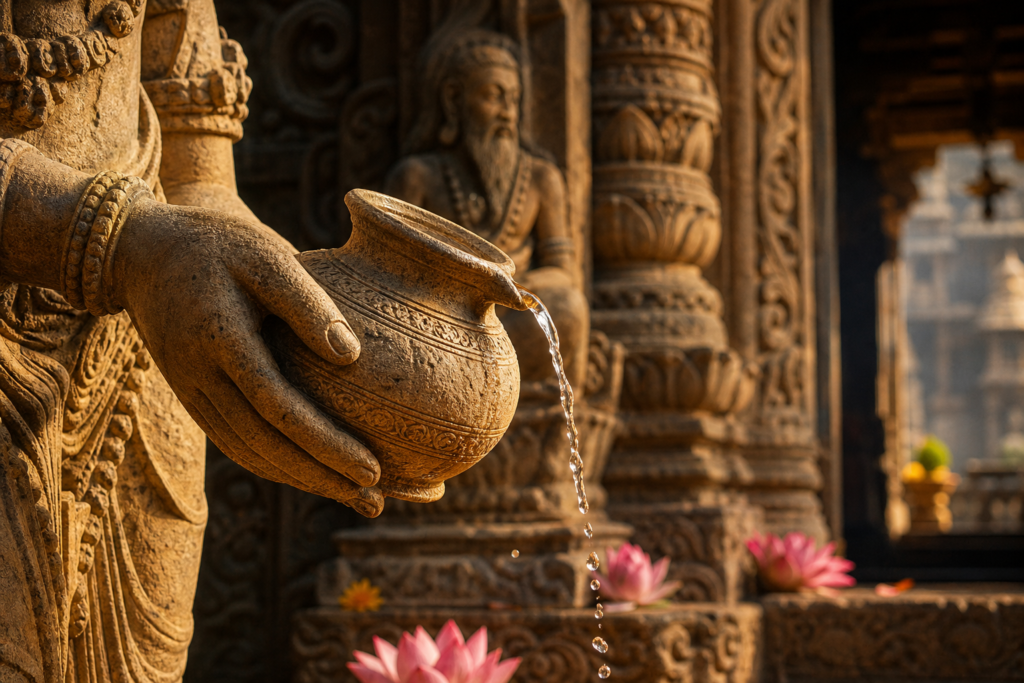
In Mayapur’s ISKCON Sri Mayapur Chandrodaya Mandir, Lord Nrsimhadeva is worshiped with daily offerings, alankara, and periodic abhishekam in accordance with Vaishnava Pancharatra guidelines. The ritual choreographyconch, lamp, incense, flowers, and sanctified watercreates a phenomenological space where presence feels palpable. Devotees often report that obstacles in service resolve unexpectedly, or that urgent petitions related to health, safety, or community needs meet with remarkably swift reassurance.
From an academic standpoint, such narratives occupy a distinct epistemic category. The “sastras” provide śabda-pramāṇa (authoritative testimony), while personal accounts offer anubhava (lived experience). A balanced hermeneutic honors scripture as the normative anchor, reads “lilas” as hagiographic and pedagogical, and remains transparent about the limits of empirical verification. This clarity preserves both devotional authenticity and intellectual integrity.
Patterns recurrent in testimonies center on timing. Help is said to arrive just as consequences become imminent; travel mishaps avert at the last moment; needed resources materialize when options appear exhausted; and, perhaps most profoundly, paralyzing fear dissolves into steadiness. Whether construed as providence, synchronicity, or mercy (kripa), these moments cultivate trust in dharma-aligned action.
The immediacy of response need not be spectacular. In many accounts, reciprocation appears as inner reorientation: a surge of courage to tell the truth, an intuition to seek counsel, or a calm that turns anger into measured speech. In the Bhakti Tradition, such shifts are not secondary outcomes; they are the substance of grace, enabling ethical clarity and steadfast service.
Contemporary research on contemplative practice offers a complementary lens. Regulated breathing, mantra recitation, and ritual participation can modulate stress physiology, improving attentional control and emotional regulation. While devotional communities name this transformation as the Lord’s presence, and scientific communities describe it as psychophysiological effect, both perspectives converge on a pragmatic truth: disciplined remembrance reliably reduces fear and sharpens discernment.
Aesthetic theology helps explain why devotees feel seen ‘instantly’ by Nrsimhadeva. The deity’s ugra aspect confronts falsehood and harm without delay, while the karuna (compassion) held for devotees is unconditional. In practice, those two vectorstruth and tendernessmeet the practitioner at precisely the point of moral decision, which is where time feels most compressed and grace most immediate.
The safeguarding principle resonating here is not exclusive to one path. Dharmic traditions share cognate motifs of compassionate protection: Mahakala and Vajrapani in Buddhism symbolize fierce guardianship of awakening; Jain teachings protect life through ahimsa and the steadfastness of vows; Sikh tradition venerates the courage of the Gurus and relies on the grace of Waheguru in the face of adversity. Recognizing these shared commitments strengthens unity across Hinduism, Buddhism, Jainism, and Sikhism while honoring each tradition’s integrity.
Within Sanatana Dharma’s inclusive ethos of Ishta, practitioners are encouraged to approach their chosen form of the sacred with humility, satya (truthfulness), and seva (service). Practical reflections commonly emphasized by temple communities include: align petitions with dharma rather than self-interest; cultivate steady sadhana rather than event-driven appeals; respect the sanctity of mantras and temple etiquette; and celebrate the diverse ways grace operates across dharmic families.
These considerations return attention to the narrative corpus associated with Mayapur’s worship of Lord Nrsimhadeva and the testimonies linked to Pankajanghri das. Read devotionally, they kindle courage. Read academically, they illustrate how living traditions weave scripture, ritual, and experience into cohesive meaning. In both readings, a core insight emerges: when intention is sincere and aligned with dharma, help arrives at the speed with which the heart turns toward the Divine.
Consequently, the perception that Lord Narasimha reciprocates instantly is best understood as a confluence of scriptural promise, Vaishnava arcana, community testimony, and the psychology of Bhaktian integrated vista that honors Hindu temples as vibrant centers of protection, learning, and unity within the wider dharmic world.
Inspired by this post on Dandavats.