Yoga is best understood as an integrated discipline of body, breath, mind, and awareness that matured across Vedic, Upanishadic, and classical traditions. Far more than physical exercise, Yoga means “union”a harmonizing of attention and energy that steadies perception and reveals clarity. Across India’s dharmic heritage, practitioners have developed distinctive yet complementary approaches to this union. Among the most widely practiced today are Hatha Yoga, Kundalini Yoga, Ashtanga Yoga, Kriya Yoga, and Jivamukti Yoga, each offering a complete path that can be integrated with meditation (dhyana) for transformative results.
Despite their differences in methodology, these streams rest on a shared philosophical foundation that encourages ethical living, inner discipline, and contemplative depth. The yama and niyama articulated in Patanjali’s system resonate closely with the Jain commitment to ahimsa, the Buddhist pañca-sīla and mindfulness training, and the Sikh emphasis on simran and seva. Seeing these resonances strengthens mutual respect and fosters unity among Hinduism, Buddhism, Jainism, and Sikhism, demonstrating that diverse techniques can serve the common human aspiration for wisdom, compassion, and liberation.
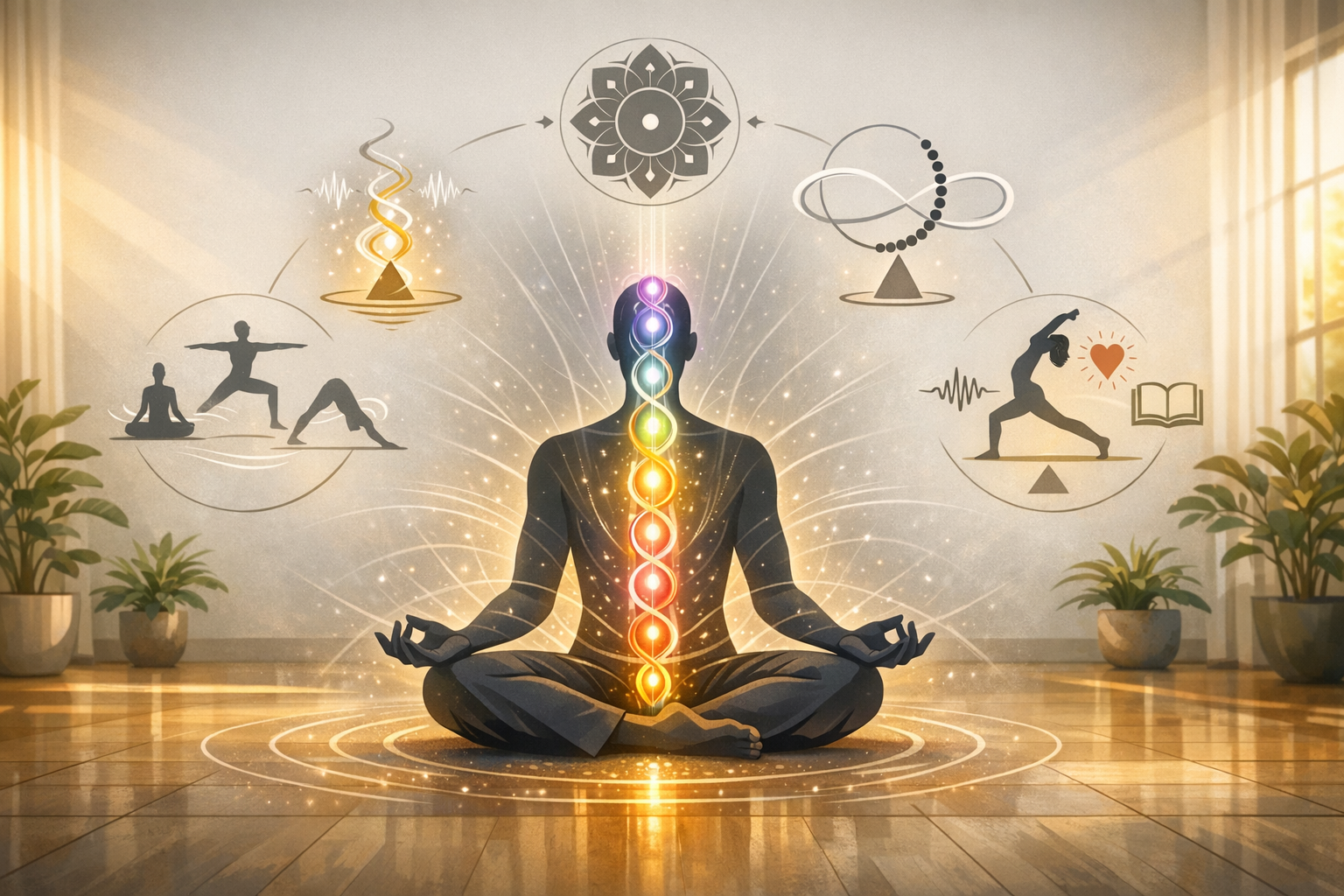
Many systems reference yogic anatomyprana (vital energy), nadis (energy channels), and chakras (psycho-energetic centers)to explain how practice reshapes attention and well-being. Ida, pingala, and sushumna nadi frame a functional map of balance, vigor, and stillness. Whether understood symbolically, phenomenologically, or as an experiential model for practice, these frameworks help align asana, pranayama, bandha, and meditation with the goals of steadiness (sthira), ease (sukha), and insight (viveka).
Hatha Yoga refines the body-breath system to prepare for deeper states of pratyahara, dharana, and dhyanaoften summarized as a gateway to Raja Yoga. Classical sources such as the Hatha Yoga Pradipika, Gheranda Samhita, and Shiva Samhita outline a progressive curriculum that tones the neuromuscular system, balances prana, and steadies the mind. In practical terms, Hatha Yoga cultivates functional mobility, postural intelligence, and calm breath as the foundation for meditation.
Methodologically, Hatha Yoga employs four interlocking pillars. Asana develops joint-friendly range, stability, and proprioception through families of poses (standing, forward extensions, back extensions, lateral movements, twists, inversions, and restorative positions). Pranayama guides the breath with techniques such as nadi shodhana, ujjayi, bhastrika, and kapalabhati to balance the autonomic nervous system and heighten interoceptive awareness. Bandhas (moola bandha, uddiyana bandha, jalandhara bandha) and mudras channel pranic flow to enhance concentration and energetic equilibrium. Cleansing practices (shatkarma), relaxation, and mindful recovery complete the cycle so the nervous system integrates change rather than resists it.
Benefits attributed to Hatha Yoga include improved flexibility and strength, vagal tone and heart rate variability, glycemic control, and reduced stress reactivity, as reported in a growing body of peer-reviewed research. Good practice respects constraints: pregnancy and certain cardiovascular, ophthalmic, or hernia conditions call for modified or deferred bandhas, vigorous pranayama, and inversions. The touchstone is always sthira-sukhamstability with easebacked by competent instruction and gradual progression.
Kundalini Yoga focuses on the awakening of kundalini shakti, traditionally described as coiled potential at the base center (muladhara) that ascends through sushumna nadi, illuminating the chakras and culminating in expanded awareness. This language functions as a sophisticated phenomenology for inner transformation: shifts in attention, affect, and meaning-making are mapped as progressive refinements of energy and insight.
Practice in Kundalini Yoga blends mantra, pranayama, bandha, mudra, and meditative focus into kriyas designed to build capacity safely and steadily. Common elements include rhythmic breathwork (e.g., bhastrika, kapalabhati), the triad of bandhas to stabilize energy, and mantra recitation to refine attention. Because certain protocols can be physiologically and emotionally intense, experienced guidance, staged progression, and appropriate recovery are essential to support a balanced ascent rather than overstimulation.
Contemporary accounts often note enhanced clarity, emotional resilience, and devotional feeling as outcomes of consistent Kundalini work. Equally recognized are cautions: those with uncontrolled hypertension, glaucoma, complex trauma, or active psychiatric vulnerabilities should avoid forceful breath, long retentions, or prolonged hyperventilatory patterns. Grounded pacing, ethical living (ahimsa, satya), adequate rest, and regular meditation help integrate experiences and sustain equilibrium.
Ashtanga Yoga is used in two closely related senses. Philosophically, it denotes Patanjali’s eight-limbed pathyama, niyama, asana, pranayama, pratyahara, dharana, dhyana, and samadhia full-spectrum training of conduct, body-breath dynamics, sensory withdrawal, attentional steadiness, meditation, and transcendence. The first two limbs harmonize with Jain, Buddhist, and Sikh ethical frameworks, underscoring intertradition unity in cultivating non-violence, truthfulness, discipline, and devotion.
Methodologically, Ashtanga Vinyasa (codified by K. Pattabhi Jois) sequences posture, breath, gaze (drishti), and bandha into a dynamic flow that builds strength, stamina, and mental focus. The Primary, Intermediate, and Advanced series emphasize ujjayi breathing and precise vinyasa counts to entrain rhythmic concentration. While physiologically potent, it benefits from intelligent modification for individual bodies, especially regarding knees, lumbar spine, shoulders, and wrists. When synchronized with mindful pratyahara and seated dhyana, the practice serves as an elegant bridge from movement to meditation.
Kriya Yoga also bears a dual meaning. In the Yoga Sutra (II.1), Kriya Yoga is tapas (disciplined effort), svadhyaya (self-study and recitation), and Ishvara-pranidhana (devotional surrender). This triad distills a daily way of living: consistent effort, reflective inquiry through shastra, and humility before the highest idealan ethos equally honored in Hindu bhakti, Buddhist compassion practices, Jain ascetic self-refinement, and Sikh remembrance of the Divine Name.
In modern lineages inspired by Lahiri Mahasaya and popularized by Paramahansa Yogananda, Kriya Yoga refers to a structured set of pranayama, mudra, and mantra procedures intended to refine pranic currents and accelerate meditative absorption. The details are best learned under a qualified teacher to ensure correct pacing and safety. Conceptually, these methods couple slow, precise breathing with directed attention, often yielding pronounced calm, improved concentration, and devotional feeling; the emphasis remains on ethical preparation, steadiness in seated practice, and respectful confidentiality around technique.
Jivamukti Yoga, established by Sharon Gannon and David Life in 1984, integrates vigorous vinyasa with five core tenets: ahimsa, bhakti, nada, dhyana, and shastra. Classes often combine dynamic sequencing, Sanskrit chanting, philosophical reflections, and music to inspire both inner inquiry and compassionate action. Its ethical pillar of ahimsa aligns closely with Jain and Buddhist non-violence and with the Sikh ethos of seva, illustrating how modern pedagogy can honor classical roots while engaging contemporary life.
Choosing among these pathways benefits from clarity of intention and honest assessment of constitution (prakriti), experience, and available time. Those seeking postural literacy and breath-centered calm may gravitate toward Hatha Yoga; individuals drawn to devotional fervor and energy work may be inspired by Kundalini Yoga; practitioners valuing a structured ethical-philosophical map can anchor in Ashtanga’s eight limbs; contemplatives committed to disciplined breath and mantra may thrive in Kriya Yoga; and seekers who resonate with art, music, ethics, and activism may flourish in Jivamukti Yoga. Across all, yama, niyama, and daily meditation safeguard balance and continuity.
A representative week can blend strengths while remaining coherent. On two or three days, a steady Hatha sequence refines alignment and pranayama. On other days, a moderated Ashtanga Vinyasa or Jivamukti flow develops heat and focused attention. Short, seated practicesnadi shodhana with gentle kumbhaka followed by dharana and dhyanaanchor mornings or evenings. Periods of silence, study of shastra, and reflective journaling integrate insight. Restorative sessions and yoga nidra support recovery, ensuring progress is sustainable.
Evidence-informed considerations are increasingly clear. Slow, diaphragmatic breathing and balanced ratios are associated with improved autonomic regulation and emotional resilience; mindful movement reduces perceived stress and supports musculoskeletal health; attentional training enhances executive function and affect regulation. The safest gains arise from gradual loading, technical precision, and respect for recovery, especially when practices include bandha, strong pranayama, or prolonged vinyasa. This material is educational and not a substitute for personalized medical advice; consultation with qualified teachers and healthcare professionals is prudent when needed.
Key concepts tie the systems together. Prana describes the felt sense of vitality organized by attention and breath; nadis and chakras offer a refined language for experiential cartography; bandhas and mudras focus subtle engagement; pratyahara and dhyana refine inwardness and clarity. These are not dogmas but practical tools: their value lies in the transformation they engendergreater kindness, steadier awareness, and freedom from compulsive reactivity.
Ultimately, Hatha Yoga, Kundalini Yoga, Ashtanga Yoga, Kriya Yoga, and Jivamukti Yoga are complementary routes toward the same summit: integrated well-being and lucid compassion. Honoring their common ethical heart while appreciating their distinctive methods nurtures unity across dharmic traditions. In this spirit of shared quest, the invitation is simple and profound: start gently, breathe attentively, study sincerely, and let daily practice reveal the innate clarity that Yoga promises.
Inspired by this post on Hindu Pad.