Arulmigu Eraiyur Thagam Theerthapureeswarar Temple, revered as Shri Annapurni sametha Shri Dhagam Theerthapureeswarar, stands in Iraiyur (also written Erayur), the present name of the historical village Thirumaranpadi in Cuddalore district, Tamil Nadu. Situated approximately 20 kilometers southwest of Vridhachalam (Vriddhachalam), the shrine is readily accessible for pilgrims and travelers; buses are available and local roads offer direct, short-haul connectivity. As a compact, living place of worship within South India’s temple ecology, it remains a vital stop on a Tirtha-Yatra through the region.
Iraiyur is traditionally glossed as God’s Village, reflecting the Tamil morphological reading irai = god and oor = village. The toponym encapsulates a devotional identity sustained over centuries and situates the temple within India’s Cultural Heritage where language, liturgy, and locality interweave to frame sacred geography.
The deity’s epithet Thagam Theerthapureeswarar encodes a rich Shaiva metaphor: thagam denotes thirst, theertha evokes sanctified water, and Pureeswara connotes Shiva as lord of the sacred precinct. In aggregate, the name signifies the Lord who alleviates existential thirst, a theological motif resonant with Shaiva Siddhanta’s emphasis on compassionate grace that nourishes both body and soul.
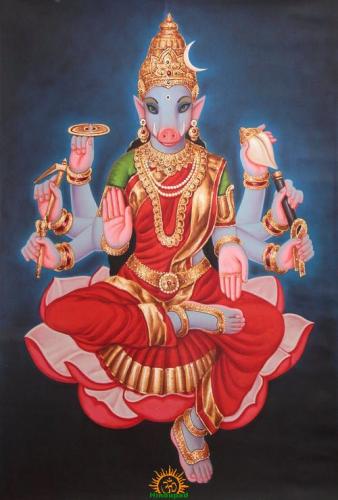
Devotional focus here centers on Shiva as Shri Dhagam Theerthapureeswarar and on the Goddess as Shri Annapurni, the granter of sustenance. The presence of Annapurni foregrounds anna-dana and hospitality as everyday virtues, aligning with shared dharmic values recognized across Hinduism, Buddhism, Jainism, and Sikhism, where compassion, restraint, and service cohere as lived ethics.
Practical access is straightforward: from Vridhachalam, Eraiyur is an inland journey of roughly 20 kilometers by district road; public and private buses are available at regular intervals, while auto-rickshaws and taxis commonly serve the last-mile approach. On maps and travel resources the shrine may appear as Eraiyur Thagam Theerthapureeswarar Temple or Erayur Dhagam Theerthapureeswarar Temple, while locally the village reference Iraiyur is prevalent.
As is customary in many Tamil Shaiva temples, daily darshan generally aligns with early-morning and evening worship windows to accommodate abhishekam, alankaram, and deeparadhana cycles. Visitors are advised to confirm the day’s timings at the entrance noticeboard, noting that observances such as Pradosham and Maha Shivaratri may extend hours. The cooler months from November to February are particularly conducive to unhurried pilgrimage.
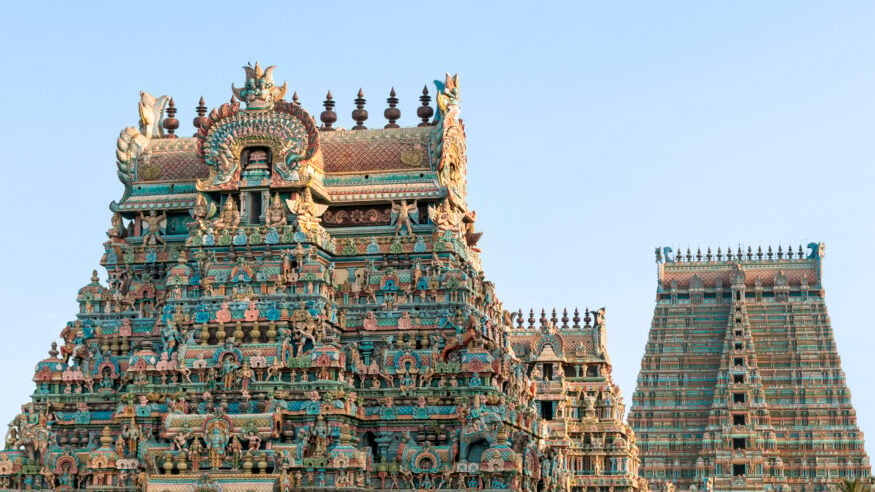
Architecturally, the shrine participates in the Dravida idiom that defines numerous Hindu Temples across Tamil Nadu. A typical Shaiva layout comprises a garbhagriha aligned axially with an ardha-mandapa and maha-mandapa, a balipeetha and dhwajasthambha in the forecourt, a Nandi mandapa oriented toward the linga, and circumambulatory prakaras for pradakshina. Such Temple Architecture is at once ritually functional and symbolically mapped to cosmic order.
Ritual life is Agama-guided and centers on the sanctum’s linga through upacharas that include Abhishekam with sanctified water and other consecrated substances. The theertha motif, implicit in the deity’s name, pairs naturally with the Goddess as Annapurni, whose association with shared food and prasadam amplifies the ethic of care. Recitation of Shaiva stotras, the resonance of bells, and the conch’s call collectively shape a contemplative soundscape.
Visitors often remark upon a quieting of the senses at the axial sightline leading from threshold to Nandi and onward to the sanctum. This spatial journey, proceeding from outer prakara to the garbhagriha, mirrors an interior movement toward centered awareness; it is a devotional experience intelligible across the dharmic spectrum, where meditation, discipline, and insight are common aspirations.
Inclusivity is intrinsic to the site’s ethos. While unmistakably a Shaiva kshetra, the values of dhyana, dana, ahimsa, and reverence for knowledge find echoes across Hindu, Buddhist, Jain, and Sikh traditions. Pilgrims of varied backgrounds therefore discover shared ground in disciplined silence, vegetarian offerings, and service-oriented participation that honors the local devotional cadence.
Responsible pilgrimage supports preservation. Modest attire, footwear removal before entering mandapas, restraint with photography near the sanctum, and mindful disposal of offerings uphold sanctity and environmental balance. Engaging fair-priced local transport and patronizing village enterprises distributes the economic benefits of pilgrimage equitably.
Eraiyur can anchor a broader heritage circuit within Cuddalore district, a landscape enriched by Chola and post-Chola sacred architecture. Planning adjacent visits enables comparative appreciation of iconography, stone workmanship, and inscriptional styles, revealing continuities and refinements within South India’s temple-building legacy.
Variant spellings such as Iraiyur, Erayur, and Eraiyur occur across documents, all referring to the same settlement traditionally known as Thirumaranpadi. Confirming bus schedules and darshan windows locally is prudent, as rural timings can shift during festival observances and agricultural seasons.
Ultimately, the appeal of Arulmigu Eraiyur Thagam Theerthapureeswarar Temple is the synthesis of nourishment and grace. Shri Annapurni sametha Shri Dhagam Theerthapureeswarar evokes a complete spirituality in which hungerliteral and metaphoricalis met with care, and inner thirst is answered at a theertha where devotion, knowledge, and community converge.
Inspired by this post on Hindu Pad.