Prabhasaalso rendered as Prabhasa Patan or Prabhasa Kshetraoccupies a singular place in the sacred geography of India. Set on the Saurashtra (Kathiawar) coast of present-day Gujarat, it is revered as the Triveni Sangam where the Hiran (Hiranya), Kapila, and the subterranean Sarasvati rivers meet the Arabian Sea. In Hindu memory and practice, this confluence has long functioned as a ritually charged threshold between land and ocean, past and present, mortal passage and divine return. It is here, according to the Mahabharata’s Mausala Parva and the Bhagavata Purana, that Sri Krishna brought his earthly lila to a closean event commemorated across the kshetra at Bhalka Tirtha and Dehotsarg Tirtha. Those intertwined narratives, together with the adjacent Somnath Jyotirlinga, continue to draw seekers who perceive in Prabhasa a living confluence of devotion, history, and philosophical depth within Sanatana Dharma.
Etymologically, “Prabhāsa” in Sanskrit evokes “splendour” or “radiance,” an apt description for a shore where sunrise, tides, and ritual fires have long animated devotional life. The suffix “Pattan/Paṭṭana,” used historically for port towns, points to the site’s maritime orientation. Today, Prabhasa Patan lies near Veraval in the Gir Somnath district, where coastal winds, estuarine creeks, and dune systems shape both ecology and experience. The hydrology of the Hiran and Kapila, combined with a traditional belief in a subterranean Sarasvati joining them at the sea, grants the Triveni its enduring sanctity. Seasonal monsoon pulses and tidal mixing here create a dynamic littoral environment that pilgrims have engaged with through bathing (snana), offerings (tarpana), and processions (yatra) for centuries.
In Hindu sacred geography, a “sangam” is not only a physical meeting of waters but also a metaphysical convergencean axis where consecrated time, place, and action can align. Prabhasa’s ritual reputation is affirmed by Purāṇic literature and local tirtha-mahatmya traditions that enumerate the spiritual benefits of bathing, worship, and charity at specific ghats and shrines. Among these texts, the Skanda Purana’s Prabhasa-khanda provides a particularly detailed account of the kshetra’s sanctity, prescribing observances during auspicious lunar phases in the months of Kartika and Magha. The site’s identity as a purifying threshold thus arises from a long, cumulative memory encoded in scripture, oral tradition, and practice.
The Itihasa-Purana corpus situates momentous events at Prabhasa. The Mahabharata’s Mausala Parva recounts the final days of the Yadavas in the vicinity of this kshetra, culminating in fratricidal conflict precipitated by a cursed iron pestle ground to powder and cast into the sea. In a hauntingly cyclical turn, reeds later grow from that very shore and become the weapons of their undoing. This narrative frames Prabhasa as a liminal site where cosmic justice, time, and human agency intersect in sobering clarity.
The Bhagavata Purana (Canto 11) complements this with contemplative intensity: following the internecine Yadava tragedy, Sri Krishna withdraws from worldly engagements and proceeds toward the Hiran’s bank near Prabhasa. Tradition holds that a hunter named Jara, mistaking Krishna’s foot for a deer, releases an arrow that precipitates the avatara’s departure. Bhalka Tirtha memorializes the arrow’s release, while Dehotsarg Tirtha near the confluence marks the place where Krishna relinquished his physical form and, in many retellings, imparted final counselan association strengthened in popular memory by readings from the Uddhava Gita. Together, these shrines orchestrate a pilgrimage arc that moves from the recognition of mortal fragility to the assurance of transcendence.
Within Vaishnava thought, Prabhasa thus becomes a theatre for understanding avatara: divine descent that teaches by participation in history, concluding not in disappearance but in re-integration with the timeless. The site’s theological resonances extend beyond sectarian boundaries, however. Shaiva, Shakta, and Smarta practitioners also emphasize the Triveni as a locus for purificatory rites, while the very proximity of Somnathone of the twelve Jyotirlingasdeepens the sense that Prabhasa is a place where Vaishnava and Shaiva currents naturally conjoin.
Somnath’s antiquity is anchored in a mythic etiology: Soma, the Moon deity, is said to have performed penance at Prabhasa to regain his luster after Daksha’s curse. The jyotirlinga here is consecrated to Shiva as Lord of Soma, ritually entwining lunar rhythms with the discipline of abhisheka and mantra. Theologically, the waxing and waning of the moon have been read as metaphors for knowledge, karma, and renewal. Architecturally and institutionally, Somnath embodies resilient continuity; the present temple, reconsecrated in 1951 under the stewardship of the Somnath Trust with leaders such as Sardar Vallabhbhai Patel and K. M. Munshi, symbolizes the enduring vitality of Hindu temples as centers of worship, learning, and community service.
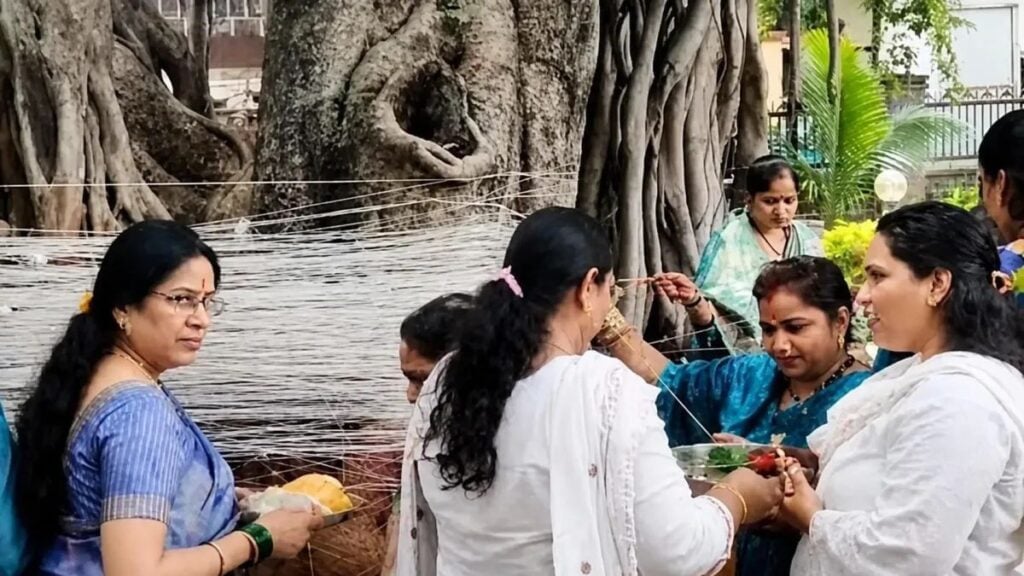
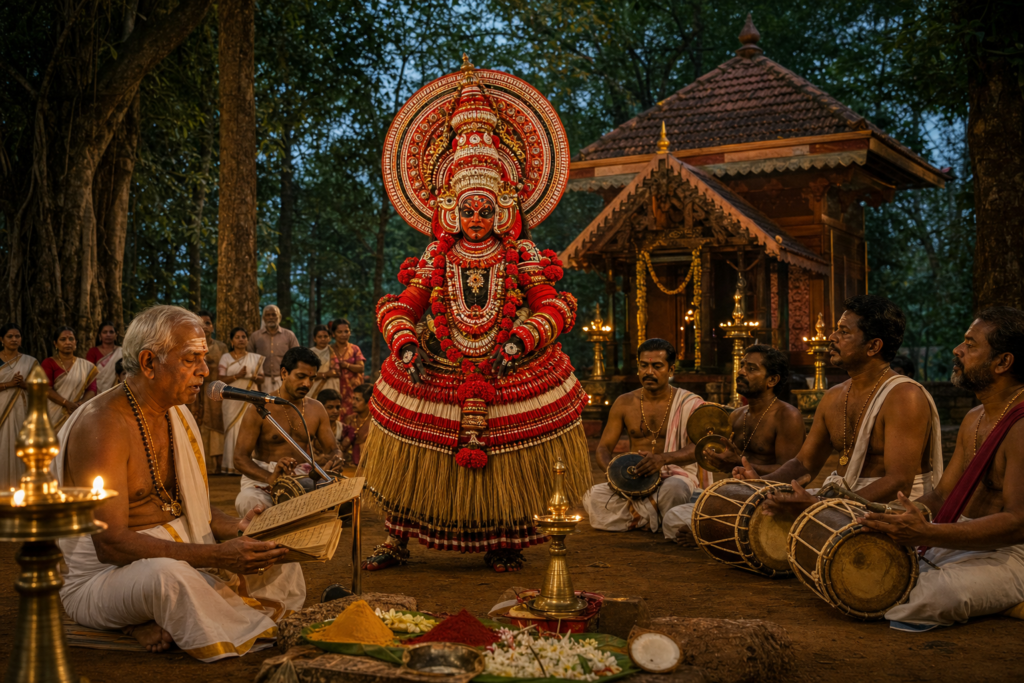
Ritual praxis at Prabhasa is textured and seasonally attuned. Pilgrims undertake Triveni snana at dawn, perform tarpana for ancestors, and offer dana as part of tirtha-yatra discipline. Many proceed to Bhalka Tirtha to reflect on the ethical poignancy of Jara’s arrow, then continue to Dehotsarg for meditation and recitationoften from the Bhagavad-Gita or Srimad-Bhagavatambefore arriving at Somnath for Shiva abhisheka and darshan. Holy days such as Kartika Purnima, Magha Purnima, Amavasya observances, and Maha Shivaratri invite heightened participation, while the daily aarti and the ocean-facing light ceremony at Somnath create an experiential bridge between temple and tide.
The Skanda Purana’s Prabhasa-khanda stresses the soteriological potency of right conduct at specific nodes in the kshetra. Such prescriptions are not merely ritual formalities; they cultivate mindfulness regarding time (tithi, nakshatra), place (kshetra, tirtha), and action (karma, dana, japa). In effect, Prabhasa functions as a pedagogy in situteaching that liberation-oriented living involves attention to cosmic rhythms, ethical intention, and shared responsibility to community and environment.
For many pilgrims, the kshetra’s sequence of sites provides a contemplative itinerary. Bhalka Tirtha awakens moral introspection about error, fate, and forgiveness. Dehotsarg nurtures meditative stillness rooted in impermanence and release. The Triveni Sangam invites embodied purification through water and mantra. Somnath gathers and elevates these intimations into luminous worship before a jyotirlinga whose very name connotes the moon’s soft radiance. The journey’s arc invites one to transform grief into insight and devotion into service.
Textual cross-references enrich this experience. The Mahabharata’s Mausala Parva frames the kshetra’s ethos with stark realism about power, pride, and consequence. The Bhagavata Purana’s eleventh canto introduces a deeply reflective toneone that values counsel, detachment, and abiding love (bhakti) alongside wisdom (jnana) and disciplined action (karma-yoga). The Skanda Purana’s tirtha-mahatmya meanwhile ties practice to place, reminding pilgrims that the earth itselfthrough rivers, shores, and shrinescan become a teacher when engaged with reverence.
Prabhasa’s appeal also lies in the integrative spirit it fosters among dharmic traditions. In Hinduism, Vaishnava and Shaiva streams naturally converge here; yet the broader ethos of tirtha-yatra resonates with Buddhism’s emphasis on mindful pilgrimage to loci of awakening, with Jainism’s disciplined journeys to nearby Saurashtran peaks such as Girnar and Shatrunjaya, and with Sikhism’s tradition of sacred waters and seva around sarovars. Across these traditions, confluences and sacred waters invite purification, ethical clarity, and solidarityreminding visitors that dharmic diversity flourishes through shared practices of remembrance, compassion, and self-cultivation.
Historically, the Saurashtra littoral formed an important node in Indian Ocean exchange, and Prabhasa Patan’s identity as a coastal settlement shaped its ritual economy. While ports and trade routes shifted over time, the kshetra’s ritual centrality persisted. The Archaeological Museum at Prabhas Patan (near Somnath) and regional collections attest to layered occupation, reconstruction, and renewalmaterial echoes of a community that sustained worship in changing political and environmental contexts.
Somnath’s repeated reconstructions are often read not merely as episodes of loss and recovery but as testimonies to cultural resilience. Temple traditionsdaily worship, feast days, hospitality, educationcontinued to anchor social life. In contemporary practice, this anchoring takes on inclusive forms: open darshan, conservation-minded temple management, and educational outreach. Such continuity underscores the role of temples as institutions of care, continuity, and cultural literacy within the broader fabric of Indian society.
A visit to Prabhasa typically includes the Triveni Ghat, Bhalka Tirtha, Dehotsarg Tirtha, and Somnath, with additional stops at local shrines and memorials that mark events from the Krishna cycle. Gita Mandir and nearby installations encourage recitation and study, while coastal promenades foster quiet reflection. Many pilgrims time their journey to coincide with Kartika and Magha observances, when collective snana and satsanga intensify the shared experience of the kshetra’s sanctity.
The ecological sensibility embedded in Indian sacred geography is particularly relevant here. Coastal erosion, plastic waste, and fragile estuarine habitats call for careful stewardship. Sustainable pilgrimageminimizing single-use plastics, supporting local livelihoods, honoring ghats and dunes, and participating in seva-led cleanupaligns naturally with dharmic ethics of ahimsa and responsibility. In this way, ritual observance and environmental care become mutually reinforcing, preserving the kshetra for future generations.
Prabhasa’s layered sanctity also lends itself to study and contemplation. For students of scriptures (Shastra), the site provides a living laboratory where Skanda Purana’s Prabhasa-khanda, the Mahabharata’s Mausala Parva, and the Bhagavata Purana’s eleventh canto can be read against the grain of place. For historians, Somnath’s institutional history illustrates how temples negotiate continuity across centuries. For practitioners, the kshetra’s rituals offer a structured pathway to inner clarity, gratitude, and service.
Across these perspectives, one insight remains constant: Prabhasa distills a civilizational commitment to unity-in-diversity. The confluence of rivers models the confluence of pathsbhakti, jnana, karma, and yogaeach entering the ocean of the Self from its own course. Vaishnava veneration of Krishna’s compassionate departure coexists seamlessly with Shaiva devotion at Somnath, and both are legible within a wider dharmic tapestry that includes Buddhist mindfulness, Jain ascetic refinement, and Sikh seva. The site thus becomes a gentle teacher of harmony without homogenization.
Practical orientation enhances the journey. Prabhasa Patan is accessible by rail via Veraval Junction and by road from Rajkot, Porbandar, and Diu. Local guides and temple information centers help visitors sequence their darshan to accommodate tides and aarti timings. Mornings at the Triveni Sangam, late afternoon reflection at Bhalka or Dehotsarg, and evening aarti at Somnath often yield a balanced rhythm of contemplation and celebration that many find deeply restorative.
In sum, Prabhasa is more than a place on the map; it is a mandala of meanings. As “The Sacred Shore Where Krishna Departed and Divinity Converged,” it binds textual memory to tidal ceremony, ethical reflection to embodied practice, and regional heritage to pan-Indian pilgrimage. Those who come seeking insight often discover a broader invitation: to live with radiance (“prabhāsa”)anchored in dharma, attuned to nature, and open to the many streams by which wisdom reaches the sea.
Inspired by this post on Hindu Blog.