On 22 March 2026, the fourth day of Chaitra Navratri (Chaitra Shukla Chaturthi) is devoted to Goddess Kushmanda, revered as the primordial radiance whose smile is said to have formed the cosmic egg (brahmāṇḍa). This observance focuses on building inner vitality, clarity, and prosperity through disciplined worship, mantra recitation, mindful fasting, and seva. The day aligns practice with the qualities of warm luminosity (uṣmā), steadiness, and compassionate action.
In 2026, Day 4 falls on Sunday, 22 March. While the core observance is anchored to Chaturthi tithi, auspicious timing (muhurat) is location-specific. Devotees typically perform the main puja after sunrise and before dusk, avoiding Rahu Kaal and preferring calm intervals such as Brahma Muhurta (pre-dawn), the morning window post-sunrise, or the Abhijit period around midday. A local pañcāṅga should be consulted to confirm the Chaturthi span and refine muhurat for one’s city and timezone.
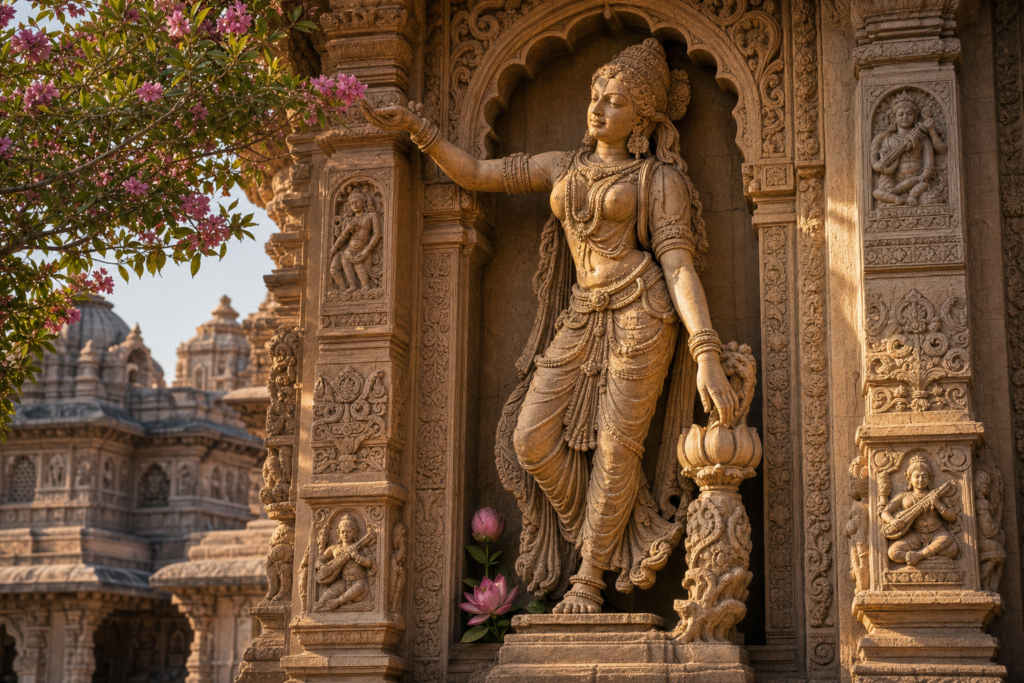
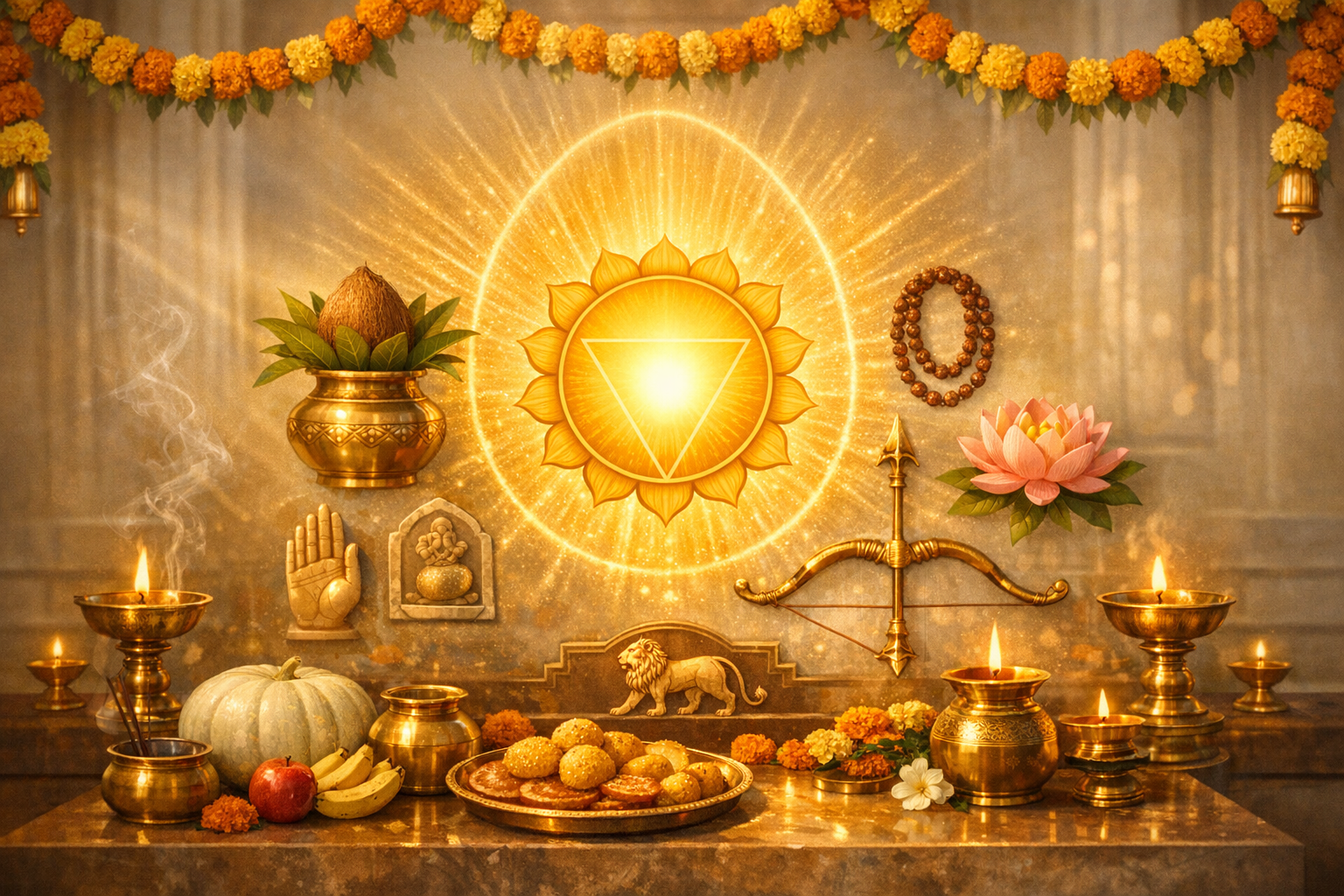
The name “Kuṣhmāṇḍā” is commonly parsed as ku (a little), uṣhmā (warmth), and anda (egg), symbolizing the subtle warmth that manifests the cosmic egg. Iconographically, Goddess Kushmanda is frequently depicted as Aṣṭabhujā (eight-armed), radiant like the sun, seated upon a lion, and bearing pot, rosary, bow, arrow, lotus, nectar, and a boon-bestowing gesture. Her association with solar brilliance links the observance to vitality, digestive fire (agni), and constructive resolve.
From a contemplative perspective, the day’s sādhanā emphasizes steadiness and luminous awareness at the solar plexus (maṇipūra) center. In allied dharmic idioms, this may be experienced as refinement of tejo-dhātu (the fire element) in Buddhist meditation, reinforcement of tapas and ahiṁsā-aligned purity in Jain practice through sattvic offerings that do not harm living beings, and deepening of nām-simran and seva in Sikh traditiontogether affirming a shared civilizational ethos of inner discipline and compassionate action.
The following ten practices synthesize classical puja-vidhi with practical guidance suitable for homes and community spaces, honoring regional diversity while preserving core intent.
1) Preparation and space purification: Clean the puja area, bathe, and wear simple, clean clothing. Light incense (dhūpa) and a steady lamp (dīpa). If a Kalasha was established on Day 1, continue its worship; otherwise, a simple lamp-centered altar is sufficient for Day 4.
2) Altar arrangement: Place an image or murti of Goddess Kushmanda (or a Navadurga form) on a clean cloth. Add fresh flowers, especially marigold or regionally preferred blooms. Keep water, sandal paste (gandha), kumkum, akshata (rice), fruits, and sweets ready. If available, keep ash gourd (white pumpkin) or pumpkin nearby to symbolize the day’s core offering.
3) Sankalpa (vow of intent): With joined palms, state name, family lineage (gotra, if known), place, date, and intenthealth, clarity, and welfare for all beings. This establishes the ethical frame of the observance.
4) Avahana and dhyana (invocation and meditation): Sit quietly and visualize a sun-like radiance pervading the heart and the altar space. Contemplate the Devi’s Ashtabhuja form, her fearless compassion, and sustaining warmth that nurtures the universe.
5) Panchopachara or Shodashopachara: Offer fragrant sandal paste (gandha), flowers (puṣpa), incense (dhūpa), flame (dīpa), and food (naivedya) in the fivefold method; or extend to the sixteenfold method if traditionally practiced at home. Each offering is made mindfully, with gratitude and a spirit of non-harm.
6) Mantra japa and stotra: A widely practiced mantra is “Om Devi Kushmandayai Namah” (ॐ देवी कूष्माण्डायै नमः). Repeating 108 times with a calm, attentive breath cadence is both accessible and potent. Many also recite the Navarna Mantra “Om Aim Hrim Klim Chamundayai Vicche” under guidance, and read selected passages from the Devi Mahatmyam (Durga Saptashati). The emphasis remains on steadiness rather than speed.
7) Bhog for Kushmanda: Traditional offerings include malpua, honeyed sweets, or preparations of ash gourd/pumpkin, reflecting the Devi’s nourishing aspect. Sattvic foodsfruits, milk-based sweets, or region-specific prasadaare appropriate. After offering, share prasada respectfully and avoid waste.
8) Surya arghya and breath discipline: Given the Devi’s solar association, many offer arghya (water) to the sun at sunrise, mentally aligning with clarity and warmth. Optional recitation of the Gayatri mantra or verses of Aditya Hridayam complements this focus. Gentle pranayama (e.g., anulom-vilom) may be included, adapted to one’s health condition.
9) Seva and dana: The day is especially suited for annadāna (food charity), support to women and children, and contributions to community kitchens and educational causes. This harmonizes with Sikh langar traditions, Buddhist and Jain compassion practices, and the Hindu ethic of loka-saṁgrahacollective uplift rooted in dignity and respect.
10) Aarti, circumambulation, and visarjana: Conclude with aarti, quiet circumambulation of the altar if space permits, and gratitude (kṛtajñatā). Offer closing prayers for the welfare of family, community, and all beings. If a separate avahana was performed for the day, perform respectful visarjana (ceremonial farewell) while maintaining the Kalasha for the remainder of Navratri.
Fasting and dietary guidance: Many observe a phalahar or sattvic fast on Day 4, including fruits, nuts, milk, and light vegetarian preparations without onion and garlic. Hydration is essential. Those with medical conditions, children, older adults, and expectant or nursing mothers should adapt or refrain from fasting, prioritizing health while maintaining the spirit of worship and kindness.
Puja colors and regional variations: Traditions vary on the color for Day 4 (often orange or green in some lineages). Local sampradāya guidance takes precedence. Practices such as Kumari/Kanya Puja are commonly performed on Ashtami or Navami in many regions; if a community observes earlier, Day 4 can include simple blessings for young children and elders, emphasizing respect and care.
Textual anchors and study: Devotees often read a chapter of the Devi Mahatmyam daily through Navratri. Complementary study may include short passages from the Upanishads on the inner light, or reflections from Jain, Buddhist, and Sikh teachings on inner discipline, compassion, and sevabuilding a shared dharmic vocabulary for ethical living.
Symbolism and contemplative focus: The “cosmic egg” imagery invites meditation on emergence from subtle warmth to manifest order, mirroring how patient effort yields tangible well-being. Practitioners may journal insights, focusing on qualities such as clarity, kindness, and perseverance that can be implemented in daily duties (dharma) at home and work.
Sustainability and safety: Use natural, biodegradable items where possible, minimize single-use plastics, and distribute excess prasada mindfully. Candles and lamps should be placed on stable, heat-safe surfaces away from fabrics and reach of children and pets. Clean the altar area respectfully after puja.
Frequently asked considerations: If unable to perform the full vidhi, a simple offering of flowers, water, and the mantra “Om Devi Kushmandayai Namah” with a sincere sankalpa remains fully meaningful. Those traveling or living in shared spaces can adapt with a small, clean cloth, a picture of the Devi, and a single diya. The integrity of intention is paramount.
Summary insight: Day 4 of Navratri, dedicated to Goddess Kushmanda, integrates disciplined worship with inner steadiness and outward compassion. Honoring the Devi’s radiant warmth through thoughtful puja, balanced fasting, mantra japa, solar contemplation, and community-minded seva advances personal resilience and social harmony, aligning with the unifying dharmic ethos shared across Hindu, Buddhist, Jain, and Sikh traditions.
Inspired by this post on Hindu Pad.