
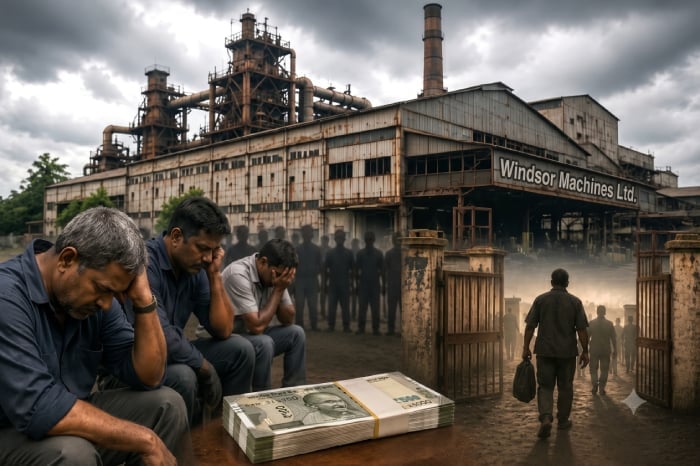
The long-pending dues case of Windsor Machines workers from Thane has entered a more visible public forum after the intervention of Surajya Abhiyan and the subsequent action of BJP Member of Legislative Council Pramod Jathar. According to the available report, the matter concerns workers whose claims have remained unresolved for nearly 25 years, making it not merely an industrial dispute but a serious test of governance, labour justice, and institutional responsiveness in Maharashtra.
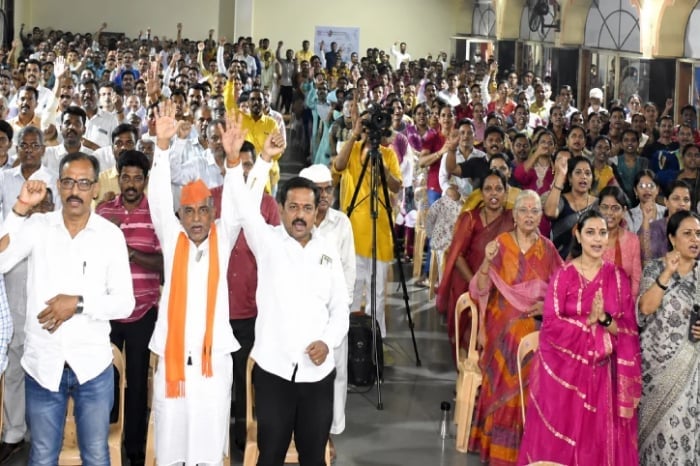
In the Maharashtra Legislative Council, Pramod Jathar raised the issue of the pending dues linked to Windsor Machines workers, bringing attention to a case that had reportedly remained unresolved for a generation. The significance of this intervention lies in the fact that legislative platforms are designed not only to debate policy but also to compel administrative attention when citizens, workers, or communities face prolonged neglect.

Presiding Officer Sanjay Khodke’s direction for immediate government action gives the matter an added institutional weight. Such directions do not automatically settle the dispute, but they can create an official pathway for review, departmental response, and administrative follow-up. In a case that has stretched across decades, even the act of placing the issue formally before the government can become an important procedural turning point.
The Windsor Machines case is important because wage and dues disputes affect more than balance sheets. Behind every delayed payment is a household that may have adjusted its education plans, medical needs, debt obligations, and retirement security around money that workers believed was rightfully owed. A 25-year delay can transform a labour claim into a story of intergenerational hardship, where the cost is carried by families as much as by individual employees.
From a labour market perspective, the matter illustrates the central importance of enforceable accountability. Workers participate in industry with the expectation that wages, benefits, settlements, and legally due payments will not be trapped indefinitely in procedural delay. When such cases remain unresolved, trust in formal employment systems weakens, and the moral authority of labour protections is diminished.

Surajya Abhiyan’s role in bringing attention to the issue reflects the wider function of civic advocacy in a democratic system. Civil society interventions often become necessary when affected groups lack the institutional access, legal resources, or political visibility required to move a matter forward. In such cases, advocacy serves as a bridge between citizens and the machinery of government.

The involvement of an elected representative is also significant. By raising the issue in the Legislative Council, Pramod Jathar moved the matter from private grievance and administrative correspondence into the arena of public accountability. Legislative attention can require departments to clarify the present status of a case, identify responsible authorities, and indicate whether legal or administrative remedies remain available.
Cases of pending dues require careful handling because they may involve employment records, company proceedings, settlement terms, labour department orders, court matters, insolvency-related complications, or statutory obligations. Without access to the full case file, no final conclusion can be drawn about liability or the precise amount involved. However, the reported fact that the matter has remained pending for 25 years is itself sufficient to justify urgent review.

The Maharashtra Government’s response will be important because administrative follow-through determines whether legislative concern becomes practical relief. A meaningful response would require identifying the competent department, reviewing available records, determining the current legal position, and communicating clearly with the affected workers or their representatives. Transparency is essential in a matter where delay has already created a deficit of confidence.
The case also raises a broader question about how industrial disputes are preserved, tracked, and resolved over time. Workers’ claims should not depend solely on personal persistence across decades. A robust governance system must be capable of maintaining records, monitoring compliance, and ensuring that unresolved labour matters do not disappear from institutional memory.
For Maharashtra, a state with a deep industrial history, such cases carry symbolic importance. Thane and the surrounding region have long been connected with manufacturing, engineering, and organised labour. When workers from an industrial establishment seek dues after decades, the issue speaks to the relationship between economic development and justice for those who contributed to that development.
The human dimension remains central. Many workers who began such a struggle decades ago may now be elderly, retired, financially constrained, or dependent on family members. Some families may have lived with uncertainty for years, waiting for a matter that should have been resolved through timely institutional action. Delayed justice in labour matters is not an abstract administrative failure; it directly affects dignity, security, and social trust.
In ethical terms, the issue connects with the principle that governance must protect the vulnerable when procedural delay becomes a form of hardship. A society committed to fairness cannot treat workers’ claims as disposable simply because time has passed. The longer a matter remains unresolved, the stronger the obligation becomes to examine it with seriousness and compassion.
The intervention also demonstrates how democratic institutions can still provide openings for long-neglected issues. When civic organisations, elected representatives, and legislative authorities act in sequence, a stalled matter can regain public visibility. This does not replace legal process, but it can ensure that legal and administrative processes are not left dormant.
The next stage will depend on the government’s action following the direction issued in the Council. The affected workers will need clarity, timelines, and a credible mechanism for resolution. If the case is handled with seriousness, it can become an example of how Maharashtra’s institutions respond when labour grievances are brought back into public focus after years of delay.
Ultimately, the Windsor Machines matter is about more than one company or one group of workers. It is about the credibility of labour protections, the responsiveness of government, and the responsibility of public institutions to ensure that citizens are not forced to spend a lifetime waiting for dues connected to their work. Surajya Abhiyan’s intervention and Pramod Jathar’s action in the Legislative Council have reopened an issue that now requires timely, transparent, and humane resolution.
Inspired by this post on Hindu Jagruti Samiti.
