
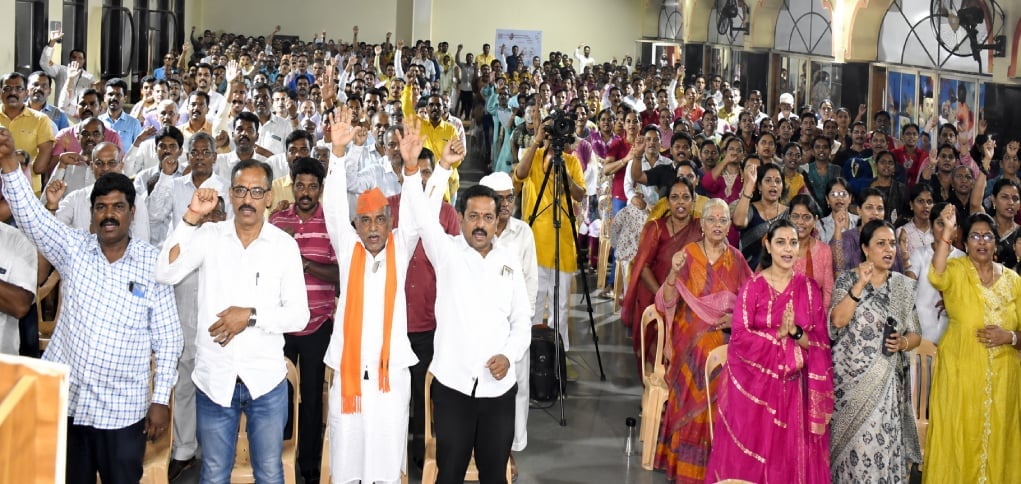
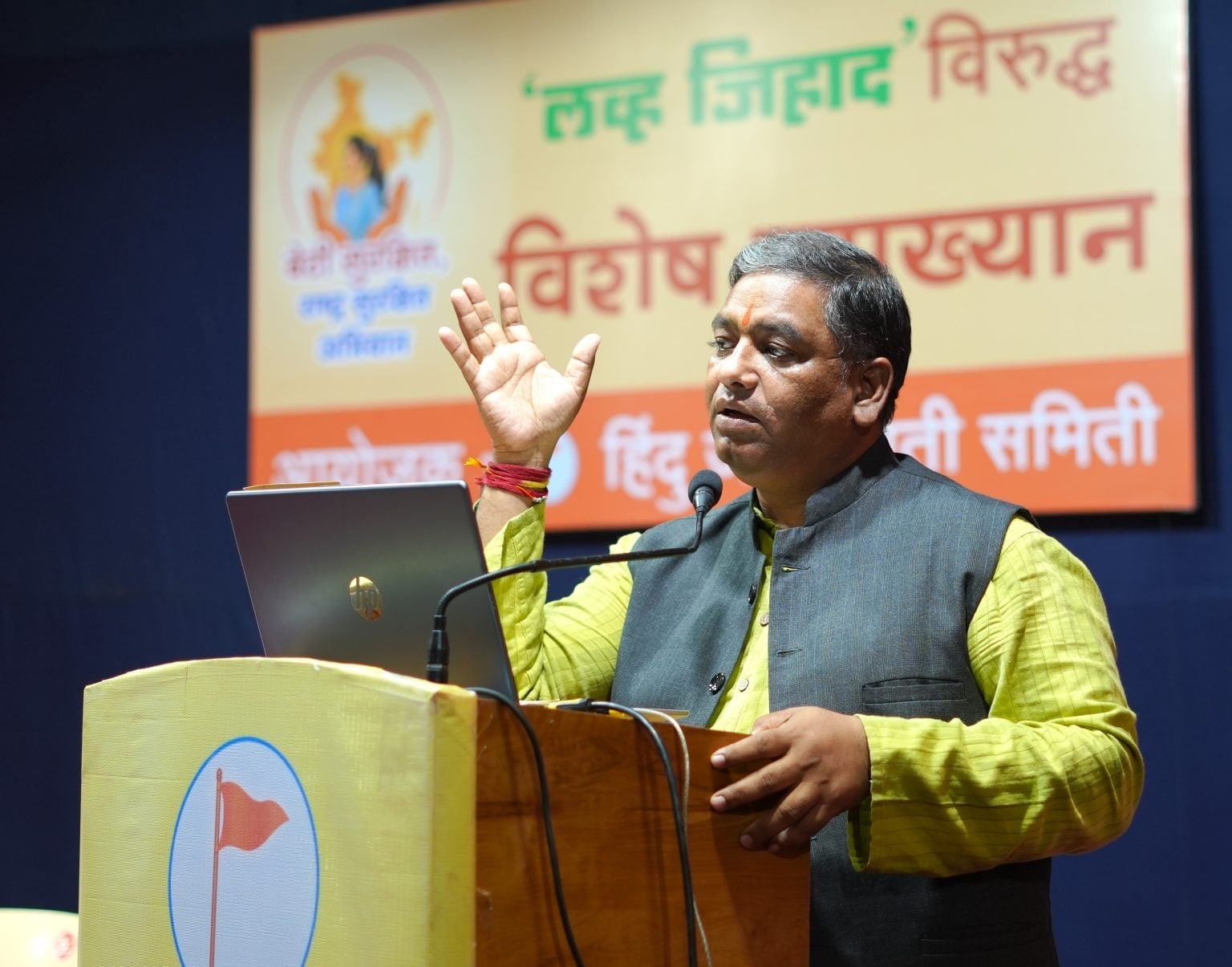
More than 600 participants gathered in Ichalkaranji for an awareness programme organised around the theme of community vigilance, family responsibility, and the protection of young women. The gathering, associated with the Hindu Janajagruti Samiti (HJS), concluded with participants resolving to support the ‘Beti Surakshit, Rashtra Surakshit’ campaign and to strengthen social awareness against what organisers described as the threat of love jihad.
The reported participation of over 600 people is significant not only as a local community event, but also as an indicator of how anxieties around safety, identity, conversion, and interfaith relationships are being discussed in contemporary Indian society. In towns such as Ichalkaranji, where family networks, educational institutions, religious associations, and local civic bodies remain closely connected, such meetings often become spaces where social concerns are translated into collective pledges and community action.
The phrase love jihad is a politically and socially contested term in India. It is used by some Hindu organisations to describe alleged cases in which romantic relationships are believed to involve deception, coercion, or pressure for religious conversion. At the same time, any serious discussion of the subject requires careful distinction between coercion, fraud, exploitation, and lawful adult choice. Academic and factual treatment demands that concerns about safety be addressed without encouraging prejudice against any religious community or undermining the dignity of consenting adults.
That distinction is central to responsible public discourse. The protection of women cannot be reduced to suspicion, surveillance, or communal hostility. It must be grounded in consent, legal literacy, emotional resilience, digital awareness, family communication, and access to institutional support. A society that values dharma must protect vulnerable individuals while also preserving fairness, due process, and respect for human dignity.
The Ichalkaranji programme appears to have placed particular emphasis on vigilance and parental engagement. This emphasis reflects a broader concern in many Indian families: young people increasingly build friendships, relationships, and social identities through schools, colleges, workplaces, social media platforms, and private digital channels. Parents often feel that they are expected to guide their children through complex emotional and technological environments for which older social customs did not fully prepare them.

Parental engagement, however, is most effective when it is based on trust rather than fear. The strongest families are not those that merely impose rules, but those that create conditions in which daughters and sons can speak honestly about friendship, attraction, pressure, manipulation, confusion, and distress. In practical terms, vigilance should mean attentive listening, emotional availability, awareness of behavioural changes, and the willingness to seek help before a situation turns harmful.

The campaign phrase ‘Beti Surakshit, Rashtra Surakshit’ carries a direct social message: the safety of daughters is linked to the safety of the nation. In Indian civilisational thought, this idea resonates with the broader dharmic responsibility to protect dignity, family stability, and social harmony. Yet the phrase also needs a contemporary interpretation. A safe daughter is not merely a guarded daughter; she is an educated, confident, legally aware, financially capable, and emotionally supported individual.

WomenEmpowerment must therefore remain at the centre of any such campaign. Safety cannot be treated only as a defensive posture. It must include self-confidence, critical thinking, knowledge of rights, awareness of coercive behaviour, and the ability to recognise manipulation in personal relationships. This is especially important in the digital age, where grooming, blackmail, impersonation, emotional dependency, and social isolation can occur across religious, caste, linguistic, and regional boundaries.
A technically sound awareness programme on this subject should address several layers of risk. The first layer is emotional manipulation, where a young person may be isolated from family and friends through excessive secrecy or dependency. The second is identity deception, where important facts about age, marital status, background, intention, or religious commitment may be concealed. The third is coercion, which may include threats, pressure, blackmail, or forced conversion. The fourth is institutional response, including police procedures, counselling, legal aid, and community support.

Such a framework is more useful than broad suspicion because it focuses on behaviour rather than identity. Harmful conduct must be identified by evidence: deception, intimidation, exploitation, confinement, financial control, sexual coercion, or pressure to abandon one’s family, faith, or personal autonomy. This approach protects young women without turning ordinary social interaction into a field of communal accusation.
Religious conversion is a sensitive subject in India because it touches constitutional freedom, family continuity, civilisational identity, and individual conscience. Hindu, Buddhist, Jain, and Sikh traditions have historically placed high value on inner conviction, ethical conduct, and disciplined self-understanding. From this perspective, any change of religious identity should arise from informed conviction, not fear, inducement, fraud, emotional coercion, or social pressure.

At the same time, dharmic unity requires a careful tone. A campaign that seeks to protect Hindu society should not become a campaign of hatred. The objective should be clarity, courage, and lawful protection, not hostility toward neighbours. The shared dharmic principles of ahimsa, satya, self-discipline, and responsibility offer a stronger foundation than reactive anger. They remind communities that truth must be defended without abandoning fairness.
Interfaith marriage is another area where precision matters. Adult citizens have legal rights in matters of marriage, faith, and personal choice. However, consent becomes morally and legally compromised when a relationship involves deception, coercion, concealment, forced conversion, or threats. Public awareness should therefore teach families how to distinguish between a lawful relationship they may not personally prefer and a harmful situation that requires intervention.
The role of community organisations such as HJS is often framed around cultural preservation, Hindu identity, and social mobilisation. In events like the Ichalkaranji lecture, the stated goal is to awaken collective responsibility. The more constructive form of such mobilisation is one that encourages legal awareness, counselling networks, women’s support systems, documentation of genuine grievances, and cooperation with lawful authorities where there is credible evidence of abuse.
Community vigilance also requires safeguards against misinformation. Rumours can spread quickly, especially when emotionally charged subjects are discussed in public meetings or on social media. A responsible community response should verify facts, avoid naming individuals without due process, protect the privacy of women involved, and prevent local tensions from escalating. The dignity and safety of the affected person must remain more important than public spectacle.
In Maharashtra, social reform traditions have long included debates on family ethics, women’s education, religious identity, and community responsibility. Ichalkaranji’s participation in such a programme belongs to this wider public culture of meetings, pledges, lectures, and local organisation. The format may be contemporary, but the underlying question is old: how does society protect its young while allowing them to grow into responsible adults?
The answer cannot be supplied by fear alone. It requires education at home, ethical instruction in community spaces, legal literacy in schools and colleges, and open communication between generations. Young people need to understand not only the dangers of coercion, but also the meaning of commitment, trust, responsibility, and personal boundaries. Parents need to understand that silence, shame, and excessive control can push problems underground rather than solve them.
A mature awareness campaign should also include boys and young men. Women’s safety is not only a women’s issue. It depends on cultivating restraint, respect, and accountability among men. Dharmic traditions repeatedly emphasise self-control, duty, and reverence for the dignity of others. When these values are taught seriously, protection becomes more than a slogan; it becomes a culture of disciplined conduct.
The emotional force of the Ichalkaranji gathering lies in the image of hundreds of people taking a collective pledge. Such pledges matter when they lead to concrete, ethical, and lawful action. They matter when families become more attentive, when young women feel more supported, when communities create safe channels for help, and when social concerns are addressed without demonising entire communities.
The most constructive reading of the event is therefore not merely that over 600 Hindus gathered against a perceived threat. It is that a large local community publicly affirmed the importance of vigilance, family responsibility, women’s safety, and cultural continuity. These goals can be pursued most effectively when rooted in evidence, compassion, legal awareness, and dharmic self-restraint.
For Hindu society and the wider family of dharmic traditions, the challenge is to protect without hardening into prejudice, to educate without humiliating, and to organise without abandoning fairness. The pledge at Ichalkaranji will be most meaningful if it strengthens families, empowers daughters, guides youth, and builds a society where safety and dignity advance together.
Inspired by this post on Hindu Jagruti Samiti.







Leave a Reply
You must be logged in to post a comment.