Chaitra Navratri (also known as Chait Navratras or Vasant Navratri) is the spring observance of nine sacred nights dedicated to Devi. In 2026, Chaitra Navratri is observed from March 19 to March 27, commencing on Chaitra Shukla Pratipada and culminating on Sri Rama Navami, the ninth lunar day. These dates align the festival with the onset of the traditional new year for many regions of India and signal a wider seasonal renewal across the dharmic world.
Chaitra Navratri is set by the Hindu lunisolar calendar and follows lunar tithis rather than the civil day. The festival spans the bright fortnight (Shukla Paksha) of the Chaitra month from Pratipada to Navami. Because tithis begin and end at varying times in each location, precise observanceespecially for Kalash Sthapana (Ghatasthapana)is determined by the local Panchang. While the Gregorian dates in 2026 are March 19–27 for most of the world, local sunrise, tithi prevalence, and muhurta rules guide exact ritual timing.
The spring cycle of Navratri emphasizes rebirth, clarity, and collective well-being. It coincides closely with agrarian cycles and the vernal equinox, and it interlaces with regional new year celebrations such as Gudi Padwa and Ugadi. The devotional focus is twofold: the nine forms of Shakti (Navadurga) during the first eight days and the maryada-centered remembrance of Sri Rama on the ninth.
Ghatasthapana (Kalash Sthapana) marks the beginning of the vrata and is traditionally performed during the first one-third of the day when Chaitra Shukla Pratipada prevails. If Pratipada is not present during the first one-third, Abhijit muhurta on the same day is accepted. Standard almanac guidance advises avoiding Ghatasthapana during Vaidhriti and Vyatipata yogas and, where possible, when Chitra nakshatra prevails. If Pratipada straddles two civil days, the day on which Pratipada is present at local sunrise is preferred. These rules preserve the ritual’s auspicious alignment with the lunar energy of inception.
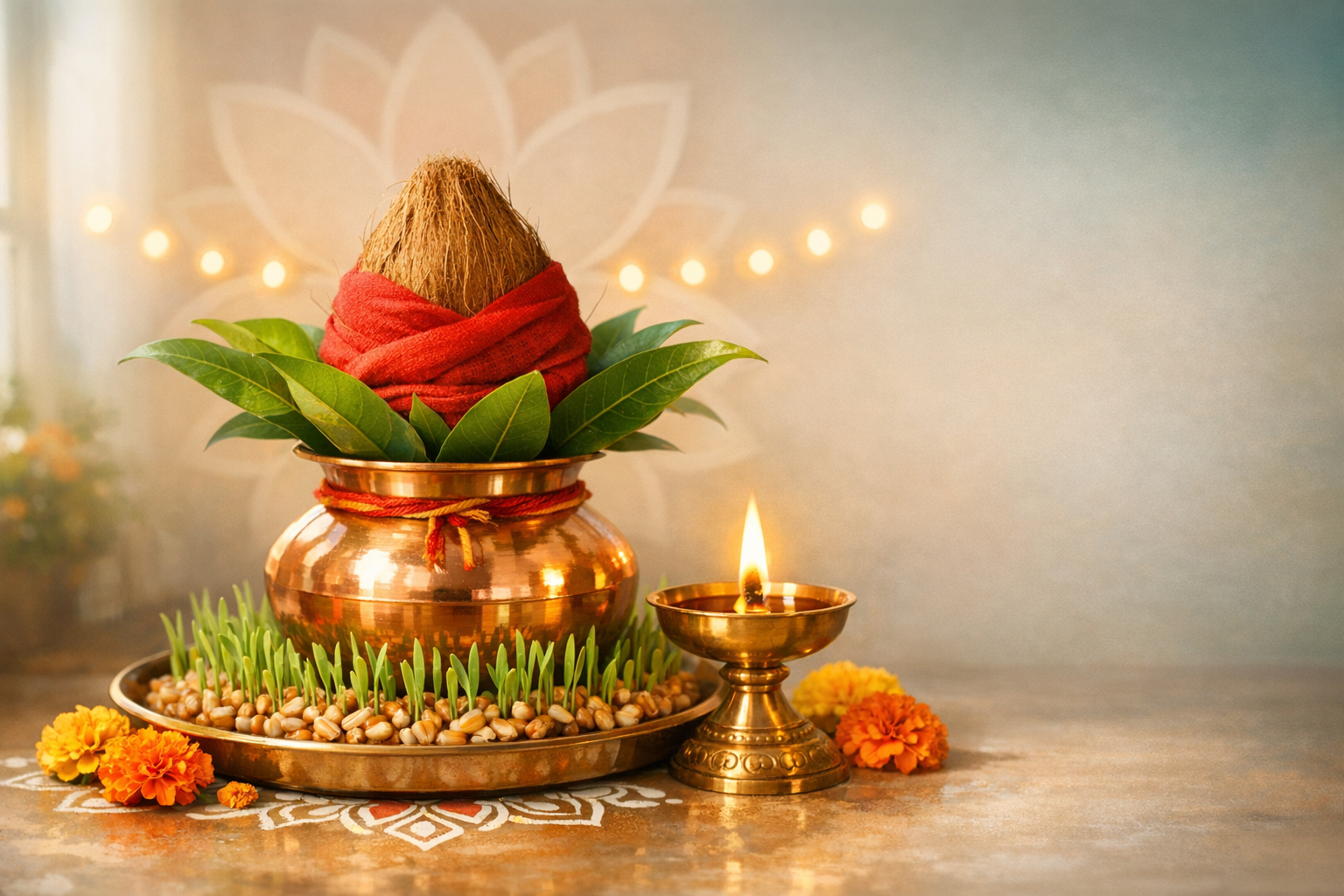
Kalash Sthapana typically uses a sanctified vessel (kalash) filled with clean water, aromatic leaves, and grains, topped with mango leaves and a coconut wrapped in red cloth, placed on a bed of fertile soil or barley (jau) to sprout as nine-night seedlings (khetri). An akhand jyot (unbroken lamp flame) is maintained in many homes and temples as a symbol of unwavering devotion and inner illumination throughout the vrata.
The Navadurga sequence draws practitioners through a graded ascent of qualities. Across the nine days, the devotional focus generally proceeds as follows: Day 1Shailaputri (foundations, steadiness); Day 2Brahmācharini (austerity, study); Day 3Chandraghanta (courage, serenity); Day 4Kushmanda (creative radiance); Day 5Skandamata (nurturance, protection); Day 6Katyayani (resolve, righteous strength); Day 7Kalaratri (fearlessness, dissolution of obstacles); Day 8Mahagauri (purity, grace); Day 9Siddhidatri (fulfillment, integrative wisdom). While daily alankaras and mantras vary by sampradaya, the shared intent is the cultivation of sattva and the transmutation of inner limitations.
Daily sadhana commonly includes alankara darshan, recitation of Devī stotras (for example, Ya Devi Sarvabhuteshu), homa or simple agarbatti offerings, and meditative repetition of beej mantras specific to each form of Devi. In household practice, children and elders often participate together, preserving transmission of ritual knowledge, melodies, and stories that anchor cultural memory in lived experience.
Fasting disciplines (vrata) during Chait Navratras vary, ranging from nirjala (waterless) for advanced practitioners to phalahara (fruits and dairy), saatvik one-meal (ek-bhojan), or partial fasts accommodating work and health needs. Common dietary guidelines emphasize fresh, saatvik foods while avoiding meat, alcohol, onion, and garlic. Those with medical conditionssuch as diabetes, pregnancy, or chronic illnessare encouraged to adhere to physician-guided adaptations so that well-being and devotion remain in harmony.
Ashtami and Navami are traditionally focal points for intensified worship. Many households and temples observe Sandhi Puja at the juncture of Ashtami and Navamian auspicious window that venerates Devi’s transformative energy passing from fierce obstacle-removal to serene fulfillment. Kanya Pujan, honoring living embodiments of the Goddess in young girls, is widely performed on Ashtami or Navami, underscoring a civilizational ethic of reverence, care, and protection.
Sri Rama Navami on March 27, 2026, marks the culmination of Chaitra Navratri. The day is observed with Ramayana parayana, bhajans, and ceremonial festivities that highlight maryada (ethical conduct), sarvajan hita (common good), and rajadharma (just leadership). In several regions, ceremonial kalyanotsava (divine wedding) traditions are observed, while temples associated with Sri Rama become centers of collective celebration and community service.
While Sharad Navratri in Ashwin is the larger pan-Indian observance, Chaitra Navratri carries distinct regional signatures. In Maharashtra and Goa, Gudi Padwa near Chaitra Shukla Pratipada proclaims the new year with a gudi (victory standard) rising at doorways. In Andhra Pradesh, Telangana, and Karnataka, Ugadi welcomes a new year with festive foods such as neem-mango pachadi that symbolically integrates life’s diverse rasas. In Bengal and adjoining regions, Basanti Durga Puja reflects a springtime Shakti emphasis. Across North India, home altars sprout barley seedlings as living signs of prosperity and good harvests.
Chaitra Navratri also resonates with a broader dharmic calendar. Jain communities observe the spirit of tapas through Ayambil Oli and Siddhachakra worship in the Chaitra period, emphasizing ahimsa, anuvrat, and inner purification that complement Navratri’s ideals of restraint and devotion. Sikh traditions in the same season host Hola Mohallacombining shastra and shastra (martial discipline and scripture) in a festival of courage and sevawhile honoring the Divine beyond form. In Buddhist communities, the spring arc leading toward Theravada new year is often marked by intensified metta (loving-kindness) and dana (generosity), echoing Navratri’s ethical focus on compassion and balance. Seen together, these observances highlight unity-in-diversity across Hinduism, Buddhism, Jainism, and Sikhism.
The 2026 cycle aligns with the start of Vikram Samvat 2083 on Chaitra Shukla Pratipada (March 19 for most locations), while the Saka year transitions to 1948 around March 22 according to the official Indian civil calendar. The proximity of the vernal equinox (around March 20) further accentuates the festival’s symbolism of equilibrium: light and dark meeting in balance as devotees seek inner poise.
For householders, a practical approach includes preparing a clean, serene puja space; organizing required items for Kalash Sthapana; arranging availability for morning or Abhijit muhurta rituals on March 19, 2026; planning balanced, saatvik meals for those fasting; and mapping daily recitations so that family members of all ages can participate meaningfully. Many families also set aside time for sevafood donation, tree planting, or community supportextending the merit of worship into tangible well-being for others.
Temple pilgrimages during Chaitra Navratri often include Shakti Peethas and sacred Devi shrines, as well as Vaishnava centers in view of Rama Navami. Sites such as Vaishno Devi in the north, the Shakti circuits of Gujarat and Bengal, and Sri Rama temples across the Deccan become vibrant with processions, alankaras, and community kitchens. In the south and east, Basanti and Vaishnava celebrations run in parallel, offering rich opportunities for intercultural learning and shared devotion.
The diaspora frequently adapts Navratri to local conditionsshorter weekday pujas, weekend satsangs, or digital darshanswhile striving to preserve core principles: purity, compassion, non-harm, and communal solidarity. This flexibility reflects a long-standing dharmic instinct to uphold essential meanings over rigid form, ensuring that devotion remains accessible and inclusive.
Key reference for 2026: Chaitra Navratri runs from March 19 (Chaitra Shukla Pratipada; Ghatasthapana) to March 27 (Sri Rama Navami). Exact muhurta windows depend on local sunrise and Panchang parameters; practitioners are advised to consult a trusted regional almanac or temple priest for precise timings, especially in places far from the Indian Standard Time zone.
Beyond dates and ritual sequences, Chaitra Navratri offers a living pedagogy of inner work: establishing a clean foundation (Shailaputri), refining focus through study and restraint (Brahmācharini), cultivating brave composure (Chandraghanta), awakening creative joy (Kushmanda), nurturing protective care (Skandamata), standing firm in dharma (Katyayani), dissolving fears (Kalaratri), embodying grace (Mahagauri), and integrating wisdom into daily life (Siddhidatri). In 2026, these nine nights invite families, communities, and all dharmic traditions to meet in shared reverencecelebrating the Divine in ways that honor both unity and the richness of diverse paths.
Inspired by this post on Hindu Pad.