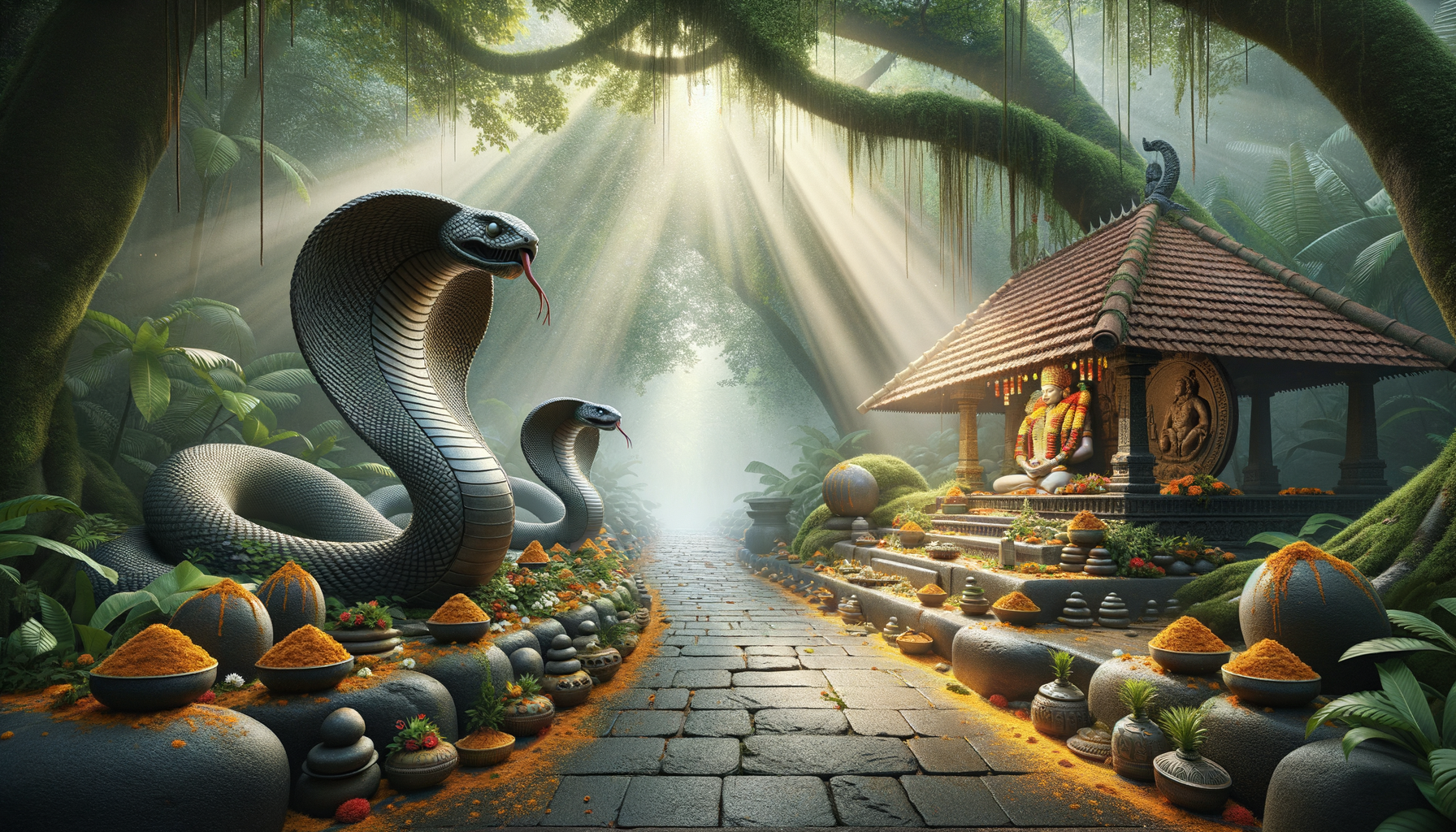
Mannarasala Nagaraja Temple in Kerala is celebrated in regional tradition as the place where Parashurama’s penance met the grace of the serpent king, transforming reclaimed, barren coastline into a life-giving landscape. Set within a sacred grove near Haripad in Alappuzha district, the temple preserves a living memory of Treta Yuga, when Parashurama, the sixth avatar of Vishnu, sought the aid of the Naga deities to sanctify and fertilize the new land.
According to Kerala’s sacred lore, Parashurama reclaimed the western coast from the sea and then performed intense tapas to cool the saline earth and make it arable. Answering this penance, the serpent kingoften identified with Vasukiblessed the soil, ensuring fertility and ecological balance. Mannarasala emerged as a sanctified grove where Sree Nagaraja and Sarpayakshi (Nagayakshi) are venerated, symbolizing the covenant between human stewardship and the regenerative powers of nature.
The temple’s sacred topography functions as both shrine and sanctuary. Thousands of serpent stones line shaded pathways, weaving a contemplative route through the grove. Within the main sanctum, devotion centers on Nagaraja, while the wider precincts embody an ethos of ecological reverence that has long characterized serpent worship in Kerala. The distinctive custodianship of the temple by the Valia Ammarevered as a matriarchal spiritual guideunderscores continuity, compassion, and disciplined service.
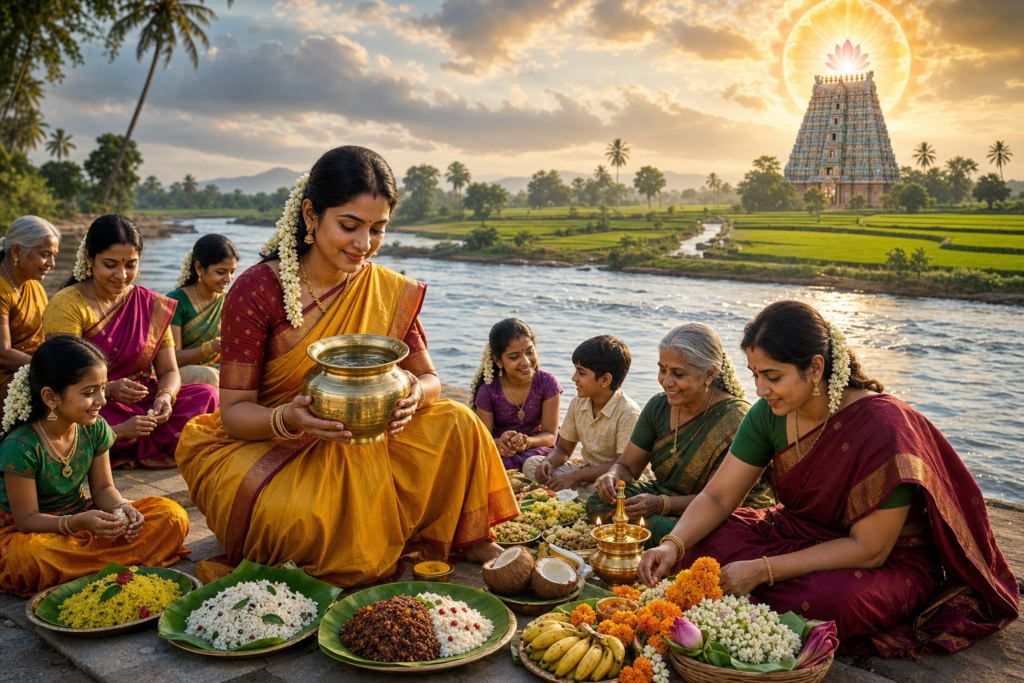
Ritual life at Mannarasala reaches its most evocative expression during the Ayilyam festival in the Malayalam month of Kanni (September–October). Processions through the grove, abhishekas, and offerings of turmeric paste create an atmosphere of sanctity anchored in ancient practice. Devotees seek blessings for fertility, health, and household harmony, reflecting the temple’s enduring association with the renewal of life and the protection of all beings that dwell in the ecosystem.
Visitors often report a palpable hush beneath the green canopy, where sandalwood and turmeric mingle with the quiet rustle of leaves. Families return across generations to fulfill vows, and pilgrims describe the grove as a rare confluence of sacred presence and natural serenity. The experience fosters reflection on how discipline (tapas), humility, and gratitude can turn inner barrenness into plenitudejust as Parashurama’s penance and the serpent king’s compassion transformed Kerala’s soil.
The symbolism resonates across dharmic traditions. In Hinduism, Buddhism, Jainism, and Sikhism, there is a shared reverence for life, restraint, and right relationship with nature. The serpent, read as wisdom, renewal, and latent energy, becomes a unifying emblem of ecological ethics and spiritual awakening. Mannarasala thus serves as a cultural and spiritual bridge, affirming unity in diversity and the sanctity of creation.
While the legend is set in Treta Yuga, the architectural layers visible today likely accrued over later centuries, as is common with Kerala temples. Epigraphic certainty is secondary, however, to the continuity of practice. As a living institution, Mannarasala Nagaraja Temple integrates regional memory, ritual knowledge, and conservation-minded stewardship, offering a model of how sacred groves safeguard biodiversity while sustaining devotional traditions.
Mannarasala stands as a testament to transformationof land, community, and consciousness. It preserves a Kerala temple heritage where Parashurama’s austerity and the serpent king’s benevolence are not distant myths but living principles: care for the earth, protection of all beings, and the recognition that spiritual discipline and ecological harmony can make even barren ground bloom.
Inspired by this post on Hindu Blog.