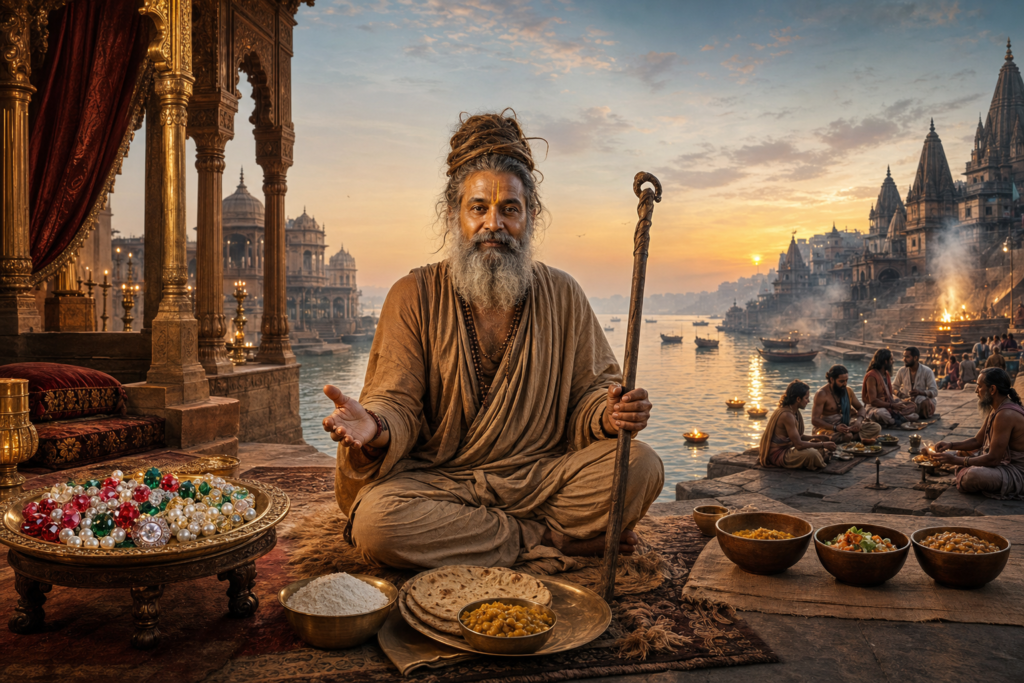
Vishwakarma, revered across Hindu scriptures as the celestial architect and divine craftsman (Devashilpi), occupies a distinctive place in the sacred imagination. Described as the son of Prabhasa (one of the eight Vasus) and Yogasiddha, sister of Jupiter (Brihaspati), he appears in the Rigveda and later Puranic literature as the master builder who gives form to cosmic order, sacred cities, temples, and divine weapons.
Across the broader dharmic tapestryHinduism, Buddhism, Jainism, and Sikhismsacred craftsmanship is honored as a pathway to the divine. The figure of Vishwakarma harmonizes with this shared ethos: skill, discipline, and beauty are viewed not merely as technique but as dharma in action, a reminder that art and architecture can nurture unity, ethical living, and spiritual insight.
Vedic references present Visvakarman as a universal shaper, the intelligence behind structure and symmetry in the cosmos. In Puranic narratives, this archetype is localized into a master artisan whose creations uphold the devas and their realms. The city of Amaravati, Indra’s opulent abode, and other celestial palaces are frequently attributed to his craft, emblematic of order, protection, and prosperity within Hindu cosmology.
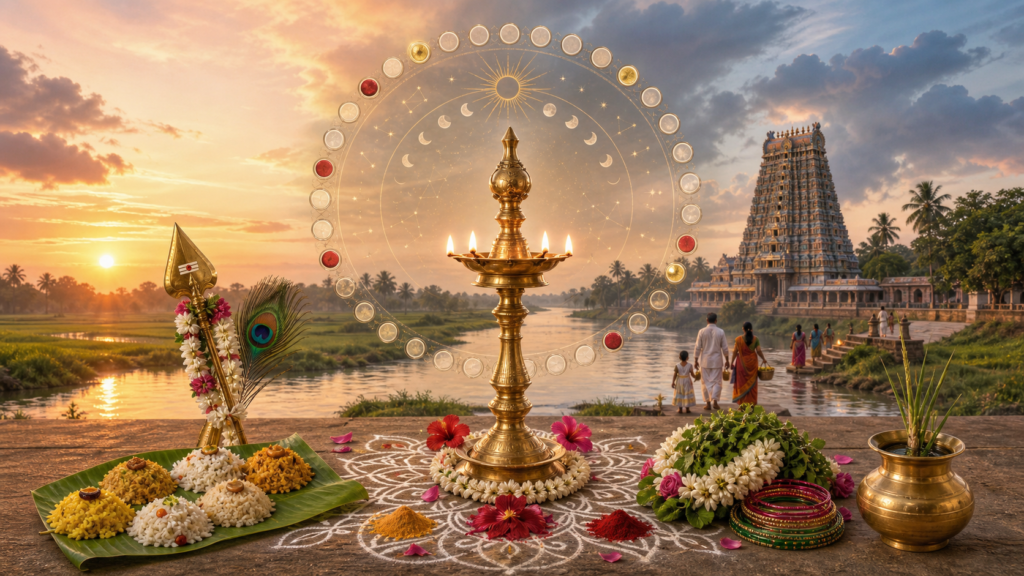
Puranic accounts also credit Vishwakarma with forging divine weapons that embody dharma’s protective force. The Vajra of Indrafashioned, according to tradition, from the bones of the sage Dadhichistands as a foremost example. Various regional and textual traditions further attribute to him the Sudarshana Chakra of Vishnu and the Trishula of Shiva, underscoring a pan-Indic memory of a master smith whose creations balance might with moral restraint.
Legendary cities and vehicles are central to his portfolio. The golden Lanka is said to have been constructed by Vishwakarmaoften for Kubera or in connection with Shivabefore later coming under Ravana’s rule. The fortified maritime city of Dwaraka, associated with Sri Krishna, and the famed Pushpaka Vimana, linked to Kubera and later narratives of the Ramayana, further illustrate how his designs animate sacred geography and epic history.
Vishwakarma’s artistry extends to sacred icons and temple idioms. In the Jagannath tradition of Puri, a cherished legend recalls Vishwakarma carving the deities under a vow of seclusion, a narrative that highlights the sanctity of process, patience, and faith. More broadly, lineages of artisans invoke Vishwakarma as patron, aligning their work with Vastu and Shilpa principles while recognizing that technical treatises accrued across centuries through diverse schools and communities.
Symbolically, Vishwakarma embodies a theology of making: refinement of materials mirrors refinement of character, and symmetry in design reflects harmony in society. For many devotees and artisans, this connection is experientialcraft becomes sadhana, and the workshop a place of contemplation. Such a view resonates across dharmic traditions, where temples, stupas, basadis, and gurdwaras stand as living testaments to the unifying power of beauty, skill, and service.
In contemporary practice, Vishwakarma Jayanti brings communities together to honor tools, workplaces, and the dignity of labor. Households, workshops, and guilds often experience this observance as a moment of gratitude and renewalan affirmation that ethical work and collective well-being are intertwined. Comparable reverence for tools and service (seva) within Buddhist, Jain, and Sikh contexts underscores a shared civilizational insight: purposeful craftsmanship uplifts both maker and community.
Texts and regional retellings vary in details, reflecting the plurality intrinsic to Hindu scriptures and India’s cultural heritage. Names appear as Visvakarman or Vishwakarma; attributes and attributions differ by Purana, locality, and sacred lineage. Yet the throughline remains clear: Vishwakarma signifies creative intelligence harnessed for the goodan ethical imagination that shapes spaces, protects life, and invites reverence for knowledge and skilled endeavor.
Understood in this light, Vishwakarma is not only the builder of celestial realms but also a perennial guide for living traditions. His legacy invites societies to value artisanship, honor sustainable creation, and cultivate unity across dharmic pathswhere craft, culture, and contemplation converge to serve a higher common purpose.
Inspired by this post on Hindu Blog.