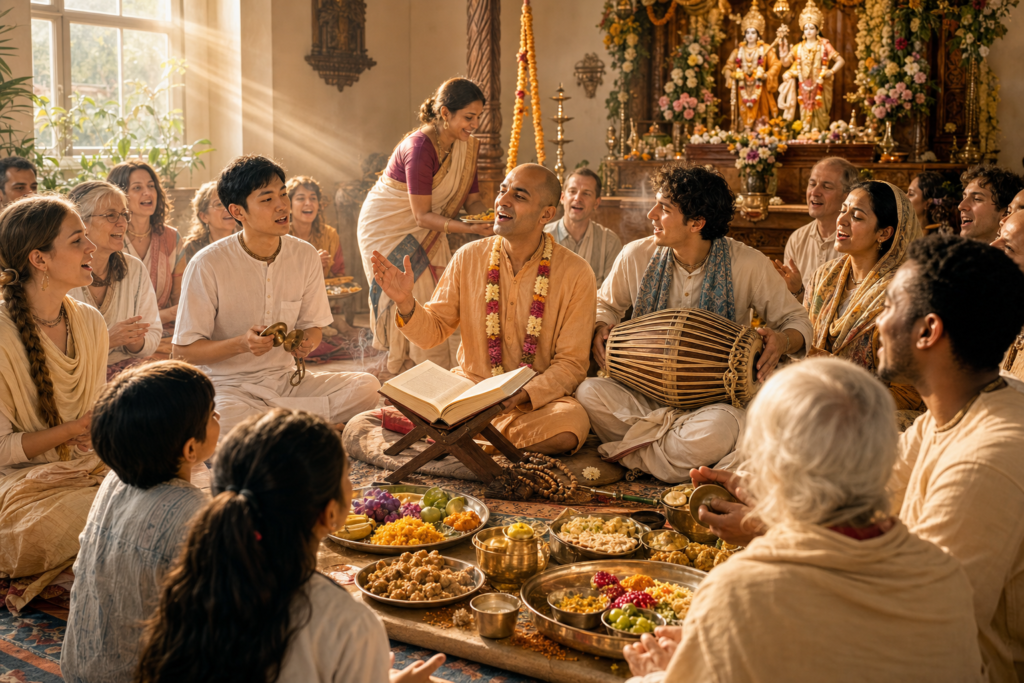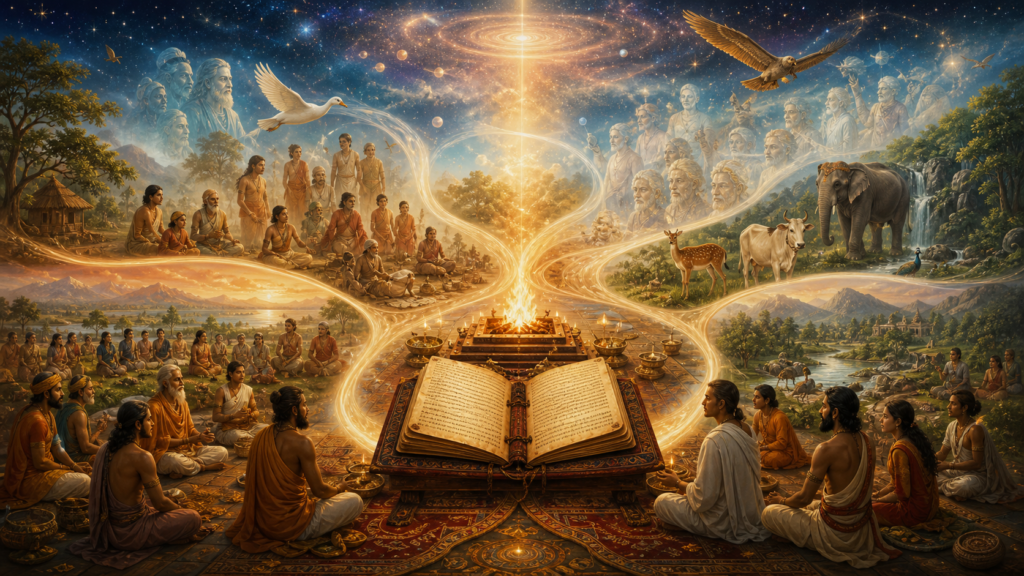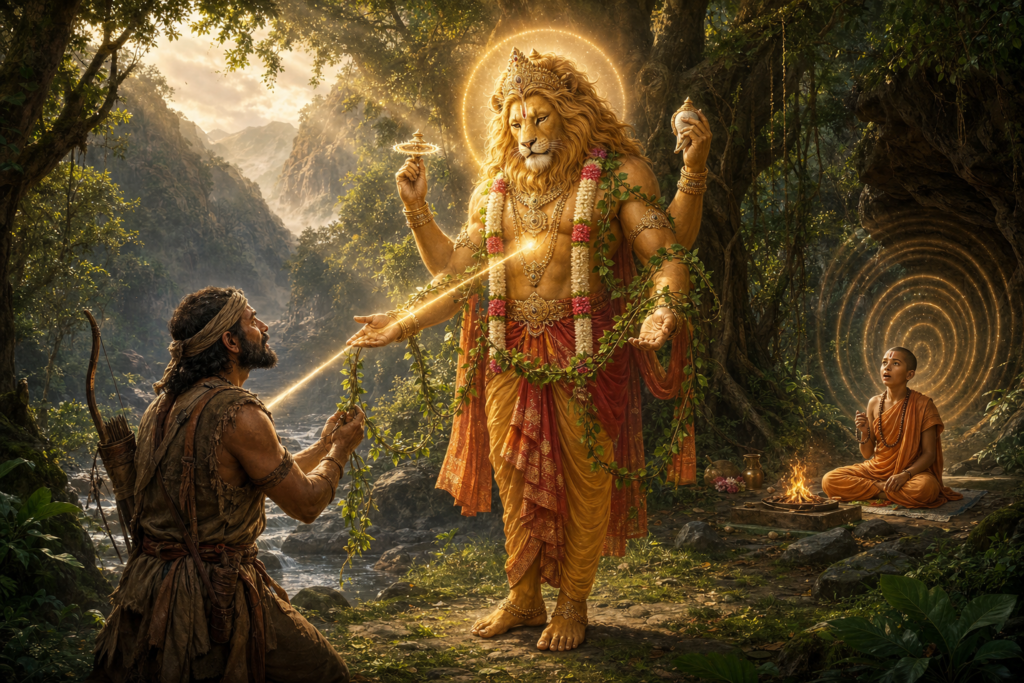
Vrndavana is presented in bhakti literature as a transcendental realm that remains perpetually spirituala sacred geography where ordinary material limitations do not apply. Celebrated as the sanctified home of divine love, it conveys themes of compassion, devotion, and higher consciousness that resonate across dharmic traditions, including Hinduism, Buddhism, Jainism, and Sikhism.
This spiritual land is populated by goddesses of fortune, known as gopis, each cherished in intimate devotion. In this depiction, Krsna is described as the sole beloved of the gopis, the central focus of their unwavering love. The narrative articulates a theology of divine reciprocitydevotees offer pure love and receive boundless graceclarifying why Vrndavana is revered as an ultimate spiritual ideal.
The landscape itself embodies abundance and fulfillment. Trees are kalpa-vrksa, wish-fulfilling beings from whom one can obtain all necessities. The earth is likened to touchstone, and the waters to nectar, expressing an atmosphere of effortless sufficiency. In this supreme abode, all speech is song, all walking is dancing, and the flute remains a constant companion, evoking the cadence of kirtan and the musicality of devotion that characterize Hindu spirituality.
Surabhi cows flood the land with milk, symbolizing nurturing plenitude and ethical abundance. Everything is self-luminousradiant as the sunsuggesting that consciousness here does not depend on external illumination. As every moment unfolds in loving service to Krsna (Krishna), time loses its conventional sequence; there is no binding sense of past, present, or future, only the ever-present completeness of bhakti.
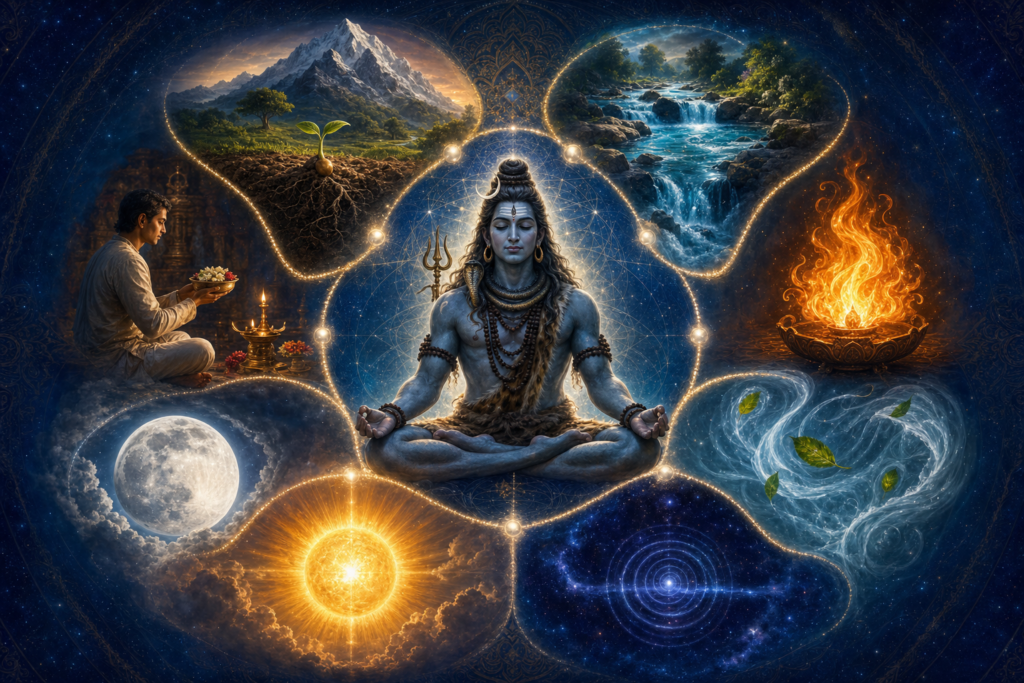
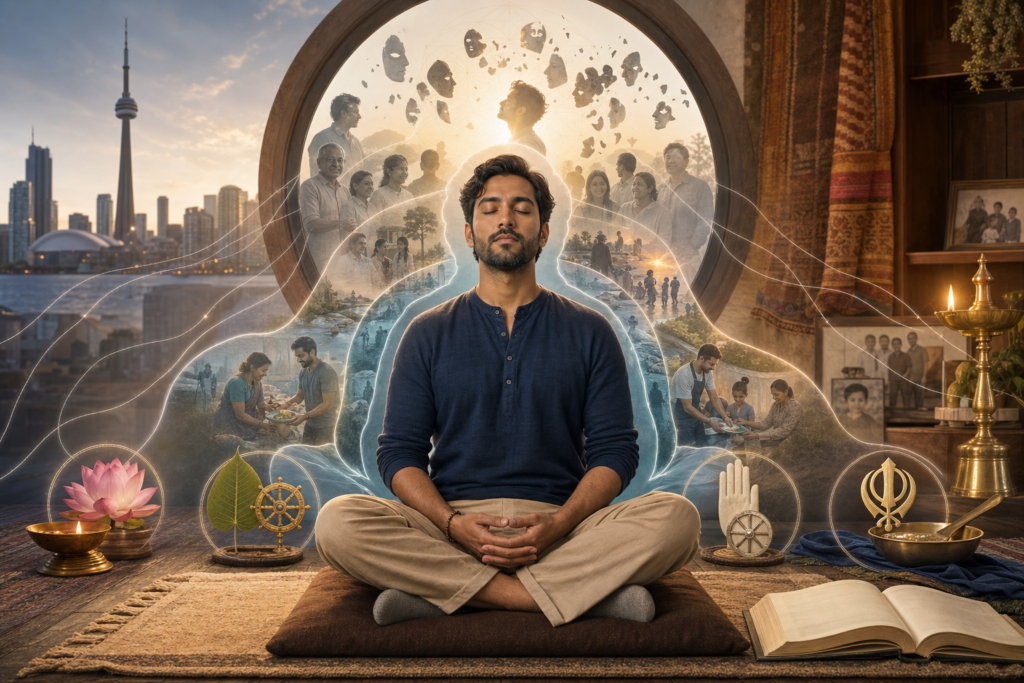
Many readers find that contemplating Vrndavana’s qualities deepens meditation and brings emotional clarity: visualizing wish-fulfilling trees can inspire generosity, hearing the imagined flute can attune the mind to subtle awareness, and reflecting on self-luminosity can kindle inner steadiness. These contemplations harmonize naturally with dharmic practices such as mantra, mindfulness, compassion, ahiṃsa, and seva, reinforcing unity across traditions while honoring their distinct paths.
In comparative perspective, Vrndavana’s portrayal aligns with broader dharmic insights into realms of purity and liberation. The emphasis on selfless service, ethical abundance, and timeless presence echoes shared aspirations across Sanatan Dharma. Thus, Vrndavanacelebrated as the “land of no return” in spiritual termsfunctions as both a precise theological vision and a universal symbol of the heart’s journey toward enduring peace, devotion, and compassionate action.
Inspired by this post on Dandavats.