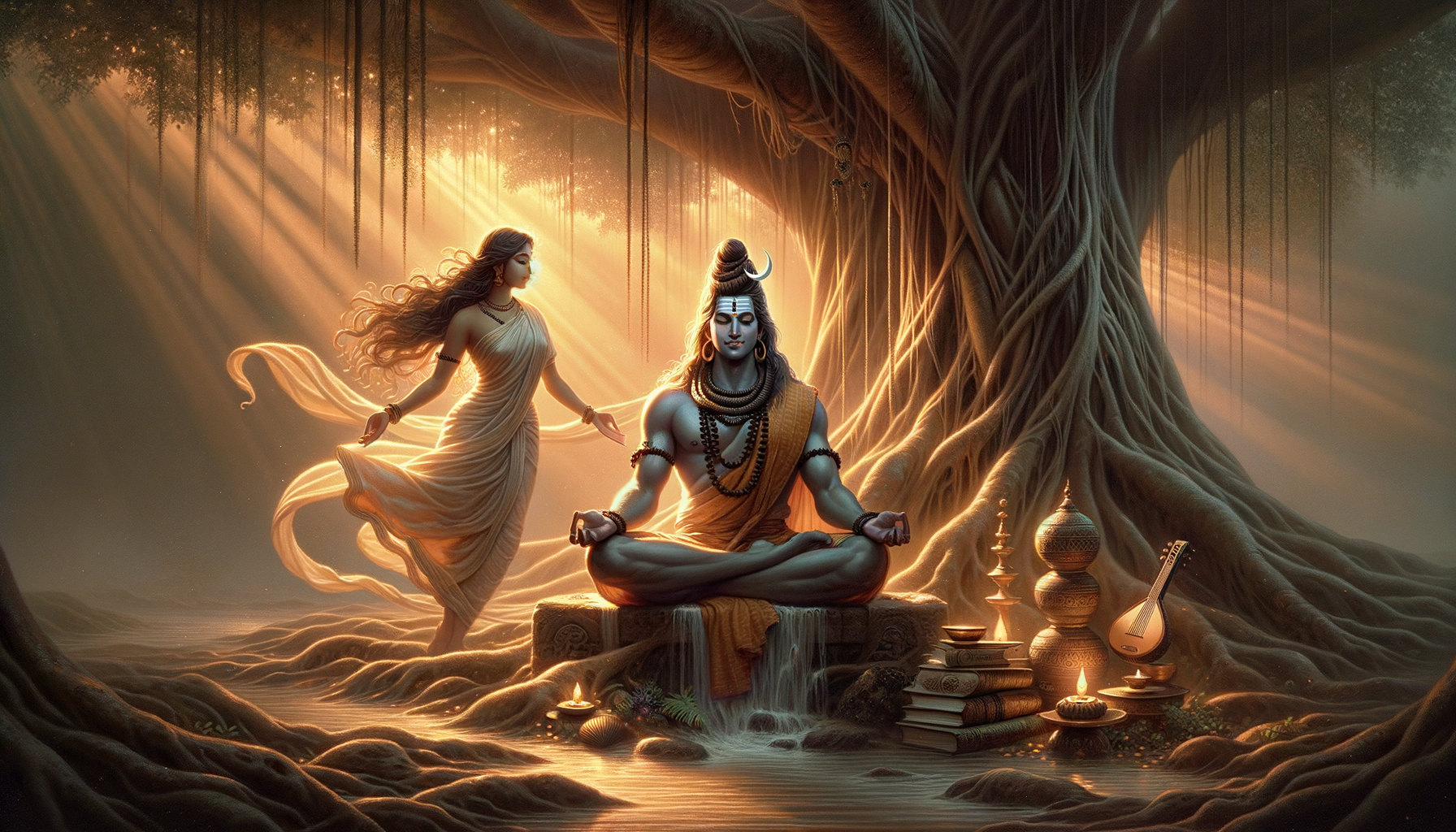
Within the expansive spiritual tapestry of Sanatana Dharma, Shiva’s manifestation as Dakshinamurthy stands as the Adi Guruan embodiment of pure knowledge, meditative stillness, and transformative guidance. A less-discussed yet evocative perspective venerates “Mother Goddess Dhara” as the dynamic complement to this south-facing form of Shiva, illuminating the living stream of insight that flows from the Guru to the seeker. Framed through this lens, the sacred union of Dakshinamurthy and Dhara conveys how wisdom and power (Shakti) function as a single, inseparable reality.
Dakshinamurthy Shiva, seated beneath the banyan tree, teaches through silence (mauna), gesture, and presence. Iconography emphasizes the transmission of inner knowledge (jnana) rather than external ritual alone. As the Supreme Teacher in Hindu spiritual traditions, Dakshinamurthy reveals the substratum of consciousness and the means to realize it, affirming the timeless centrality of the Guru in the Guru-Shishya Tradition.
“Dhara,” literally the current or flow, is understood here as the personified stream of wisdomjnana-dharathat animates the Guru’s luminous silence. In some interpretive and devotional contexts, Dhara is revered as the Shakti of Dakshinamurthy, not as a separate rival to established forms, but as the compassionate, motherly movement of insight that nourishes the heart and clarifies the mind. This symbolic naming honors how knowledge in Sanatana Dharma is both stillness and flowconsciousness and its expressive power.
The sacred union of Dakshinamurthy and Dhara therefore articulates a philosophical truth: jnana (wisdom) and Shakti (dynamic potency) are inseparable. In Advaita Vedanta, consciousness is the ground of being; yet its luminous presence is known through the living “flow” of realization. Dhara, as a devotional expression, represents that beneficent current through which seekers intuit, absorb, and stabilize wisdom.
Viewed through the Guru-Shishya Tradition, this union also illuminates how authentic learning unfolds. The still center of the Guru dispels ignorance, while the nurturing, continuous stream of Dhara sustains the seeker’s growth with clarity, patience, and compassion. Under Dakshinamurthy’s gaze, scriptural study (svadhyaya), contemplation, and disciplined living converge into a cohesive path of inner maturation.
In devotional and contemplative practice, honoring Dakshinamurthy with the remembrance of Dhara encourages balance: deep silence paired with steady inquiry; reverence for the Adi Guru alongside openness to the living current of insight arising in meditation and ethical action. Simple practicesmindful study of stotra and Upanishadic ideas, brief periods of silent sitting, and gratitude for the lineage of teachershelp integrate this wisdom-Shakti harmony into daily life.
This perspective resonates with the broader dharmic family. Hinduism, Buddhism, Jainism, and Sikhism all uphold the guiding presence of the Guru or Teacher and the compassionate flow of wisdomwhether expressed as prajna, kevala jnana, or the grace of the Guru Granth Sahib’s teachings. While each tradition maintains its own doctrines and practices, the shared reverence for transformative knowledge encourages mutual respect and unity in spiritual diversity.
Sanatana Dharma affirms Ishtathe freedom to approach the Divine through forms aligned with one’s temperament. In that inclusive spirit, the veneration of Mother Goddess Dhara alongside Dakshinamurthy Shiva underscores a unifying insight: there are many complementary ways to honor truth. Coercive uniformity finds no place here; instead, plural paths and living traditions are welcomed and safeguarded.
By contemplating the sacred union of Dakshinamurthy and Dhara, seekers encounter an integrative vision: wisdom that is both still and flowing, a Guru who is both silent and ever-giving, and a path that honors the many voices of the dharmic heritage. Such understanding deepens personal practice and strengthens harmony across the family of dharmic traditions.
Inspired by this post on Hindu Blog.